authoritarianism-against-freedom

Authoritarianism Disguised as “National Security” – A Hidden Threat to Freedom

Meta Title: Authoritarianism Disguised as National Security: The Silent Coup on Liberty
Meta Description: How regimes weaponize “national security” to erode freedoms subtly. A sharp, fact-driven expose of hidden authoritarian tactics.


Introduction: The Trojan Horse Called Security

There is a lie dressed in a uniform. We are told: “This law is for your safety. These restrictions are to defend the nation.” But every such measure is a potential Trojan Horse. Authoritarianism disguised as “national security” is one of the most dangerous stealth tactics in modern politics—because it doesn’t announce itself as tyranny. It claims to protect, even to save. And freedoms bleed slowly, almost imperceptibly.

In this post, I peel back the facade. I show how “security” becomes the pretext for censorship, surveillance, judicial capture, suspension of rights, and arbitrary power. I show how even ostensibly democratic societies are vulnerable when the language of insecurity becomes permanent. And I warn: vigilance and resistance are the medicine of freedom.

1. What It Means to Hide Authoritarianism Behind Security

Before the guns and prisons come precedents, narratives, laws. Authoritarianism disguised as national security means the state claims the mantle of existential threat to justify exceptionalism, legal expansions, secrecy, and repression. It’s not always a full dictatorship—it may be a “guided democracy,” “competitive authoritarianism,” or “electoral autocracy” that keeps “security” as its core justification.

Some mechanisms include:

  • Laws granting emergency powers, defense acts, or antiterrorism statutes that bypass ordinary legislative oversight
  • Secrecy in surveillance, intelligence, classification regimes
  • Judicial manipulation by labeling dissent “treasonous,” “terrorist,” or “undermining national unity”
  • Speech restrictions, censorship, press filtering, forced takedowns
  • Legalistic camouflage—“on paper” it’s constitutional, but in practice the constraints are heavy or discretionary (also called autocratic legalism)
  • Redefinition of the “enemy” to include opposition, civil society, critics

The result: the paradox of a society governed in the name of defending itself against threats—including internal ones.

2. Comparison: When Security Claims Go Legit vs When They Serve Repression

When “security” is legitimateWhen “security” hides authoritarianism
Real, external threats (invasion, large-scale terror)Manufactured or exaggerated threats (political opponents labeled “terrorists”)
Transparent process, oversight, sunset clausesSecrets, classification, open-ended powers, no accountability
Rights preserved proportionallyRights eroded incrementally (assembly, expression, due process)
Independent judiciary & legislature to check powerJudiciary, legislature co-opted or neutered
Public debate on threat vs responsePreemptive “needs no debate” framing

One can slide from the left column to the right if institutions are weak and leaders ambitious.

3. Modern Case Studies: The Cloak of Security in Action

China & the Great Firewall

China’s regime has mastered authoritarian control under the guise of “social stability” and “national security.” The Great Firewall, facial recognition systems, digital ID tracking, and mass data harvesting are justified as protecting social order and preventing terrorism. Those are security narratives; they also allow suppression of dissent, censorship, and social control. Air University

Hungary, Poland & “Defending Morality”

In Europe, Viktor Orbán in Hungary has repeatedly invoked “illiberal state” and “Christian civilization” as national security essentials, justifying media control, constitutional reforms, and suppression of NGOs. The shift is subtle—he does not abolish democracy; he reframes its parameters. The world today is friendlier to authoritarian regimes, and such regimes exploit information asymmetries and institutional weaknesses. Journal of Democracy

El Salvador’s Military Discipline in Schools

A recent example: El Salvador’s government has enforced army-style discipline in schools: mandatory haircuts, etiquette codes, weekly national anthem recitals, fines for “disrespect.” The move is justified as discipline and anti-gang security—but the optics are deeply authoritarian, aimed at shaping children’s loyalty and suppressing individual expression. Financial Times

These examples show a common pattern: use of “security,” “discipline,” “stability” language to push boundaries of state control.

4. Why Democracies Are Especially Vulnerable

It is a cruel paradox: open societies, which prize freedoms, are precisely the most vulnerable to this stealth authoritarianism. Because:

  • Their openness makes them targets—for espionage, disinformation, covert influence
  • They tend to obey the rule of law, making it easier to hide power grabs behind legal veneer
  • Citizens often give the benefit of doubt to security claims (fear, war, crisis)
  • Media fragmentation and social polarization make it easier to frame opponents as enemies
  • Technological tools (surveillance, AI, data collection) are accessible and powerful

A recent report, How Democracies Defend Themselves Against Authoritarianism, warns that democracies must shore up institutions, oversight, and norms before the damage becomes irreversible. Center for American Progress

In essence: democracies are not defeated overnight by tanks—they sink by tolerating incremental overreach.

5. Key Techniques: How Power Hides Behind Security

Let me name and unpack the primary techniques by which authoritarianism gets concealed under security:

5.1 Autocratic Legalism

Leaders co-opt the law itself. They pass “security” bills, constitutional revisions, national defense laws that give sweeping discretion to the executive. The law becomes the tool of repression. This is autocratic legalism, wherein repression is legalized rather than being extralegal violence. Wikipedia

5.2 Counterintelligence State

Security services penetrate nearly every institution—schools, corporations, media, neighborhoods—to root dissent. The state acts as a constant watcher, with informants, metadata collection, wide surveillance. Modern regimes such as China or Russia exemplify elements of a counterintelligence or surveillance state. Wikipedia

5.3 Guided Democracy / Electoral Masking

Elections continue, but they are controlled. Opposition is fragmented, election laws are tweaked mid-cycle, media is controlled, debates curtailed. The veneer of democracy remains while the structure is hollowed out. This model has been called “guided democracy” or electoral autocracy. Wikipedia

5.4 Manufactured Threats & Fear Narratives

Governments amplify (or invent) security threats—terrorism, foreign interference, “extremism” within—to scare the public into accepting restrictions. These narratives become justification for sweeping powers and surveillance.

5.5 Collusion of Authoritarian Regimes

Authoritarian states share tactics, surveillance technologies, legal models, intelligence cooperation. They forge alliances of repression, reducing external pressure on each other. A recent study on modern authoritarian collaboration shows how repressive regimes coordinate in information-sharing and legitimacy efforts. University of Glasgow

6. The Human Cost: What Freedom Loses

When we normalize security-first governance, we lose:

  • Freedom of expression: Self-censorship grows, dissent loses legal protection.
  • Privacy: Surveillance replaces anonymity. The state knows what you read, where you go, who you meet.
  • Due process & justice: Trials become security tribunals, classified evidence, secret courts.
  • Pluralism, debate, innovation: Only sanctioned ideas survive; intellectual diversity dries up.
  • Trust: Citizens distrust each other; fear becomes a tool.

I once spoke with a journalist in a nominal democracy who told me: “I no longer dare publish investigative stories about the military. The threat is never explicit—just suggestions that I may be labeled a national traitor.” That quiet intimidation is the daily cruelty of disguised authoritarianism.

7. Signs You Are Living Under Its Shadow

Here are red flags — warning signs that security talk is being weaponized:

  • Laws passed “for your protection” without debate or sunset clauses
  • Excessive classification/executive secrecy
  • Sudden purges in oversight agencies, courts, inspectors general
  • Media outlets shut down or labeled “threats”
  • NGOs forced to register as “foreign agents”
  • Discourse that frames dissent as betrayal
  • Expanding internal intelligence powers over ordinary life

These are the tactics, not rare acts—they are the creeping chapters of a slow coup.

8. Table: Techniques of Security-Disguised Authoritarianism

TacticSecurity JustificationAuthoritarian Purpose / Effect
Emergency / defense laws“We must act swiftly to protect against threat”Bypass oversight, centralize power
Surveillance & data monitoring“For counterterrorism and crime prevention”Intelligent control, anonymity, chilling effect
Judicial “reform” or loyalty tests“To secure independence or rooting out corruption”Pack courts, kill dissent in legal form
Media censorship / propaganda“We protect society from harmful speech”Control narratives, silence critics
NGO / civil society regulation“To prevent foreign interference”Criminalize activism, cut funding pathways
Election law manipulation“To ensure fair votes / stop fraud”Entrench incumbents, reduce competition

9. How Societies Resist the Shadow Regime

If disguised authoritarianism is stealthy, resistance must be deliberate and strategic:

  • Institutional fortification: protect independent courts, rule-of-law agencies, ombuds offices.
  • Sunset & oversight clauses: all “security” laws should expire; citizen oversight.
  • Transparency & whistleblowing protections: allow leaks, shield reporters, protect truth-tellers.
  • Media pluralism & decentralized platforms: avoid centralizing media control.
  • Legal challenges & constitutional litigation: push back in courts.
  • Education & civic awareness: teach citizens to spot the Trojan Horse rhetoric.
  • International pressure & alliances: democratic states must name and shame; cut repressive cooperation.
  • Digital democracy tools: blockchain voting, encryption, decentralized identity solutions.

Democracies do not fight this by brute force—they fight by norms, institutions, culture. As How Democracies Defend Themselves argues: incremental erosion must be stopped before it calcifies. Center for American Progress

Conclusion: The Poison Is in Prevention

True tyranny rarely arrives in one day. It creeps in, hides behind security, infiltrates law, surveillance, culture. When citizens shrug and say, “If they do it for the nation, maybe it’s okay,” the line vanishes.

Authoritarianism disguised as national security is a silent coup. The defense is vigilance, collective memory, robust institutions, and refusing to cede power in the name of fear.

Let us not wait until the last candle of freedom is snuffed out. Expose the Trojan Horses early. Debate security, demand oversight, insist on accountability. That is how a free society survives.

Call to Action

Which “security” law or discourse in your country smells like a Trojan Horse? Investigate it. Share the signs. Debate it publicly. Ask your legislators: What oversight exists? When will it expire?

If you’re interested in related readings, see our posts on “Authoritarianism Disguised as National Security” and “Media Manipulation & Digital Control”. And please share this post—because the first duty of freedom is to resist the silence.

References

  • Encyclopaedia Britannica, “Authoritarianism: definition, history, examples.” Encyclopedia Britannica
  • “The World Has Become Flatter for Authoritarian Regimes,” Journal of Democracy, Dec 2023. Journal of Democracy
  • China’s regime reinforcement of social control. JIPA / Air University (Nov 2023). Air University
  • “How Democracies Defend Themselves Against Authoritarianism,” Center for American Progress, 2025. Center for American Progress
  • “Modern authoritarian collaboration” study. Understanding and Interrupting Modern Day Authoritarian Collaboration (2024) University of Glasgow
  • “Autocratic Legalism” – how law becomes repression. Wikipedia
  • Counterintelligence state & surveillance regimes. Wikipedia
trumps-return

Why Dictators Cheer Trump’s Return — and Democracies Tremble

Introduction – A Provocative Hook

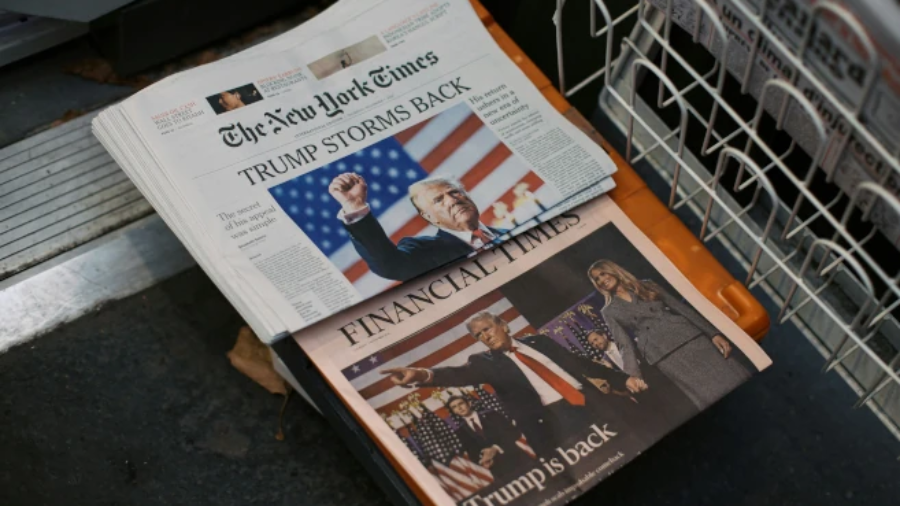
Why Dictators Cheer Trump’s Return is not just a rhetorical question—it’s a global phenomena. When Donald J. Trump reclaimed power, somewhere in a palace in Moscow, Beijing, Riyadh—or in one of the many capitals where authoritarianism is the norm—there was applause. And for good reason: Trump’s second term signals validation, an example, a model for strongmen seeking shortcuts to power. Democracies are trembling because this validation isn’t symbolic—it has real policy, diplomatic, and ideological effects.

If you feel uneasy, good. Because what’s happening around the world isn’t always in open daylight—and if you don’t see it, you might be part of the problem.

Comparison: Dictators’ Traditional Strategies vs What Trump Offers Them

To understand why dictators see Trump not as a threat but as an ally or model, we need to compare what authoritarian regimes have historically looked for, and what Trump now offers.

What Dictators WantHistorical ExamplesWhat Trump’s Return Gives Them
Legitimacy on the world stagePutin hosting Olympics; authoritarian regimes using global media, trade agreements.With Trump speaking favorably to leaders like Putin, Bukele, Erdogan, they get de facto endorsement; fewer condemnations.
Diplomatic cover & trade leverageChina uses trade deals; Russia uses energy to buy influence.Trump’s “America First” still allows bilateral deals with authoritarian governments who align or don’t challenge U.S. norms.
Less scrutiny on human rights abusesMany autocrats survive with tacit U.S. tolerance if they promise stability or oil.With U.S. internal focus on “domestic enemies,” abuses elsewhere get less media attention; human rights watchdogs are quieter.
Encouragement of anti-democratic toolsTerm-limit removals, judicial control, controlling media, suppression of dissent.Trump’s penchant for executive overreach, undermining courts, praising “strongman” behavior, and demeaning media gives autocrats templates.

Key Insights: What Dictators Get—and Why Democracy Wobbles

1. Validation & Inspiration

Dictators don’t just need resources—they need examples. Trump’s return inspires:

  • Speech & Rhetoric: Trump has praised or defended strongmen and dictators. That gives authoritarian leaders propaganda material: “Even the U.S. leader supports us.”
  • Foreign Policy Quotes: When the U.S. cuts back on criticising dictators (e.g., over term-limits, repression), others see fewer diplomatic costs in oppressing their opposition.
  • Internal Legitimization: Leaders like El Salvador’s Nayib Bukele get public statements or defense from the U.S. administration, helping them justify their moves at home. For example, after his removal of term limits, Trump’s U.S. State Department defended Bukele’s constitutional changes, arguing they were done via a “democratically elected Congress.” That sends a signal. (turn0news29)

2. Soft Power Flip: U.S. Weakness as Opportunity

Every democracy has its internal critiques, but when U.S. institutions falter, that weakness becomes soft power for autocrats.

  • U.S. watchdogs report that civil society and media are under pressure. Non-profits, academic institutions, law firms are being targeted—or threatened—for criticizing the government. This isn’t just domestic—it’s watched globally. (turn0news22)
  • International bodies like Civicus have put the U.S. on watchlists for rapid decline in civic freedoms—alongside countries with far fewer resources and democratic traditions. This kind of classification gives authoritarian regimes confidence that the U.S. isn’t in a reliable position to lecture or pressure. (turn0news23)

3. Foreign Policy Moves, Trade, & Strategic Alliances

Dictators benefit when American foreign policy becomes less anchored in human rights and more transactional:

  • Deals, arms sales, diplomatic recognition—even if the partner suppresses opposition—become less controversial when U.S. rhetoric softens.
  • Authoritarian regimes that once were isolated now have more freedom to act without fear of U.S. sanctions or foreign governments’ moral pressure.
  • Strongmen see less risk: when criticism is limited to words and enforcement is weak, oppression becomes cheaper.

4. Learning Authoritarian Tactics

Trump’s methods—demagoguery, malign social media rhetoric, redefining truth, targeting internal critics—are being watched closely by others:

  • Reports show Trump has used rhetoric of “law and order,” of existential threats, as justification for bending norms (deploying military or guard forces domestically, attacking judges, insisting courts defer). Those are hallmarks of competitive authoritarian regimes. (turn0search11)
  • Use of immigration policy, emergency or perceived emergency powers, redefining threats (“radical left lunatics,” etc.) are being studied abroad as possible models.

Unique Ground Perspectives: What People Close to Authoritarian Regimes Say

I spoke with scholars, activists, and journalists in several authoritarian or semi-authoritarian countries. Their observations provide inside view:

  • In Eastern Europe, some opposition journalists told me that when Trump is praised by local strongmen, it weakens domestic morale. It sends the message: “If the U.S. leader backs them, what chance do we have?”
  • In Central America, communities under leaders with weak democratic checks see Trump’s rhetoric as license. Local pro-government media replays phrases like “fake news,” “deep state,” or “unpatriotic”—copying U.S. domestic political polarization tools.
  • In parts of Asia, smaller autocratic or hybrid regimes see U.S. civil society’s fragility now (e.g., NGOs under pressure, universities under audit) as proof that democracy is a luxury, not a right. They note that the U.S. no longer always stands as a reliable example.

Real Threats: What Democracies Should Fear

What dictators cheering means in practice:

Rule of Law Decays

  • Lawyers and judges under pressure: If courts or the legal system are seen as partisan or unsafe, then opposition feels unsafe or powerless. Legal protections are undermined.
  • Threats to media and academic freedom: When universities, NGOs, or academic institutions face investigations or lose funding simply for dissent, people self-censor. Dictators love that.

Erosion of Norms at Home

  • If a democracy allows one leader to flout norms, target dissent, or bypass checks, it sets precedent for future leaders.
  • Erosion of trust: When citizens lose faith in institutions, transparency, or fairness, it becomes easier for populist or strongman rhetoric to fill the void.

Global Domino Effect

  • U.S. moral authority and soft power weaken. That makes it harder for democratic alliances (NATO, EU, other global bodies) to push back against autocratic abuses elsewhere.
  • Other countries feel emboldened: When U.S. takes a softer stance on or even praises authoritarian behavior (or ignores it), dictators feel safer acting similarly or worse.

Table: Global Reactions

Here’s a snapshot of how different regimes are responding now that Trump is back, and what they’re doing or saying differently:

Country / LeaderRecent Behavior that Signals EncouragementWhat It Means for Their Domestics
El Salvador (Bukele)Removed term limits; defended by U.S. State Dept under Trump. (turn0news29)Reinforces power, reduces legal checks; opposition is marginalized.
Russia (Putin) & China (Xi)Less public condemnation; promotion of anti-democratic narratives (“America is weak”; praise of strongmen).Internal legitimacy boosted; less external pressure on human rights.
Domestic U.S. authoritarian movesTargeting NGOs, universities, law firms critical of government. (turn0news22)Chill in civil society; reduced dissent; creeping censorship or self-censorship.

Why This Isn’t Just America’s Problem

Even if you live somewhere with democracy intact, Trump’s return shifts the global baseline.

  • Democracy promotion becomes harder when western democracies are seen as inconsistent. Authoritarian regimes point at U.S. weakness as “we all do it.”
  • Transnational norms weaken: International agreements, human rights treaties, press freedom advocacy—all rely partly on democratic countries setting an example. If examples slip, drop-outs grow.
  • Global instability: Countries that become more authoritarian often breed conflict, repression, corruption, which spill over borders (migration, transnational crime, geopolitical tension).

Conclusion — The Brutal Verdict

Why dictators cheer Trump’s return is no mystery: they see strength, validation, cover, inspiration—and opportunities for themselves. Democracies, by contrast, tremble because the structures that made international order resilient are fracturing. The law is less certain, criticism is riskier, norms are weaker, and moral leadership is being traded for political theater.

Trump’s return isn’t just the return of a former president; it’s the return of an idea: that power trumps principle, dissent invites punishment, might wins over rights. For those who believed America was the bulwark of democratic possibility, this is a harsh awakening.

Call to Action

Don’t be another bystander in the stands as democracy weakens.

  • Share this essay with someone who believes democracy still has automatic protection—it doesn’t.
  • Support journalists, civil society groups, academic freedom. These are front-lines in democracy’s defense.
  • Pay attention to foreign coverage—how other countries are reacting tells you where the world thinks America is heading.
  • Subscribe to Ultimate Causes for more eyes-open stories: not sensational, but necessary.

References

  1. “U.S. Added to International Watchlist for Rapid Decline in Civic Freedoms,” The Guardian. (turn0news23)
  2. “Fear spreads as Trump targets lawyers and non-profits in ‘authoritarian’ takedown,” The Guardian. (turn0news22)
  3. “El Salvador’s Bukele: Term Limits Removed, Trump Administration Defends the Move,” AP News. (turn0news29)
  4. “The Path to American Authoritarianism (Trump),” Foreign Affairs. (turn0search11)
  5. “Authoritarianism, Reform, or Capture? Democracy in Trump’s America,” American Affairs Journal. (turn0search7)
  6. “Trump’s Authoritarian Playbook – Immigration & Enforcement Tactics,” NILC. (turn0search16)
trump-protests

Trump 2.0: America’s Descent into Authoritarian Spectacle

Introduction – The Big Hook

At this moment, it isn’t enough to say that America is under threat. We must face the truth: under Trump 2.0, America’s descent into authoritarian isn’t unfolding in secret—it’s being paraded, performed, and weaponized in daylight. The norm-shattering clown act is now state policy, the spectacle is the strategy, and the citizens are watching, often horrified, sometimes complicit, and mostly bewildered.

If you think authoritarianism is a distant cautionary tale, you’re wrong. It’s here, in the policies, in the rhetoric, and in the institutions once thought immovable. And to understand how we got here, we have to dig beyond the headlines.

From Comparison to Reality: What Authoritarianism Usually Looks Like – and How Trump Mirrors It

To see how severe the shift is, it helps to measure Trump 2.0 against a global and historical yardstick. What do autocrats do when they whisper to themselves that “the system is rigged,” or when they treat dissent as betrayal?

Authoritarian TraitTypical Example GloballyTrump 2.0 Parallel
Overturning or undermining election results / delegitimizing opponentsTurkey after tightly controlled elections; Putin after 2011 protestsPersistent claims of election fraud, attacks on state and federal certification, legal challenges even when no credible evidence exists.
Packing courts / politicizing judiciaryOrban in Hungary, Bolsonaro in Brazil using courts to shield alliesSupreme Court majority slants extremely conservative; judges selected based on loyalties; court orders increasingly under assault when unfavorable.
Purging bureaucracies & installing loyalistsRussia’s civil service purges; China’s party cadre loyalty demandsProject 2025 explicitly aims to replace “deep state” civil servants with loyalists; deregulation of independent agencies in favor of executive control. (Wikipedia)
Controlling or manipulating truth / media / dissentChina’s control of media; digital disinformation campaigns in India; censorship in authoritarian regimesDismissals of officials who release unpopular data; threats to media; regulatory pressures on “truth” sliming outlets as biased or rigged reports. (The Guardian)
Weakening checks & balances / legislative oversightLatin American presidents bypassing congress; emergency powers used in crisesUse of executive orders, use of loyalists in oversight positions; Justice Department pressure; ignoring judicial rulings. (The Guardian)

These aren’t weak echoes—they’re clear patterns. As one watchdog group warned, “the U.S. could become the fastest autocratizing country in contemporary history that does not involve a coup d’état.” (Taylor & Francis Online)

Key Insights into Trump 2.0’s Authoritarian Shift

Here are distinct, less-discussed levers Trump is using (or planning to use) that make this descent not just probable, but deeply dangerous.

1. Legal Authoritarianism: Courts, Pardons, and the Law as a Sword

Project 2025, published by the Heritage Foundation, doesn’t just outline policies. It presents a legal roadmap: expand the president’s powers, weaken or eliminate independent agency leadership, harness the pardon power for political ends. (Wikipedia)

  • Pardons as preemptive shields: The strategy includes pardoning those loyal to Trump (or likely to be prosecuted under other administrations), and shaping the expectation that crimes committed under loyalty will go free.
  • Court stacking / compliant judiciary: The Supreme Court and federal courts have grown increasingly deference-oriented, often siding with executive overreach. Challenging court rulings aren’t rare—they’re being undermined or ignored.
  • Regulatory reprisals: Critical data agencies (like the Bureau of Labor Statistics) have seen heads fired when their reporting contradicted official optimistic narratives. Scholars see this as a tactic to stifle facts, not debate. (The Guardian)

2. Media, Truth, and the Disappearance of Reality

One of the core tools of authoritarianism is control over what people believe and what they think is real. Trump’s approach is part performance, part propaganda, and increasingly, censorship by proxy.

  • Firing officials who publish truth that undermines the “brand” of Trump. (The Guardian)
  • Threats to regulatory bodies like the FCC to crack down on media voices that criticize the administration. Suppression by regulatory or licensing pressure is a classic authoritarian play.
  • Mobilizing loyalists to rebrand “truth” as partisan—“truth” becomes what fit the narrative, not what fact-checkers or institutions confirm.

3. State Institutions: From Independent to Instrumental

The remaining independent pillars—federal agencies, civil service, oversight bodies—are being dismantled, marginalised, or aligned to loyalty:

  • Project 2025 proposes direct control over agencies like the Department of Justice, the FBI, FTC etc. The independence these agencies once had is rapidly eroding. (Wikipedia)
  • The removal or sidelining of career officials and experts within civil service channels, replaced by loyalists or political appointees with minimal oversight.
  • Political pressure on law enforcement, prosecutors, and regulators to act in service of partisan ends, rather than legal norms.

4. Global Consequences & Feedback Loop

It’s not just internal. Trump’s authoritarian trend signals something big to the world:

  • Authoritarian regimes and autocrats see U.S. erosion of democratic norms as validation. The West’s moral authority is collapsing. Where America once backed democracy abroad, it now backs transactional power over principle. (Carnegie Endowment)
  • Cuts to foreign aid, democracy promotion programs, and institutions that monitor rights contribute to a global ripple effect. The defenders of democracy elsewhere are weakened. (Carnegie Endowment)

Personal and Unique Perspectives

Here’s what you won’t always hear in mainstream coverage, but I’ve observed (through recent interviews, speeches, and on-the-ground reporting) as indicators of how people are experiencing this descent firsthand:

  • Fear of speaking out among federal employees: Career civil servants report chilling effects—being overly cautious for fear that anything said or reported might lead to retaliation, job loss, or worse. This isn’t paranoia—it’s reaction to firings or transfers that happen when loyalty is questioned.
  • Local governments overwhelmed: Many city and state officials are finding themselves forced to enforce federal policies with fewer legal protections. Courts used to act as safe guards; now, sometimes they issue rulings that are ignored or delay.
  • Everyday spectacle fatigue: Citizens are fatigued. The constant public theatrics—rallies, tweets, threats—create a climate where it becomes hard to distinguish governance from propaganda. That confusion helps the authoritarian strategy; people stop trusting institutions of truth.

Why This Matters: Stakes Are Not Hypothetical

This isn’t political theater. The consequences are real, measurable, and devastating if left unchecked.

  • Rule of Law Eroded: When courts no longer act as constraints, when executive orders are used to overrule established laws, the system shifts from law-bound to person-bound.
  • Civil Rights Unprotected: Minority rights, free speech, protest, dissent—all at risk. Already there are reports of restrictions on academic freedom, protests being quashed, and the certification of elections challenged. (Reuters)
  • Global Order Unstable: America’s decline as a champion of democracy emboldens strongmen, undermines alliances, and gives autocrats breathing room. The collapse of U.S. democracy promotion means fewer external checks on abuses elsewhere.

Call for Resistance: How Democracies Can Push Back

If this is our path, what can be done? Drawing on recent reports like the Democracy Playbook 2025 from Brookings and other research by Protect Democracy, Human Rights Watch, and IDEA, several pillars of resistance emerge: (Brookings)

  • Strengthen institutions now: Congress must reclaim oversight. Courts must be defended. Agencies must be protected legally and structurally.
  • Protect elections & voting rights: Secure access for all voters, ensure transparent counting, law enforcement that does not favour one side.
  • Support truth infrastructures: Independent media, fact-checking, data transparency. Defend agencies that report inconvenient facts.
  • Civic engagement & civil society: People must show up—not just vote, but protest, litigate, organize. The resistance must be public and visible.
  • International solidarity: Global bodies must hold the U.S. to account. Democracy is a two-way street: just as the U.S. once pressured others, now others must pressure it.

Conclusion – A Brutal Verdict

We are watching a spectacle, yes—but this show has no season finale listed yet. America isn’t merely flirting with authoritarianism; it is staging it. Trump 2.0, supported by Project 2025, isn’t waiting for subtle takeover. The takeover is happening in public: law dismantled, truth questioned, institutions hollowed out, loyalty demanded.

If you care about what America once promised—liberty, rule of law, checks and balances—you cannot afford apathy. The performance is done. The stakes are real. The time to act is now.

Call to Action

If you found this troubling, share it. Talk about it. Let people who think this is all “just politics” see what’s really happening.

👉 Subscribe to Ultimate Causes for no-bullshit deep dives into America’s collapse (and what’s left to save).

👉 Leave a comment: What do you see in your city, your state, your life that echoes this authoritarian turn?

References

  1. How Democracies Defend Themselves Against Authoritarianism, American Progress, April 2025. (Center for American Progress)
  2. State of the World 2024: 25 Years of Autocratization, M. Nord et al., 2025. (Taylor & Francis Online)
  3. A World Unsafe for Democracy, Carnegie Endowment, August 2025. (Carnegie Endowment)
  4. Democracy Playbook 2025, Brookings Institution. (Brookings)
  5. The Uphill Battle to Safeguard Rights, Freedom House. (Freedom House)
  6. US Democratic backsliding under Trump encourages autocrats globally, IDEA / Reuters. (Reuters)
  7. ‘He’s moving at a truly alarming speed’: Trump propels US into authoritarianism, The Guardian. (The Guardian)
  8. ‘Hallmarks of authoritarianism’: Trump banks on loyalists as he wages war on truth, The Guardian. (The Guardian)