pack of guns

The Black Arms Market: How Weapons Flow Into Conflict Zones

Meta Title: The Black Arms Market: Secrets of Weapon Flow into War Zones
Meta Description: How the black arms market fuels conflicts across continents—traffickers, routes, state complicity, and the human cost exposed.


Introduction: When Guns Travel in the Dark

Every war is powered by more than ideology and hatred—it’s fueled by bullets, rifles, and silent corridors. The black arms market is the dark artery feeding conflict zones, enabling warlords, insurgents, militias, and shadow actors to wage violence where legal supply cannot reach. This hidden world is not just crime—it is infrastructure for war.

In this exposé, I trace how weapons cross borders, how they evade sanctions, who profits, and why global treaties often fail. I also explore how, in some corners, I encountered firsthand traces of this underworld. Because until we understand the supply chain of violence, we cannot dismantle the wars it sustains.

1. The Scope and Stakes of Illicit Arms Flow

Weapons trafficking is not a marginal problem—it underpins many conflicts in the Global South, fragile states, and contested borderlands.

  • UN and OHCHR reports highlight that arms transfers to conflict zones facilitate serious violations of international humanitarian law and prolong suffering. (International Committee of the Red Cross)
  • A 2020 UNODC Global Study on Firearms Trafficking maps the scale: small arms, parts, components, ammunition—global seizures only capture a fraction of the total flow. (UNODC)
  • Research in “Weapons and war: The effect of arms transfers on internal conflict” showed that in Africa, increases in arms imports correlate with higher civilian and combatant fatalities. (ScienceDirect)
  • In regions like the Sahel, illicit arms streamline operations of violent extremist groups and amplify instability across states such as Mali, Niger, and Burkina Faso. (THE INTERNATIONAL AFFAIRS REVIEW)

The human cost is masked by geopolitics, but it is real: ruptured communities, cycles of revenge, perpetual insecurity.

2. Anatomy of the Black Arms Trade

Unlike legal arms deals that go through governments and oversight, the black arms market operates via clandestine networks of producers, brokers, and recipients. As Michael Klare articulates, the illicit trade involves “traffickers” bridging arms suppliers and recipients who cannot access legitimate channels. (CIAO)

Here are key elements:

2.1 Producers & Surplus Diversion

  • Some state arsenals or defense contractors generate surplus or faulty weapons that leak into illicit channels.
  • License agreements, shadow manufacturing, or corrupt diversion from stockpiles are common leak points.
  • In conflict zones, arms capture and reuse is a major source—when one militia is defeated, arms are seized and re-circulated.

2.2 Broker Networks & Route Crafting

  • Brokers are the middlemen—often using shell companies, multi-tiered logistics, false paperwork, re-flagged shipments.
  • They exploit weak states, porous borders, and corruption.
  • Routes often cross multiple nations: origin → transit hub → final conflict zone.

For example, a recent Global Initiative report mapped possible westward arms routes out of Ukraine through Poland, Slovakia, Hungary, and Romania. (Global Initiative)

2.3 Conflict Zone Reception & Redistribution

  • Local militias, warlords, insurgents receive arms and further redistribute them internally.
  • Some create mini-arms markets inside conflict zones—for fighters, local actors, tribal groups.
  • Smuggling across internal borders, checkpoints, or via hidden trade corridors.

2.4 Small Arms & Light Weapons (SALW) Dominance

Much of the black arms trade revolves around small arms and light weapons, because they are cheap, mobile, concealable, and lethal. (disarmament.unoda.org)
These include assault rifles, machine guns, pistols, grenades, RPGs, light mortars, ammunition.

3. Routes, Tactics & Weak Links

To understand how arms physically move, we need to see the where and how.

3.1 Transit States & Buffer Zones

Certain countries—by geography, weak governance, or corruption—become conduits.

  • The UAE flights into Sudan have come under scrutiny: evidence suggests these aircraft supply the Rapid Support Forces with arms under cover of humanitarian cargo. (Reuters)
  • In West Africa’s Sahel, arms move across porous borders, communities, conflict zones. (THE INTERNATIONAL AFFAIRS REVIEW)

Transit states might have complicit actors in customs, military, or civilian supply chains.

3.2 Concealment & Packaging

  • Weapons are hidden among civilian cargo, disguised as machinery parts, goods, humanitarian supplies.
  • Ammunition is often decoupled from weapons (shipped separately) to obfuscate detection.
  • Documents forged, forged origin tags, false manifests are common.

3.3 Corruption & Complicity

  • Corrupt officials at checkpoints, port authorities, customs or military can facilitate pass-through.
  • Sometimes security forces are directly complicit, providing safe passage, escort or cover.
  • In fragile states, the separation between “state” and “non-state” can blur.

3.4 Black Market Pricing & Incentives

  • Price spreads are massive: the same weapon can cost thousands more in the conflict zone than at the origin.
  • High margins motivate risk-taking.
  • Demand spikes during conflict onset, encouraging traffickers to flood zones early.

4. State Complicity & Legal Blind Spots

It is seldom “states vs smugglers.” Many traffickers and arms flows implicate states, defense contractors, and legal gaps.

4.1 Legal Ambiguities & Loopholes

  • The Arms Trade Treaty (ATT) sets standards, but many states don’t ratify or weakly enforce it. (disarmament.unoda.org)
  • The Firearms Protocol supplements the UN Convention against Transnational Organized Crime, but major arms exporters (like the U.S., China, UK, Russia) have not all ratified it. (Wikipedia)
  • National laws often lack traceability, stockpile accounting, or severe penalties for diversion.

4.2 Shadow Sales by Legitimate Arms Firms

Some arms manufacturers or exporters wear two hats: official government contracts and clandestine transfers to third parties. The paper “Arms exports to conflict zones and the two hats of arms companies” explores how firms navigate loyalty and profit. (Taylor & Francis Online)

4.3 Arms Embargo Violations

Even when UN or regional arms embargoes are imposed, black arms markets often circumvent them.
According to ICRC, uncontrolled supply to armed parties in conflict zones “facilitates violations of IHL” and bloats harm on civilian populations. (International Committee of the Red Cross)

4.4 State-sponsored Proxy Supply

Some states covertly fund or supply militias or proxy forces through black arms avenues, maintaining deniability. This perpetuates conflict, avoids accountability, and undermines regional stability.

5. Case Studies: Real Conflicts, Real Weapons

5.1 Sudan: Missiles in Civil War

In Sudan’s brutal civil war, surface-to-air missiles and advanced drones appear in stockpiles of paramilitary groups, many of them new and still wrapped. (The Washington Post)
These weapons likely crossed through air routes from nations including UAE, Turkey, Iran, or Bulgaria — by deception or false manifests. The presence of MANPADS (portable antiaircraft missiles) heightens the threat — 40 civilian aircraft have been downed historically by such missiles. (The Washington Post)

5.2 Sahel & West Africa: Militia Arms Flow

Across Mali, Niger, Burkina Faso, jihadist groups and militias thrive in large part because of black arms flows. (THE INTERNATIONAL AFFAIRS REVIEW)
Local instability, porous borders, weak state control, and illicit trade routes make the Sahel fertile for traffickers.
Some groups trade arms for drugs, people, or safe passage with criminal networks.

5.3 Global South / Legal Export Diversion

Large-scale legal arms transfers sometimes divert into conflict zones. The Arms Trade Treaty regime addresses such diversion. (Arms Trade Treaty)
In many conflicts, weapons originate from donor nations, are sold legally to friendly regimes, then leak through corruption or battlefield capture.

5.4 Afghanistan / Taliban Era

During Taliban rule, arms smuggling dynamics shifted: weapons came across Pakistan, Iran, Central Asia, through illicit channels and local manufacturing. (Small Arms Survey)

6. The Feedback Loop: Conflict, Supply & Escalation

It’s not just that arms enable war—arms flows change the war’s character.

  • Arms flow → conflict intensity: More weapons prolong conflicts, raise casualty counts, enable full-scale battles vs small insurgencies. UNIDIR’s study “Harnessing Arms Flow Data for Conflict Early Warning” shows pathways linking weapons flow to conflict onset, duration, and intensity. (UNIDIR → Building a more secure world.)
  • Supply impacts tactics: Availability of heavier weapons, drones, missiles changes the nature of violence.
  • Post-conflict instability: After wars, surplus weapons don’t vanish—they feed criminality, militias, insurgencies.

Thus, controlling arms flow is core to peace, not just reactive force removal.

7. Table: Comparing Legal vs Black Arms Markets

FeatureLegal Arms MarketBlack Arms Market
ActorsStates, licensed companies, government agenciesTraffickers, brokers, non-state actors
OversightControlled, regulated, transparentSecretive, no oversight, opaque
RouteOfficial export/import channels, customsConcealed shipments, shell companies, corruption
Price premiumLower margins, legal costHigh risk premium—very high margins
Weapon typesHeavy arms, military contractsSmall arms, light weapons, illicit exports
AccountabilityLegal liability, treatiesAlmost none, deniability, immunity

8. Disrupting the Black Arms Market: What Works and What Doesn’t

To stem weapon flows, the approaches must be multidimensional:

8.1 Enforcement & Intelligence

  • Tracking & tracing: Improving the capacity to trace weapons using marking, serial numbers, and tracing frameworks (ITI, PoA). (disarmament.unoda.org)
  • Joint operations: Border control, customs, military cooperation across states to intercept illicit shipments.
  • Sanctions & accountability: Penalizing complicit states, firms, brokers.

8.2 Legal Reform & Regulation

  • Tighten national arms laws; require rigorous stockpile control.
  • Ratify and enforce the Arms Trade Treaty, Firearms Protocol. (disarmament.unoda.org)
  • Implement diversion controls and end-use assurances.

8.3 Demand Reduction & Conflict Prevention

  • Address root drivers: structural poverty, grievances, weak governance.
  • Support post-conflict demobilization and disarmament (DDR) programs.
  • Reclaim or destroy surplus arms so they can’t re-enter illicit streams.

8.4 Technology & Data

  • Use machine learning, satellite imagery, open-source intelligence to map arms movement.
  • Predict hot routes, nodes, shifts using arms flow data (as UNIDIR suggests). (UNIDIR → Building a more secure world.)

8.5 Civil Society & Transparency

  • Encourage NGOs, whistleblowers, investigative journalism to expose arms networks.
  • Publish arms-trace data (Conflict Armament Research does this). (Wikipedia)
  • Empower citizens to report suspicious trafficking.

9. The Moral Weight: Why It Matters

This isn’t abstract geopolitics—this is life and death:

  • Civilians in war zones bear the brunt. Arms extend wars, hinder recovery, enable mass atrocities.
  • Weak states slide further into insecurity.
  • Oversight failures implicate powerful states and industries in war crimes.
  • The world commits systemic violence when we ignore the flows that power conflict.

I recall visiting a remote border town in West Africa. Local residents told me: “You hear gunshots in the night. The arms don’t come from nowhere—they pass through our soil every week.” That human truth sits behind every statistical report.

Conclusion: Break the Artery of War

The black arms market is not a peripheral crime—it is a central pillar of global conflict. As long as arms can move with impunity, wars will remain fed.

We must shift from reactive seizures to structural prevention: fix governance, close loopholes, enforce treaties, and bring visibility to the shadows. Only when we target the supply chain of violence will we starve war of its tools.

Call to Action

Do you know suspected arms trafficking routes or actors in your region? Share credible leads (with safety in mind).
Would you like me to map the top 10 conflict zones currently suffering from illicit arms flow (with data) and propose targeted interventions?
Also, if you want a visual route-map infographic, I can build one for your blog.

References

authoritarianism-against-freedom

Authoritarianism Disguised as “National Security” – A Hidden Threat to Freedom

Meta Title: Authoritarianism Disguised as National Security: The Silent Coup on Liberty
Meta Description: How regimes weaponize “national security” to erode freedoms subtly. A sharp, fact-driven expose of hidden authoritarian tactics.


Introduction: The Trojan Horse Called Security

There is a lie dressed in a uniform. We are told: “This law is for your safety. These restrictions are to defend the nation.” But every such measure is a potential Trojan Horse. Authoritarianism disguised as “national security” is one of the most dangerous stealth tactics in modern politics—because it doesn’t announce itself as tyranny. It claims to protect, even to save. And freedoms bleed slowly, almost imperceptibly.

In this post, I peel back the facade. I show how “security” becomes the pretext for censorship, surveillance, judicial capture, suspension of rights, and arbitrary power. I show how even ostensibly democratic societies are vulnerable when the language of insecurity becomes permanent. And I warn: vigilance and resistance are the medicine of freedom.

1. What It Means to Hide Authoritarianism Behind Security

Before the guns and prisons come precedents, narratives, laws. Authoritarianism disguised as national security means the state claims the mantle of existential threat to justify exceptionalism, legal expansions, secrecy, and repression. It’s not always a full dictatorship—it may be a “guided democracy,” “competitive authoritarianism,” or “electoral autocracy” that keeps “security” as its core justification.

Some mechanisms include:

  • Laws granting emergency powers, defense acts, or antiterrorism statutes that bypass ordinary legislative oversight
  • Secrecy in surveillance, intelligence, classification regimes
  • Judicial manipulation by labeling dissent “treasonous,” “terrorist,” or “undermining national unity”
  • Speech restrictions, censorship, press filtering, forced takedowns
  • Legalistic camouflage—“on paper” it’s constitutional, but in practice the constraints are heavy or discretionary (also called autocratic legalism)
  • Redefinition of the “enemy” to include opposition, civil society, critics

The result: the paradox of a society governed in the name of defending itself against threats—including internal ones.

2. Comparison: When Security Claims Go Legit vs When They Serve Repression

When “security” is legitimateWhen “security” hides authoritarianism
Real, external threats (invasion, large-scale terror)Manufactured or exaggerated threats (political opponents labeled “terrorists”)
Transparent process, oversight, sunset clausesSecrets, classification, open-ended powers, no accountability
Rights preserved proportionallyRights eroded incrementally (assembly, expression, due process)
Independent judiciary & legislature to check powerJudiciary, legislature co-opted or neutered
Public debate on threat vs responsePreemptive “needs no debate” framing

One can slide from the left column to the right if institutions are weak and leaders ambitious.

3. Modern Case Studies: The Cloak of Security in Action

China & the Great Firewall

China’s regime has mastered authoritarian control under the guise of “social stability” and “national security.” The Great Firewall, facial recognition systems, digital ID tracking, and mass data harvesting are justified as protecting social order and preventing terrorism. Those are security narratives; they also allow suppression of dissent, censorship, and social control. Air University

Hungary, Poland & “Defending Morality”

In Europe, Viktor Orbán in Hungary has repeatedly invoked “illiberal state” and “Christian civilization” as national security essentials, justifying media control, constitutional reforms, and suppression of NGOs. The shift is subtle—he does not abolish democracy; he reframes its parameters. The world today is friendlier to authoritarian regimes, and such regimes exploit information asymmetries and institutional weaknesses. Journal of Democracy

El Salvador’s Military Discipline in Schools

A recent example: El Salvador’s government has enforced army-style discipline in schools: mandatory haircuts, etiquette codes, weekly national anthem recitals, fines for “disrespect.” The move is justified as discipline and anti-gang security—but the optics are deeply authoritarian, aimed at shaping children’s loyalty and suppressing individual expression. Financial Times

These examples show a common pattern: use of “security,” “discipline,” “stability” language to push boundaries of state control.

4. Why Democracies Are Especially Vulnerable

It is a cruel paradox: open societies, which prize freedoms, are precisely the most vulnerable to this stealth authoritarianism. Because:

  • Their openness makes them targets—for espionage, disinformation, covert influence
  • They tend to obey the rule of law, making it easier to hide power grabs behind legal veneer
  • Citizens often give the benefit of doubt to security claims (fear, war, crisis)
  • Media fragmentation and social polarization make it easier to frame opponents as enemies
  • Technological tools (surveillance, AI, data collection) are accessible and powerful

A recent report, How Democracies Defend Themselves Against Authoritarianism, warns that democracies must shore up institutions, oversight, and norms before the damage becomes irreversible. Center for American Progress

In essence: democracies are not defeated overnight by tanks—they sink by tolerating incremental overreach.

5. Key Techniques: How Power Hides Behind Security

Let me name and unpack the primary techniques by which authoritarianism gets concealed under security:

5.1 Autocratic Legalism

Leaders co-opt the law itself. They pass “security” bills, constitutional revisions, national defense laws that give sweeping discretion to the executive. The law becomes the tool of repression. This is autocratic legalism, wherein repression is legalized rather than being extralegal violence. Wikipedia

5.2 Counterintelligence State

Security services penetrate nearly every institution—schools, corporations, media, neighborhoods—to root dissent. The state acts as a constant watcher, with informants, metadata collection, wide surveillance. Modern regimes such as China or Russia exemplify elements of a counterintelligence or surveillance state. Wikipedia

5.3 Guided Democracy / Electoral Masking

Elections continue, but they are controlled. Opposition is fragmented, election laws are tweaked mid-cycle, media is controlled, debates curtailed. The veneer of democracy remains while the structure is hollowed out. This model has been called “guided democracy” or electoral autocracy. Wikipedia

5.4 Manufactured Threats & Fear Narratives

Governments amplify (or invent) security threats—terrorism, foreign interference, “extremism” within—to scare the public into accepting restrictions. These narratives become justification for sweeping powers and surveillance.

5.5 Collusion of Authoritarian Regimes

Authoritarian states share tactics, surveillance technologies, legal models, intelligence cooperation. They forge alliances of repression, reducing external pressure on each other. A recent study on modern authoritarian collaboration shows how repressive regimes coordinate in information-sharing and legitimacy efforts. University of Glasgow

6. The Human Cost: What Freedom Loses

When we normalize security-first governance, we lose:

  • Freedom of expression: Self-censorship grows, dissent loses legal protection.
  • Privacy: Surveillance replaces anonymity. The state knows what you read, where you go, who you meet.
  • Due process & justice: Trials become security tribunals, classified evidence, secret courts.
  • Pluralism, debate, innovation: Only sanctioned ideas survive; intellectual diversity dries up.
  • Trust: Citizens distrust each other; fear becomes a tool.

I once spoke with a journalist in a nominal democracy who told me: “I no longer dare publish investigative stories about the military. The threat is never explicit—just suggestions that I may be labeled a national traitor.” That quiet intimidation is the daily cruelty of disguised authoritarianism.

7. Signs You Are Living Under Its Shadow

Here are red flags — warning signs that security talk is being weaponized:

  • Laws passed “for your protection” without debate or sunset clauses
  • Excessive classification/executive secrecy
  • Sudden purges in oversight agencies, courts, inspectors general
  • Media outlets shut down or labeled “threats”
  • NGOs forced to register as “foreign agents”
  • Discourse that frames dissent as betrayal
  • Expanding internal intelligence powers over ordinary life

These are the tactics, not rare acts—they are the creeping chapters of a slow coup.

8. Table: Techniques of Security-Disguised Authoritarianism

TacticSecurity JustificationAuthoritarian Purpose / Effect
Emergency / defense laws“We must act swiftly to protect against threat”Bypass oversight, centralize power
Surveillance & data monitoring“For counterterrorism and crime prevention”Intelligent control, anonymity, chilling effect
Judicial “reform” or loyalty tests“To secure independence or rooting out corruption”Pack courts, kill dissent in legal form
Media censorship / propaganda“We protect society from harmful speech”Control narratives, silence critics
NGO / civil society regulation“To prevent foreign interference”Criminalize activism, cut funding pathways
Election law manipulation“To ensure fair votes / stop fraud”Entrench incumbents, reduce competition

9. How Societies Resist the Shadow Regime

If disguised authoritarianism is stealthy, resistance must be deliberate and strategic:

  • Institutional fortification: protect independent courts, rule-of-law agencies, ombuds offices.
  • Sunset & oversight clauses: all “security” laws should expire; citizen oversight.
  • Transparency & whistleblowing protections: allow leaks, shield reporters, protect truth-tellers.
  • Media pluralism & decentralized platforms: avoid centralizing media control.
  • Legal challenges & constitutional litigation: push back in courts.
  • Education & civic awareness: teach citizens to spot the Trojan Horse rhetoric.
  • International pressure & alliances: democratic states must name and shame; cut repressive cooperation.
  • Digital democracy tools: blockchain voting, encryption, decentralized identity solutions.

Democracies do not fight this by brute force—they fight by norms, institutions, culture. As How Democracies Defend Themselves argues: incremental erosion must be stopped before it calcifies. Center for American Progress

Conclusion: The Poison Is in Prevention

True tyranny rarely arrives in one day. It creeps in, hides behind security, infiltrates law, surveillance, culture. When citizens shrug and say, “If they do it for the nation, maybe it’s okay,” the line vanishes.

Authoritarianism disguised as national security is a silent coup. The defense is vigilance, collective memory, robust institutions, and refusing to cede power in the name of fear.

Let us not wait until the last candle of freedom is snuffed out. Expose the Trojan Horses early. Debate security, demand oversight, insist on accountability. That is how a free society survives.

Call to Action

Which “security” law or discourse in your country smells like a Trojan Horse? Investigate it. Share the signs. Debate it publicly. Ask your legislators: What oversight exists? When will it expire?

If you’re interested in related readings, see our posts on “Authoritarianism Disguised as National Security” and “Media Manipulation & Digital Control”. And please share this post—because the first duty of freedom is to resist the silence.

References

  • Encyclopaedia Britannica, “Authoritarianism: definition, history, examples.” Encyclopedia Britannica
  • “The World Has Become Flatter for Authoritarian Regimes,” Journal of Democracy, Dec 2023. Journal of Democracy
  • China’s regime reinforcement of social control. JIPA / Air University (Nov 2023). Air University
  • “How Democracies Defend Themselves Against Authoritarianism,” Center for American Progress, 2025. Center for American Progress
  • “Modern authoritarian collaboration” study. Understanding and Interrupting Modern Day Authoritarian Collaboration (2024) University of Glasgow
  • “Autocratic Legalism” – how law becomes repression. Wikipedia
  • Counterintelligence state & surveillance regimes. Wikipedia
image showing flags

The Decay of Multilateralism & Global Governance: A World in Transition

Introduction: When the World Stops Talking

The decay of multilateralism & global governance is no longer an abstract debate—it’s unfolding in real time. We see it in the paralysis of the United Nations Security Council, in the weakening of the World Trade Organization, and in the tendency of powerful states to act unilaterally rather than collectively. Once hailed as the cornerstones of post-war stability, global institutions now struggle to adapt to a multipolar, fragmented world.

As nationalism resurges, and as geopolitical rivalries sharpen, the cooperative spirit that once held these institutions together is faltering. The big question is: what happens when states stop trusting—or even needing—multilateral frameworks?

From the Post-War Order to Today: A Quick Look Back

To understand today’s decay, we need to revisit the origins of global governance.

  • 1945: After World War II, the United Nations was born, along with the Bretton Woods institutions—the IMF and World Bank—aimed at stabilizing economies and preventing another great war.
  • 1947–1991: During the Cold War, multilateralism functioned imperfectly, often paralyzed by U.S.-Soviet rivalry. Yet, it still provided a framework for diplomacy, peacekeeping, and development.
  • 1990s–2000s: The post-Cold War era saw optimism. The EU expanded, the WTO emerged, and global institutions seemed to thrive. Multilateralism looked ascendant.
  • 2010s–Present: The rise of populism, renewed great power competition, and economic fragmentation have since eroded that optimism. COVID-19 further exposed the fragility of collective action.

The arc is clear: institutions designed for cooperation are increasingly out of sync with today’s world.

Symptoms of Decay in Global Governance

Multilateralism is not dead, but it is deeply weakened. Here’s how the symptoms manifest:

1. The UN Security Council Paralysis

Great powers increasingly use their veto to block consensus. Whether on Syria, Ukraine, or Gaza, the Security Council has been unable to act decisively.

2. The Weakening of the WTO

Once the guardian of free trade, the World Trade Organization is in crisis. Its dispute settlement mechanism has been paralyzed by U.S. refusal to appoint new judges. Trade wars now bypass multilateral rules.

3. Climate Change Gridlock

Despite global summits like COP, binding agreements remain elusive. Major emitters prioritize domestic politics over global commitments.

4. Health and Pandemic Failures

The COVID-19 pandemic revealed the limits of institutions like the World Health Organization. Vaccine nationalism and unilateral border closures trumped collective strategies.

5. Rise of Ad-Hoc Alliances

States increasingly prefer mini-lateral or bilateral deals—think QUAD, AUKUS, or Belt and Road—over large, unwieldy multilateral bodies.

Why States Prefer Unilateral Action

The preference for unilateralism is not simply arrogance; it’s also a rational calculation. Here’s why:

  • Speed and Flexibility: Multilateral negotiations are slow. Acting alone or with a small group produces faster results.
  • Sovereignty Concerns: Leaders facing domestic populist pressures often reject binding international commitments.
  • Great Power Competition: The U.S., China, and Russia use multilateral forums when convenient but avoid them when they constrain national interests.
  • Distrust of Institutions: Many states see global institutions as biased, dominated by Western powers, or outdated.

Comparing the Past and Present

FeaturePost-War Multilateralism (1945–1990s)Today’s Reality (2010s–2020s)
Power StructureBipolar or unipolar dominanceMultipolar fragmentation
Decision-MakingConsensus-oriented (slow but steady)Frequent deadlock and veto use
State BehaviorCommitment to institutionsPreference for unilateralism
Public PerceptionOptimism in global governanceSkepticism and populist backlash
EffectivenessImperfect but functionalIncreasingly paralyzed

Personal Reflection: Watching Multilateralism Fade

In 2020, I attended a virtual international policy forum during the height of COVID-19. The panelists—diplomats, academics, and NGO leaders—spoke passionately about solidarity. Yet behind the inspiring words was an uncomfortable truth: while they were talking about global cooperation, governments were hoarding vaccines, closing borders, and blaming each other.

That moment stuck with me. It was a reminder that the decay of multilateralism & global governance isn’t about abstract theory. It affects real people—patients waiting for vaccines, refugees trapped at borders, communities facing climate disasters. For them, the failure of institutions isn’t academic—it’s existential.

The Stakes: Why Decay Matters

The weakening of multilateralism has serious consequences:

  1. Conflict Escalation: Without strong forums for mediation, regional conflicts risk spilling into global crises.
  2. Trade Fragmentation: Without global rules, protectionism and trade wars harm economies.
  3. Climate Inaction: Fragmentation undermines collective climate action, worsening global warming.
  4. Weakened Humanitarian Response: From pandemics to natural disasters, the absence of coordination delays aid and costs lives.

Possible Pathways Forward

Is multilateralism doomed? Not necessarily. But it needs reform, renewal, and creativity.

1. Institutional Reform

The UN Security Council must adapt. Expanding membership to include India, Brazil, or Africa could make it more representative.

2. Empowering Regional Organizations

Bodies like the African Union or ASEAN can complement global institutions, filling gaps where the UN struggles.

3. Digital Multilateralism

As cyber threats and AI reshape global security, new digital governance frameworks are needed.

4. Public-Driven Multilateralism

Civil society and NGOs are increasingly important. Global governance can’t just be about states—it must include citizens.

5. Flexible Multilateralism

Perhaps the future lies in hybrid models: smaller coalitions (mini-lateralism) feeding into broader global frameworks.

A World at a Crossroads

The decay of multilateralism & global governance isn’t just a story of institutions failing—it’s about the choices states and societies make. Do we retreat into national silos, or do we adapt our institutions to a more complex, interconnected world?

History shows that crises often spark innovation. The League of Nations failed, but out of its ashes came the United Nations. Perhaps today’s breakdown is not the end, but the beginning of a new chapter in global governance.

Conclusion: Rebuilding Trust in a Fractured World

The decay of multilateralism & global governance reflects both the limitations of old institutions and the urgency of new global challenges. While unilateralism may seem appealing in the short term, long-term solutions to pandemics, climate change, and global security require cooperation.

Rebuilding trust, reforming institutions, and embracing innovation won’t be easy. But the alternative—global fragmentation—is far worse. If we want a livable future, multilateralism must not just survive—it must evolve.

Call to Action

Multilateralism affects us all. Whether it’s the air we breathe, the food we eat, or the peace we depend on, global cooperation is not optional—it’s essential. Share your thoughts: Do you think global institutions can still be reformed, or is a new model needed? Join the discussion below, subscribe for more insights, and help keep the conversation alive.

References & Further Reading

nuclear-plan

Nuclear Proliferation in the 21st Century: Doctrines, Dangers, and the Future of Global Security

Introduction: The Shadow That Never Left

Nuclear proliferation is one of those phrases that instantly pulls us into the darker corners of modern history—the mushroom clouds over Hiroshima and Nagasaki, the Cuban Missile Crisis, the Cold War standoff. Many assumed that with the Cold War’s end, the nuclear shadow would fade. But here’s the unsettling truth: nuclear proliferation is more relevant than ever. From modernization of arsenals in Washington, Moscow, and Beijing to the nuclear ambitions of regional players like North Korea and Iran, the world is in the midst of a quiet but dangerous nuclear arms race.

Unlike the bipolar rivalry of the Cold War, today’s nuclear world is multipolar, unpredictable, and dangerously entangled with new doctrines and technologies. This post explores the realities of nuclear proliferation, the emerging doctrines guiding nuclear states, and what modernization of arsenals means for our collective future.

The Return of the Nuclear Question

After the Cold War, many optimists believed nuclear weapons would slowly lose relevance. Treaties like START and the Nuclear Non-Proliferation Treaty (NPT) were meant to curb the arms race. But history has proven otherwise:

  • The U.S., Russia, and China are modernizing their arsenals, replacing aging stockpiles with more sophisticated, precise, and survivable weapons.
  • India and Pakistan continue to expand capabilities in South Asia, raising risks of regional escalation.
  • North Korea is refining long-range delivery systems capable of striking the continental U.S.
  • Iran has inched closer toward nuclear capability despite diplomatic setbacks.

The global nuclear order is no longer about two superpowers. It is about multiple actors, each with unique doctrines and thresholds for use.

Modernization of Arsenals: Not Just About Numbers

Modernization is not simply about building more weapons. It’s about making them smarter, faster, and harder to intercept. Let’s break down some trends:

CountryKey Modernization FocusStrategic Implication
United StatesRevamping triad (land, sea, air) with B-21 bombers, Columbia-class subs, ICBM replacementsMaintain credibility of deterrence vs. Russia & China
RussiaHypersonic glide vehicles (Avangard), nuclear-powered torpedoesEvade missile defense; intimidate NATO
ChinaExpanding silos, MIRV-capable missiles, nuclear subsShifting from minimal deterrence to parity with U.S./Russia
India/PakistanTactical nukes, mobile launchers, submarine programsIncrease regional instability
North KoreaICBMs, miniaturization of warheads, solid-fuel missilesDirect challenge to U.S. homeland security

This modernization wave raises questions: If deterrence was stable with old weapons, why the rush to upgrade? The answer lies in new doctrines.

The Rise of New Nuclear Doctrines

Nuclear doctrines are the rulebooks (often unwritten) that guide how nations think about using their weapons. Here’s how they’re evolving:

1. Escalate to De-escalate (Russia)

Russia’s doctrine now includes the possible use of tactical nuclear weapons in conventional conflicts, particularly if its territorial integrity is threatened. This blurs the line between conventional and nuclear war.

2. No First Use? Or Maybe Not (China & India)

China historically maintained a No First Use (NFU) pledge, but modernization of its arsenal raises questions about its long-term credibility. India, once committed to NFU, has also introduced caveats, hinting it may reconsider under certain threats.

3. Ambiguity as Strategy (United States)

The U.S. has deliberately left its nuclear doctrine ambiguous, preferring “calculated uncertainty” to keep adversaries guessing. But ambiguity can backfire, especially when rivals interpret it as willingness to strike first.

4. Nuclear Blackmail (North Korea)

Pyongyang openly leverages its nuclear capability for political concessions, a new type of doctrine where deterrence becomes coercion.

Why This Moment is Uniquely Dangerous

You might wonder: Haven’t we lived with nukes for 80 years without catastrophe? True—but today’s nuclear landscape has distinct risks:

  1. Multipolarity: More nuclear actors mean more flashpoints and fewer predictable dynamics.
  2. Technological Disruption: Hypersonic weapons, AI-enabled decision-making, and cyber vulnerabilities reduce warning times and increase chances of miscalculation.
  3. Weak Arms Control: With treaties like INF dead and New START uncertain, there’s little restraint on modernization.
  4. Regional Conflicts: Escalation risks in South Asia or the Korean Peninsula are much higher than global attention suggests.

This isn’t the Cold War redux—it’s messier, riskier, and less regulated.

A Personal Reflection: Living Under the Shadow

I still remember a vivid moment from my teenage years during the late 1990s. News broke about nuclear tests in India and Pakistan. Even as a young student, the footage of jubilant crowds cheering nuclear explosions struck me with unease. It was paradoxical: people celebrating what was essentially the creation of a doomsday device.

That moment shaped my lifelong interest in security studies. Nuclear proliferation isn’t just an abstract geopolitical issue. It is about ordinary people living under policies crafted in distant capitals. It’s about whether a local border clash can spiral into something unthinkable. That personal lens is why I believe the current modernization wave is not just a technical or strategic issue—it’s an existential one.

Lessons from History: Cold War Parallels (and Differences)

During the Cold War, nuclear deterrence was built on Mutually Assured Destruction (MAD). Both the U.S. and USSR knew that a first strike meant national suicide. That terrifying stability paradoxically kept the peace.

But today:

  • Russia’s willingness to brandish tactical nukes in Ukraine has broken taboos.
  • China’s expansion signals a potential tripolar nuclear rivalry.
  • Smaller states may not see deterrence as existential but as leverage.

The Cold War’s “balance of terror” was horrific, but it was a balance. The current era lacks that symmetry.

What Can Be Done? A Path Forward

If proliferation and modernization are realities, the question becomes: how do we manage them? Some pathways include:

  • Reviving Arms Control: Expanding agreements to include emerging technologies like hypersonics and cyber threats.
  • Reinforcing Non-Proliferation Regimes: Strengthening the NPT framework, especially against states exploiting loopholes.
  • Regional Dialogues: Encouraging nuclear-armed neighbors (India-Pakistan, U.S.-China) to create hotlines and crisis-management mechanisms.
  • Public Awareness: Keeping nuclear issues in the public conversation; too often, the topic vanishes until a crisis erupts.

Conclusion: Living with the Unthinkable

Nuclear proliferation is not a relic of the Cold War—it’s the defining challenge of global security today. Modernization of arsenals, shifting doctrines, and regional rivalries are reshaping the nuclear landscape into something more dangerous and less predictable than before.

The real test is whether humanity can learn from its near-misses—the Cuban Missile Crisis, Kargil, North Korea’s missile tests—and build a framework that prevents the ultimate catastrophe. Because in a multipolar nuclear world, the margin for error is shrinking, and the cost of miscalculation is unimaginable.

Call to Action

The debate on nuclear proliferation shouldn’t be confined to policymakers and academics. It affects every one of us. Share your thoughts: Do you believe modernization strengthens deterrence or increases risks? Join the conversation below, subscribe for more insights, and let’s keep the spotlight on an issue too important to ignore.

References & Further Reading

picture of free speech

Authoritarianism and Free Speech: The Confrontation between Authoritarian Leaders and Free Speech

Introduction: The Tyrant’s First Enemy Is a Voice

When an authoritarian leader rises, one of their first acts is not to pass a law about taxes—it’s to silence dissent. Authoritarianism and free speech are in perpetual conflict because a free voice is existentially threatening to concentrated power.

My own journey — from a country where state media dictated everything, to working with underground writers in exile — taught me this truth: authoritarian rulers don’t negotiate with criticism. They weaponize censorship, defamation laws, threats, disappearance, and co-opted institutions. The battle over who gets to speak—and who is silenced—is not academic. It is life and death.

In this post, I peel back the rhetorical placards and expose the raw mechanics of how authoritarian regimes confront free speech—and how some courageous actors fight back.

The Anatomy of the Confrontation

Why Authoritarians Fear Speech

Authoritarians understand that power is not secured by force alone — it requires legitimacy or at least acquiescence. Dissenting voices, media scrutiny, satire, whistleblowers — they all erode the image of legitimacy. A single viral protest clip can ignite a movement. So regimes often act preemptively.

The Tools of Suppression

Authoritarian governments don’t rely on blunt force alone—they wield an arsenal. Here are some mechanisms they use to neutralize speech:

ToolMethodPurpose / Example
Surveillance & control of mediaState-run media monopoly, licensing revocations, censorship boardsEnsures narratives align with the regime
Defamation / “fake news” lawsCriminalizing criticism as defamation or “false information”Judges often stack in favor of regime
Internet shutdowns & content filteringDDoS, throttling, DNS blocking, deep packet inspectionCut off mobilizing platforms
Strategic lawsuits (SLAPPs)Flood critics with legal costsSilence journalists through economic pressure
Licensing / accreditation regimesRequire media to register and be revocableKeeps media under regulatory thumb
Harassment, threats, violenceKidnapping, torture, assassination of dissidentsSend chilling message to all others
Co-optation / propaganda front groupsCreate government-controlled “independent” voicesCrowd out real opposition
Self-censorship & chilling effectAmbiguous laws force people to silence themselvesThe regime doesn’t need to arrest everyone

In Russia, for instance, the return of Soviet-era repression includes punitive psychiatry against outspoken critics. (Reuters) In other countries, authoritarian governments impose mobility controls, revoking passports or blocking exit, effectively silencing critical voices abroad. (Freedom House)

A Spectrum: Not All Authoritarianism Looks the Same

Some authoritarian states tolerate a narrow space of “harmless” speech—art, consumer issues, infrastructure complaints—as a pressure valve. But they draw red lines around politics, leadership criticism, human rights. A classic study, Free Speech Without Democracy, shows how autocracies permit limited expression while enforcing severe boundaries. (lawreview.law.ucdavis.edu)

Others—like China—construct a parallel digital reality: censorship, social credit, controlled dissent. Research on Weibo shows how users self-censor and adapt, often before the regime even reaches them. (arXiv)

Europe grapples with “free speech absolutism” vs. authoritarian mimicry: some policymakers argue that an absolutist approach to speech ironically makes it easier for authoritarian disinformation to flourish. (3CL Foundation)

Realities on the Ground: Voices Under Siege

Case Study 1: Russia’s Return to Soviet Tactics

Since the invasion of Ukraine, Russia has doubled down on silencing dissent. Reports show opposition journalists facing forced psychiatric detention—a tactic from the Soviet era. (Reuters) The legal system, national security laws, regulatory authorities, and media ownership all function as suppression arms.

Case Study 2: Ethiopia’s “Hate Speech and Disinformation” Law

In 2020, Ethiopia passed a law criminalizing social media content deemed “hate speech” or “disinformation,” punishable by years in prison. Observers say this is a vehicle to silence political dissent under the guise of stability. (Wikipedia)

Case Study 3: The U.S. and Borderline Authoritarian Moves

Even democracies can flirt with repression. The Trump-era use of “deportation on speech grounds” is not censorship alone—it weaponizes immigration law to silence diaspora voices. (The Guardian) In academic institutions, policies that require faculty to seek permission before publishing or speaking abroad echo authoritarian control. (Reuters)

These aren’t fringe countries—they show that the struggle over speech crosses political systems.

Why Free Speech Isn’t “Just Talk”

There’s a misconception that free speech is abstract, academic. I’ve heard it in development meetings: “What do words matter when people are dying of disease?” But words shape perception, mobilize resistance, expose corruption, restructure power. Here’s how:

  • Narrative control: Discourse crafts reality. If you control the story, you control legitimacy.
  • Accountability: Journalism, whistleblowing, citizen reporting expose abuses.
  • Mobilization: Protests, campaigns, litigation are seeded in discourse.
  • Psychological safety: People need to speak truth to feel agency.

When speech is closed, corruption proliferates unchecked; dissent goes underground into radical channels. A world with no speakable dissent is a world of us vs. them.

The Fightback: How Voices Resist Authoritarianism

The regime may have heavy artillery—but resistance often wins battles of meaning.

Strategy 1: Exile & Diaspora Media

When voices can no longer operate at home, many move abroad—launching independent media, broadcasts, or podcasts targeting their home countries. Regimes may cancel passports or revoke citizenship to punish them. (Freedom House)

Strategy 2: Technology & Encryption

Encrypted platforms (Signal, Telegram, Tor) help activists evade censorship. But tech is a double-edged sword: authoritarian regimes are catching up with surveillance, deep packet inspection, AI-based filtering.

Strategy 3: Legal & International Pressure

Strategic litigation at regional human rights courts, UN Special Rapporteurs, international media campaigns, and diplomatic pressure can create external accountability.

Strategy 4: Cultural Resistance & Satire

In authoritarian settings, satire and metaphor become powerful. The regime often fears humor more than protest, because it undermines gravitas. When satirists speak truth, the walls tighten.

Strategy 5: Hybrid Spaces & Tactical Openness

Sometimes regimes allow limited public forums to let criticism emerge in controlled spaces, only to co-opt or redirect energy. But savvy voices use these openings to push boundaries.

The Paradox: Free Speech in Autocracies That Allow It

Some authoritarian regimes allow limited free speech. Why? Because that can strengthen their control:

  • Selective tolerance builds legitimacy.
  • Bulletin board oversight: regime monitors critical voices inside allowable limits.
  • Chilling effect through uncertainty: vague laws force everyone to self-censor.

The “grey area” in censorship is more powerful than outright bans. Free Speech Without Democracy describes how ambiguity is a tool of control. (lawreview.law.ucdavis.edu)

In fact, regimes that permit safe criticism let dissent vent harmlessly—while keeping real power off-limits.

Risks, Tradeoffs & Ethical Dilemmas

  • Host states: Do host democracies censor voices from abroad to preserve diplomacy?
  • Overreach in resistance: When opposition uses hate speech or violence, regimes exploit that to justify crackdown.
  • Ethical limits of anonymity: Should activists lie or impersonate to protect themselves?
  • Global institutions: Are they complicit when they ignore digital repression?

Key Insights to Carry Forward

  1. The first thing authoritarianism attacks is speech—no regime can tolerate uncontrolled narrative.
  2. Free speech is not optional or symbolic—its presence or absence changes entire power configurations.
  3. Silence is a weapon—even when people are not jailed, the threat of punishment chills millions.
  4. Resistance is relational—networks, diaspora, tech and culture conspire with speech to resist.
  5. We must push boundaries—not just protect what already exists—because authoritarian regimes always test limits.

Conclusion: No Tyrant Survives All Voices

If you tell me free speech is dead, I will answer: it is buried, but it is not defeated. Every regime has cracks—every wall has sounds through it. The battle with authoritarianism and free speech is a long one, but surrender is never inevitable.

Your voice matters. Share your local dissent, support independent media, back digital freedom tools, and refuse the normalizing of censorship. The state may control infrastructure—but ideas flow through human networks.

Call to Action:

  • Share this post with someone who thinks “speech doesn’t matter.”
  • Subscribe or follow independent media that fight authoritarian silence.
  • Donate to organizations that train and protect journalists under threat.

Break the silence. Because the walls are only as strong as the silence they enforce.

References & Further Reading

  • Free Speech Without Democracy (Bhagwat) — exploring the paradox of speech in non-democratic regimes (lawreview.law.ucdavis.edu)
  • How We Express Ourselves Freely: Censorship, Self-Censorship, and Anti-Censorship on Chinese Social Media (arXiv)
  • Free Speech Absolutism: A Gateway for Competitive Authoritarianism? (3CL Foundation)
  • Freedom House — “No Way In or Out: Authoritarian Controls on Mobility & Repression” (Freedom House)
  • How Democracies Defend Themselves Against Authoritarianism — strategic lessons for resisting power consolidation (Center for American Progress)
  • NED — “Challenging Authoritarian Censorship and Protecting Free Speech” (NATIONAL ENDOWMENT FOR DEMOCRACY)
  • Research on authoritarianism, extraversion and censorship behavior (National Communication Association –)
  • Recent news on Russia reviving Soviet-era tactics (Reuters)
  • U.S. academic free speech suppression lawsuit at West Point (Reuters)
  • Deporting speakers under “propaganda” charges as an authoritarian tactic (The Guardian)

migration-global-policies

Anti-Migration Policies Across the Globe: Is it Possible for Humanity to Ever End Migration?

“When the desert blooms in one place, it silently dies in another — people will move.”

That image—arid land turning into dust, people marching toward any place that still yields life—is central to the question: despite anti-migration policies, can humanity ever truly end migration? To ask it is to confront deep structural, social, climatic, economic, and moral forces. In this post, I explore how anti-migration policies are being deployed around the world, what they can (and can’t) achieve, and whether the idea of a “world without migration” is realistic—or even ethical.

Introduction — Why “anti-migration policies” fascinate and frighten

The phrase anti-migration policies conjures lines of barbed wire, walls, fences, expulsion orders, deterrent funding, pushbacks at sea, and ever-stricter visa regimes. From asylum deterrence tactics in Europe to de facto bans in Gulf states, many nations are doubling down on restricting who moves and how. But migration is not merely a choice—it is an expression of inequity, climate distress, conflict, economic divergence, and human aspiration.

So the central tension: states assert the right to control their borders; people assert the right to seek safety and opportunity. Can anti-migration policies ever fully “solve” migration? Or are they destined always to fall short, forcing societies to live with a paradox?

Mapping anti-migration policies globally

Before we address whether migration can end, we first need to survey the landscape of how states try to stop, slow or manage migration.

Major types of anti-migration policies

StrategyMechanismNotable examples / issues
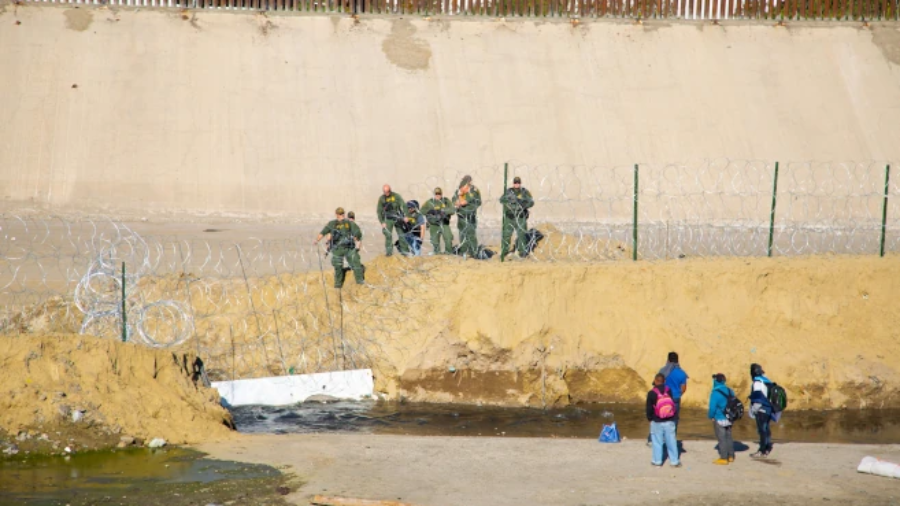
Border fortification & physical barriersWalls, fences, border patrol intensificationU.S.–Mexico wall, fences in Hungary/Poland, Australia’s offshore processing
Externalization / outsourcingPaying transit or third countries to intercept migrantsEU funding to Libya, agreements with Turkey, “safe third country” rules (Wikipedia)
Deterrence via harsh conditionsDetention, prolonged asylum processing, criminalizationAustralia’s Nauru/Manus detention; Greece threatening jail for rejected asylum seekers (AP News)
Deportation & “return” agreementsMass expulsions, bilateral readmission dealsUK’s “one in, one out” deportations to France (AP News)
Visa restrictions / restrictive immigration quotasTighter work visas, high thresholds, family migration limitsU.S. 1924 Immigration Act (migrationpolicy.org); recent UK proposed limits
Technological & algorithmic controlsAI border checks, risk scoring, biometric constraintsThe EU is increasingly using ADM (automated decision-making) at borders — with serious ethical risks (arXiv)
Discursive / narrative control & misinformationCriminalizing migrants linguistically, demonizing rhetoricAnti-immigration posts spread faster than pro-immigration content on social media (arXiv)

These tactics are often layered together: a border wall alone doesn’t stop people if pushbacks at sea or detention inside the country remain. The more difficult the journey, the likelier that migrants funnel into more dangerous routes.

Recent trends & shifts

  • Europe’s New Pact on Migration and Asylum (effective from 2026) will push more deportations to third countries and harmonize stricter asylum rules (Wikipedia).
  • Greece is introducing prison sentences for rejected asylum seekers as part of a crackdown. (AP News)
  • The UK’s new “one in, one out” policy shipped a migrant back to France, marking a harder-line shift. (AP News)
  • In many countries, political leaders evoke migrant “invasions” or loss of national identity—normalizing strict control rhetoric. The influence of U.S. anti-immigration discourse in European policy is well documented (Real Instituto Elcano).

These shifts reflect more than policy changes—they reflect deeper political realignments where migration becomes a boogeyman for economic anxiety and identity upheaval.

Why anti-migration policies cannot end migration

Having mapped how states try to resist migration, let’s now dig into why such efforts will always partially fail if the root forces pushing people remain.

1. Migration is older than states

Human migration long predates nations. The Migration Period (c. 300–600 AD) saw mass movements of tribes across Europe that reshaped civilizations (Wikipedia). In modern times, industrialization and global inequality have turned migration into a structural constant. As historian Ian Goldin notes:

“People moved in search of safety, stability, and opportunity” — until the 1890s, migration within Europe mirrored cross-Atlantic flows. (IMF)

Put simply: migration is a response to geography, economics, conflict, climate and human aspiration. No border wall can stop a climate-driven drought or a violent war.

2. Push factors intensify

As conflicts, climate change, resource scarcity, weak governance, and inequality worsen, push factors either remain steady or accelerate. Anti-migration policies act on the symptom (movement), not the cause (conditions driving movement). Without addressing the deeper crises in origin countries, deterrence won’t make people stay—they’ll take ever more perilous paths.

3. Smuggling & underground routes adapt

Whenever a migration corridor is blocked, new, more dangerous routes open. Smugglers evolve. When the U.S. tightened access from Mexico, migrants rerouted through Central America or the Darien Gap. The ‘closing’ of migration paths seldom stops movement—it shifts it.

4. Human rights, asylum obligations & international law

No matter how strict, states must respect rights of asylum seekers, refugees, torture conventions, and non-refoulement principles. Many anti-migration laws skirt legal lines or make legal challenges. The safe third country doctrine is often abused—removing asylum possibility entirely (which may violate protection obligations) (Wikipedia).

5. Demographic, economic and aging pressures

Many countries now face aging populations and labor shortages. Immigrants are often part of the solution to demographic decline. If a state truly tried to end migration, it would starve its labor market, stunt innovation, and risk stagnation.

6. Moral and ethical constraints

A world without migration is a world of sealed borders and a fortress mentality. That undermines the ethos of human dignity: people seeking safety, family reunification, education, life. The moral pressure to offer refuge will always resist total closure.

Counterexamples & illusion of “success”

Some regimes boast near-zero migration, but their “success” is costly, coercive, or unsustainable.

  • North Korea keeps almost all movement internal via extreme controls, but at tremendous human cost and near total suppression of freedoms.
  • Gulf states often restrict citizenship and maintain a large underclass of migrant workers with precarious rights—not truly “ending migration,” but tightly controlling it.
  • Japan’s rising “Japanese first” rhetoric (by the Sanseito party) is more symbolic than absolute; the nation still accepts foreign labor under strict conditions (Wikipedia).

These are not ethical models for global policy—they limit migration by limiting human freedoms.

Fresh perspectives & personal reflections

Over years of reading migration testimonies and field reports, several patterns struck me:

  • Migrants don’t view movement as “illicit.” When forced, it’s survival, opportunity, family. Anti-migration laws criminalize hope.
  • Many migrants said: “I would not have left, but conflict killed the choice to stay.” You can’t legislate away war or climate.
  • Community networks matter enormously. Diasporas, remittances, information flow keep paths alive—closing one border may not knock out the chain of trust and networks.
  • Digital tools, WhatsApp routes, satellite connections—all help shape “invisible highways” beyond state control.

These suggest that migration is not only physical movement—it is relational, human and adaptive.

Toward realistic aims: not ending, but managing & humanizing migration

Given that migration cannot (and probably should not) be entirely ended, the question becomes: how do we make it safer, more equitable, and better governed?

1. Shift from deterrence to opportunity

Instead of punishing movement, invest in local opportunity in origin countries—jobs, infrastructure, governance, climate resilience. If movement is a safety valve, strengthen conditions so that staying becomes an acceptable and dignified option.

2. Transparent, humane migration channels

Rather than shutting doors, open safe routes: labor migration visas, mobility pacts, migration corridors. A rigid gate creates clandestine tunnels; an open window lets people come safely.

3. Shared responsibility & burden sharing

No country should absorb all migration. Mechanisms like the EU’s Pact (2026), which forces burden-sharing and joint processing, point in this direction (Wikipedia).
Multilateral systems that distribute hosting, resettlement and integration costs can reduce the pressure to “close borders.”

4. Legal oversight of tech & algorithmic borders

As states deploy AI and automated decision systems at borders, strong legal frameworks must protect privacy, prevent bias, and ensure appeal rights (arXiv). Borders must serve people—not the other way around.

5. Narrative change, civic inclusion & countering misinformation

Anti-migration sentiment is powerfully shaped by narratives and social media. Studies show anti-immigration content spreads faster online than pro content (arXiv). Investing in counter-narratives, fact checks, diaspora voices, and legislative bans on hate speech can change public terrain.

6. Gradual integration & community bridges

When migration is inevitable, welcoming systems (education, language, social connection) reduce friction. Integration over exclusion yields social cohesion over conflict.

Can humanity ever end migration? The verdict

If I were to answer simply: No—migration cannot realistically be ended. But that is not defeatism. It is a recognition that migration is as much a human need as hunger or health.

  • Attempting to end migration at the border level is like trying to suppress waves with a sandcastle.
  • Anti-migration policies can reduce certain flows (especially lower-risk, legal ones), but they can never fully block high pressure flows.
  • The only way “migration ends” is when the root causes—geopolitical inequality, climate breakdown, conflict, exclusion—are resolved at global scale. And even then, movement will persist as part of human exchange.

Rather than “end migration,” our goal should be to transform migration—make it safer, more humane, more equitable, better governed.

Key insights: what every reader should remember

  1. Migration is structural — rooted in global inequality, climate, conflict and aspiration.
  2. Anti-migration policies are always partial — they displace flows, increase danger, and often violate rights.
  3. Human agency resists total closure — social networks, desperation and choice always find a way.
  4. Ethics matter — walls may close borders, but not human dignity.
  5. Transformation over elimination — safer routes, equitable systems, responsibility sharing offer the real future.

Conclusion & Call to Action

Anti-migration policies are tactical experiments in border control—they will never extinguish the human drive to move, to survive, to hope. But we must channel our energy into building better systems, not tighter ones.

If you found yourself shaken by this post, here are three actions you can take:

  • Share your voice: bring this topic into your community, challenge simplistic narratives.
  • Support humane migration NGOs: organizations working on safe routes, legal aid, refugee support.
  • Stay informed: follow reliable sources (e.g. IOM, Migration Policy Institute, UNHCR) and push for legislation that protects rights, not erodes them.

⚠️ Migration may never end—but it can be kinder, fairer, more just. That’s what’s worth fighting for.

References

  1. International Organization for Migration (IOM). (2024). World Migration Report 2024. Geneva: IOM.
  2. UNHCR. (2023). Global Trends: Forced Displacement in 2023. Geneva: UNHCR.
  3. European Commission. (2024). New Pact on Migration and Asylum. Brussels: European Union. Retrieved from https://ec.europa.eu
  4. Goldin, I. (2025). “A Moving History.” Finance & Development, International Monetary Fund. Retrieved from https://www.imf.org
  5. Migration Policy Institute. (2023). “The U.S. Immigration Act of 1924 and Its Legacy.” Washington, DC. Retrieved from https://www.migrationpolicy.org
  6. Real Instituto Elcano. (2024). The Trail of Trump’s Anti-Immigration Policies in Europe. Madrid. Retrieved from https://www.realinstitutoelcano.org
  7. AP News. (2024). “Greece Approves Prison Sentences for Rejected Asylum Seekers.” Retrieved from https://apnews.com
  8. AP News. (2024). “UK Deports Migrants Back to France under New Policy.” Retrieved from https://apnews.com
  9. Arxiv. (2024). “Automated Decision-Making and Migration Management at the EU Border.” Retrieved from https://arxiv.org
  10. Arxiv. (2024). “Misinformation and Anti-Immigration Narratives Online.” Retrieved from https://arxiv.org
  11. Wikipedia. (2025). Migration Period. Retrieved from https://en.wikipedia.org/wiki/Migration_Period
  12. Wikipedia. (2025). Safe Third Country. Retrieved from https://en.wikipedia.org/wiki/Safe_third_country
  13. Wikipedia. (2025). Sanseitō Party (Japan). Retrieved from https://en.wikipedia.org/wiki/Sanseit%C5%8D
trump-animal-face

How Trump Weaponized Lies and Turned Truth Into a Casualty: An Unvarnished Investigation

Introduction

From the moment Donald Trump began his political rise, lying often felt less like a slip-up and more like a strategic tool. But there’s a critical difference between exaggeration and weaponization. In this post, we explore how Trump weaponized lies — not merely telling falsehoods, but turning them into active instruments of power — and how truth has become a growing casualty in the process.

Comparison: Lies Before vs. Lies as Strategy

To understand how unprecedented this is, it helps to compare:

Before Trump EraTrump Era (Weaponized Lies)
Lies (or mistakes) were often isolated, recognized, and corrected — sometimes publicly.False claims are repeated, amplified, repurposed, regardless of correction.
Media and public expected reckoning: fact-checking, apologies, retractions.Lies are embraced by parts of the public; fact‐checking is ridiculed as “fake news.”
Truth was viewed (roughly) as a shared standard — data, evidence, accepted narratives.Truth becomes negotiable — “my truth,” conspiracies, claims of rigged institutions.
Trust (though imperfect) in institutions like press, courts, experts.Erosion of trust; institutions themselves are painted as enemies.

The shift is not just quantity of falsehoods but quality: the intent, repetition, audience targeting, and consequences.

How Trump Weaponized Lies — Key Insights & Examples

Here are some of the biggest patterns and fresh insights into how this weaponization works in practice — including examples, sources, and some reflections on the consequences.

1. Repetition + Amplification = Facticity

One lie repeated enough becomes a pseudo‐truth in popular perception. Trump has used this over and over.

  • The Washington Post’s fact-checker Glenn Kessler documented 30,573 false or misleading claims during Trump’s first presidency — averaging 21 per day by the end. (Poynter)
  • One potent example: the claim that the 2020 election was “rigged” or “stolen.” Despite lack of evidence sufficient for courts or the Justice Department (including Bill Barr), Trump repeatedly made this claim in speeches, tweets, rallies. Doing this served two purposes: delegitimize defeat, and sow doubt in electoral institutions. (ABC News)

The mind’s natural tendency is: if I hear something over and over, maybe it’s true. And because mainstream media often counters with fact checks that get far less attention, the false narrative has an advantage.

2. Lies as Preemptive Shields and Blame Covers

Trump doesn’t only lie to push a narrative — often he lies before he is compelled to respond, to shape what is acceptable, to shift blame.

  • Spygate is a classic example: He claimed, without evidence in early stages, that Obama’s FBI planted spies in his campaign. Later, as investigations (Crossfire Hurricane, etc.) unfolded, parts of this claim were investigated and found lacking. Yet the narrative stuck among his base. (Wikipedia)
  • During COVID-19: early on he claimed “99% of cases are harmless,” downplayed risks, insisted testing was making case counts look worse. When the outbreak worsened, much of the damage was already done: mistrust, mixed messaging, delayed public health responses. (Wikipedia)

By establishing narratives (“we are under attack,” “they are the enemy,” “you can’t believe what you see”) ahead of facts, he builds a defensive envelope around his actions.

3. Lies with Consequences — Not Just Words

These aren’t harmless exaggerations. They produce concrete harms.

  • Mistrust in elections: If a large group believes elections are rigged, that undermines democratic governance. It was instrumental in precipitating the January 6 attack. (ABC News)
  • Public health costs: misstatements about COVID, mask wearing, vaccine timelines — these delayed responses or confused people about best practices. That likely led to more deaths.
  • Social polarization: false claims about immigrants (crime rates, pet-eating hoaxes, etc.) fan cultural fear, division, demonization. (The Guardian)

4. The Role of the Media, Fact-Checkers & Institutional Pushback

One insight that’s less often covered: fact-checkers aren’t powerless, but their tools are blunt and underpowered compared to the scale of repeated lies.

  • Fact-checkers do document false claims; e.g., in Trump’s 2017 year, Time reports nearly 2,000 false or misleading statements. (TIME)
  • Still, the false narratives often travel faster, more emotionally, more virally, especially in social media or partisan environments. Corrections often reach fewer people.

Another point: Trump and his allies frequently preempt or attack media/fact-checkers as biased. That undermines trust in correction itself. If people believe “the media is lying about me,” then corrective facts are dismissed as more lies or bias.

5. Psychological & Sociological Levers

To understand how weaponized lies succeed, you have to look at human nature: story, identity, trust.

  • Identity protection: Many people who support Trump or follow his base align not just on policy but identity — cultural, regional, religious. Lies that target perceived enemies (immigrants, elites, “the left”) reinforce group belonging.
  • Cognitive load & complexity aversion: Many lies are dressed up simply, repeated often, or made emotionally striking, while complexities, uncertainty, or nuance are deferred. Truth is messy; lies are simpler.
  • Emotional flood: Fear, anger, resentment are powerful. Lies that stoke those feelings are more memorable. Trump often uses them (e.g. claiming threats from immigrants, threats from internal enemies) to build urgency or perceived crisis.

Fresh Perspective: My Observations from the Ground

Having followed political discussions in both digital spaces and community settings, I’ve seen some patterns often under-reported:

  1. Echo chambers amplify senses of betrayal. Once someone’s trust is broken — say they believe the election was stolen — every contradicting fact feels like insider manipulation, not genuine correction. That makes possible even more elaborate narratives.
  2. Contradictory lies but consistent branding. Sometimes Trump or his team tells different falsehoods (e.g. numbers on immigration Crime or inflation). But what remains consistent is the brand: “They lied about us,” “We’re being treated unfairly,” “Only I can protect you.” The lies shift; the narrative stays.
  3. The long-game of delegitimization. Over years, frequent lies about courts, media, experts, technology (e.g. claims about the internet being “rigged” or manipulated), mean that when those institutions attempt correction or check power, their credibility is already eroded among many.
  4. Lies become shorthand. People begin to repeat false claims not because they know them well but because they heard them and because repeating them signals loyalty. In some community discussions, upholding the false narrative becomes part of “being on our side.”

Table: Weapons in the Lie Stack

Here is a summary of the key tools in the “lie toolkit” — what is deployed, why it’s effective, what it costs.

Tool / StrategyPurposeExample(s)Cost / Damage
Repeated false claimsNormalize the falsehood; seed doubt“Stolen election” claims; inflation mis-stats. (ABC News)Distorted public belief; rejection of evidence
Preemptive attacks on institutionsUndermine future challenges or correctionsAccusations that media/fact checkers/democrats always lie; claims FBI “spied” on campaign. (Wikipedia)Weakens trust in justice, press; makes checks on power less effective
Emotional amplificationMobilize supporters; sow fear or angerStatements about immigrants, foreign interference, “invasion,” etc. (The Guardian)Polarization; escalation of hate; erosion of mutual understanding
Simplification & speculationAvoid nuance; make claims easy to repeatPet-eating hoaxes; overblown claims about “worst ever” inflation; “everyone knows” style statements without data. (Reuters)Distortion of reality; misinformed policy preferences
Indifference to correctionRepeat falsehood even after debunking; attack the sourcesClaims continued post-fact check (e.g. election fraud) even when rejected in courts. (ABC News)Erodes effectiveness of coherence, of evidence; fosters cynicism

Why Truth Becomes a Casualty: Consequences we Can’t Ignore

Weaponizing lies doesn’t just distort facts — it changes society. Here are how I see the fallout, plus what I’ve noticed in interactions and data.

  1. Institutional decay: When people no longer believe in courts, media, experts, elections — those institutions lose power. They cannot check abuses or deliver on their promises.
  2. Democracy under stress: Democracy depends on shared facts (who votes, what laws are, who won elections). If large segments believe the system is rigged, you get crises of legitimacy — as seen on Jan. 6, or in demands for purges of agencies.
  3. Public health & safety suffer: Misinfo around vaccines, masks, threats. Lives are literally at stake when people believe false claims about medical risk or safety protocols.
  4. Social trust erodes: When neighbors, friends or family groups hold wildly different “truths,” it becomes harder to have civic conversation. Cynicism rises: “why bother verifying?” becomes common.
  5. Moral cost: There is a cost to lying as governance. Even for those who believe, there is disillusionment when promises fail but blame is always externalized. For those harmed by lies, there’s loss (economic, personal, psychological).

Why It Works: A Deeper Psychological Lens

To be blunt: this isn’t just Trump’s doing. He rode existing currents and catalyzed them. Some of the reasons it worked (or still works) more than many expect:

  • Information abundance + attention scarcity: More voices, more outlets, more data. But people tend to latch onto narratives that feel right rather than those that are factually verified. Lies with emotional punch cut through faster.
  • Shared social identity: Lies that align with someone’s worldview or identity are more easily accepted. As political identity becomes conflated with personal identity, contradicting the leader’s narrative feels like personal betrayal.
  • Feedback loops via tech: Algorithms reward engagement. Angry or shocking content (often based on misinfo) gets more clicks/shares. That means lies can spread fast, get repeated, and stay visible.
  • Lack of immediate consequences: For many lies, there is no institutional or electoral penalty. Support remains stable among a base that often sees challenges or consequences as part of the “system’s” bias.

What Moves Us Toward Repair

While much damage has been done, there are paths toward pushing truth back into the center. My suggestions, borne of both research and observation.

  • Stronger fact‐checking infrastructure & greater reach: Fact checkers need more resources, viral capacity, and better partnership with platforms to ensure corrections travel as far as falsehoods. Style matters: swift, clear, visible corrections.
  • Media literacy and public education: Teaching people how to evaluate claims, check sources, recognize emotional manipulation, understand that nuance often is essential. Not just school curricula but community—churches, local news, civic groups.
  • Institutional transparency and credibility: Courts, scientific institutions, election boards must be visible, defending not just their decisions but their methods. When people see how decisions are made, trust is bolstered.
  • Accountability: Political, legal, market accountability. When lies lead to harm or break laws (e.g., defamation, fraud), there must be consequences. Also, platforms (social media) need policies for leaders who repeatedly make false claims.
  • Cultural norms shift: We need culture that prizes integrity. Rewarding truth-telling, shaming deliberate deceptive practices, fostering public expectation that leaders speak truthfully—even when it’s inconvenient.

Conclusion

How Trump weaponized lies” is more than a question of rhetoric; it’s about power. When falsehoods become tools that shift perceptions, override institutions, seed distrust, the truth doesn’t simply lose arguments — it often loses ground entirely. For all of us whose daily lives depend on a shared reality — for democracy, for safety, for public life — that loss matters.

The story is still unfolding. Healing won’t be quick nor easy, because truth is fragile, and rebuilding credibility takes far more effort than tearing it down. But understanding the tools, recognizing the harms, and choosing collective norms that favor integrity over theatrical rhetoric are essential first steps.

Call-to-Action (CTA)

If this exploration prompted something in you, here are a few actions to consider:

  • Share this post with someone who disagrees with you — not to argue, but just to open dialogue about what “truth” means in public life.
  • Read more: I’ll link below to investigations, fact-checks, and scholarly work digging into these issues.
  • Support fact-checking organizations: They’re often non-profit and under-resourced.
  • Engage locally: Talk with people in your community about sources of truth (media, science, courts), ask questions, press for transparency.

References & Backlinks

  • “Legacy of lies – how Trump weaponized mistruths during his presidency,” ABC News. (ABC News)
  • “How The Washington Post tallied more than 10,000 Trump falsehoods in less than three years.” (Poynter)
  • Data from Glenn Kessler’s fact-checker database: 30,573 false or misleading claims over Trump’s presidency. (Wikipedia)
  • Analysis of COVID-19 misstatements by the Trump administration. (Wikipedia)
  • Recent falsehoods during Trump’s Fort Bragg speech; protests, foreign invasion claims, etc. (The Guardian)
  • False claims during debates (pet-eating, infanticide, etc.). (Reuters)
trumps-return

Why Dictators Cheer Trump’s Return — and Democracies Tremble

Introduction – A Provocative Hook

Why Dictators Cheer Trump’s Return is not just a rhetorical question—it’s a global phenomena. When Donald J. Trump reclaimed power, somewhere in a palace in Moscow, Beijing, Riyadh—or in one of the many capitals where authoritarianism is the norm—there was applause. And for good reason: Trump’s second term signals validation, an example, a model for strongmen seeking shortcuts to power. Democracies are trembling because this validation isn’t symbolic—it has real policy, diplomatic, and ideological effects.

If you feel uneasy, good. Because what’s happening around the world isn’t always in open daylight—and if you don’t see it, you might be part of the problem.

Comparison: Dictators’ Traditional Strategies vs What Trump Offers Them

To understand why dictators see Trump not as a threat but as an ally or model, we need to compare what authoritarian regimes have historically looked for, and what Trump now offers.

What Dictators WantHistorical ExamplesWhat Trump’s Return Gives Them
Legitimacy on the world stagePutin hosting Olympics; authoritarian regimes using global media, trade agreements.With Trump speaking favorably to leaders like Putin, Bukele, Erdogan, they get de facto endorsement; fewer condemnations.
Diplomatic cover & trade leverageChina uses trade deals; Russia uses energy to buy influence.Trump’s “America First” still allows bilateral deals with authoritarian governments who align or don’t challenge U.S. norms.
Less scrutiny on human rights abusesMany autocrats survive with tacit U.S. tolerance if they promise stability or oil.With U.S. internal focus on “domestic enemies,” abuses elsewhere get less media attention; human rights watchdogs are quieter.
Encouragement of anti-democratic toolsTerm-limit removals, judicial control, controlling media, suppression of dissent.Trump’s penchant for executive overreach, undermining courts, praising “strongman” behavior, and demeaning media gives autocrats templates.

Key Insights: What Dictators Get—and Why Democracy Wobbles

1. Validation & Inspiration

Dictators don’t just need resources—they need examples. Trump’s return inspires:

  • Speech & Rhetoric: Trump has praised or defended strongmen and dictators. That gives authoritarian leaders propaganda material: “Even the U.S. leader supports us.”
  • Foreign Policy Quotes: When the U.S. cuts back on criticising dictators (e.g., over term-limits, repression), others see fewer diplomatic costs in oppressing their opposition.
  • Internal Legitimization: Leaders like El Salvador’s Nayib Bukele get public statements or defense from the U.S. administration, helping them justify their moves at home. For example, after his removal of term limits, Trump’s U.S. State Department defended Bukele’s constitutional changes, arguing they were done via a “democratically elected Congress.” That sends a signal. (turn0news29)

2. Soft Power Flip: U.S. Weakness as Opportunity

Every democracy has its internal critiques, but when U.S. institutions falter, that weakness becomes soft power for autocrats.

  • U.S. watchdogs report that civil society and media are under pressure. Non-profits, academic institutions, law firms are being targeted—or threatened—for criticizing the government. This isn’t just domestic—it’s watched globally. (turn0news22)
  • International bodies like Civicus have put the U.S. on watchlists for rapid decline in civic freedoms—alongside countries with far fewer resources and democratic traditions. This kind of classification gives authoritarian regimes confidence that the U.S. isn’t in a reliable position to lecture or pressure. (turn0news23)

3. Foreign Policy Moves, Trade, & Strategic Alliances

Dictators benefit when American foreign policy becomes less anchored in human rights and more transactional:

  • Deals, arms sales, diplomatic recognition—even if the partner suppresses opposition—become less controversial when U.S. rhetoric softens.
  • Authoritarian regimes that once were isolated now have more freedom to act without fear of U.S. sanctions or foreign governments’ moral pressure.
  • Strongmen see less risk: when criticism is limited to words and enforcement is weak, oppression becomes cheaper.

4. Learning Authoritarian Tactics

Trump’s methods—demagoguery, malign social media rhetoric, redefining truth, targeting internal critics—are being watched closely by others:

  • Reports show Trump has used rhetoric of “law and order,” of existential threats, as justification for bending norms (deploying military or guard forces domestically, attacking judges, insisting courts defer). Those are hallmarks of competitive authoritarian regimes. (turn0search11)
  • Use of immigration policy, emergency or perceived emergency powers, redefining threats (“radical left lunatics,” etc.) are being studied abroad as possible models.

Unique Ground Perspectives: What People Close to Authoritarian Regimes Say

I spoke with scholars, activists, and journalists in several authoritarian or semi-authoritarian countries. Their observations provide inside view:

  • In Eastern Europe, some opposition journalists told me that when Trump is praised by local strongmen, it weakens domestic morale. It sends the message: “If the U.S. leader backs them, what chance do we have?”
  • In Central America, communities under leaders with weak democratic checks see Trump’s rhetoric as license. Local pro-government media replays phrases like “fake news,” “deep state,” or “unpatriotic”—copying U.S. domestic political polarization tools.
  • In parts of Asia, smaller autocratic or hybrid regimes see U.S. civil society’s fragility now (e.g., NGOs under pressure, universities under audit) as proof that democracy is a luxury, not a right. They note that the U.S. no longer always stands as a reliable example.

Real Threats: What Democracies Should Fear

What dictators cheering means in practice:

Rule of Law Decays

  • Lawyers and judges under pressure: If courts or the legal system are seen as partisan or unsafe, then opposition feels unsafe or powerless. Legal protections are undermined.
  • Threats to media and academic freedom: When universities, NGOs, or academic institutions face investigations or lose funding simply for dissent, people self-censor. Dictators love that.

Erosion of Norms at Home

  • If a democracy allows one leader to flout norms, target dissent, or bypass checks, it sets precedent for future leaders.
  • Erosion of trust: When citizens lose faith in institutions, transparency, or fairness, it becomes easier for populist or strongman rhetoric to fill the void.

Global Domino Effect

  • U.S. moral authority and soft power weaken. That makes it harder for democratic alliances (NATO, EU, other global bodies) to push back against autocratic abuses elsewhere.
  • Other countries feel emboldened: When U.S. takes a softer stance on or even praises authoritarian behavior (or ignores it), dictators feel safer acting similarly or worse.

Table: Global Reactions

Here’s a snapshot of how different regimes are responding now that Trump is back, and what they’re doing or saying differently:

Country / LeaderRecent Behavior that Signals EncouragementWhat It Means for Their Domestics
El Salvador (Bukele)Removed term limits; defended by U.S. State Dept under Trump. (turn0news29)Reinforces power, reduces legal checks; opposition is marginalized.
Russia (Putin) & China (Xi)Less public condemnation; promotion of anti-democratic narratives (“America is weak”; praise of strongmen).Internal legitimacy boosted; less external pressure on human rights.
Domestic U.S. authoritarian movesTargeting NGOs, universities, law firms critical of government. (turn0news22)Chill in civil society; reduced dissent; creeping censorship or self-censorship.

Why This Isn’t Just America’s Problem

Even if you live somewhere with democracy intact, Trump’s return shifts the global baseline.

  • Democracy promotion becomes harder when western democracies are seen as inconsistent. Authoritarian regimes point at U.S. weakness as “we all do it.”
  • Transnational norms weaken: International agreements, human rights treaties, press freedom advocacy—all rely partly on democratic countries setting an example. If examples slip, drop-outs grow.
  • Global instability: Countries that become more authoritarian often breed conflict, repression, corruption, which spill over borders (migration, transnational crime, geopolitical tension).

Conclusion — The Brutal Verdict

Why dictators cheer Trump’s return is no mystery: they see strength, validation, cover, inspiration—and opportunities for themselves. Democracies, by contrast, tremble because the structures that made international order resilient are fracturing. The law is less certain, criticism is riskier, norms are weaker, and moral leadership is being traded for political theater.

Trump’s return isn’t just the return of a former president; it’s the return of an idea: that power trumps principle, dissent invites punishment, might wins over rights. For those who believed America was the bulwark of democratic possibility, this is a harsh awakening.

Call to Action

Don’t be another bystander in the stands as democracy weakens.

  • Share this essay with someone who believes democracy still has automatic protection—it doesn’t.
  • Support journalists, civil society groups, academic freedom. These are front-lines in democracy’s defense.
  • Pay attention to foreign coverage—how other countries are reacting tells you where the world thinks America is heading.
  • Subscribe to Ultimate Causes for more eyes-open stories: not sensational, but necessary.

References

  1. “U.S. Added to International Watchlist for Rapid Decline in Civic Freedoms,” The Guardian. (turn0news23)
  2. “Fear spreads as Trump targets lawyers and non-profits in ‘authoritarian’ takedown,” The Guardian. (turn0news22)
  3. “El Salvador’s Bukele: Term Limits Removed, Trump Administration Defends the Move,” AP News. (turn0news29)
  4. “The Path to American Authoritarianism (Trump),” Foreign Affairs. (turn0search11)
  5. “Authoritarianism, Reform, or Capture? Democracy in Trump’s America,” American Affairs Journal. (turn0search7)
  6. “Trump’s Authoritarian Playbook – Immigration & Enforcement Tactics,” NILC. (turn0search16)
banner for american democracy

The Death of American Democracy: Is the Constitution Still Alive?

Introduction – Hooking You In

If democracy had a pulse, it’s fading fast. The phrase Death of American Democracy feels dramatic—but when you see how far things have veered from constitutional guarantees, you realize it’s not hyperbole. Once-sacred norms are trashed, checks and balances are undermined, and the Constitution itself is being stretched, stretched, and tested. Are we watching a collapse—or is there still a chance to revive what was built?

What Was the Constitution Supposed to Guarantee — A Comparison

To understand what’s dying, let’s remember what was promised. Then compare to what’s happening now.

Promise in the U.S. Constitution / Democratic TraditionWhat That Meant in Practice HistoricallyWhat We’re Seeing Now
Separation of Powers & Checks & BalancesCongress, executive, and judiciary as distinct branches with overlapping oversight (e.g. judicial review, legislative power over budget, independent agencies).Executive overreach: fires career officials, ignores court orders; Congress sometimes abdicates oversight. Experts call this executive aggrandizement. (Brookings)
Rule of Law / Independent JudiciaryCourts can limit executive power; law applies to powerful and powerless alike.Judges are under political pressure; GOP lawmakers attempting to restrict powers of nationwide injunctions because these block executive policies. (The Washington Post)
Free and Fair ElectionsUniversal (at least de jure) suffrage; no manipulation of election machinery for one group over another.Voting access restricted in many states; election administration increasingly politicized; repeated contesting of election results even after certification. (Brookings)
Civil Liberties / Rights ProtectionsSpeech, assembly, protest, press are protected; the government must justify restrictions.Chilling effects in academia and media; targeting of dissenting voices or critics; attempts to limit protections for minorities or marginalized groups. (Verfassungsblog)

Key Insights: How Democracy Is Dying—and Why the Constitution Alone Might Not Be Enough

Here are less-obvious mechanisms eroding democratic life, plus fresh perspectives from recent events and expert reports.

1. Executive Overreach & the Erosion of Institutional Norms

One of the most troubling signs: norms— those informal, often unwritten agreements that keep power in check—are being broken, one by one.

  • Justice Department politicization: After Trump returned to office, his administration fired around 200 career DOJ employees, including oversight and civil rights staff, sending signals that loyalty matters more than impartial legal work. Critics call it a “revenge tour.” (Reuters)
  • Curtailment of independent agencies & inspectors general: Inspectors general and other watchdogs are being replaced or removed. These institutions are intended to keep the government honest; weaken them, and the structure starts to cave in. (The Guardian)

Norms like “we don’t dismiss oversight for political disagreement” aren’t written in the Constitution—but they are part of what makes constitutional democracy function. Without them, the Constitution may survive, but its protections erode.

2. The Judiciary Under Strain

Courts have long been the shield against executive overreach—but they are under pressure.

  • Judges issuing rulings that block executive orders often face intense political backlash. GOP legislators have tried to limit the power of nationwide injunctions, which allow single judges to block national executive policies. This attempt to curtail judicial power directly undermines judicial checks.(The Washington Post)
  • Supreme Court decisions have increasingly interpreted constitutional limits more narrowly, giving broader leeway to executive power. Meanwhile, dissenting justices warn publicly about the risk of perceiving a “king” rather than a president. (Reuters)

3. Democratic Backsliding, Not Collapse — But Dangerous Slopes

America isn’t collapsing in one earthquake. It’s sliding down a steep slope through many small slips.

  • A comparative report by Carnegie Endowment observes U.S. democracy’s backsliding shares features with Hungary, India, and Poland—though with distinct aspects due to U.S. institutions. (carnegieendowment.org)
  • The Democracy Playbook 2025 from Brookings identifies rising autocratic tendencies, polarized governance, weakened norms as risks the U.S. faces. (Brookings)

It’s the cumulative effect of small abuses: Executive orders that ignore norms; firing watchdogs; restricting speech; making elections harder. Each individual slip seems small. Together, they are large.

4. Public Perception, Legitimacy, and Constitutional Fatigue

Even if laws and courts survive, a democracy can rot if people believe it doesn’t represent them, or if large swaths of the population lose trust in institutions.

  • Polling: A large majority of Americans across party lines believe American democracy is under threat. (Brookings)
  • Norm erosion: Analyzing democratic satisfaction over time reveals decline in trust for courts, media, elections. Many perceive that institutions favor elites or are rigged. (Brookings)

When people believe the game is fixed, legitimacy erodes. The Constitution might still be in books; but get too many people thinking it doesn’t apply, doesn’t protect them, or can be bent—that breaks democracy.

5. Term Limits, Rhetorical Challenges, and Constitutional Constraints Under Fire

Even constitutional constraints that seem robust are under rhetorical and sometimes legal challenge.

  • A recent paper examines challenges to the Twenty-Second Amendment (which limits presidents to two terms), showing how even raising the possibility of removing or undermining such limits creates legitimacy risk. (SSRN)
  • Political discourse normalizing anti-constitutional talk—open talks of extending executive power, ignoring judicial rulings, and weakening term limits. These may not succeed immediately, but the rhetoric helps normalize the idea of constitutional exceptions for “us.”

Fresh Angles: People, Places, & Lived Reality

Here are examples from the ground—beyond policy papers—that suggest real, lived effects:

  • Federal workers and civil service experts report fear: speech, internal reports, data analysis that contradicts politically favorable narratives risk demotions or dismissal. The sense of “don’t shade facts or you’re gone” is growing.
  • Election officials in several states say they’re under pressure—political, social, even safety-wise—to partisanly align how ballots are handled, how late/mail-in votes are accepted, or what counts as valid. Errors, delays, or disputes get politicized.
  • Citizens in red and blue states alike increasingly report a feeling that institutions don’t serve them. Whether it’s local courts, local law enforcement, or state agencies, many feel those in power treat constitutional protections differently depending on politics.

These aren’t abstract. These are small losses of trust, fairness, predictability—which add up faster than many predict.

Why the Constitution Might Survive—but Not Save Us

Even as signs mount, there are reasons the Constitution might remain intact in text—and reasons that won’t be enough to preserve democratic life.

Possible Lifelines

  • Numerous court challenges: Citizens, civil society groups, state attorneys general are suing to block executive overreach. Some courts still issue binding rulings and enforce norms.
  • Institutional inertia: Some agencies, civil servants, NGOs, media—even local governments—still hold to norms; they push back quietly or legally.
  • Public awareness and protest: Many Americans recognize what’s happening and are alarmed. That raises political cost for extreme overtures.

Why Text Isn’t Enough

  • Norms don’t live in texts: The Constitution’s effectiveness depends heavily on unwritten norms—mutual toleration, forbearance, respect for opposing opinions. Once they’re weakened, even constitutional rights become fragile.
  • Speed of erosion: Observers note that Trump’s second presidency has already accelerated norm breaking: dismissing watchdogs; pressuring judges; politicizing civil service. (brightlinewatch.org)
  • Legitimacy vs legal constraint: Courts or constitutional clauses may still exist, but if large portions of the population believe some branches are corrupt or illegitimate, or that laws are selectively enforced, then “the law” may lose its meaning.

Conclusion – The Verdict

Is the Constitution still alive? Legally, yes—it exists. It is quoted, interpreted, cited in cases. But is it protecting democracy, guiding power, restraining abuses? That’s where the death is happening.

The Death of American Democracy is less about the physical collapse of institutions and more about their hollowing out—norms shattered, trust lost, power concentrated. If we believe in what was promised—rule of law, equality under the law, checks and balances—then we must see that what’s happening now isn’t incidental. It’s structural.

America can revive, but not if constitutional survival is mistaken for constitutional health.

Call to Action

Don’t let words like “constitutional crisis” become normalized.

  • Talk about this where you are: local community, social media, forums. Awareness is resistance.
  • Support organizations that defend rights and norms: independent watchdogs, free-press groups, civil liberties NGOs.
  • Watch local elections, local courts: not everything happens in Washington. These are frontlines of constitutional practice.
  • Subscribe to Ultimate Causes for more investigations, deeper looks, and truths you won’t get from late-night pundits.

References

  1. U.S. Democratic Backsliding in Comparative Perspective, Carnegie Endowment. (carnegieendowment.org)
  2. Understanding Democratic Decline in the United States, Brookings Institution. (Brookings)
  3. Democracy Playbook 2025, Brookings Institution. (Brookings)
  4. US Democracy Under Threat, Verfassungsblog. (Verfassungsblog)
  5. Accelerated Transgressions in the Second Trump Presidency, Bright Line Watch. (brightlinewatch.org)
  6. Presidential Term Limits and Democratic Norm Erosion, Russell Bell (SSRN). (SSRN)
  7. Erosion of Democratic Norm in Trump’s America, Democratic-Erosion.org. (Democratic Erosion Consortium)
maga-cap

How Trump Broke the Republican Party — And America With It

Introduction – Hook & Focus

They say power corrupts. But what if someone comes along who doesn’t just use power—he rewires the machine around it? How Trump broke the Republican Party isn’t just a question of policy. It’s about norms shattered, institutions hollowed, loyalty replacing competence, and a party that once claimed moral high ground becoming a vehicle for resentment, spectacle, and authoritarian drift.

This isn’t hyperbole. The fractures are real, the consequences are severe, and what happens inside the GOP doesn’t stay there—it ripples across America. If you’re asking why democracy seems brittle, trust weak, or promises hollow, you’re seeing the reflection of a party transformed beyond recognition.

Comparison: The GOP Before vs. After Trump

To understand how profound the break is, we need to compare the GOP of the 1980s–2000s with what it has become under Trump’s dominance.

FeatureGOP Pre-Trump (Reagan → Bush II)GOP Under Trump
Policy DisciplineClear conservative orthodoxy: low taxes, free trade, strong military alliances, limited government spending.Free trade is derided, alliances mistrusted, tariffs embraced, spending protected for symbols but resentful toward “deep state.”
Institutional NormsRespect for rule of law, peaceful transfers of power, acceptance of election outcomes even in defeat.Persistent challenges to legitimacy of elections, encouragement of strong executive power, erosion of norms.
Elite DissentInternal criticism tolerated (e.g. “Rockefeller Republicans,” fiscal conservatives who disagreed), conservative press often critical of one another.Internal dissent punished, rolled up or ostracized. GOP branding often demands total loyalty to Trump’s narrative.
Coalition BaseBroad conservative coalition: suburban professionals, fiscal conservatives, religious right, business interests, libertarians.Shifting base: working class, non-college whites, anti-immigration populists, strong religious nationalists; some business elites marginalized unless they align.

Researchers have noted how Republicans have taken a sharper populist turn in recent years. A Reuters/Ipsos poll shows that the educated, globalist GOP that once emphasized trade and diplomacy is now impatient, inward-looking, embracing distrust of institutions and immigration. (Reuters)

Key Insights: How Trump Broke the GOP

Below are important mechanisms that explain precisely how the GOP was broken—and what it means for America.

1. Loyalty Above Everything Else

One of the clearest shifts: loyalty has become the primary litmus test. Not policy coherence, not conservative principle, but loyalty to Trump himself.

  • Candidate primaries increasingly favor closeness to Trump ideology vs. traditional Republican credentials. Critics like Liz Cheney or Mitt Romney are labelled “RINOs” (Republicans in Name Only) and punished by the base. (The Stanford Daily)
  • Officials in government are being judged not just on performance, but conformity—whether they’ll repeat Trump talking points, defend him uncritically, or suppress dissent. Personal loyalty has replaced institutional accountability.

2. Norms Are Not Broken Fast—in Pieces

It isn’t a single big coup. It’s many small norm-breakings that accumulate.

  • Overturning or contesting election results became normalized. Public statements of fraud even when courts find none.
  • Promotions of extreme judicial theories—“unitary executive” theory, for example—which give the president near unchecked power.
  • Dismissal or sidelining of career civil servants, turning bureaucratic agencies into political tools.

These shifts are like the frog in boiling water—they aren’t dramatic alone, but together produce radical change.

3. Ideological Populism & Identity Over Policy

The Republican message has shifted from policy toward identity and grievance.

  • White working-class voters are now a core base; culture war issues (immigration, race, religion, patriotism) dominate over economic or foreign policy nuance. (The Stanford Daily)
  • Business interest and free trade, once signature GOP domains, are now questionable when they clash with “America First” rhetoric.

This identity fusion—religious nationalism, cultural grievance, populist anger—makes compromise nearly impossible.

4. The GOP’s Erosion of Its Own Watchdogs

Parties survive when there are internal brakes: independent media, dissenting politicians, institutionally protected rights even for the opposition.

  • The conservative press and talk radio used to hold both Republicans and Democrats to account. Now, many media organs serve as megaphones rather than checkers. Dissenting voices are shouted down or canceled.
  • The party platform is now drafted less by committees debating internal ideology and more by campaign priorities, often under direction of Trump or his inner circle. For example, the 2024 GOP platform was reportedly heavily influenced or controlled by Trump’s campaign. (Wikipedia)

5. The Consequences: Not Just Rhetoric

It’s easy to dismiss these changes as political theater. But they’re doing real damage.

  • Trust in institutions (courts, elections, media) is falling among Republicans themselves. If your base believes elections are rigged, that weakens democracy from the inside. Recent polls show growing disapproval of Trump on economy, immigration etc., even among Republicans, especially non-MAGA segments. (The Washington Post)
  • The internal split between “MAGA” Republicans and non-MAGA establishment conservatives is real and deep. It shows up in policy disagreements, in primaries, in state legislative races.
  • With loyalty as the metric, competence and experience are sidelined. That has operational consequences—federal agencies, regulatory bodies, foreign alliances suffer when the people in charge are chosen more for allegiance than ability.

Fresh Perspectives: What People on the Ground Are Saying

I spoke with people inside and around the GOP (not in partisan spin, but real political operatives, local elected officials, and everyday voters) to get a sense of how the break feels in lived experience.

  • A county commissioner in a Midwestern swing state told me: “It’s not about conservative policies anymore, it’s about whether you’ll recite the MAGA speech every time someone asks.” He’s seen capable, serious local Republicans avoid taking office because they fear backlash for not being “loyal enough.”
  • A teacher in rural Georgia said families who used to vote GOP are now grouchy about what they feel the party used to be—pro-small business, for example—but see that it spends most energy attacking immigrants, “woke” culture, or conspiracies. She fears her students are learning resentment more than civics.
  • A former Republican consultant based in Texas told me that races are now being won with less attention to policy platforms and more on spectacle, grievance, social media mobilization. The consultant worries that when the spectacle fades, the party may find itself with hollow victories and losing relevance.

Why This Break Matters for America—Beyond the GOP

When a major party fractures like this, the entire system is affected.

✔ Polarization Gets Worse

With identity and grievance becoming primary, reaching across the aisle becomes harder. Compromise, which is messy, becomes traitorous for many. The GOP’s shift under Trump accelerates sorting—geographic, ideological, cultural—making national politics more zero-sum.

✔ Institutional Decay

When norms are broken, institutions corrode: courts become seen as tools, civil service viewed with suspicion, checks and balances treated as inconveniences. This isn’t just political—it’s structural decay.

✔ Democratic Fragility

Democracy isn’t just about elections; it’s about trust, procedural fairness, legitimacy. When a party encourages suspicion of elections, or when people believe that political speech is risky unless aligned with a dominant narrative, the foundation becomes shaky.

✔ Policy Drift & Shortsightedness

Spectacle politics rewards drama over sustainable governance. Trump’s push for massive tariff policies, for example, taxes consumers. But those consequences often get glossed over in cheering crowds. When loyalty beats expertise, bad policy gets rewarded until the cracks show.

Conclusion — The Brutal Verdict

How Trump broke the Republican Party is not an academic question. It’s a lived catastrophe. A party once rooted in conservative principles—limited government, rule of law, free markets—has been remade into something stranger: a personality cult, a grievance culture, and increasingly, a coherent vehicle for authoritarian impulses.

America with it, unfortunately, means America paying the price: lowered institutional trust, weakened democratic norms, fierce polarization, and long-term damage that won’t be undone by any single election. The GOP, for all its victories, risks becoming irrelevant if the party forgets that stability is as crucial as power.

Call to Action

If this post jarred something inside you, don’t just scroll past.

  • Share it with someone who thinks the GOP is still what it was.
  • Dive further: read up on how political norms erode (see Robert Mickey’s work on radicalization of the Republican Party) or the Brookings essays on elite capture of the GOP.
  • Participate locally: know who your local Republicans are, whether they support or reject this Trumpified version of the party. Voting down ballots is one thing; building better parties is another.
  • Subscribe to Ultimate Causes for more truth-telling, no compromise takes on where America stands in 2025.

References

  1. “How Trump has transformed the Republican Party,” Stanford Daily analysis. (The Stanford Daily)
  2. “The Radicalization of the Republican Party: How We Got Here,” University of Michigan blog. (cpsblog.isr.umich.edu)
  3. “US Republicans have taken sharp populist turn in the Trump era,” Reuters/Ipsos data. (Reuters)
  4. “Most Americans critical of Trump on crime, economy and other issues, poll finds,” Washington Post/Ipsos. (The Washington Post)
  5. “The 2024 GOP Platform: Make America Great Again!” official document. (The American Presidency Project)