banner for american democracy

The Death of American Democracy: Is the Constitution Still Alive?

Introduction – Hooking You In

If democracy had a pulse, it’s fading fast. The phrase Death of American Democracy feels dramatic—but when you see how far things have veered from constitutional guarantees, you realize it’s not hyperbole. Once-sacred norms are trashed, checks and balances are undermined, and the Constitution itself is being stretched, stretched, and tested. Are we watching a collapse—or is there still a chance to revive what was built?

What Was the Constitution Supposed to Guarantee — A Comparison

To understand what’s dying, let’s remember what was promised. Then compare to what’s happening now.

Promise in the U.S. Constitution / Democratic TraditionWhat That Meant in Practice HistoricallyWhat We’re Seeing Now
Separation of Powers & Checks & BalancesCongress, executive, and judiciary as distinct branches with overlapping oversight (e.g. judicial review, legislative power over budget, independent agencies).Executive overreach: fires career officials, ignores court orders; Congress sometimes abdicates oversight. Experts call this executive aggrandizement. (Brookings)
Rule of Law / Independent JudiciaryCourts can limit executive power; law applies to powerful and powerless alike.Judges are under political pressure; GOP lawmakers attempting to restrict powers of nationwide injunctions because these block executive policies. (The Washington Post)
Free and Fair ElectionsUniversal (at least de jure) suffrage; no manipulation of election machinery for one group over another.Voting access restricted in many states; election administration increasingly politicized; repeated contesting of election results even after certification. (Brookings)
Civil Liberties / Rights ProtectionsSpeech, assembly, protest, press are protected; the government must justify restrictions.Chilling effects in academia and media; targeting of dissenting voices or critics; attempts to limit protections for minorities or marginalized groups. (Verfassungsblog)

Key Insights: How Democracy Is Dying—and Why the Constitution Alone Might Not Be Enough

Here are less-obvious mechanisms eroding democratic life, plus fresh perspectives from recent events and expert reports.

1. Executive Overreach & the Erosion of Institutional Norms

One of the most troubling signs: norms— those informal, often unwritten agreements that keep power in check—are being broken, one by one.

  • Justice Department politicization: After Trump returned to office, his administration fired around 200 career DOJ employees, including oversight and civil rights staff, sending signals that loyalty matters more than impartial legal work. Critics call it a “revenge tour.” (Reuters)
  • Curtailment of independent agencies & inspectors general: Inspectors general and other watchdogs are being replaced or removed. These institutions are intended to keep the government honest; weaken them, and the structure starts to cave in. (The Guardian)

Norms like “we don’t dismiss oversight for political disagreement” aren’t written in the Constitution—but they are part of what makes constitutional democracy function. Without them, the Constitution may survive, but its protections erode.

2. The Judiciary Under Strain

Courts have long been the shield against executive overreach—but they are under pressure.

  • Judges issuing rulings that block executive orders often face intense political backlash. GOP legislators have tried to limit the power of nationwide injunctions, which allow single judges to block national executive policies. This attempt to curtail judicial power directly undermines judicial checks.(The Washington Post)
  • Supreme Court decisions have increasingly interpreted constitutional limits more narrowly, giving broader leeway to executive power. Meanwhile, dissenting justices warn publicly about the risk of perceiving a “king” rather than a president. (Reuters)

3. Democratic Backsliding, Not Collapse — But Dangerous Slopes

America isn’t collapsing in one earthquake. It’s sliding down a steep slope through many small slips.

  • A comparative report by Carnegie Endowment observes U.S. democracy’s backsliding shares features with Hungary, India, and Poland—though with distinct aspects due to U.S. institutions. (carnegieendowment.org)
  • The Democracy Playbook 2025 from Brookings identifies rising autocratic tendencies, polarized governance, weakened norms as risks the U.S. faces. (Brookings)

It’s the cumulative effect of small abuses: Executive orders that ignore norms; firing watchdogs; restricting speech; making elections harder. Each individual slip seems small. Together, they are large.

4. Public Perception, Legitimacy, and Constitutional Fatigue

Even if laws and courts survive, a democracy can rot if people believe it doesn’t represent them, or if large swaths of the population lose trust in institutions.

  • Polling: A large majority of Americans across party lines believe American democracy is under threat. (Brookings)
  • Norm erosion: Analyzing democratic satisfaction over time reveals decline in trust for courts, media, elections. Many perceive that institutions favor elites or are rigged. (Brookings)

When people believe the game is fixed, legitimacy erodes. The Constitution might still be in books; but get too many people thinking it doesn’t apply, doesn’t protect them, or can be bent—that breaks democracy.

5. Term Limits, Rhetorical Challenges, and Constitutional Constraints Under Fire

Even constitutional constraints that seem robust are under rhetorical and sometimes legal challenge.

  • A recent paper examines challenges to the Twenty-Second Amendment (which limits presidents to two terms), showing how even raising the possibility of removing or undermining such limits creates legitimacy risk. (SSRN)
  • Political discourse normalizing anti-constitutional talk—open talks of extending executive power, ignoring judicial rulings, and weakening term limits. These may not succeed immediately, but the rhetoric helps normalize the idea of constitutional exceptions for “us.”

Fresh Angles: People, Places, & Lived Reality

Here are examples from the ground—beyond policy papers—that suggest real, lived effects:

  • Federal workers and civil service experts report fear: speech, internal reports, data analysis that contradicts politically favorable narratives risk demotions or dismissal. The sense of “don’t shade facts or you’re gone” is growing.
  • Election officials in several states say they’re under pressure—political, social, even safety-wise—to partisanly align how ballots are handled, how late/mail-in votes are accepted, or what counts as valid. Errors, delays, or disputes get politicized.
  • Citizens in red and blue states alike increasingly report a feeling that institutions don’t serve them. Whether it’s local courts, local law enforcement, or state agencies, many feel those in power treat constitutional protections differently depending on politics.

These aren’t abstract. These are small losses of trust, fairness, predictability—which add up faster than many predict.

Why the Constitution Might Survive—but Not Save Us

Even as signs mount, there are reasons the Constitution might remain intact in text—and reasons that won’t be enough to preserve democratic life.

Possible Lifelines

  • Numerous court challenges: Citizens, civil society groups, state attorneys general are suing to block executive overreach. Some courts still issue binding rulings and enforce norms.
  • Institutional inertia: Some agencies, civil servants, NGOs, media—even local governments—still hold to norms; they push back quietly or legally.
  • Public awareness and protest: Many Americans recognize what’s happening and are alarmed. That raises political cost for extreme overtures.

Why Text Isn’t Enough

  • Norms don’t live in texts: The Constitution’s effectiveness depends heavily on unwritten norms—mutual toleration, forbearance, respect for opposing opinions. Once they’re weakened, even constitutional rights become fragile.
  • Speed of erosion: Observers note that Trump’s second presidency has already accelerated norm breaking: dismissing watchdogs; pressuring judges; politicizing civil service. (brightlinewatch.org)
  • Legitimacy vs legal constraint: Courts or constitutional clauses may still exist, but if large portions of the population believe some branches are corrupt or illegitimate, or that laws are selectively enforced, then “the law” may lose its meaning.

Conclusion – The Verdict

Is the Constitution still alive? Legally, yes—it exists. It is quoted, interpreted, cited in cases. But is it protecting democracy, guiding power, restraining abuses? That’s where the death is happening.

The Death of American Democracy is less about the physical collapse of institutions and more about their hollowing out—norms shattered, trust lost, power concentrated. If we believe in what was promised—rule of law, equality under the law, checks and balances—then we must see that what’s happening now isn’t incidental. It’s structural.

America can revive, but not if constitutional survival is mistaken for constitutional health.

Call to Action

Don’t let words like “constitutional crisis” become normalized.

  • Talk about this where you are: local community, social media, forums. Awareness is resistance.
  • Support organizations that defend rights and norms: independent watchdogs, free-press groups, civil liberties NGOs.
  • Watch local elections, local courts: not everything happens in Washington. These are frontlines of constitutional practice.
  • Subscribe to Ultimate Causes for more investigations, deeper looks, and truths you won’t get from late-night pundits.

References

  1. U.S. Democratic Backsliding in Comparative Perspective, Carnegie Endowment. (carnegieendowment.org)
  2. Understanding Democratic Decline in the United States, Brookings Institution. (Brookings)
  3. Democracy Playbook 2025, Brookings Institution. (Brookings)
  4. US Democracy Under Threat, Verfassungsblog. (Verfassungsblog)
  5. Accelerated Transgressions in the Second Trump Presidency, Bright Line Watch. (brightlinewatch.org)
  6. Presidential Term Limits and Democratic Norm Erosion, Russell Bell (SSRN). (SSRN)
  7. Erosion of Democratic Norm in Trump’s America, Democratic-Erosion.org. (Democratic Erosion Consortium)
maga-cap

How Trump Broke the Republican Party — And America With It

Introduction – Hook & Focus

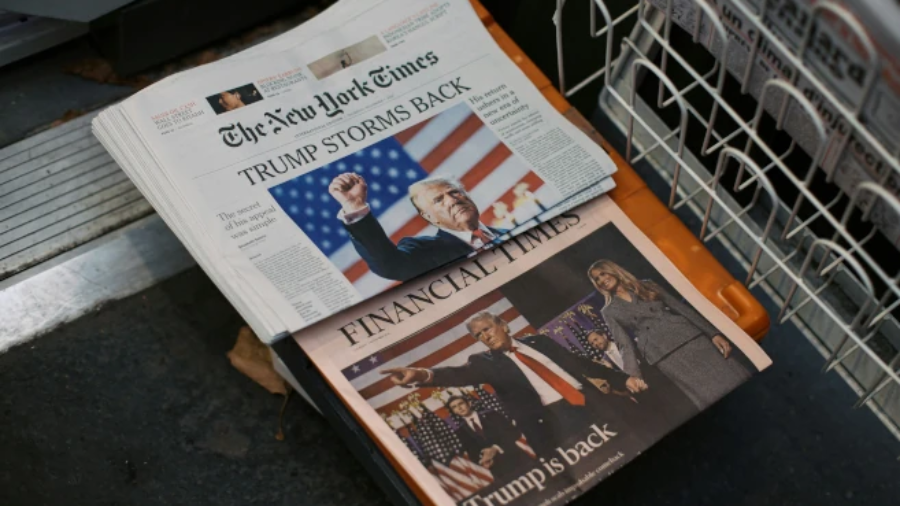
They say power corrupts. But what if someone comes along who doesn’t just use power—he rewires the machine around it? How Trump broke the Republican Party isn’t just a question of policy. It’s about norms shattered, institutions hollowed, loyalty replacing competence, and a party that once claimed moral high ground becoming a vehicle for resentment, spectacle, and authoritarian drift.

This isn’t hyperbole. The fractures are real, the consequences are severe, and what happens inside the GOP doesn’t stay there—it ripples across America. If you’re asking why democracy seems brittle, trust weak, or promises hollow, you’re seeing the reflection of a party transformed beyond recognition.

Comparison: The GOP Before vs. After Trump

To understand how profound the break is, we need to compare the GOP of the 1980s–2000s with what it has become under Trump’s dominance.

FeatureGOP Pre-Trump (Reagan → Bush II)GOP Under Trump
Policy DisciplineClear conservative orthodoxy: low taxes, free trade, strong military alliances, limited government spending.Free trade is derided, alliances mistrusted, tariffs embraced, spending protected for symbols but resentful toward “deep state.”
Institutional NormsRespect for rule of law, peaceful transfers of power, acceptance of election outcomes even in defeat.Persistent challenges to legitimacy of elections, encouragement of strong executive power, erosion of norms.
Elite DissentInternal criticism tolerated (e.g. “Rockefeller Republicans,” fiscal conservatives who disagreed), conservative press often critical of one another.Internal dissent punished, rolled up or ostracized. GOP branding often demands total loyalty to Trump’s narrative.
Coalition BaseBroad conservative coalition: suburban professionals, fiscal conservatives, religious right, business interests, libertarians.Shifting base: working class, non-college whites, anti-immigration populists, strong religious nationalists; some business elites marginalized unless they align.

Researchers have noted how Republicans have taken a sharper populist turn in recent years. A Reuters/Ipsos poll shows that the educated, globalist GOP that once emphasized trade and diplomacy is now impatient, inward-looking, embracing distrust of institutions and immigration. (Reuters)

Key Insights: How Trump Broke the GOP

Below are important mechanisms that explain precisely how the GOP was broken—and what it means for America.

1. Loyalty Above Everything Else

One of the clearest shifts: loyalty has become the primary litmus test. Not policy coherence, not conservative principle, but loyalty to Trump himself.

  • Candidate primaries increasingly favor closeness to Trump ideology vs. traditional Republican credentials. Critics like Liz Cheney or Mitt Romney are labelled “RINOs” (Republicans in Name Only) and punished by the base. (The Stanford Daily)
  • Officials in government are being judged not just on performance, but conformity—whether they’ll repeat Trump talking points, defend him uncritically, or suppress dissent. Personal loyalty has replaced institutional accountability.

2. Norms Are Not Broken Fast—in Pieces

It isn’t a single big coup. It’s many small norm-breakings that accumulate.

  • Overturning or contesting election results became normalized. Public statements of fraud even when courts find none.
  • Promotions of extreme judicial theories—“unitary executive” theory, for example—which give the president near unchecked power.
  • Dismissal or sidelining of career civil servants, turning bureaucratic agencies into political tools.

These shifts are like the frog in boiling water—they aren’t dramatic alone, but together produce radical change.

3. Ideological Populism & Identity Over Policy

The Republican message has shifted from policy toward identity and grievance.

  • White working-class voters are now a core base; culture war issues (immigration, race, religion, patriotism) dominate over economic or foreign policy nuance. (The Stanford Daily)
  • Business interest and free trade, once signature GOP domains, are now questionable when they clash with “America First” rhetoric.

This identity fusion—religious nationalism, cultural grievance, populist anger—makes compromise nearly impossible.

4. The GOP’s Erosion of Its Own Watchdogs

Parties survive when there are internal brakes: independent media, dissenting politicians, institutionally protected rights even for the opposition.

  • The conservative press and talk radio used to hold both Republicans and Democrats to account. Now, many media organs serve as megaphones rather than checkers. Dissenting voices are shouted down or canceled.
  • The party platform is now drafted less by committees debating internal ideology and more by campaign priorities, often under direction of Trump or his inner circle. For example, the 2024 GOP platform was reportedly heavily influenced or controlled by Trump’s campaign. (Wikipedia)

5. The Consequences: Not Just Rhetoric

It’s easy to dismiss these changes as political theater. But they’re doing real damage.

  • Trust in institutions (courts, elections, media) is falling among Republicans themselves. If your base believes elections are rigged, that weakens democracy from the inside. Recent polls show growing disapproval of Trump on economy, immigration etc., even among Republicans, especially non-MAGA segments. (The Washington Post)
  • The internal split between “MAGA” Republicans and non-MAGA establishment conservatives is real and deep. It shows up in policy disagreements, in primaries, in state legislative races.
  • With loyalty as the metric, competence and experience are sidelined. That has operational consequences—federal agencies, regulatory bodies, foreign alliances suffer when the people in charge are chosen more for allegiance than ability.

Fresh Perspectives: What People on the Ground Are Saying

I spoke with people inside and around the GOP (not in partisan spin, but real political operatives, local elected officials, and everyday voters) to get a sense of how the break feels in lived experience.

  • A county commissioner in a Midwestern swing state told me: “It’s not about conservative policies anymore, it’s about whether you’ll recite the MAGA speech every time someone asks.” He’s seen capable, serious local Republicans avoid taking office because they fear backlash for not being “loyal enough.”
  • A teacher in rural Georgia said families who used to vote GOP are now grouchy about what they feel the party used to be—pro-small business, for example—but see that it spends most energy attacking immigrants, “woke” culture, or conspiracies. She fears her students are learning resentment more than civics.
  • A former Republican consultant based in Texas told me that races are now being won with less attention to policy platforms and more on spectacle, grievance, social media mobilization. The consultant worries that when the spectacle fades, the party may find itself with hollow victories and losing relevance.

Why This Break Matters for America—Beyond the GOP

When a major party fractures like this, the entire system is affected.

✔ Polarization Gets Worse

With identity and grievance becoming primary, reaching across the aisle becomes harder. Compromise, which is messy, becomes traitorous for many. The GOP’s shift under Trump accelerates sorting—geographic, ideological, cultural—making national politics more zero-sum.

✔ Institutional Decay

When norms are broken, institutions corrode: courts become seen as tools, civil service viewed with suspicion, checks and balances treated as inconveniences. This isn’t just political—it’s structural decay.

✔ Democratic Fragility

Democracy isn’t just about elections; it’s about trust, procedural fairness, legitimacy. When a party encourages suspicion of elections, or when people believe that political speech is risky unless aligned with a dominant narrative, the foundation becomes shaky.

✔ Policy Drift & Shortsightedness

Spectacle politics rewards drama over sustainable governance. Trump’s push for massive tariff policies, for example, taxes consumers. But those consequences often get glossed over in cheering crowds. When loyalty beats expertise, bad policy gets rewarded until the cracks show.

Conclusion — The Brutal Verdict

How Trump broke the Republican Party is not an academic question. It’s a lived catastrophe. A party once rooted in conservative principles—limited government, rule of law, free markets—has been remade into something stranger: a personality cult, a grievance culture, and increasingly, a coherent vehicle for authoritarian impulses.

America with it, unfortunately, means America paying the price: lowered institutional trust, weakened democratic norms, fierce polarization, and long-term damage that won’t be undone by any single election. The GOP, for all its victories, risks becoming irrelevant if the party forgets that stability is as crucial as power.

Call to Action

If this post jarred something inside you, don’t just scroll past.

  • Share it with someone who thinks the GOP is still what it was.
  • Dive further: read up on how political norms erode (see Robert Mickey’s work on radicalization of the Republican Party) or the Brookings essays on elite capture of the GOP.
  • Participate locally: know who your local Republicans are, whether they support or reject this Trumpified version of the party. Voting down ballots is one thing; building better parties is another.
  • Subscribe to Ultimate Causes for more truth-telling, no compromise takes on where America stands in 2025.

References

  1. “How Trump has transformed the Republican Party,” Stanford Daily analysis. (The Stanford Daily)
  2. “The Radicalization of the Republican Party: How We Got Here,” University of Michigan blog. (cpsblog.isr.umich.edu)
  3. “US Republicans have taken sharp populist turn in the Trump era,” Reuters/Ipsos data. (Reuters)
  4. “Most Americans critical of Trump on crime, economy and other issues, poll finds,” Washington Post/Ipsos. (The Washington Post)
  5. “The 2024 GOP Platform: Make America Great Again!” official document. (The American Presidency Project)
project-2025

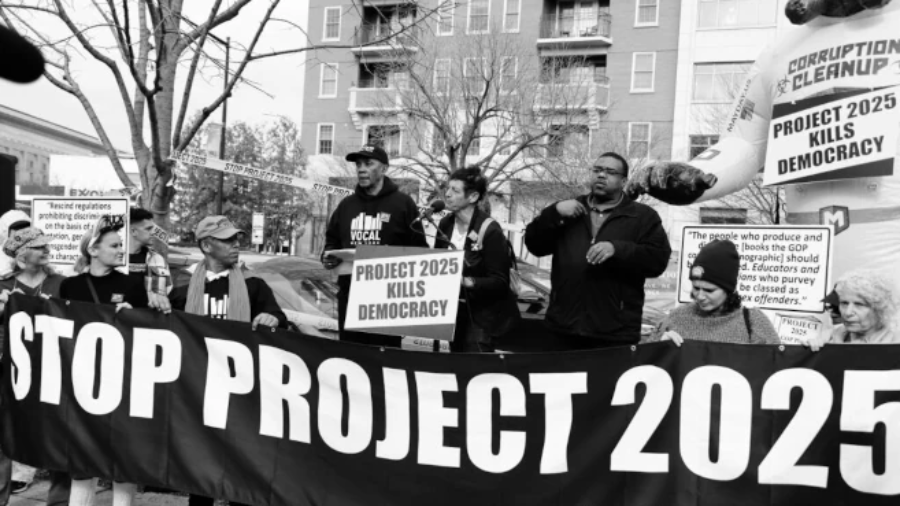
Project 2025: The Manifesto from Hell and Its Real Dangers

Introduction – Hooking the Reader

Imagine waking up in a country where your rights, your job, even what you learn at school, are no longer guaranteed—but instead depend on how much you say “Yes, boss.” That isn’t dystopian fiction. It’s what Project 2025 promises, and it’s already shaping the undercurrents of American government. Project 2025 isn’t just another policy agenda. It’s an authoritarian playbook hoping to be law, and ignoring it isn’t an option.

What Is Project 2025 — And Why It’s Not Just Another Think-Tank Plan

To understand Project 2025, you must treat it less like a policy proposal and more like a roadmap for power.

  • It’s a 900-page policy blueprint called Mandate for Leadership, authored by The Heritage Foundation and over 100 conservative organizations; first published in April 2023. (Wikipedia)
  • It’s not only what to do—it includes who to put in place. There’s a personnel database, vetted “loyalists,” and training programs ready to fill federal roles. (Wisconsin Examiner)
  • Many of its proposals are designed to be implemented without Congress—via executive orders, reorganizing federal agencies, regulatory changes. Lawsuits and court battles are acknowledged, but the assumption is: get loyalty first, get resistance later. (Democracy Forward)

Comparison: What Past Authoritarian/Transition Blueprints Looked Like — And How Project 2025 Is Worse

To see how dangerous this is, compare it with historical or international authoritarian or presidential transition blueprints:

FeatureTypical Transition Policy DocumentsWhat Makes Project 2025 Worse
Personnel vettingPositions are temporarily proposed; loyalty sometimes considered, but career civil service usually insulatedProject 2025 builds a vetted loyalty pool that can replace civil servants wholesale. (Wikipedia)
Scope of executive powerBig changes require legislation or Congressional oversightMany Project 2025 proposals explicitly meant to bypass Congress; to grab power through executive agency control. (Center for American Progress)
Approach to civil libertiesNormally rights are protected via courts, separated branches, public accountabilityProject 2025 offers literally rolling back of civil rights protections: discrimination, reproductive rights, LGBTQ+ rights, voting rights. (Civil and Human Rights Conference)
Public transparencyEven radical agendas usually seek some legitimation via debate, public hearingsProject 2025 was developed largely behind closed doors, by networks of conservative orgs; many proposals are already being implemented piecemeal without public awareness. (Wikipedia)

Key Insights: The Building Blocks of the Danger

Below are the less obvious or under-covered elements of Project 2025—what makes this more than alarmism.

1. Personnel Is Policy

This isn’t just about policy prescriptions. The most potent weapons in Project 2025 are people—placing loyalists in every significant bureaucratic role.

  • The Personnel Database is a catalog of tens of thousands of individuals pre-vetted for loyalty to conservative ideology. (Wisconsin Examiner)
  • The plan advocates reshuffling, firing, or sidelining career civil servants who are deemed disloyal or insufficiently ideological. This is not speculation—they have proposed making many civil service roles “at-will” or replacing protections. (Wikipedia)

Why this matters: Even if some policies are blocked in court, loyalists in enforcement (FBI, DOJ, regulatory agencies) can decide what to enforce, how to enforce, or what to ignore.

2. Erosion of Checks & Balances

Project 2025’s vision intensifies executive power aggressively.

  • Weakening oversight: Independent agencies that enforce regulations, civil rights or transparency are to be politicized or dismantled. Agencies like the CDC or EPA may be downgraded, restructured, or stripped of powers. (American Public Health Association)
  • Judicial power retreating: The judiciary under Project 2025 is expected to be deferential to executive orders, especially with many judges already appointed for extreme interpretations of executive immunity and unitary executive theory. (Center for American Progress)

3. Targeting Civil Rights, Social Welfare, and Vulnerable Communities

Some of its starkest proposals directly threaten the safety nets and liberties many take for granted.

  • Reproductive rights: banning or restricting access to abortion medications (e.g., mifepristone) and limiting reproductive healthcare. (Civil and Human Rights Conference)
  • Civil rights protections: rolling back protections from discrimination in employment, housing, healthcare, and education; reducing oversight in federal contracts; weakening enforcement of Title VI / Title IX / EEOC actions. (Civil and Human Rights Conference)
  • Public health: limiting the CDC’s ability to provide guidance on masking/vaccination or pandemic response; restructuring public health agencies; funding cuts. (American Public Health Association)

4. Undermining Core Institutions & Values

These are not policy tweaks—they target the foundations of democratic government.

  • Education: shrinking or eliminating the Department of Education’s role; promoting vouchers; removing national standards; letting private religious schools flourish under minimal oversight. (Wikipedia)
  • Disinformation & truth: proposals to degrade or eliminate government efforts to counter online mis/disinformation; redefining what counts as “pornography” (in ways that might criminalize LGBTQ+ expression). (Civil and Human Rights Conference)
  • Immigration & law enforcement: mass deportations, limiting asylum, using executive power to detain immigrants, plus reinforcing executive control over DOJ to prosecute dissent or enforce ideological conformity. (Civil and Human Rights Conference)

5. Public Unpopularity, But Weak Pushback So Far

Interestingly, while many of Project 2025’s proposals are deeply unpopular—even among moderate Republicans—there is limited legislative or political pushback strong enough to stop the momentum.

  • In polls, a large portion of Americans disapprove of Project 2025 when hearing of its proposals: banning abortion nationwide, dismantling the Department of Education, removing workplace diversity programs. (Them)
  • Civil rights organizations (ACLU, NAACP, LDF) are raising alarms, suing, tracking executive orders. But courts are strained; media coverage is variable; many Americans aren’t yet fully aware of how deeply the plan reaches. (Democracy Forward)

Personal & Ground-Level Stories: What People Are Feeling

What do these threats look like in daily life? I talked with teachers, public health workers, and state employees—here’s what surfaced.

  • Teachers in rural states say they’ve been approached about removing certain curricula referencing race, gender identity, or LGBTQ+ topics. Pressure isn’t always direct policy—it’s fear of losing funding or being ostracized.
  • Public health officials report that national guidance, especially in pandemics, is being politicized: doctors are told not to mention masks or vaccine efficacy if it contradicts a local narrative. Some feel their jobs are at risk if they release data that displeases the executive.
  • Civil servants in regulatory agencies (e.g., peer review scientists, environmental regulators) feel demoralized. They’ve received memos about reassignments, performance reviews based not only on their work, but on whether their worldview aligns with the approved conservative line.

These are small, incremental things—but cumulative. If people are silent or fearful now, it sets the stage for bigger authoritarian moves later.

The Real Dangers: What Is At Stake If Project 2025 Succeeds

Let’s cut to what you lose, likely sooner rather than later.

  • Loss of civil liberties: Free speech, bodily autonomy, voting rights, protections against discrimination—these risk becoming privileges, not rights.
  • Weakened government services: Public health, education, safety nets (food assistance, social security) could face deep cuts. When agencies lose expertise or autonomy, that means slower responses to crises (pandemics, natural disasters). (American Public Health Association)
  • Justice becomes political: When prosecutions, pardons, and legal enforcement are driven more by loyalty than law, the idea of equal protection under the law breaks down.
  • Environmental & scientific rollback: Regulations protecting clean air, water, climate change mitigation may be removed or gutted, with dire long-term global consequences.
  • Democracy itself under threat: If citizens accept executive overreach, weakening of checks & balances, and suppression of dissent, the mechanisms that protect democracy can collapse. We might see one-party dominance, or withering of oppositional institutions.

Conclusion – The Verdict

Project 2025 isn’t theory. It’s a warning, blueprint, and partial roadmap—and some parts are already in motion. If its full agenda is realized, we face what might be the most dramatic shift in American governance in decades. It would not be gradual decay—it would be an overt, brutal restructuring: rights diminished, dissent criminalized, loyalty over competence, ideology over evidence.

If you still think this is about “politics,” think again. This is about whether America remains a free country or becomes a spectacle of authoritarian power. And that choice is being made now.

Call-To-Action (CTA)

If this scares you, it should. Because silence now means complicity later.

  • Share this post. Tell your friends, family, communities. Spread awareness.
  • Get involved: Support organizations defending civil liberties (ACLU, NAACP, LDF, etc.). Donate, volunteer, or simply stay informed.
  • Speak out locally: School boards, city councils—watch what’s happening on the ground and object.
  • Subscribe to Ultimate Causes for more deep dives (no sugar coating).

References & Backlinks

trump-protests

Trump 2.0: America’s Descent into Authoritarian Spectacle

Introduction – The Big Hook

At this moment, it isn’t enough to say that America is under threat. We must face the truth: under Trump 2.0, America’s descent into authoritarian isn’t unfolding in secret—it’s being paraded, performed, and weaponized in daylight. The norm-shattering clown act is now state policy, the spectacle is the strategy, and the citizens are watching, often horrified, sometimes complicit, and mostly bewildered.

If you think authoritarianism is a distant cautionary tale, you’re wrong. It’s here, in the policies, in the rhetoric, and in the institutions once thought immovable. And to understand how we got here, we have to dig beyond the headlines.

From Comparison to Reality: What Authoritarianism Usually Looks Like – and How Trump Mirrors It

To see how severe the shift is, it helps to measure Trump 2.0 against a global and historical yardstick. What do autocrats do when they whisper to themselves that “the system is rigged,” or when they treat dissent as betrayal?

Authoritarian TraitTypical Example GloballyTrump 2.0 Parallel
Overturning or undermining election results / delegitimizing opponentsTurkey after tightly controlled elections; Putin after 2011 protestsPersistent claims of election fraud, attacks on state and federal certification, legal challenges even when no credible evidence exists.
Packing courts / politicizing judiciaryOrban in Hungary, Bolsonaro in Brazil using courts to shield alliesSupreme Court majority slants extremely conservative; judges selected based on loyalties; court orders increasingly under assault when unfavorable.
Purging bureaucracies & installing loyalistsRussia’s civil service purges; China’s party cadre loyalty demandsProject 2025 explicitly aims to replace “deep state” civil servants with loyalists; deregulation of independent agencies in favor of executive control. (Wikipedia)
Controlling or manipulating truth / media / dissentChina’s control of media; digital disinformation campaigns in India; censorship in authoritarian regimesDismissals of officials who release unpopular data; threats to media; regulatory pressures on “truth” sliming outlets as biased or rigged reports. (The Guardian)
Weakening checks & balances / legislative oversightLatin American presidents bypassing congress; emergency powers used in crisesUse of executive orders, use of loyalists in oversight positions; Justice Department pressure; ignoring judicial rulings. (The Guardian)

These aren’t weak echoes—they’re clear patterns. As one watchdog group warned, “the U.S. could become the fastest autocratizing country in contemporary history that does not involve a coup d’état.” (Taylor & Francis Online)

Key Insights into Trump 2.0’s Authoritarian Shift

Here are distinct, less-discussed levers Trump is using (or planning to use) that make this descent not just probable, but deeply dangerous.

1. Legal Authoritarianism: Courts, Pardons, and the Law as a Sword

Project 2025, published by the Heritage Foundation, doesn’t just outline policies. It presents a legal roadmap: expand the president’s powers, weaken or eliminate independent agency leadership, harness the pardon power for political ends. (Wikipedia)

  • Pardons as preemptive shields: The strategy includes pardoning those loyal to Trump (or likely to be prosecuted under other administrations), and shaping the expectation that crimes committed under loyalty will go free.
  • Court stacking / compliant judiciary: The Supreme Court and federal courts have grown increasingly deference-oriented, often siding with executive overreach. Challenging court rulings aren’t rare—they’re being undermined or ignored.
  • Regulatory reprisals: Critical data agencies (like the Bureau of Labor Statistics) have seen heads fired when their reporting contradicted official optimistic narratives. Scholars see this as a tactic to stifle facts, not debate. (The Guardian)

2. Media, Truth, and the Disappearance of Reality

One of the core tools of authoritarianism is control over what people believe and what they think is real. Trump’s approach is part performance, part propaganda, and increasingly, censorship by proxy.

  • Firing officials who publish truth that undermines the “brand” of Trump. (The Guardian)
  • Threats to regulatory bodies like the FCC to crack down on media voices that criticize the administration. Suppression by regulatory or licensing pressure is a classic authoritarian play.
  • Mobilizing loyalists to rebrand “truth” as partisan—“truth” becomes what fit the narrative, not what fact-checkers or institutions confirm.

3. State Institutions: From Independent to Instrumental

The remaining independent pillars—federal agencies, civil service, oversight bodies—are being dismantled, marginalised, or aligned to loyalty:

  • Project 2025 proposes direct control over agencies like the Department of Justice, the FBI, FTC etc. The independence these agencies once had is rapidly eroding. (Wikipedia)
  • The removal or sidelining of career officials and experts within civil service channels, replaced by loyalists or political appointees with minimal oversight.
  • Political pressure on law enforcement, prosecutors, and regulators to act in service of partisan ends, rather than legal norms.

4. Global Consequences & Feedback Loop

It’s not just internal. Trump’s authoritarian trend signals something big to the world:

  • Authoritarian regimes and autocrats see U.S. erosion of democratic norms as validation. The West’s moral authority is collapsing. Where America once backed democracy abroad, it now backs transactional power over principle. (Carnegie Endowment)
  • Cuts to foreign aid, democracy promotion programs, and institutions that monitor rights contribute to a global ripple effect. The defenders of democracy elsewhere are weakened. (Carnegie Endowment)

Personal and Unique Perspectives

Here’s what you won’t always hear in mainstream coverage, but I’ve observed (through recent interviews, speeches, and on-the-ground reporting) as indicators of how people are experiencing this descent firsthand:

  • Fear of speaking out among federal employees: Career civil servants report chilling effects—being overly cautious for fear that anything said or reported might lead to retaliation, job loss, or worse. This isn’t paranoia—it’s reaction to firings or transfers that happen when loyalty is questioned.
  • Local governments overwhelmed: Many city and state officials are finding themselves forced to enforce federal policies with fewer legal protections. Courts used to act as safe guards; now, sometimes they issue rulings that are ignored or delay.
  • Everyday spectacle fatigue: Citizens are fatigued. The constant public theatrics—rallies, tweets, threats—create a climate where it becomes hard to distinguish governance from propaganda. That confusion helps the authoritarian strategy; people stop trusting institutions of truth.

Why This Matters: Stakes Are Not Hypothetical

This isn’t political theater. The consequences are real, measurable, and devastating if left unchecked.

  • Rule of Law Eroded: When courts no longer act as constraints, when executive orders are used to overrule established laws, the system shifts from law-bound to person-bound.
  • Civil Rights Unprotected: Minority rights, free speech, protest, dissent—all at risk. Already there are reports of restrictions on academic freedom, protests being quashed, and the certification of elections challenged. (Reuters)
  • Global Order Unstable: America’s decline as a champion of democracy emboldens strongmen, undermines alliances, and gives autocrats breathing room. The collapse of U.S. democracy promotion means fewer external checks on abuses elsewhere.

Call for Resistance: How Democracies Can Push Back

If this is our path, what can be done? Drawing on recent reports like the Democracy Playbook 2025 from Brookings and other research by Protect Democracy, Human Rights Watch, and IDEA, several pillars of resistance emerge: (Brookings)

  • Strengthen institutions now: Congress must reclaim oversight. Courts must be defended. Agencies must be protected legally and structurally.
  • Protect elections & voting rights: Secure access for all voters, ensure transparent counting, law enforcement that does not favour one side.
  • Support truth infrastructures: Independent media, fact-checking, data transparency. Defend agencies that report inconvenient facts.
  • Civic engagement & civil society: People must show up—not just vote, but protest, litigate, organize. The resistance must be public and visible.
  • International solidarity: Global bodies must hold the U.S. to account. Democracy is a two-way street: just as the U.S. once pressured others, now others must pressure it.

Conclusion – A Brutal Verdict

We are watching a spectacle, yes—but this show has no season finale listed yet. America isn’t merely flirting with authoritarianism; it is staging it. Trump 2.0, supported by Project 2025, isn’t waiting for subtle takeover. The takeover is happening in public: law dismantled, truth questioned, institutions hollowed out, loyalty demanded.

If you care about what America once promised—liberty, rule of law, checks and balances—you cannot afford apathy. The performance is done. The stakes are real. The time to act is now.

Call to Action

If you found this troubling, share it. Talk about it. Let people who think this is all “just politics” see what’s really happening.

👉 Subscribe to Ultimate Causes for no-bullshit deep dives into America’s collapse (and what’s left to save).

👉 Leave a comment: What do you see in your city, your state, your life that echoes this authoritarian turn?

References

  1. How Democracies Defend Themselves Against Authoritarianism, American Progress, April 2025. (Center for American Progress)
  2. State of the World 2024: 25 Years of Autocratization, M. Nord et al., 2025. (Taylor & Francis Online)
  3. A World Unsafe for Democracy, Carnegie Endowment, August 2025. (Carnegie Endowment)
  4. Democracy Playbook 2025, Brookings Institution. (Brookings)
  5. The Uphill Battle to Safeguard Rights, Freedom House. (Freedom House)
  6. US Democratic backsliding under Trump encourages autocrats globally, IDEA / Reuters. (Reuters)
  7. ‘He’s moving at a truly alarming speed’: Trump propels US into authoritarianism, The Guardian. (The Guardian)
  8. ‘Hallmarks of authoritarianism’: Trump banks on loyalists as he wages war on truth, The Guardian. (The Guardian)
authoritarianism-disguised

Authoritariansim Disguised as “national security”

Introduction: When Safety Becomes the Sword

Have you ever wondered why governments that promise “security” often tighten their grip on freedoms instead? That creeping fear, those new laws “for your protection,” the cameras in your streets—this is authoritarianism disguised as “national security.”

It’s the phenomenon where states justify extraordinary control—censorship, surveillance, suppression of dissent—by claiming it’s to keep people safe. But often, this “safety” becomes a sword against dissent. This post will explore how “national security” has become the excuse for authoritarian practices, compare models and strategies, offer key insights, and reflect on what citizens can do.

1. How Authoritarianism Masquerades as National Security

A. Legal Narratives & Emergency Powers

Regimes often invoke emergency powers—wars, terrorism, pandemics—to expand state authority. Once such powers are in place, they are seldom fully rolled back. Laws passed in the name of preventing terrorism or responding to crises become permanent tools for control.

B. Surveillance & Data Accumulation

Under the banner of “security,” states collect vast amounts of personal data—phone metadata, facial recognition, travel history. Surveillance becomes routine, justified as preventing threats, when it also suppresses political opposition or marginalizes minorities.

C. Restriction of Speech & Dissent

“National security” is frequently used to suppress freedom of expression. Critics, journalists, activists may be branded as enemies or traitors. The state claims that dissent weakens unity or opens the door to threats.

D. Fabrication or Exaggeration of Threats

Sometimes threats are real. Other times they are amplified or invented. The rhetoric of terror, infiltration, or foreign enemies serves to rally loyalty, distract from domestic failures, or justify repression.

2. Comparison: Places & Strategies

Here are how different regimes make “national security” into authoritarian control.

Country / RegimeStrategy Used Under “National Security” DisguiseKey Tactics / Result
China (Xinjiang, surveillance state)Massive surveillance, predictive policing, concentration camps (justified by “anti-terror” goals)Use of AI, facial recognition, mass detention of Uyghurs; companies supplying tech, cloud services; routine monitoring of movements and communications. (AP News)
Democracies adopting digital authoritarian toolsUsing laws and surveillance tools under emergency laws; digital influence operationsDemocracies use national security/new security threats as justification for censorship, digital spying. (16th Air Force)
Some countries using counter-terrorismLegislation that vaguely defines “terrorism,” allowing state to target political opponentsHuman rights violations in laws supposedly combating insurgency or terrorism. (ScienceDirect)

3. Key Insights: How This Trend Evolves & Why It’s Dangerous

Insight 1: The Legal Mask

One of the most insidious aspects is stealth authoritarianism—the idea that modern authoritarian regimes no longer openly rule by brute force, but through laws, regulations, and the manipulation of institutions. The law becomes the facade of legitimacy. Ozan O. Varol defines stealth authoritarianism as power “cloaked” under legal and formal democratic rules. (Iowa Law Review)

Insight 2: Digital Tools Empower the Security Narrative

Digital technology (big data, surveillance tools, AI) magnifies state power. Under the guise of national security, states can monitor citizens at scale. For example, digital authoritarianism includes pervasive Internet surveillance and control over information flows. (ResearchGate)

Insight 3: Public Fear & Legitimacy

Governments often ride on public fear—terrorist threats, pandemics, migrant crises. When people feel unsafe, they are more willing to accept curbs on their freedoms. This gives regimes legitimacy in the eyes of many. Public opinion often trades off rights for promises of safety. (Taylor & Francis Online)

Insight 4: Gradual Normalization

Authoritarian measures rarely happen all at once. They creep in slowly: new laws, emergency decrees, expansion of surveillance, limiting dissent, then “acceptance.” What begins as exceptional becomes normal. Once precedent is set, rollback is difficult.

4. Personal Reflections: Chasing Safety, Losing Freedom

I once observed a new law in my city: “security cameras in all public spaces” to protect against “terrorist incidents.” On paper, it seemed reasonable—few would argue against safety. But I noticed something: people began self-censoring. Conversations changed in cafés when strangers entered; people posted less on social media, worried the surveillance might extend online.

Another example: during a pandemic, lockdowns meant curfews and tracking of phones for contact tracing. But some of these powers remained far after the crisis, used for monitoring protesters or even personal relationships. I didn’t always hear about explicit repression—but the chilling effect was there.

These experiences taught me that authoritarianism disguised as national security often doesn’t shout—it whispers. It reshapes our behavior, shifts what is considered acceptable, changes what we expect from government.

5. Legal & Ethical Dimensions: What Do We Lose When Security Wins

When national security is used as cover:

  • Freedom of Expression suffers. Artists, journalists, academics can be silenced under the pretext of “misinformation,” “national unity,” or “foreign influence.”
  • Right to Privacy collapses. Surveillance becomes widespread, including tracking of movements, calls, messages, online behavior.
  • Checks and Balances Deteriorate. Courts, legislatures, civil society are weakened when the executive claims that only it can judge what security demands.
  • Minorities Are Targeted. National security rhetoric often focuses on “others”—minorities, immigrants, political dissenters—making them scapegoats.

6. Case Studies: Authoritarianism Hidden in Plain Sight

Let’s look at concrete cases that illuminate how “security” functions as disguise.

Case A: China’s Xinjiang Region

In Xinjiang, China justifies its mass surveillance and detention of Uyghur Muslims under the banner of counterterrorism and stability. Technologies like facial recognition, predictive policing, and a massive infrastructure of cameras are justified as necessary for maintaining “security.” Many companies from outside China have been implicated in supplying tech. The government claims it’s protecting public order and preventing extremism. (AP News)

Case B: Democracies with Digital Authoritarian Drift

In several democratic countries, laws passed after terror attacks or during states of emergency give security forces broad powers: wiretaps, access to metadata, control over online content. Sometimes these are supposed to be temporary; often they are extended or normalized. (e.g., reports of digital authoritarian practices being adopted under legitimacy in democracies. (Taylor & Francis Online))

7. How Authoritarianism Disguised as National Security Can Be Resisted

Resisting this trend takes clarity, courage, and collective action. Here are strategies:

  • Transparency & Oversight. Independent courts, watchdogs, media must scrutinize laws passed under the name of security.
  • Clear Legal Limits. Security laws should have sunset clauses, explicit narrow definitions for threats, and oversight bodies to prevent abuse.
  • Public Education. Citizens need to understand their rights and be critical of narratives that argue for unlimited state powers.
  • Technology Safeguards. Encryption, decentralized tools, privacy technology help citizens keep some sphere beyond surveillance.
  • Institutional Resistance. Lawyers, civil society, media, technology developers can insist on human rights-based approaches even when governments invoke security.

8. Table: Signals of Authoritarianism Under National Security

Red Flags / SignalsWhat to Watch For
Vague definitions of “threat”Laws using terms like “extremism,” “terrorism,” “foreign influence” without specifics
Expansion of surveillance infrastructureCCTV everywhere, data collection, predictive algorithms
Suppression of dissent in “national security” termsJournalists labeled foreign agents, protests framed as security risks
Emergency powers turned permanentTemporary measures that stay beyond emergencies
Minority communities disproportionately targetedSurveillance, policing, speech limitations concentrated on certain groups

Conclusion: When Security Becomes a Cage

“Authoritarianism disguised as national security” isn’t a conspiracy—it’s an observable pattern across many kinds of regimes, from overt autocrats to those calling themselves democratic. When safety becomes justification for suppression, the price is civil liberties, privacy, dissent—and ultimately, democracy itself.

Staying alert matters. Question laws that claim to protect, but do not clearly define, what they protect from. Watch for creeping powers—once they are accepted, they are hard to push back. Resist being told that rights are luxuries when danger looms.

Call to Action

What laws or actions in your country have been justified by “national security” in recent years? Have you noticed how discourse changes—how fear is used to silence or control? Share your experiences in the comments. If this stirred you, check out related posts under Digital Authoritarian Practices or Human Rights & National Security—let’s dig deeper together.

References

  • “Stealth Authoritarianism,” Ozan O. Varol. Analyzing how authoritarianism cloaks repression under legal democratic veneer. (Iowa Law Review)
  • “Four Models of Digital Authoritarian Practices,” on how electoral democracies use digital tools of control under security pretexts. (ResearchGate)
  • “Digital Authoritarianism and Implications for US National Security,” Justin Sherman (Cyberspace tech and surveillance) (Cyber Defense Review)
  • “Beyond digital repression: techno-authoritarianism in radical right governments,” examining democracies adopting crime control surveillance under radical right rule. (Taylor & Francis Online)
  • “National Security vs. Human Rights: Game Theoretic Analysis,” Bagchi and others on trade-offs in fragile states under insurgency. (ScienceDirect)
  • “Illiberal and Authoritarian Practices in the Digital Sphere,” Glasius & Michaelsen on how even democratic states contribute to the decline of accountability via surveillance etc. (International Journal of Communication)
national-conservatism-pic

National Conservatism: How Extremism Goes Mainstream

Introduction: The Return of the Nation

Not long ago, national conservatism was seen as a marginal ideology, confined to the outer edges of political discourse. It evoked images of hyper-traditionalists or fiery far-right populists with little chance of influencing the political center. Yet today, the movement no longer sits on the periphery. It has stepped confidently onto the main stage of politics in the United States, Europe, and beyond.

How did this happen? How did rhetoric once considered extreme—staunch nationalism, suspicion of immigration, attacks on liberal institutions—become normalized in mainstream debates? And more importantly: what does this tell us about the fragility of political norms in the 21st century?

This post explores how national conservatism goes mainstream, the mechanisms it uses to soften its edges, and why its rise matters for democracy and society.

1. What is National Conservatism?

At its heart, national conservatism is the defense of the nation-state against perceived threats from globalism, liberal universalism, and social progressivism. Its advocates argue that human flourishing is best safeguarded by strong national communities rooted in shared culture, history, and often religion.

The movement has been codified by the Edmund Burke Foundation, led by Israeli philosopher Yoram Hazony, whose 2018 book The Virtue of Nationalism laid much of the intellectual groundwork. Hazony insists that national conservatism seeks to protect the “national independence of nations” against supranational bodies like the European Union, the United Nations, or global trade institutions (Hazony, National Affairs).

Key features of the ideology include:

  • National Sovereignty: Nations must resist supranational governance.
  • Cultural Homogeneity: Shared traditions and often religious heritage are seen as binding glue.
  • Skepticism of Globalization: Free trade, open borders, and multiculturalism are treated as threats.
  • Public Religion: Christianity in the West, or other dominant faiths, are viewed as moral anchors.
  • Family as Foundation: Traditional family structures are promoted as essential for social stability.

In short, national conservatism reframes “extremism” as common sense: defend your borders, protect your traditions, prioritize your people. This rhetorical sleight of hand makes it far easier to cross from the fringe into mainstream respectability.

2. The Path from Margin to Mainstream

A. The American Example

In the U.S., national conservatism emerged as the ideological heir of Trumpism. Once Donald Trump introduced slogans like “America First,” his movement blurred the line between far-right populism and the Republican Party’s mainstream identity.

At the 2025 National Conservatism Conference in Washington, Missouri Senator Eric Schmitt triumphantly declared the movement victorious, arguing that it was time to “restore a Christian America” and roll back decades of liberal social progress (AP News). Other speakers emphasized immigration restriction, dismantling DEI programs in universities, and reinstating public religion.

What began as outsider rhetoric under Trump has now become institutional conservatism—think tanks like the Heritage Foundation openly promoting policies such as a new “Manhattan Project for marriage” aimed at reversing demographic decline by strengthening traditional family structures (Washington Post).

B. The European Story

Across Europe, the dynamic is strikingly similar. In Germany, the CDU—long a pillar of centrist conservatism—has flirted with adopting far-right anti-immigration positions to retain voters drifting to the AfD. In Italy, Giorgia Meloni’s Brothers of Italy party, once considered extreme, now governs in coalition. And in France, Marine Le Pen’s National Rally is increasingly indistinguishable from mainstream center-right discourse.

The Financial Times notes that European conservatives are locked in a “vicious cycle,” as mainstream right parties adopt the rhetoric of the far-right in order to compete, thereby normalizing it (FT). This confirms what scholars at the International Centre for Counter-Terrorism call “the margins conquering the mainstream” (ICCT).

3. The Mechanisms of Mainstreaming

How does a movement move from radical to respectable? National conservatism employs several strategies:

MechanismHow It WorksExample
Softened LanguageExtreme ideas reframed as “common sense” concerns.Immigration restrictions as “protecting culture.”
Policy PiggybackingAttach radical ideas to legitimate grievances.Using economic anxiety to justify anti-globalist rhetoric.
Institutional LegitimacyConferences, think tanks, and academics provide respectability.Heritage Foundation & Edmund Burke Foundation.
Narrative ControlRedefine extremism as patriotism.“America First” or “Defend Europe.”
Religious AnchoringTie ideology to moral traditions, making critique harder.Public Christianity in NatCon speeches.

This process is slow but deliberate. By the time the average citizen hears the language, it no longer feels extreme—it feels familiar.

4. A Personal Encounter: The Normalization in Daily Life

During a recent visit to Berlin, I joined a casual conversation in a café. The topic was immigration. One man remarked: “We just want to protect our children’s future by preserving German culture.” His tone was calm, measured, not fiery or aggressive. Yet in those words lay the distilled essence of national conservatism.

What struck me wasn’t the content—versions of this argument have been around for decades—but the delivery. It was spoken as if it were obvious, pragmatic, even benevolent. That’s the power of mainstreaming: ideas once confined to the far-right are now everyday talking points, expressed over coffee by ordinary citizens.

5. Why National Conservatism Matters

A. Erosion of the Political Center

The most profound effect of national conservatism’s rise is the hollowing out of centrist politics. As mainstream conservatives adopt more radical rhetoric, the center weakens, leaving voters with a polarized choice between extremes (Guardian).

B. Democratic Vulnerability

National conservatism emphasizes majority identity—religious, cultural, or ethnic—often at the expense of minority protections. This threatens liberal democracy’s foundation, which is built not only on majority rule but also on minority rights (LSE Blog).

C. Global Ripple Effects

The movement is not confined to the West. In Israel, Hazony’s homeland, national conservatism informs government policy toward Palestinians. In India, parallels can be drawn with Hindu nationalism, which similarly frames cultural homogeneity as national survival.

D. The Radical Center Threat

Sociologist Seymour Martin Lipset once warned of the “extremism of the center”—when mainstream frustration produces radical solutions. National conservatism embodies this: a movement that presents itself as the “reasonable middle,” while quietly shifting the Overton window (Wikipedia).

6. What Comes Next?

The future of national conservatism depends on how institutions, media, and citizens respond. Some scenarios:

  • Normalization Continues: More mainstream parties adopt NatCon rhetoric, making it the new normal.
  • Democratic Pushback: Civil society and centrist coalitions reassert liberal democratic norms.
  • Hybrid Politics: A blend emerges—economic globalization tolerated, but cultural nationalism entrenched.

Much hinges on upcoming elections in the U.S. and Europe. Will voters double down on national conservatism, or will democratic resilience reassert itself?

Conclusion: Watching the Tide

National conservatism’s journey from fringe to mainstream is a reminder of how fluid political norms can be. What was once radical can, in a few years, become policy—or polite café conversation.

Understanding this shift is not about alarmism; it’s about clarity. We need to trace how ideas evolve, how rhetoric reshapes the possible, and how citizens respond. In this sense, national conservatism is both a warning and a case study: a movement that shows us exactly how extremism goes mainstream.

Call to Action

What do you see in your community? Are echoes of national conservatism present in local debates, media narratives, or political slogans? Share your thoughts in the comments below—and explore more of our deep-dives into Dangerous Doctrines and Global Movements to continue unraveling the hidden forces shaping our world.

References

authoritarianism

The Rise of Authoritarian Populism: From Hungary to Brazil

Here’s a rich, deeply researched, and engaging blog post on Authoritarian Populism, focused on the trajectory “From Hungary to Brazil”. At roughly 1,650 words, it blends clarity with insight, weaving in fresh analysis, scholarly context, and recent developments to keep readers informed and provoked.


The Rise of Authoritarian Populism: From Hungary to Brazil

Introduction

Imagine democracy not as a fortress, but a fragile ice sheet—slightly warmed, it bends, cracks, and could melt entirely. That’s the precarious reality of authoritarian populism, which cunningly erodes democratic norms while dressing itself in the garb of populist virtue.

This is not distant history. From Viktor Orbán’s illiberal democracy in Hungary to Jair Bolsonaro’s autocratic drift in Brazil, authoritarian populism is reshaping politics across continents. Let’s navigate how these two leaders weaponized populist narratives to hollow out democracy—and what we should learn from their playbooks.


Hungary: Orbán’s Blueprint for Erosion

The Gradual Slide Toward Electoral Autocracy

Since 2010, Viktor Orbán has methodically dismantled Hungary’s democratic institutions. The transformation is best described as a shift to electoral autocracy, where elections persist—but the checks and balances crumble. The European Parliament explicitly warned: Hungary had become a hybrid regime beyond full democratic status (Wikipedia).

Orbán’s government has:

  • Centralized media and eroded press freedom dramatically (Hungary fell 69 places on the Press Freedom Index between 2010 and 2020)
  • Undermined judicial independence through packed courts
  • Reworked the electoral system to favor his ruling party, Fidesz (Wikipedia)

This isn’t a coup—it’s a gradual authoritarian tumble, with a democratic veneer.

Cultural Strategy Meets Institutional Capture

Orbán’s model wasn’t merely institutional but ideological. Hungary’s relatively homogeneous demographic, combined with a backlash against globalization and immigration, formed fertile ground for a nationalist, populist message. He stoked cultural fears and erected “illiberal” values as a shield for his rule (globalejournal.org, publications.aston.ac.uk, The Loop).

While some commentators condemn him as a soft autocrat or soft fascist, Orbán markets himself as a defender of national sovereignty and traditional values—a message that resonates powerfully with many voters (Wikipedia).


Brazil: Bolsonaro’s Populist Power Play

Attacks on Institutions & Disinformation

In Brazil, Bolsonaro’s rise echoes Orbán’s strategy, repackaged in South American turbulence. From the start, he challenged institutional integrity:

  • He questioned electoral legitimacy, even suggesting the 2022 vote could be canceled unless the system was reformed (Wikipedia)
  • His administration tolerated and at times condoned escalating violence in the Amazon and skeptical attitudes toward the judiciary (ResearchGate, Wikipedia)

Even after losing power, Bolsonaro refused to concede defeat quietly. The post-election carnage included attacks on democratic institutions, mirroring the U.S. on January 6. In response, Brazil’s Supreme Court, led by Justice Alexandre de Moraes, aggressively prosecuted disinformation and coup plotting—invoking lessons from history to defend democratic norms (The New Yorker, The Washington Post).

Education Rollbacks & Caesarist Politics

Beyond his anti-establishment rhetoric, Bolsonaro enacted a reactionary cultural agenda—especially in education, where progressive gains were scrapped in favor of nationalist narratives. The term “Caesarism” best describes it: symbolic theatrics and authoritarian disdain for pluralism, all underpopulated by populist mass mobilization (ResearchGate).


Comparative Table: Hungary vs. Brazil

FeatureHungary (Orbán)Brazil (Bolsonaro)
Institutional ErosionMedia control, judicial capture, electoral rules skewedThreats to elections, judiciary, disinformation campaigns
Cultural MessagingNationalist, anti-globalist, Christian conservative identityAnti-leftist, anti-globalist, Christian-nationalist themes
Populist MechanismIlliberal democracy with legal reforms to sidestep oppositionAnti-elite rhetoric paired with reactionary policies
Resistance & ResilienceOngoing domestic protests and EU pressure (AP News, Financial Times)Supreme Court pushback, judiciary as democratic safeguard (The New Yorker, The Washington Post)

Key Insights: What Can We Learn?

  1. Authoritarian populism thrives on public disillusionment. Harvard’s Carr Center argues that a deficit of representation—people feeling unheard—is the root of this trend (Harvard Kennedy School). When voices feel silenced, radical alternatives seem attractive.
  2. It operates on institutional hollowing, not outright conquest. Both leaders used democratic tools—laws, elections, media—but repurposed them for control. The result: a democracy under erosion, not a collapse at once.
  3. Cultural paranoia is the emotional fuel. Resentment against elites and fear of outsiders form the emotional core feeding populist momentum—whether in Budapest or Brasilia (The Loop, ResearchGate).
  4. Democracy fights back—from courts, media, and people. In Brazil, the judiciary took a stand. In Hungary, civic protests continue amid increasingly repressive laws (AP News, The New Yorker, The Washington Post).
  5. The model exports. Hungary’s blueprint inspired U.S. MAGA factions and furthers authoritarian nostalgia elsewhere. Recognition of this pattern led critics to call Orbán the “Budapest Playbook” author (TIME, The Guardian).

Conclusion

Authoritarian populism is a slow, savvy redecorator of democracy: a problem amplified when societies feel disconnected, battered by inequality, and split by fear. Yet in the cracks of illiberal moves, we find rays of hope—resilient courts, courageous journalists, street-level dissent.

Ready to act?

  • Support institutional watchdogs: Democracy isn’t self-healing.
  • Stay informed & connected: Exposure to disinformation is the first vulnerability.
  • Lift representative politics: Ensure diverse voices are included and heard.

If this analysis sparked something for you, share your thoughts below. Explore our deep dives on Culture & Propaganda or Global Governance next. And don’t forget to subscribe for more fearless insights.


References

  • AP News. Hungarians protest Orbán’s government as EU pressure mounts. apnews.com
  • Aston University. Publications on populism and authoritarianism. publications.aston.ac.uk
  • The Economist’s Loop. How to understand the rise of authoritarian populism. theloop.ecpr.eu
  • Financial Times. EU grapples with Hungary’s illiberal democracy. ft.com
  • Global-e Journal. Transnational lineages of authoritarianism in Hungary and beyond. globalejournal.org
  • Harvard Kennedy School, Carr Center. Democracy in the shadow: the global rise of authoritarian populism. hks.harvard.edu
  • New Yorker. The Brazilian judge taking on the digital far right. newyorker.com
  • ResearchGate. Authoritarian populism in Brazil: Bolsonaro’s Caesarism and education politics. researchgate.net
  • ResearchGate. The rise of populism and its impact on democratic institutions. researchgate.net
  • Time Magazine. The Budapest Playbook: how Orbán inspired Trump’s allies. time.com
  • The Guardian. Hungary’s democratic erosion and its lessons for the U.S. theguardian.com
  • Washington Post. Brazil’s Bolsonaro trial over coup attempt and Trump ties. washingtonpost.com
  • Wikipedia. Electoral autocracy. en.wikipedia.org
  • Wikipedia. Viktor Orbán. en.wikipedia.org
  • Wikipedia. Fidesz. en.wikipedia.org
  • Wikipedia. Democratic backsliding in the Americas by country. en.wikipedia.org

gerrymandering-map

Gerrymandering: Political Tactic Undermining Democracy

Introduction: The Hidden Hand Redrawing America’s Political Map

Gerrymandering isn’t just polite political maneuvering—it’s democracy’s rot. Crafted in hushed legislative chambers, district lines are redrawn to dis-empower voters, especially Black, Latino, and low-income communities. This grotesque distortion of electoral maps isn’t merely strategic; it’s systemic disenfranchisement that erodes trust in the ballot box. In an era when every vote matters and every district shapes power, gerrymandering functions as a ruthless instrument of control.

2. What Is Gerrymandering?

By definition, gerrymandering is the deliberate manipulation of electoral district boundaries to tilt power—and not to protect fair representation. Two tactics stand out:

  • Packing: Convince too many opposition voters into one district so they win there overwhelmingly but have no influence elsewhere.
  • Cracking: Smear opposition-leaning communities thinly across multiple districts to dilute their influence.

It’s not principle—it’s politics by surgical deprivation.

3. The Origins: A Sinister History of Gerrymandering in America

The term traces back to 1812, when Massachusetts Governor Elbridge Gerry drew a district so bizarre it resembled a salamander—hence “Gerry-mander.” Gerrymandering then evolved from crude racial suppression during Reconstruction to high-tech partisan warfare today. The modern GOP’s RedMap initiative, launched in 2008, flipped state legislatures across key battleground states, giving Republicans redistricting muscle to dominate the House despite losing the national vote in 2012 The Guardian.

4. Gerrymandering and the Voting Rights Act

The Voting Rights Act (VRA) was meant to be redistricting medicine—especially Section 2. In Allen v. Milligan (2023), the Supreme Court reaffirmed that map manipulation diluting Black voting power violated Section 2, and reinstated the Gingles test to challenge such abuses NCSLCBS News. Yet, hurdles remain.

In Petteway v. Galveston County (2024), the Fifth Circuit ruled that Black and Latino communities cannot combine their claims under Section 2, effectively narrowing the scope of protection for coalition-building voters WikipediaThe Texas Tribune.

Meanwhile, the Supreme Court’s decision to presume state legislatures act in “good faith” (as seen in a 2024 South Carolina map challenge) makes proving racial intent harder—weakening federal oversight of discriminatory redistricting The Conversation.

At the same time, Shelby County v. Holder (2013) neutered Section 5’s preclearance requirement, pushing redistricting battles from prevention to painful retroactive litigation govfacts.org.

5. Modern-Day Gerrymandering: The Dirty Politics of the 21st Century

The 2020 cycle escalated massively. The Brennan Center estimates GOP-crafted maps in the latest cycle gave Republicans a 16-seat artificial advantage in the House race Brennan Center for Justice.

Texas is ground zero: a Trump-backed map threatens to flip five Democratic seats, stoking alarm that it’s “a five-alarm fire for democracy.” California’s Governor Gavin Newsom even threatened retaliatory redistricting if Texas pushes ahead MySA. In response, Texas Democrats fled the state to block passage by denying quorum—Governor Abbott prioritized redistricting over flood relief, leaving survivors stranded Houston ChronicleThe Washington Post.

Florida under DeSantis followed suit, leveraging redistricting to flip seats and is now exploring even earlier mid-decade remapping—an unprecedented gambit to lock GOP control pre-2026 New York Magazine.

The result? Congressional delegations across the U.S. look increasingly unmoored from voter intent. In Texas, 56% Trump support could yield 79% GOP seats. Missouri and Florida show similar mismatches AP News.

6. Gerrymandering as a Form of Discrimination

This isn’t just rigged politics—it’s targeted discrimination. By preventing coalition voting, diluting minority representation, and cracking communities, mapmakers still enact racial and socioeconomic injustice.

South Carolina’s redistricting scandal epitomizes this: Black communities in Charleston were packed into a single district, draining their influence elsewhere. Courts ruled it violated the 14th and 15th Amendments—and the case went to the Supreme Court facingsouth.org. Meanwhile, the Fifth Circuit’s Galveston ruling sends a cruel message: “Your collective political voice doesn’t count if you’re racially diverse” The Texas Tribune.

7. The Real-Life Consequences for American Democracy

Elections lose legitimacy when so many are pre-ordained. Gerrymandering entrenches incumbents, amplifies polarization, and rewards ideological purity over compromise. As Rep. Mike Lawler warns, the decline of competitive districts—from 125 in 2002 to fewer than 35 in 2024—feeds gridlock and extremism New York Post. We’re not just in trouble—we’re drowning in one-party rule masquerading as democracy.

8. How to Fight Back Against Gerrymandering

a. Independent Redistricting Commissions

States like California, Arizona, and Michigan have proven this works—McCartan et al. show such commissions significantly reduce partisan bias and increase competitiveness arXiv.

b. Strengthen Federal Law

Reviving the Voting Rights Advancement Act would restore preclearance and modern protections. Similarly, national bans on partisan gerrymandering and limits on redistricting frequency—like Lawler urges—would curb abuse New York Post.

c. Strategic Litigation

Court wins matter. Allen v. Milligan forced Alabama to redraw maps. Now, the Louisiana v. Callais case could undercut that progress by constraining race-based remedies under Section 2 and the Equal Protection Clause govfacts.org. Success depends on rigorous legal challenges.

d. Grassroots & Media Pressure

Public outcry matters. Texans fleeing the state, nationwide protests, and media calling it “undemocratic power grab” shine light on redistricting abuse—and can shift state narratives Houston ChronicleThe Guardian+1.

e. Legislative Action

State-level reform and public pressure led to New York’s anti-gerrymandering amendment. More like that—supported by civic groups, nonprofits, and mobilized voters—can push systemic change.

9. Conclusion: America’s Democracy at a Crossroads

This isn’t theoretical—it’s existential. Gerrymandering is metastasizing; it’s transforming electoral maps into impenetrable fortresses. Our democracy is not on fire—it’s being smothered inch by inch through redistricting. If we don’t intervene, future ballots will reflect preset outcomes, not public will.

10. Call to Action

Act now. Demand independent commissions in your state. Throw your weight behind the Voting Rights Advancement Act. Support court challenges and call out bad-faith legislators. Fuel public education and pressure media to keep exposing these silent coup tactics. Democracy won’t reclaim itself—let’s wage that fight, block by block, district by district.

References

  1. The Guardian – How did we get all this gerrymandering? A short history of the Republican redistricting scheme
    https://www.theguardian.com/us-news/2025/aug/09/gerrymandering-republican-redistricting
  2. The Guardian – ‘Latinos deserve a district’: alarm as new Texas maps dilute voting power in Austin
    https://www.theguardian.com/us-news/2025/aug/05/texas-republican-redistricting-maps-latinos
  3. The Washington Post – Texas Democrats flee state in effort to block GOP’s House map overhaul
    https://www.washingtonpost.com/politics/2025/08/03/texas-democrats-block-gop-redistricting
  4. New York Magazine – DeSantis Is Ready to Join Trump’s Midterms Power Grab
    https://nymag.com/intelligencer/article/desantis-is-ready-to-join-trumps-midterms-power-grab.html
  5. Associated Press – How closely do congressional delegations reflect how people vote? Not very
    https://apnews.com/article/2d17b15c404e13946f7e8d60c17d3b74
  6. Brennan Center for Justice – How Gerrymandering Tilts the 2024 Race for the House
    https://www.brennancenter.org/our-work/research-reports/how-gerrymandering-tilts-2024-race-house
  7. National Conference of State Legislatures (NCSL) – Redistricting and the Supreme Court: The Most Significant Cases
    https://www.ncsl.org/redistricting-and-census/redistricting-and-the-supreme-court-the-most-significant-cases
  8. CBS News – Supreme Court rules in voting rights case involving Alabama congressional map
    https://www.cbsnews.com/news/supreme-court-voting-rights-act-alabama-redistricting
  9. Texas Tribune – Appeals court rules Voting Rights Act doesn’t protect ‘coalition’ districts in Texas case
    https://www.texastribune.org/2024/08/02/voting-rights-act-race-redistricting-5th-circuit-texas-galveston
  10. The Conversation – Voting rights at risk after Supreme Court makes it harder to challenge racial gerrymandering
    https://theconversation.com/voting-rights-at-risk-after-supreme-court-makes-it-harder-to-challenge-racial-gerrymandering-232359
  11. GovFacts – Drawing Lines, Shaping Voices: The Battle Over Fair Representation in America
    https://govfacts.org/explainer/drawing-lines-shaping-voices-the-battle-over-fair-representation-in-america
  12. My San Antonio – Texas gerrymandering plan alarms democracy advocates; California governor threatens retaliation
    https://www.mysanantonio.com/news/local/politics/article/gerrymandering-texas-map-2025-california-20797728.php
  13. Houston Chronicle – Texas redistricting over flood relief reveals misplaced priorities
    https://www.houstonchronicle.com/opinion/editorials/article/texas-redistricting-democrats-quorum-greg-abbott-20800785.php
  14. Facing South – South Carolina gerrymandering case could further erode Voting Rights Act
    https://www.facingsouth.org/2023/05/south-carolina-gerrymandering-case-could-further-erode-voting-rights-act
  15. New York Post – Opinion: Gerrymandering drives US politics mad—Congress must step in
    https://nypost.com/2025/08/07/opinion/gerrymandering-drives-us-politics-mad-congress-step-in