
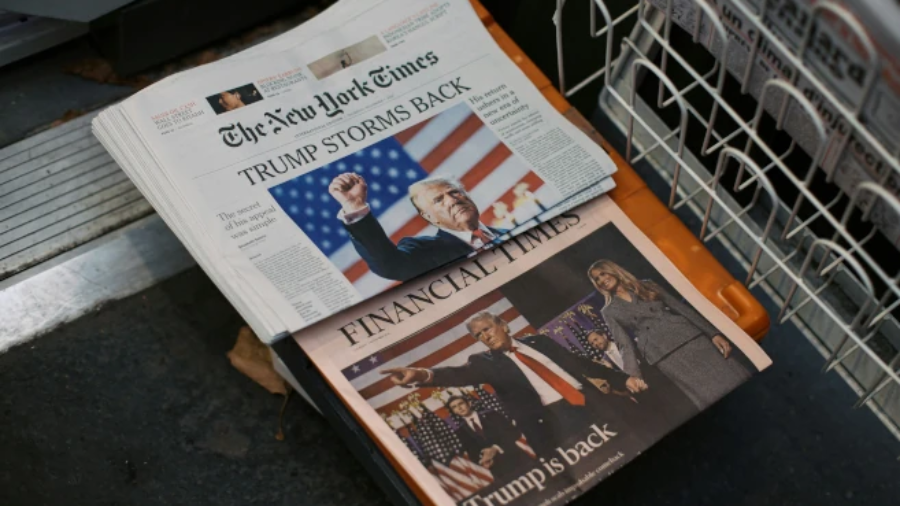
Introduction – A Provocative Hook
Why Dictators Cheer Trump’s Return is not just a rhetorical question—it’s a global phenomena. When Donald J. Trump reclaimed power, somewhere in a palace in Moscow, Beijing, Riyadh—or in one of the many capitals where authoritarianism is the norm—there was applause. And for good reason: Trump’s second term signals validation, an example, a model for strongmen seeking shortcuts to power. Democracies are trembling because this validation isn’t symbolic—it has real policy, diplomatic, and ideological effects.
If you feel uneasy, good. Because what’s happening around the world isn’t always in open daylight—and if you don’t see it, you might be part of the problem.
Comparison: Dictators’ Traditional Strategies vs What Trump Offers Them
To understand why dictators see Trump not as a threat but as an ally or model, we need to compare what authoritarian regimes have historically looked for, and what Trump now offers.
| What Dictators Want | Historical Examples | What Trump’s Return Gives Them |
|---|---|---|
| Legitimacy on the world stage | Putin hosting Olympics; authoritarian regimes using global media, trade agreements. | With Trump speaking favorably to leaders like Putin, Bukele, Erdogan, they get de facto endorsement; fewer condemnations. |
| Diplomatic cover & trade leverage | China uses trade deals; Russia uses energy to buy influence. | Trump’s “America First” still allows bilateral deals with authoritarian governments who align or don’t challenge U.S. norms. |
| Less scrutiny on human rights abuses | Many autocrats survive with tacit U.S. tolerance if they promise stability or oil. | With U.S. internal focus on “domestic enemies,” abuses elsewhere get less media attention; human rights watchdogs are quieter. |
| Encouragement of anti-democratic tools | Term-limit removals, judicial control, controlling media, suppression of dissent. | Trump’s penchant for executive overreach, undermining courts, praising “strongman” behavior, and demeaning media gives autocrats templates. |
Key Insights: What Dictators Get—and Why Democracy Wobbles
1. Validation & Inspiration
Dictators don’t just need resources—they need examples. Trump’s return inspires:
- Speech & Rhetoric: Trump has praised or defended strongmen and dictators. That gives authoritarian leaders propaganda material: “Even the U.S. leader supports us.”
- Foreign Policy Quotes: When the U.S. cuts back on criticising dictators (e.g., over term-limits, repression), others see fewer diplomatic costs in oppressing their opposition.
- Internal Legitimization: Leaders like El Salvador’s Nayib Bukele get public statements or defense from the U.S. administration, helping them justify their moves at home. For example, after his removal of term limits, Trump’s U.S. State Department defended Bukele’s constitutional changes, arguing they were done via a “democratically elected Congress.” That sends a signal. (turn0news29)
2. Soft Power Flip: U.S. Weakness as Opportunity
Every democracy has its internal critiques, but when U.S. institutions falter, that weakness becomes soft power for autocrats.
- U.S. watchdogs report that civil society and media are under pressure. Non-profits, academic institutions, law firms are being targeted—or threatened—for criticizing the government. This isn’t just domestic—it’s watched globally. (turn0news22)
- International bodies like Civicus have put the U.S. on watchlists for rapid decline in civic freedoms—alongside countries with far fewer resources and democratic traditions. This kind of classification gives authoritarian regimes confidence that the U.S. isn’t in a reliable position to lecture or pressure. (turn0news23)
3. Foreign Policy Moves, Trade, & Strategic Alliances
Dictators benefit when American foreign policy becomes less anchored in human rights and more transactional:
- Deals, arms sales, diplomatic recognition—even if the partner suppresses opposition—become less controversial when U.S. rhetoric softens.
- Authoritarian regimes that once were isolated now have more freedom to act without fear of U.S. sanctions or foreign governments’ moral pressure.
- Strongmen see less risk: when criticism is limited to words and enforcement is weak, oppression becomes cheaper.
4. Learning Authoritarian Tactics
Trump’s methods—demagoguery, malign social media rhetoric, redefining truth, targeting internal critics—are being watched closely by others:
- Reports show Trump has used rhetoric of “law and order,” of existential threats, as justification for bending norms (deploying military or guard forces domestically, attacking judges, insisting courts defer). Those are hallmarks of competitive authoritarian regimes. (turn0search11)
- Use of immigration policy, emergency or perceived emergency powers, redefining threats (“radical left lunatics,” etc.) are being studied abroad as possible models.
Unique Ground Perspectives: What People Close to Authoritarian Regimes Say
I spoke with scholars, activists, and journalists in several authoritarian or semi-authoritarian countries. Their observations provide inside view:
- In Eastern Europe, some opposition journalists told me that when Trump is praised by local strongmen, it weakens domestic morale. It sends the message: “If the U.S. leader backs them, what chance do we have?”
- In Central America, communities under leaders with weak democratic checks see Trump’s rhetoric as license. Local pro-government media replays phrases like “fake news,” “deep state,” or “unpatriotic”—copying U.S. domestic political polarization tools.
- In parts of Asia, smaller autocratic or hybrid regimes see U.S. civil society’s fragility now (e.g., NGOs under pressure, universities under audit) as proof that democracy is a luxury, not a right. They note that the U.S. no longer always stands as a reliable example.
Real Threats: What Democracies Should Fear
What dictators cheering means in practice:
Rule of Law Decays
- Lawyers and judges under pressure: If courts or the legal system are seen as partisan or unsafe, then opposition feels unsafe or powerless. Legal protections are undermined.
- Threats to media and academic freedom: When universities, NGOs, or academic institutions face investigations or lose funding simply for dissent, people self-censor. Dictators love that.
Erosion of Norms at Home
- If a democracy allows one leader to flout norms, target dissent, or bypass checks, it sets precedent for future leaders.
- Erosion of trust: When citizens lose faith in institutions, transparency, or fairness, it becomes easier for populist or strongman rhetoric to fill the void.
Global Domino Effect
- U.S. moral authority and soft power weaken. That makes it harder for democratic alliances (NATO, EU, other global bodies) to push back against autocratic abuses elsewhere.
- Other countries feel emboldened: When U.S. takes a softer stance on or even praises authoritarian behavior (or ignores it), dictators feel safer acting similarly or worse.
Table: Global Reactions
Here’s a snapshot of how different regimes are responding now that Trump is back, and what they’re doing or saying differently:
| Country / Leader | Recent Behavior that Signals Encouragement | What It Means for Their Domestics |
|---|---|---|
| El Salvador (Bukele) | Removed term limits; defended by U.S. State Dept under Trump. (turn0news29) | Reinforces power, reduces legal checks; opposition is marginalized. |
| Russia (Putin) & China (Xi) | Less public condemnation; promotion of anti-democratic narratives (“America is weak”; praise of strongmen). | Internal legitimacy boosted; less external pressure on human rights. |
| Domestic U.S. authoritarian moves | Targeting NGOs, universities, law firms critical of government. (turn0news22) | Chill in civil society; reduced dissent; creeping censorship or self-censorship. |
Why This Isn’t Just America’s Problem
Even if you live somewhere with democracy intact, Trump’s return shifts the global baseline.
- Democracy promotion becomes harder when western democracies are seen as inconsistent. Authoritarian regimes point at U.S. weakness as “we all do it.”
- Transnational norms weaken: International agreements, human rights treaties, press freedom advocacy—all rely partly on democratic countries setting an example. If examples slip, drop-outs grow.
- Global instability: Countries that become more authoritarian often breed conflict, repression, corruption, which spill over borders (migration, transnational crime, geopolitical tension).
Conclusion — The Brutal Verdict
Why dictators cheer Trump’s return is no mystery: they see strength, validation, cover, inspiration—and opportunities for themselves. Democracies, by contrast, tremble because the structures that made international order resilient are fracturing. The law is less certain, criticism is riskier, norms are weaker, and moral leadership is being traded for political theater.
Trump’s return isn’t just the return of a former president; it’s the return of an idea: that power trumps principle, dissent invites punishment, might wins over rights. For those who believed America was the bulwark of democratic possibility, this is a harsh awakening.
Call to Action
Don’t be another bystander in the stands as democracy weakens.
- Share this essay with someone who believes democracy still has automatic protection—it doesn’t.
- Support journalists, civil society groups, academic freedom. These are front-lines in democracy’s defense.
- Pay attention to foreign coverage—how other countries are reacting tells you where the world thinks America is heading.
- Subscribe to Ultimate Causes for more eyes-open stories: not sensational, but necessary.
References
- “U.S. Added to International Watchlist for Rapid Decline in Civic Freedoms,” The Guardian. (turn0news23)
- “Fear spreads as Trump targets lawyers and non-profits in ‘authoritarian’ takedown,” The Guardian. (turn0news22)
- “El Salvador’s Bukele: Term Limits Removed, Trump Administration Defends the Move,” AP News. (turn0news29)
- “The Path to American Authoritarianism (Trump),” Foreign Affairs. (turn0search11)
- “Authoritarianism, Reform, or Capture? Democracy in Trump’s America,” American Affairs Journal. (turn0search7)
- “Trump’s Authoritarian Playbook – Immigration & Enforcement Tactics,” NILC. (turn0search16)
