
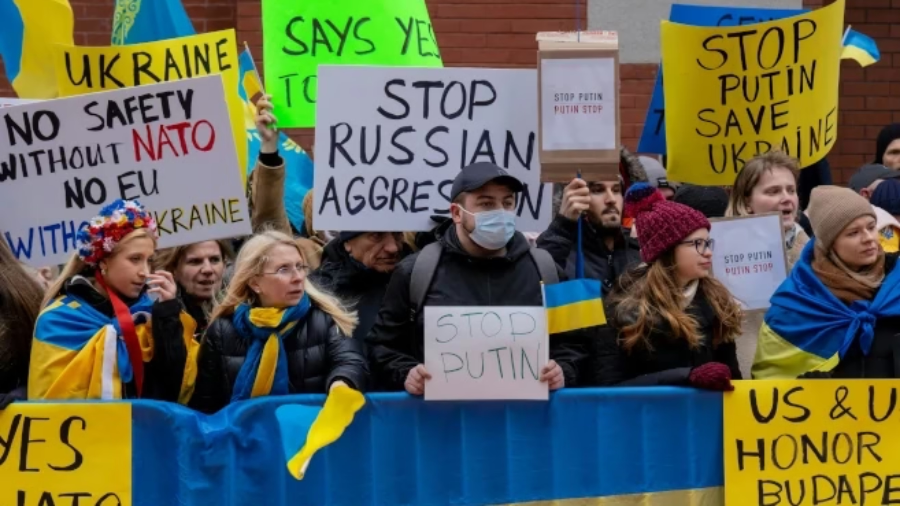
Introduction: A Peace Plan or a Pyrrhic Gift?
When The New US ‘Peace Plan’ for Ukraine was unveiled, it was sold by its proponents as a breakthrough — a realistic way to end a brutal war. But for many observers, the draft reads less like diplomacy and more like capitulation. It demands Ukraine cede critical territory, slash its military forces, and abandon any hope of NATO membership. In short, critics say it’s not a path to peace — it’s a roadmap to surrender.
This proposal, which has reportedly gained backing from Donald Trump, has provoked outrage across Kyiv, Washington, and European capitals. Is it a genuine attempt to broker stability — or a dangerous appeasement that emboldens Russian aggression? And what does it mean for Ukraine’s very sovereignty?
In this post, we’ll unpack what’s in the plan, why it is deeply problematic, who stands to gain, and why many see it as “a gift to the aggressor.”
What’s Inside the So-Called Peace Plan?
Based on multiple media reports, including The Guardian and Al Jazeera, the draft includes a 28-point framework that places unusually heavy demands on Ukraine. (The Guardian) Key points include:
- Recognition of Russian claims over Crimea, Luhansk, and Donetsk. The plan reportedly asks for de facto recognition of these regions as under Russian control. (The Guardian)
- Limiting Ukraine’s military: The draft states that Ukraine’s armed forces would be capped at 600,000 personnel — a steep reduction from current levels. (United24 Media)
- Abandon NATO aspirations: Ukraine is to enshrine in its constitution a ban on joining NATO, and NATO itself would amend its statutes to reflect this. (United24 Media)
- No foreign troops in Ukraine: The proposal reportedly prohibits NATO or other foreign troops from being stationed in Ukraine, although European fighter jets would be based in Poland as part of “security guarantees.” (United24 Media)
- Economic reintegration for Russia: The plan envisions phased sanction relief for Russia and reintegration into the global economy, including a possible return to the G8. (The Guardian)
- Huge reconstruction fund: Around $100 billion of frozen Russian assets would be used for Ukrainian reconstruction — but with a controversial caveat: the U.S. would profit from this fund. (United24 Media)
- Elections and constitutional changes: The draft allegedly requires Ukraine to hold elections within 100 days and to amend its constitution to reflect the new security arrangement. (Sky News)
Taken together, these elements look less like a negotiated peace and more like a deep strategic concession to Russia — one that weakens Ukraine’s sovereignty and long-term defense posture.
Why Many View It as a Capitulation
1. Territorial Surrender Under the Guise of Diplomacy
By demanding the formal or de facto cession of Crimea, Donbas, and other contested territories, the plan effectively asks Ukraine to normalize Russia’s military gains. For many, this is not compromise but capitulation. As The Guardian reported, the terms repeat Moscow’s maximalist demands, violating Ukrainian red lines. (The Guardian)
Ukraine’s leaders have historically rejected ceding these territories. As noted by AP News, recognizing Russian sovereignty over Crimea would require a constitutional amendment and a national referendum — a politically explosive move. (AP News)
2. A Weakened Military = Weakened Defense
Limiting Ukraine’s army to 600,000 soldiers significantly reduces its capacity to defend its territory, deter future aggression, or maintain internal stability. For a country still under threat, this is more than a concession — it’s a structural handicap.
3. Neutrality: Permanent Isolation from NATO
One of the most controversial parts of the proposal: Ukraine would constitutionally commit to never joining NATO. That weakens its long-term security prospects and prevents future Western alliances from offering robust guarantees against Russian re-aggression. (United24 Media)
4. Legitimizing the Aggressor
By granting Russia economic reintegration and recognizing its territorial gains, the plan could be seen as rewarding Moscow’s violent behavior. Many argue this sets a dangerous precedent for international law: conquer by force and negotiate later.
5. Opaque Guarantees
The security guarantees promised to Ukraine are vague. Reports indicate that while there would be U.S. backing, specifics are light, and the deal carries significant conditions — including a cut of profits from the reconstruction fund. (United24 Media)
Reactions from Kyiv, Europe, and Beyond
Kyiv’s Response: A Mix of Caution and Alarm
Ukrainian President Volodymyr Zelenskyy has expressed a willingness to “work honestly” on the plan, emphasizing the need for “respect for our independence, sovereignty, and dignity.” (Novaya Gazeta Europe) But not all in Ukraine are so diplomatic. Several officials have denounced the plan as “absurd”, equating it with surrender. (The Guardian)
European Leaders Push Back
European allies are deeply skeptical. Analysts and politicians from NATO countries have warned that concessions to Russia undermine the core logic of European security. As The Guardian notes, accepting this proposal could effectively hand Russia a permanent strategic advantage. (The Guardian) Germany’s defense minister has publicly rejected what he calls “weakness through peace,” arguing that capitulation risks long-term instability. (The Guardian)
Russian Influence in the Draft
Alarmingly, some reports suggest that the plan was not just U.S.-led — it may have been co-drafted with Russian officials. The Guardian names Kirill Dmitriev, a close Putin ally, as being centrally involved in the negotiations alongside U.S. envoy Steve Witkoff. (The Guardian) If true, it undermines claims that this is a balanced proposal — instead, it suggests it may more closely reflect Moscow’s agenda than Kyiv’s.
The Strategic Risk: Why This Is Dangerous for Ukraine — and Europe
A Precedent for Aggressors
If the world accepts this proposal, it sends a message:
Military aggression can pay. Stare down your adversary, grab what you want, and then negotiate.
That emboldens not just Russia — but other autocratic regimes watching.
Long-Term Military Weakening
Capping Ukraine’s army permanently weakens its deterrence against future Russian encroachment. A future conflict could become more likely, not less.
Fragile Guarantees
Ambiguous security guarantees haven’t protected Ukraine so far. Without strong, binding commitments, there’s no guarantee that future leaders — on any side — will uphold the deal.
Erosion of International Norms
Normalizing Russia’s territorial gains undermines decades of post-Cold War consensus about sovereignty, borders, and the rule of law.
European Security at Risk
With Ukraine weakened, Russia’s posture toward Europe becomes more aggressive. A weaker Ukraine could invite further destabilization on NATO’s eastern flank — not peace.
Why Is the U.S. Supporting This, If at All?
Understanding why such a controversial plan is being floated requires peeling back political, ideological, and geopolitical layers:
- Domestic Calculations
For Donald Trump, the peace plan is deeply tied to his “deal-maker” identity. Offering a “deal” with Russia plays to his base and reinforces his geopolitical brand. - War Fatigue
In the U.S. and Europe, public appetite for continued involvement in Ukraine is waning. A “peace” deal with concessions may seem politically palatable — even if dangerous. - Backchannel Diplomacy
The plan seems to have been developed through informal channels (e.g., Trump envoy Steve Witkoff, Kirill Dmitriev), not through traditional diplomatic forums. This raises concerns about transparency, accountability, and whose interests are really being served. (The Guardian) - Global Strategy
Reintegrating Russia economically could appeal to U.S. economic interests, while avoiding long-term military commitments — a trade-off that some policymakers may view as pragmatic rather than principled.
Is There Any Path Forward That Avoids Surrender?
Critics argue that real peace must include:
- No irreversible territorial concessions
- Strong, enforceable, legal security guarantees
- Constitutional clarity in Ukraine (with full sovereignty preserved)
- A genuine NATO pathway or equivalent alliance guarantees
- Transparent international reconstruction funding
- Respect for Ukrainian national identity, including language and institutions
Without these, a “peace” deal risks being heartbreakingly hollow — more a tactical retreat than a lasting resolution.
A Personal Reflection: Why This Matters to Me
Watching this proposal unfold has been deeply unsettling. As someone who cares deeply about democratic values, global stability, and the right of oppressed nations to defend themselves, the contours of this plan feel like a betrayal.
I’ve talked with people in Ukraine — citizens, analysts, veterans — and they express a sense of déjà vu. Surrender dressed as peace, deals made in back rooms, terms that diminish national dignity. They’re haunted by history: once you concede land, once you cap your military, once you promise neutrality — the cost is not just strategic, it’s existential.
This isn’t just a geopolitical move: it’s a test of moral courage, of our collective will to defend freedom, and of whether the world supports sovereignty or sacrifice.
Key Takeaways
Here’s what should be front of mind for anyone following this proposal:
- It’s not purely a peace plan; it mirrors Russia’s war goals.
- Military limitations weaken Ukraine’s ability to defend itself long-term.
- Neutrality and NATO exclusion undermine Europe’s collective security.
- Economic reintegration of Russia could reward aggression.
- The security guarantees are vague and potentially hollow.
- This could set a dangerous international precedent.
Conclusion: A Peace Plan That Risks More Than It Promises
At first glance, The New US ‘Peace Plan’ for Ukraine may appear as a generous olive branch. But if you peel back the veneer, you find terms that align far more closely with Russian strategic objectives than Ukrainian sovereignty. Recognizing occupied territories, shrinking military capacity, limiting alliance membership — these are not compromises born of compromise, but terms drafted under pressure.
If this plan moves forward as is, it may mark a pivotal moment: not just for Ukraine, but for the future of international order. It could embolden aggressors, signal a weakening of NATO, and celebrate peace on terms that undermine justice.
In this moment, the world must ask: is this a path to peace, or a prescription for capitulation?
Call to Action
What do you think?
- Is this “peace plan” a genuine diplomatic breakthrough — or a dangerous concession?
- Can Ukraine afford to accept these terms?
- Should the international community support or reject a deal shaped so heavily by the aggressor?
Let me know your thoughts in the comments — and please share this post if you believe the gravity of these proposals needs to be widely understood. Subscribe for more in-depth political analysis and breaking commentary about Ukraine, geopolitics, and global security.
Sources & References
- The Guardian: analysis of U.S.-Russian drafted peace plan (The Guardian)
- Al Jazeera: review of Ukraine ceding land and weapons (Al Jazeera)
- Novaya Gazeta Europe: Zelenskyy’s response (Novaya Gazeta Europe)
- Sky News: text of the 28-point draft plan (Sky News)
- Time Magazine: Trump’s public statements on Crimea & NATO (TIME)
- Al Jazeera: why Russia rejected earlier Trump proposals (Al Jazeera)
- Le Monde: report on U.S. ultimatum to Ukraine (Le Monde.fr)
