

DOGE-and-the-federal-government-purge

Elon Musk & the Federal Government Purge: Chaos, Constitutions, and the Cost Nobody Expected

The Richest Man on Earth Versus the American Government

When Elon Musk rewatched Office Space for the fifth time in November 2024 and posted on X that he was “preparing for DOGE,” most people assumed it was performance art. But the federal government purge that followed was no joke. It became the most sweeping, fastest, and most legally contested assault on the American civil service since the republic was founded. And the consequences — for services, for safety, and for the Constitution itself — are still cascading through every institution the government was built to protect.

Within weeks of Trump’s January 2025 inauguration, Musk’s Department of Government Efficiency embedded teams inside dozens of federal agencies, fired tens of thousands of workers, cancelled contracts, and gained access to sensitive government data. The promise was surgical efficiency. But what America got was, by almost every measurable account, chaos — and a bill that may ultimately cost more than the savings it generated.

300KFederal employees fired, pushed to resign, or bought out by DOGE

$55BDOGE’s claimed savings — but independent review found only ~$16B verifiable

17Inspectors General fired in Trump’s first week — the anti-corruption watchdogs

67People killed in the Potomac midair crash after DOGE fired FAA safety workers

14States suing DOGE — arguing Musk’s authority is unchecked and unconstitutional

July 42026 — DOGE’s official termination date. But the damage is already done.

The Promise: $2 Trillion. The Reality: $16 Billion — Maybe

Musk launched DOGE with an audacious headline number: $2 trillion in federal savings. He then revised it to $1 trillion. Then to $500 billion. Then $150 billion. By the time independent analysts examined the itemised savings list posted on DOGE’s official website, TIME’s review found only $16 billion of the claimed $55 billion could actually be verified. The rest was double-counted, inflated, projected, or simply wrong.

But the savings figure was never really the point. The point was speed — the deliberate, aggressive, constitutional-limit-testing speed of dismantling government before courts, Congress, or public opinion could catch up. And for a while, it worked. As Rolling Stone documented, Musk’s trusted aides embedded inside agencies — sometimes sleeping on cots on office floors — pursued plans to cancel contracts and fire workers at a pace that deliberately outran the legal system’s ability to respond.

DOGE is coming into these agencies and accessing data and firing people, terminating contracts. They’re essentially running the government. That’s the problem. — US District Judge Tanya Chutkan, during DOGE federal court hearing, February 2025

The Agencies Gutted — And the Services Lost With Them

The federal government purge did not hit every agency equally. But the scope of disruption reached into every corner of American life — because the federal government, whatever its inefficiencies, is the infrastructure on which ordinary daily life depends. Here is a snapshot of the damage, sourced from the House Budget Committee’s documented review and TIME’s comprehensive DOGE tracker.

Federal Aviation Administration (FAA)

Hundreds fired — then a fatal crash

DOGE fired hundreds of FAA probationary staff. Months later, an Army helicopter and a commercial jet collided over the Potomac River, killing 67 people. Musk had also pressured the previous FAA administrator to resign, leaving the agency without leadership at its most critical moment.

Centres for Disease Control (CDC)

1,300 employees fired

Termination notices went out on February 14, 2025 — Valentine’s Day — slashing the agency responsible for monitoring and responding to infectious disease outbreaks across the United States and globally.

Internal Revenue Service (IRS)

Thousands cut during tax season

The House Budget Committee noted that cuts to IRS expertise directly benefit wealthy tax cheats by reducing enforcement capacity — the exact opposite of what “efficiency” is supposed to achieve.

Department of Education

Every disability compliance attorney fired

Every attorney responsible for ensuring states properly use funds for students with disabilities was terminated — leaving millions of the most vulnerable students without any federal legal protection.

USAID

Effectively shuttered

A federal judge ruled that Musk and DOGE “likely violated the Constitution” when closing USAID. The agency that delivered humanitarian aid to millions globally was functionally destroyed within weeks of the inauguration.

General Services Administration (GSA)

12,000-person agency gutted

PBS documented how GSA entered “triage mode” — cancelling 800 property leases, then begging fired workers to return months later at additional taxpayer cost. “They didn’t have the people needed to carry out basic functions,” one official said.

The Constitution Problem: Who Actually Authorised Any of This?

Here is the question that legal scholars, 14 state attorneys general, and multiple federal judges keep asking — and that the Trump administration keeps struggling to answer: who gave Elon Musk the authority to run the federal government?

ABC News outlined the constitutional problem clearly. Under the Constitution’s Appointments Clause, “principal officers” of the United States must be confirmed by the Senate. Trump created DOGE by executive order without any congressional involvement. And Musk was classified as an “unpaid special government employee” — a category Congress created in 1962 for temporary workers performing limited duties for no more than 130 days.

But constitutional law scholar James Sample of Hofstra University put the problem plainly: “Musk manifestly answers only to Trump. Answering only to the President while wielding vast and enormous power is basically the Platonic form of a principal officer, thus requiring Senate confirmation.”

What the Courts Found

Court / CaseFindingOutcome
Federal District Court — USAID closureMusk and DOGE “likely violated the Constitution” when shuttering USAIDAgainst DOGE
Northern District of California — mass firingsOrdered 17,000 probationary workers to be rehired — firings ruled illegalAgainst DOGE
Supreme Court — probationary workersPaused the rehire order while the case continuesPaused / Pending
Judge Chutkan — 14-state lawsuitFound DOGE “essentially running the government” but declined immediate restraintPartial — Ongoing
Coalition lawsuit — unions, local govts, nonprofitsFirings violated the Constitution and the Administrative Procedure ActFiled — Ongoing

Al Jazeera reported that Syracuse University law professor David Driesen put the constitutional stakes in the starkest terms: “There is no precedent for withholding monies across the board because of broad policy disagreement with the law. That is a frontal attack on the legislative authority of Congress.” And PolitiFact noted that if lawmakers don’t challenge DOGE, they “risk losing the powers Congress has held for two and a half centuries.”

The Hidden Cost: When Efficiency Creates Inefficiency

The most devastating irony of the federal government purge is that it made the government more expensive and less functional — the exact opposite of its stated purpose. And this is not political opinion. It is documented in agency-by-agency government records.

  • Trump fired the Inspectors General at 17 agencies in his first week — the officials whose entire job is to find waste, fraud, and abuse. So the people who catch inefficiency were the first to go
  • GSA cancelled 800 property leases — then racked up higher costs in properties where leases had expired, because there was nobody left to manage the transition
  • GSA then asked fired workers to return months later — meaning the government paid their salaries during absence AND paid rehiring costs on top
  • The IRS fired thousands of enforcement staff — directly reducing the government’s ability to collect taxes from wealthy evaders and increasing the deficit
  • The FAA fired safety workers and lost leadership — creating the conditions for a fatal crash now requiring a full investigation and costly system overhaul
  • 80 CMS healthcare employees lost their jobs — the team that sets and enforces health insurance standards for ordinary Americans

💡 The Efficiency Paradox — In the Government’s Own Numbers

The House Budget Committee concluded that “these cuts to the federal workforce will likely make the deficit worse, not better, thanks to decreased oversight and increased tax dodging.” Musk promised to save $2 trillion. The independent estimate of verifiable savings sits at $16 billion. But the cost of chaos — in rehiring, legal battles, lost tax enforcement, and safety failures — has not yet been fully calculated. When it is, the net figure may well be negative.

The Man, the Motive, and the Conflict Nobody Will Name

Musk spent $290 million supporting Trump’s 2024 campaign. He owns Tesla, SpaceX, Starlink, X, and xAI — companies that collectively hold billions of dollars in federal contracts and face regulation from the very agencies DOGE targeted. Rolling Stone documented that DOGE fired hundreds of FAA probationary employees — the same agency that had previously proposed fining SpaceX for regulatory violations. After the firings, SpaceX’s Starlink was brought in to help modernise the FAA’s systems.

🔍 The Conflict of Interest Nobody in Power Will Name

Musk’s companies face regulation from the FAA, the EPA, the SEC, the Department of Transportation, and NASA — every one of which DOGE targeted. When the world’s richest man, who invested $290 million in the president’s political success, is handed authority over the agencies that regulate his own businesses, that is not government efficiency. It is the most breathtaking conflict of interest in modern American history — and it has been almost entirely normalised by a political culture too stunned to call it what it is.

Conclusion: What the Purge Has Actually Produced

Ben Vizzachero, a wildlife biologist who spent his career protecting California’s Los Padres National Forest, received his termination notice over a long weekend. He had a positive performance review. He was, in his own words, “making the world a better place.” And then DOGE told him his performance was insufficient — in a template email sent from a generic Microsoft address, not an official government account.

“My job is my identity,” he told Rolling Stone. And then, after attending his first ever protest: “I would thank him for radicalising me.” Vizzachero is one story among hundreds of thousands. But his experience captures something that savings figures and constitutional arguments cannot: the federal government purge did not only damage agencies and services. It damaged the relationship between the American government and the people it exists to serve.

DOGE is scheduled to cease operations on July 4, 2026. But the damage to agencies, to legal norms, to diplomatic relationships through USAID’s destruction, and to the simple trust that government services will function when citizens need them, will not end on that date. Courts will be litigating the constitutional questions for years. Agencies will be rebuilding for longer. And the workers who were told their decades of public service were “inefficient” will not forget.

The federal government purge promised to make America more efficient. But efficiency built on illegality, managed by conflicts of interest, and measured against falsified savings figures is not efficiency. It is something else entirely — and the republic is still calculating the full cost.


Did DOGE’s Purge Affect You, Your Community, or Your Services?

Hundreds of thousands of people have been touched by this story. Share your experience in the comments, pass this article to someone who needs the full picture, and subscribe for our ongoing coverage of the forces reshaping American governance.💬 Share Your Story📩 Subscribe for Updates📤 Share This Article

📚 Sources & References

  1. TIME — Here’s What DOGE Is Doing Across the Federal Government (Updated 2025–2026)
  2. Rolling Stone — Elon Musk Is Gleefully Destroying the Government for Donald Trump (April 2025)
  3. PBS NewsHour — Federal Employees Purged by DOGE: Months Later, the Administration Is Asking Them to Return (September 2025)
  4. ABC News — Is Elon Musk’s Government Role Unconstitutional? (February 2025)
  5. CBS News — Judge Won’t Block Musk and DOGE From Accessing Data, Making Cuts at 7 Agencies (February 2025)
  6. House Budget Committee — DOGE’s Mass Firings Result in Gutted Services and Higher Costs (April 2025)
  7. Al Jazeera — Do Elon Musk and DOGE Have Power to Close US Government Agencies? (February 2025)
  8. PolitiFact — What Powers Do Musk and DOGE Have to Close Agencies? (February 2025)
  9. Democracy Docket — USAID Workers Sue DOGE for Unconstitutional Government Takeover (February 2025)
  10. MSNBC — Elon Musk’s DOGE Is Weakening. This Lawsuit Wants to Finish It Off (October 2025)
project-2025

Project 2025 Exposed: The Plan to Weaponize Justice, Crush the Press, and Control Power

Meta Title: Project 2025 Exposed: How the Plan Intends to Dismantle Democracy
Meta Description: A hard-hitting investigation into Project 2025 dismantling democracy — from weaponized justice to state media, power consolidation, and rigged institutions.

Introduction

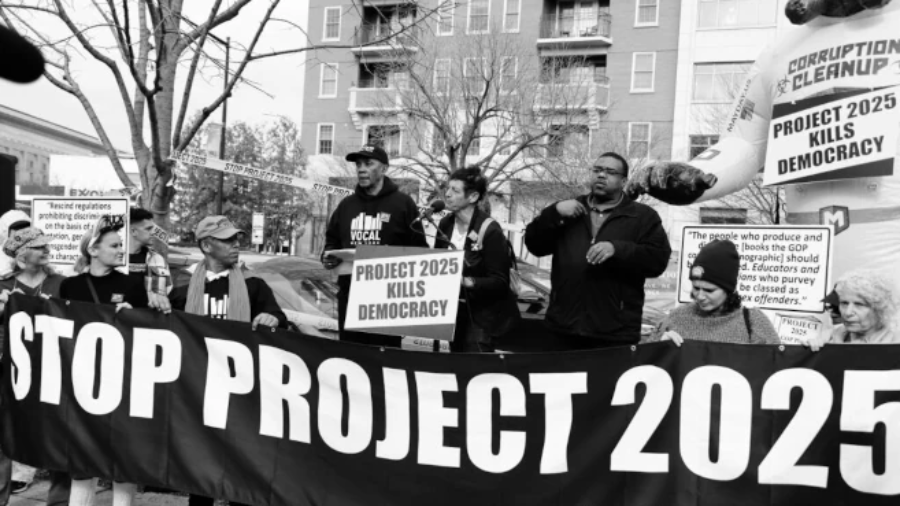
“Project 2025 dismantling democracy” is not hyperbole. It’s a strategy, drafted in full detail, to remake American governance from the ground up—transmuting courts into political tools, silencing the press, militarizing law enforcement, seizing fiscal control, and rewriting the rules of the game entirely. This is not about maintaining conservatism; it is about remaking institutional architecture to entrench one faction in perpetual dominance.

In this investigation, I’ll walk you through how each of the five pillars of this plan works in practice, show where we already see pieces being deployed, and reflect on what’s at stake if we let this agenda pass unnoticed.

The Five Pillars of the Project 2025 Blueprint

Let’s begin by unpacking the senator’s outline in more detail, layering in what we know from the Heritage Foundation’s Mandate for Leadership and external analyses.

  1. Convert the justice system into a political witch-hunt operation
  2. Eliminate the free press and replace it with state-run media
  3. Militarize law enforcement
  4. Seize control of government spending and taxation
  5. Rig the rules — courts, elections, oversight, agency structure

Each of these is terrifying on its own. Together, they form a full-spectrum playbook for transition from republic to regime.

Comparison: Norms vs. the 2025 Vision

DomainDemocratic NormProject 2025 Vision
Justice / DOJ / FBIIndependent prosecutors, civil liberties protections, checks & balancesDirect control by politicized attorney general; purge opponents
Press & MediaPluralistic press, freedom under First AmendmentDefund public media, restrict news access, escalate government propaganda
Law Enforcement / PolicingDomestic law enforcement under civilian oversightDeploy military-style units, expand powers, suppress dissent
Budget / TaxationPower of purse under Congress, distributed authorityExecutive reallocation, override, control of all taxation flows
Checks & RulesCourts, agencies, administrative state, norms binding allStack courts, dissolve agencies, circumvent rule of law

This is not a shift of degree. It’s a shift of kind.

1. Weaponizing Justice: The Witch Hunt Engine

What the plan says (and implies):
Project 2025 calls for sweeping new powers for the Department of Justice (DOJ), rewriting prosecutorial discretion, using civil statutes for political retaliation, and embedding loyalty tests in senior roles. (See Brennan Center on Project 2025’s Plan for Criminal Justice) (Brennan Center for Justice)

It further suggests that investigations should be used not merely to enforce law, but to target individuals who resist or criticize the regime. The legal rationale would shift from “neutral enforcement” to selective enforcement under political criteria.

Already happening in fits and starts:

  • The removal of inspectors general across agencies is a hallmark move: watchdogs who might expose wrongdoing are being sidelined en masse. (The Guardian)
  • Efforts to punish or threaten state election officials who refused to subvert the 2020 results are already baked into earlier iterations of MAGA-aligned lawsuits; Project 2025 augments and institutionalizes that pattern. (lofgren.house.gov)
  • Legal immunity for executive acts is being expanded, as the plan proposes consolidating prosecutorial power under an aligned DOJ.

Why this is distinctively dangerous:
When law enforcement becomes a political sword, the presumption of innocence, due process, and even the idea of justice as blind collapse. Those in power can open investigations at will, freeze assets, intimidate adversaries — all under the veneer of legalism.

One civil liberties lawyer told me informally, “you don’t need to convict someone. You just need to threaten them on paper—and the chilling does your work for you.” In such a world, compliance wins; dissent silences itself.

2. Crushing the Press: From Plurality to Propaganda

The Plan’s Directives:

  • Eliminate or defund public broadcasting (PBS, NPR) by revoking their status and compelling them to pay licensing fees. (Brookings)
  • Reevaluate the White House press corps’ access—perhaps remove permanent space, deny accreditation, or impose licensing. (Nieman Lab)
  • Use the regulatory apparatus (FCC, etc.) to penalize or threaten media organizations that deviate from approved narrative. (As in the FCC chapter of Project 2025.) (Brookings)

Signs emerging in reality:

  • On May 1, 2025, Executive Order 14290 was signed, ending federal funding for NPR and PBS, asserting media bias as justification. (Wikipedia)
  • Analyses in media-industry coverage (e.g. Nieman Lab) examine how defunding public media would greatly reduce press diversity and concentrate narrative control. (Nieman Lab)
  • Critics warn Project 2025 is a media repression plan under the guise of “reform.” (Kettering Foundation)

Fresh perspective:
It’s not just “shutting down” media — it’s replacing it. State media will fill the void, pushing overt propaganda with machineries of communication (broadcast licenses, spectrum, national reach) under executive control. A local station that now airs critical journalism might suddenly be forced to carry government-approved content or lose its license.

For journalists I know in public radio, there’s real fear—and self-censorship already creeping in. When your next budget depends on a political committee’s goodwill, “objectivity” becomes a gamble.

3. Militarizing Law Enforcement: From Police to Paramilitary Control

What the blueprint urges:
Expand the domestic deployment of military forces, intensify surveillance, expand “task force” authority, and fuse local law enforcement with federal paramilitary units. (Per the Authoritarian Playbook for 2025) (The Authoritarian Playbook for 2025)

Use emergency powers and reinterpret the Insurrection Act to permit domestic use of active military assets against civil dissent. Curtail judicial oversight in policing operations.

Emerging shadows of that shift:

  • Discussions in conservative legal circles echo proposals to convert SWAT-like capabilities into the norm rather than exception.
  • Pressure is mounting to loosen restrictions on the use of military-grade gear and intelligence systems for domestic policing.
  • Dissenters argue that existing statutes like the Insurrection Act are already being revisited in memos for reinterpretation.

Why it matters:
Even the specter of tanks, drones, and national guard units in crowd control chills protest, assembly, and democracy itself. Once you normalize force against civilians, you no longer need to argue; you can command.

Someone who participated in Black Lives Matter protests confided to me: “We’re already seeing National Guard hovering—just to scare.” In the 2025 paradigm, that becomes business as usual, not exceptional.

4. Seize Control of Government Spending & Taxation

Agenda content:

  • Empower the executive to reallocate or override congressional appropriations.
  • Centralize taxation authority under a single executive-controlled office (such as OMB).
  • Reduce congressional oversight and audit capacity, making financial control opaque and unilateral.
  • Purge executive branch spending that doesn’t align with ideological priorities (dismantling social programs, equity initiatives, etc.).

Analyses by the Center for American Progress warn that this would obliterate the constitutional guardianship of the purse. (Center for American Progress)

Implementation cues already seen:

  • Through transition memos, Project 2025 linked OMB/OMB-aligned personnel structures as central levers for redirecting funds. (Center for American Progress)
  • Critics note recent executive orders reassigning independent agencies under OMB oversight as part of a drive to collapse agency independence. (The Guardian)
  • The executive order terminating public broadcasting funding is one example of top-down budget seizure (for media) over Congress. (Wikipedia)

Risks and insight:
If the executive can decide who gets funding—not via negotiated legislation but by fiat—then political alignments become survival tools. A Congressional majority doesn’t matter if the president can reallocate or override.

A former budget analyst told me: “You can’t see the wires when you’re adjusting line items. That is exactly what makes this terrifying—stealth control, not constant headline conflict.”

5. Rig the Rules: Courts, Agencies, Elections

Plan’s components:

  • Stack federal courts with loyalists, revoke legal immunities, limit judicial review.
  • Replace merit-based civil service with political appointees vetted for loyalty (mass “loyalist purge”).
  • Repack institutions (EPA, FTC, etc.) or dissolve them entirely, placing power under direct executive command.
  • Alter election law: raise contribution limits, decline independent campaign law enforcement, disempower FEC, and restrict voting protections.

We see many references to this in opposition analyses. (Center for American Progress)

Already emerging in practice:

  • Some purges of inspectors general and watchdogs have already occurred. (The Guardian)
  • The FEC’s autonomy is targeted: Project 2025 proposes giving the DOJ control over FEC litigation and limiting independent prosecutions. (Democracy Docket)
  • Public interest groups warn that shifting agency enforcement powers undermines accountability. (Democracy Docket)
  • Democratic task forces are actively mapping how Project 2025 would reshuffle agency structure. (lofgren.house.gov)

Insight on cumulative effect:
The rigging isn’t just procedural; it’s structural. Even if citizens win elections, winning doesn’t guarantee power unless institutions are under your thumb. Change the rules, and democracy—even when nominally preserved—becomes a hollow shell.

The Dominoes Are Already Falling

You don’t have to wait for full implementation to see harm. The building blocks are being laid now, quietly:

  • Independent media funding is under assault via EO 14290.
  • Watchdogs and oversight bodies are being purged or realigned.
  • Regulatory agency independence is being gutted via oversight consolidation.
  • Legal threats and ideological pressure are creeping into media, nonprofits, academia.

If your local public radio station goes dark next year, or your state DOJ opens a vague investigation into political opponents—those won’t be anomalies. They’ll be test cases.

The phrase “Project 2025 dismantling democracy” will sound prophetic in hindsight if we don’t act.

What Must Be Done (Resistance Playbook)

  • Push for statutory constraints now. Don’t wait for the future. Demand laws that limit executive reallocation, preserve civil service protections, and require judicial review of DOJ actions.
  • Protect public media legally. Embed NPR, PBS, local public stations into law with bipartisan guarantees so they can’t be unilaterally axed.
  • Bolster press defense funds. Newsrooms, especially nonprofit ones, need legal and financial backing to resist regulatory intimidation and survive defunding.
  • Support watchdog independence. Advocate for inspectors general, agency audit offices, and oversight bodies with protected status.
  • Elect principled institutionalists. Vote for representatives who pledge to defend the rule of law and resist the nullification of checks & balances.
  • Civic literacy & watchdog culture. Journalists, civil society, and citizens must monitor FCC dockets, DOJ rule changes, OMB restructurings—spot the threads before they become fabric.

Conclusion: A Turn or a Trap?

This is not a policy debate among equals. Project 2025 aims to reengineer democracy into an ecosystem where only one network survives. When justice, media, police, money, and rules all serve a faction, opposition has no leverage.

I’ve seen the quiet fear grow among media operators and civil servants. I’ve heard consultants rerouting projects to avoid drawing attention. I’ve seen public interest groups bracing for regulatory shock waves.

If “Project 2025 dismantling democracy” seems dramatic now, give it time—the first waves are already lapping the shore.

Call to Action:
Don’t wait for a national crisis. Share this post. Send it to journalists and public officials. Ask your representatives whether they’ll codify protections. Subscribe to watchdog newsletters. Become someone who reads FCC notices. The safeguard against silence is noise.

If each of us acts now, the machinery of authoritarian control may stutter. But if we sleep—even for a year—the ship may already have sailed.

References & Further Reading

  • Project 2025’s Plan for Criminal Justice, Brennan Center (Brennan Center for Justice)
  • Project 2025: What a second Trump term could mean for media and technology policies, Brookings (Brookings)
  • Project 2025 Would Destroy the U.S. System of Checks and Balances, American Progress (Center for American Progress)
  • The People’s Guide to Project 2025, Democracy Forward (democracyforward.org)
  • Executive Order 14290 ending public broadcasting funding (Wikipedia)
  • Opposition analysis: Unmasking the Anti-Democracy Agenda of Project 2025, Democracy Docket (Democracy Docket)
  • What Would Project 2025 Do for (or to) Journalism?, Nieman Lab (Nieman Lab)