
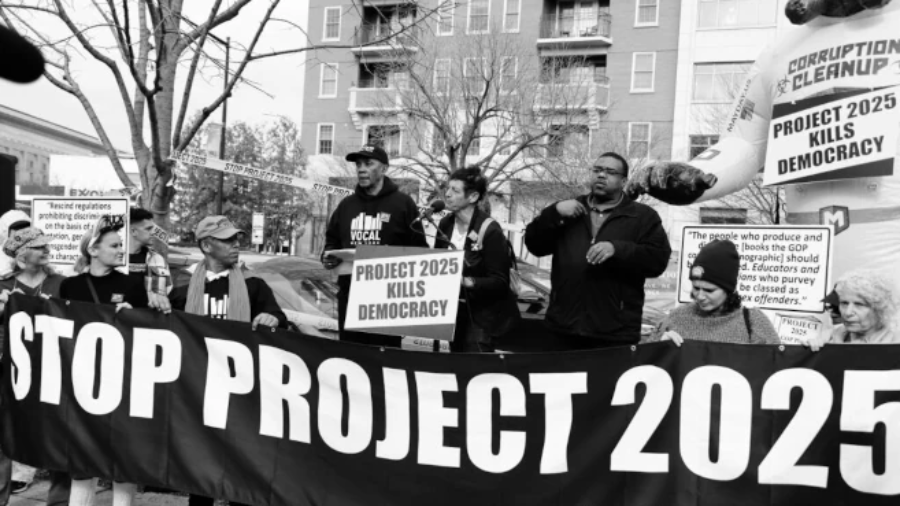
project-2025

Project 2025 Exposed: The Plan to Weaponize Justice, Crush the Press, and Control Power

Meta Title: Project 2025 Exposed: How the Plan Intends to Dismantle Democracy
Meta Description: A hard-hitting investigation into Project 2025 dismantling democracy — from weaponized justice to state media, power consolidation, and rigged institutions.

Introduction

“Project 2025 dismantling democracy” is not hyperbole. It’s a strategy, drafted in full detail, to remake American governance from the ground up—transmuting courts into political tools, silencing the press, militarizing law enforcement, seizing fiscal control, and rewriting the rules of the game entirely. This is not about maintaining conservatism; it is about remaking institutional architecture to entrench one faction in perpetual dominance.

In this investigation, I’ll walk you through how each of the five pillars of this plan works in practice, show where we already see pieces being deployed, and reflect on what’s at stake if we let this agenda pass unnoticed.

The Five Pillars of the Project 2025 Blueprint

Let’s begin by unpacking the senator’s outline in more detail, layering in what we know from the Heritage Foundation’s Mandate for Leadership and external analyses.

  1. Convert the justice system into a political witch-hunt operation
  2. Eliminate the free press and replace it with state-run media
  3. Militarize law enforcement
  4. Seize control of government spending and taxation
  5. Rig the rules — courts, elections, oversight, agency structure

Each of these is terrifying on its own. Together, they form a full-spectrum playbook for transition from republic to regime.

Comparison: Norms vs. the 2025 Vision

DomainDemocratic NormProject 2025 Vision
Justice / DOJ / FBIIndependent prosecutors, civil liberties protections, checks & balancesDirect control by politicized attorney general; purge opponents
Press & MediaPluralistic press, freedom under First AmendmentDefund public media, restrict news access, escalate government propaganda
Law Enforcement / PolicingDomestic law enforcement under civilian oversightDeploy military-style units, expand powers, suppress dissent
Budget / TaxationPower of purse under Congress, distributed authorityExecutive reallocation, override, control of all taxation flows
Checks & RulesCourts, agencies, administrative state, norms binding allStack courts, dissolve agencies, circumvent rule of law

This is not a shift of degree. It’s a shift of kind.

1. Weaponizing Justice: The Witch Hunt Engine

What the plan says (and implies):
Project 2025 calls for sweeping new powers for the Department of Justice (DOJ), rewriting prosecutorial discretion, using civil statutes for political retaliation, and embedding loyalty tests in senior roles. (See Brennan Center on Project 2025’s Plan for Criminal Justice) (Brennan Center for Justice)

It further suggests that investigations should be used not merely to enforce law, but to target individuals who resist or criticize the regime. The legal rationale would shift from “neutral enforcement” to selective enforcement under political criteria.

Already happening in fits and starts:

  • The removal of inspectors general across agencies is a hallmark move: watchdogs who might expose wrongdoing are being sidelined en masse. (The Guardian)
  • Efforts to punish or threaten state election officials who refused to subvert the 2020 results are already baked into earlier iterations of MAGA-aligned lawsuits; Project 2025 augments and institutionalizes that pattern. (lofgren.house.gov)
  • Legal immunity for executive acts is being expanded, as the plan proposes consolidating prosecutorial power under an aligned DOJ.

Why this is distinctively dangerous:
When law enforcement becomes a political sword, the presumption of innocence, due process, and even the idea of justice as blind collapse. Those in power can open investigations at will, freeze assets, intimidate adversaries — all under the veneer of legalism.

One civil liberties lawyer told me informally, “you don’t need to convict someone. You just need to threaten them on paper—and the chilling does your work for you.” In such a world, compliance wins; dissent silences itself.

2. Crushing the Press: From Plurality to Propaganda

The Plan’s Directives:

  • Eliminate or defund public broadcasting (PBS, NPR) by revoking their status and compelling them to pay licensing fees. (Brookings)
  • Reevaluate the White House press corps’ access—perhaps remove permanent space, deny accreditation, or impose licensing. (Nieman Lab)
  • Use the regulatory apparatus (FCC, etc.) to penalize or threaten media organizations that deviate from approved narrative. (As in the FCC chapter of Project 2025.) (Brookings)

Signs emerging in reality:

  • On May 1, 2025, Executive Order 14290 was signed, ending federal funding for NPR and PBS, asserting media bias as justification. (Wikipedia)
  • Analyses in media-industry coverage (e.g. Nieman Lab) examine how defunding public media would greatly reduce press diversity and concentrate narrative control. (Nieman Lab)
  • Critics warn Project 2025 is a media repression plan under the guise of “reform.” (Kettering Foundation)

Fresh perspective:
It’s not just “shutting down” media — it’s replacing it. State media will fill the void, pushing overt propaganda with machineries of communication (broadcast licenses, spectrum, national reach) under executive control. A local station that now airs critical journalism might suddenly be forced to carry government-approved content or lose its license.

For journalists I know in public radio, there’s real fear—and self-censorship already creeping in. When your next budget depends on a political committee’s goodwill, “objectivity” becomes a gamble.

3. Militarizing Law Enforcement: From Police to Paramilitary Control

What the blueprint urges:
Expand the domestic deployment of military forces, intensify surveillance, expand “task force” authority, and fuse local law enforcement with federal paramilitary units. (Per the Authoritarian Playbook for 2025) (The Authoritarian Playbook for 2025)

Use emergency powers and reinterpret the Insurrection Act to permit domestic use of active military assets against civil dissent. Curtail judicial oversight in policing operations.

Emerging shadows of that shift:

  • Discussions in conservative legal circles echo proposals to convert SWAT-like capabilities into the norm rather than exception.
  • Pressure is mounting to loosen restrictions on the use of military-grade gear and intelligence systems for domestic policing.
  • Dissenters argue that existing statutes like the Insurrection Act are already being revisited in memos for reinterpretation.

Why it matters:
Even the specter of tanks, drones, and national guard units in crowd control chills protest, assembly, and democracy itself. Once you normalize force against civilians, you no longer need to argue; you can command.

Someone who participated in Black Lives Matter protests confided to me: “We’re already seeing National Guard hovering—just to scare.” In the 2025 paradigm, that becomes business as usual, not exceptional.

4. Seize Control of Government Spending & Taxation

Agenda content:

  • Empower the executive to reallocate or override congressional appropriations.
  • Centralize taxation authority under a single executive-controlled office (such as OMB).
  • Reduce congressional oversight and audit capacity, making financial control opaque and unilateral.
  • Purge executive branch spending that doesn’t align with ideological priorities (dismantling social programs, equity initiatives, etc.).

Analyses by the Center for American Progress warn that this would obliterate the constitutional guardianship of the purse. (Center for American Progress)

Implementation cues already seen:

  • Through transition memos, Project 2025 linked OMB/OMB-aligned personnel structures as central levers for redirecting funds. (Center for American Progress)
  • Critics note recent executive orders reassigning independent agencies under OMB oversight as part of a drive to collapse agency independence. (The Guardian)
  • The executive order terminating public broadcasting funding is one example of top-down budget seizure (for media) over Congress. (Wikipedia)

Risks and insight:
If the executive can decide who gets funding—not via negotiated legislation but by fiat—then political alignments become survival tools. A Congressional majority doesn’t matter if the president can reallocate or override.

A former budget analyst told me: “You can’t see the wires when you’re adjusting line items. That is exactly what makes this terrifying—stealth control, not constant headline conflict.”

5. Rig the Rules: Courts, Agencies, Elections

Plan’s components:

  • Stack federal courts with loyalists, revoke legal immunities, limit judicial review.
  • Replace merit-based civil service with political appointees vetted for loyalty (mass “loyalist purge”).
  • Repack institutions (EPA, FTC, etc.) or dissolve them entirely, placing power under direct executive command.
  • Alter election law: raise contribution limits, decline independent campaign law enforcement, disempower FEC, and restrict voting protections.

We see many references to this in opposition analyses. (Center for American Progress)

Already emerging in practice:

  • Some purges of inspectors general and watchdogs have already occurred. (The Guardian)
  • The FEC’s autonomy is targeted: Project 2025 proposes giving the DOJ control over FEC litigation and limiting independent prosecutions. (Democracy Docket)
  • Public interest groups warn that shifting agency enforcement powers undermines accountability. (Democracy Docket)
  • Democratic task forces are actively mapping how Project 2025 would reshuffle agency structure. (lofgren.house.gov)

Insight on cumulative effect:
The rigging isn’t just procedural; it’s structural. Even if citizens win elections, winning doesn’t guarantee power unless institutions are under your thumb. Change the rules, and democracy—even when nominally preserved—becomes a hollow shell.

The Dominoes Are Already Falling

You don’t have to wait for full implementation to see harm. The building blocks are being laid now, quietly:

  • Independent media funding is under assault via EO 14290.
  • Watchdogs and oversight bodies are being purged or realigned.
  • Regulatory agency independence is being gutted via oversight consolidation.
  • Legal threats and ideological pressure are creeping into media, nonprofits, academia.

If your local public radio station goes dark next year, or your state DOJ opens a vague investigation into political opponents—those won’t be anomalies. They’ll be test cases.

The phrase “Project 2025 dismantling democracy” will sound prophetic in hindsight if we don’t act.

What Must Be Done (Resistance Playbook)

  • Push for statutory constraints now. Don’t wait for the future. Demand laws that limit executive reallocation, preserve civil service protections, and require judicial review of DOJ actions.
  • Protect public media legally. Embed NPR, PBS, local public stations into law with bipartisan guarantees so they can’t be unilaterally axed.
  • Bolster press defense funds. Newsrooms, especially nonprofit ones, need legal and financial backing to resist regulatory intimidation and survive defunding.
  • Support watchdog independence. Advocate for inspectors general, agency audit offices, and oversight bodies with protected status.
  • Elect principled institutionalists. Vote for representatives who pledge to defend the rule of law and resist the nullification of checks & balances.
  • Civic literacy & watchdog culture. Journalists, civil society, and citizens must monitor FCC dockets, DOJ rule changes, OMB restructurings—spot the threads before they become fabric.

Conclusion: A Turn or a Trap?

This is not a policy debate among equals. Project 2025 aims to reengineer democracy into an ecosystem where only one network survives. When justice, media, police, money, and rules all serve a faction, opposition has no leverage.

I’ve seen the quiet fear grow among media operators and civil servants. I’ve heard consultants rerouting projects to avoid drawing attention. I’ve seen public interest groups bracing for regulatory shock waves.

If “Project 2025 dismantling democracy” seems dramatic now, give it time—the first waves are already lapping the shore.

Call to Action:
Don’t wait for a national crisis. Share this post. Send it to journalists and public officials. Ask your representatives whether they’ll codify protections. Subscribe to watchdog newsletters. Become someone who reads FCC notices. The safeguard against silence is noise.

If each of us acts now, the machinery of authoritarian control may stutter. But if we sleep—even for a year—the ship may already have sailed.

References & Further Reading

  • Project 2025’s Plan for Criminal Justice, Brennan Center (Brennan Center for Justice)
  • Project 2025: What a second Trump term could mean for media and technology policies, Brookings (Brookings)
  • Project 2025 Would Destroy the U.S. System of Checks and Balances, American Progress (Center for American Progress)
  • The People’s Guide to Project 2025, Democracy Forward (democracyforward.org)
  • Executive Order 14290 ending public broadcasting funding (Wikipedia)
  • Opposition analysis: Unmasking the Anti-Democracy Agenda of Project 2025, Democracy Docket (Democracy Docket)
  • What Would Project 2025 Do for (or to) Journalism?, Nieman Lab (Nieman Lab)
weaponize-fcc

Project 2025’s Dangerous Strategy: Weaponizing the FCC to Enforce MAGA Narrative

Meta Title: Project 2025’s Dangerous Strategy: Weaponizing the FCC to Enforce MAGA Narrative
Meta Description: A hard-hitting investigation into how Project 2025 proposes weaponizing the FCC to bend media, speech, and tech to MAGA interests–and why it matters.

Introduction: When Regulators Become Political Weapons

Imagine a regulatory agency—ostensibly independent, technically neutral—morphed overnight into a blunt instrument of political control. That is precisely the scenario unfolding under the banner of weaponizing the FCC in the Project 2025 blueprint. This isn’t merely about policy changes; it’s about turning the Federal Communications Commission into a shield and sword for MAGA ideology—intimidating dissent, rewarding loyalty, and remaking the boundaries of permissible speech.

In this post, I peel back the layers. Drawing on internal documents, policy analysis, and contemporary developments, I’ll show how the FCC is being re-calibrated from a telecom regulator to an ideological enforcer. Expect to uncover: how the legal mechanism is being twisted, what real targets are already feeling pressure, and why this threatens foundational democratic norms.

What Is Project 2025 — And Why It Matters

Project 2025, the 920-page “Mandate for Leadership” published by the Heritage Foundation, is far more than a wish list. It’s an ambitious roadmap to reshape the federal government along more authoritarian lines. (Wikipedia) Among its many controversial proposals is an explicit call to “weaponize the Federal Communications Commission (FCC)”, discouraging content moderation, gutting broadband equity efforts, and using regulatory pressure to dictate media content. (civilrights.org)

That chapter was penned by none other than Brendan Carr, now FCC Chair. (FactCheck.org) This isn’t a hypothetical playbook—it’s a blueprint being implemented in real time.

Project 2025’s broader objective is to dismantle the independence of regulatory agencies and place them under presidential command—a classic unitary executive strategy. (Wikipedia) The FCC is a prime vehicle: it already has authority over spectrum, broadcast licensing, content obligations, and net neutrality. Control the FCC, and you control a central hub of modern speech infrastructure.

From Regulator to Enforcer: The Shift in Strategy

1. Disguised Coercion: The “Coercion Cartel”

One of the most insidious tactics is what legal analysts call the “coercion cartel.” Instead of passing rules transparently, the FCC under Carr is opening investigations or issuing demand letters to companies whose editorial decisions it dislikes—without going through procedural steps that would invite judicial challenge. (Brookings)

For instance:

  • Carr reopened a closed complaint about CBS’s 60 Minutes editing of a Kamala Harris interview—linking it to a pending broadcast license transfer. (Brookings)
  • He launched investigations into NPR and PBS programming, suggesting their public funding could be cut. (Brookings)
  • He pressured Comcast for its DEI initiatives, demanding internal accounting and suggesting noncompliance could lead to enforcement. (Brookings)

Because none of these actions necessarily go through full commission vote or formal rulemaking, they are harder to challenge in court. That’s not regulation—it’s regulatory intimidation. (Default)

2. Redefining “Public Interest” for Political Ends

At the heart of FCC authority is the ambiguous mandate of the “public interest”—a flexible standard historically used to adjudicate tricky cases. That ambiguity is now being exploited. The administration is recoding “public interest” to mean compliance with MAGA talking points: favor those who stay in line, punish those who don’t. (Default)

Thus editorial judgments, content moderation, and corporate diversity policies suddenly fall under FCC scrutiny. Newspapers, broadcasters, and tech platforms will think twice before running something controversial—just in case they draw the FCC’s gaze.

3. Dismantling Content Immunities & Section 230

Project 2025 advocates stripping protections for platforms under Section 230 of the Communications Decency Act—opening social media to liability if they remove user content, especially if that content aligns with “core political viewpoints.” (Brennan Center for Justice) It also calls for collaboration between Congress and the FCC to press companies into “viewpoint neutrality” mandates. (Brennan Center for Justice)

This is effectively coercing platforms to host election falsehoods and extremist content—or risk FCC scrutiny or lawsuits. The First Amendment implications are huge.

4. Gutting Digital Equity & Broadband Access

The Project 2025 chapter also proposes scrapping FCC efforts around broadband affordability, digital inclusion, and competition. (civilrights.org) The logic: regulatory resources should not “force” equity or universal service, especially when such mandates conflict with free-market ideology.

If that succeeds, large swaths of rural and underserved communities—often politically marginalized—would lose connectivity and voice. That’s not accidental.

Real-World Impacts: Already Under Fire

You don’t have to speculate too far into the future. These changes are already at work.

  • CBS / Paramount / 60 Minutes: The FCC’s reopened investigation is entangled with Trump’s private lawsuit against CBS over editing. (Harvard Kennedy School) Harvard’s former FCC chair described it as a textbook case of weaponizing the agency. (Harvard Kennedy School)
  • DEI as a Target: Comcast was ordered to hand over internal diversity documents, essentially investigating its internal values. (Brookings)
  • Public Broadcasting under Siege: In May 2025, Trump signed Executive Order 14290 to end federal funding for NPR and PBS, leveraging FCC-aligned arguments of bias. (Wikipedia)
  • Ethics investigation calls: House Democrats demanded a probe into Carr’s role because he authored the very FCC chapter in Project 2025 while holding regulatory power. (Jared Huffman)
  • Press and industry alarm: Media reports now call Carr’s FCC “a rights-trampling harassment machine.” (The Verge)

In short: we are witnessing the regulatory equivalent of a hostile takeover.

Why This Threat Is More Than Political Theater

1. Chilling Speech via Uncertainty

When the rules are murky and enforcement is arbitrary, censorship becomes self-policing. Editors, platform moderators, and tech executives will avoid content that might attract the FCC’s ire. The mere threat becomes the tool. Over time, dissenting or investigative content vanishes.

2. Erosion of Judicial Safeguards

By avoiding formal rulemaking and unilateral moves, the FCC under Carr is shifting away from processes that invite courts to intervene. This “coercion without appeal” structure reduces legal accountability. (Default) If done broadly, it rewrites the separation of powers.

3. Concentration of Power & Loyalty

Project 2025 aims to reclassify civil servants into political loyalists and centralize executive control. The FCC is a test case. Control it, and you control spectrum, media licensing, internet access—tools of narrative control. This is exactly how authoritarian regimes consolidate power. (Wikipedia)

4. Marginalizing the Unheard

Already underserved communities—rural, poor, minority—are most dependent on robust public-interest broadcasting and equitable broadband. If legal protections are gutted and funding is cut, these voices go dark first.

Table: Comparison — Traditional FCC vs. Weaponized FCC under Project 2025

FeatureTraditional FCC (Norms)Weaponized FCC (Project 2025 Model)
Rulemaking & TransparencyFormal notice-and-comment, commission votes, judicial reviewAd hoc letters, unilateral investigations, limited judicial recourse
Public Interest StandardInterpreted to promote diversity, competition, localismPolitical alignment, loyalty, content compliance
Content Moderation StanceDeference to platforms’ editorial decisions, protected under lawInvestigation of tech platforms’ decisions, threats of liability
DEI / Equity ProgramsSupported in spectrum rules, ownership rules, inclusion policiesTargeted, threatened, dismantled
Public Broadcasting RoleRecognized as serving public interestLabeled biased, defunded, investigated
Legal AccountabilityCourts have basis to review decisionsMore decisions made informally to avoid courts

Personal Perspective: Why I Care (And You Should Too)

I’ve spent years engaging with media law, tech policy, and civil rights. But lately, when I glance at FCC notices or industry statements, a chill has set in. The language is shifting: “public interest compliance,” “viewpoint neutrality,” “coercive oversight.” I see former editors and tech executives whispering to their lawyers before publishing, not because they fear hackers, but because they fear the FCC.

This is not a distant theoretical threat—it’s happening now. One colleague working at a nonprofit news outlet told me they are removing entire planned investigations from the schedule, fearing FCC retaliation. Another consultant in the telecom space whispered over coffee: “We’re avoiding any move that might draw attention from Carr’s office.” When regulatory fear suppresses journalism before it even begins, democracy loses before it can fight back.

Paths of Resistance & What Must Be Done

  1. Demand clarity in legislation
    The vagueness of “public interest” must be constrained by statute. Without precise definitions, the FCC’s discretion becomes authoritarian.
  2. Strengthen judicial review rights
    Every FCC action—especially airings, investigations, letters—must be subject to timely court challenge before irreversible harm occurs.
  3. Protect platform editorial autonomy
    Section 230 must remain a sanctuary for platforms to moderate content. Attempts to remove it must be blocked in court and Congress.
  4. Secure public media funding legally
    NPR, PBS, and local public stations must have protections enshrined so they can’t be defunded based on political whim.
  5. Public & journalistic vigilance
    Investigative journalists should monitor FCC dockets, push for public comment, and expose coercive letters when they arise.
  6. Congress must reassert oversight
    Committees need to subpoena Carr, demand internal memos, and cultivate bipartisan resistance to regulatory capture.
  7. States & local governments act
    Promote local broadband, net neutrality ordinances, and fund independent media. Don’t wait for the federal government to save the public sphere.

Conclusion: The FCC’s Crossroads

“Weaponizing the FCC” was never meant as hyperbole. It’s a tactic already being executed—layer by layer, letter by letter. The FCC is being redefined, not to serve the public, but to serve a political faction.

In all the debates about social media, content moderation, misinformation, people forget that far more foundational levers govern what we can hear and see. Spectrum licenses, public interest obligations, broadcast rules—these are invisible chokepoints in our speech infrastructure. If one side controls them, other voices quiver.

This struggle matters not because you support one party or another—but because what’s at stake is far broader: whether the tools of communication remain democratic or become a one-way valve for propaganda.

Call to Action: Share this post, forward it to media outlets, and push your representatives to demand hearings. If your state or city can pass net neutrality or public-media protection laws, support those. The more people watching, the less room for covert regulatory coups.

Want to dig deeper? I’d suggest starting with the Civil Rights & Technology report on Project 2025(civilrights.org) and the “Coercion Cartel” analysis by Lawfare.(Default)
I’d love to hear your thoughts or experiences—drop a comment or reach out.

Let’s not let the FCC become a censor’s sly muscle.

project-2025

Project 2025: The Manifesto from Hell and Its Real Dangers

Introduction – Hooking the Reader

Imagine waking up in a country where your rights, your job, even what you learn at school, are no longer guaranteed—but instead depend on how much you say “Yes, boss.” That isn’t dystopian fiction. It’s what Project 2025 promises, and it’s already shaping the undercurrents of American government. Project 2025 isn’t just another policy agenda. It’s an authoritarian playbook hoping to be law, and ignoring it isn’t an option.

What Is Project 2025 — And Why It’s Not Just Another Think-Tank Plan

To understand Project 2025, you must treat it less like a policy proposal and more like a roadmap for power.

  • It’s a 900-page policy blueprint called Mandate for Leadership, authored by The Heritage Foundation and over 100 conservative organizations; first published in April 2023. (Wikipedia)
  • It’s not only what to do—it includes who to put in place. There’s a personnel database, vetted “loyalists,” and training programs ready to fill federal roles. (Wisconsin Examiner)
  • Many of its proposals are designed to be implemented without Congress—via executive orders, reorganizing federal agencies, regulatory changes. Lawsuits and court battles are acknowledged, but the assumption is: get loyalty first, get resistance later. (Democracy Forward)

Comparison: What Past Authoritarian/Transition Blueprints Looked Like — And How Project 2025 Is Worse

To see how dangerous this is, compare it with historical or international authoritarian or presidential transition blueprints:

FeatureTypical Transition Policy DocumentsWhat Makes Project 2025 Worse
Personnel vettingPositions are temporarily proposed; loyalty sometimes considered, but career civil service usually insulatedProject 2025 builds a vetted loyalty pool that can replace civil servants wholesale. (Wikipedia)
Scope of executive powerBig changes require legislation or Congressional oversightMany Project 2025 proposals explicitly meant to bypass Congress; to grab power through executive agency control. (Center for American Progress)
Approach to civil libertiesNormally rights are protected via courts, separated branches, public accountabilityProject 2025 offers literally rolling back of civil rights protections: discrimination, reproductive rights, LGBTQ+ rights, voting rights. (Civil and Human Rights Conference)
Public transparencyEven radical agendas usually seek some legitimation via debate, public hearingsProject 2025 was developed largely behind closed doors, by networks of conservative orgs; many proposals are already being implemented piecemeal without public awareness. (Wikipedia)

Key Insights: The Building Blocks of the Danger

Below are the less obvious or under-covered elements of Project 2025—what makes this more than alarmism.

1. Personnel Is Policy

This isn’t just about policy prescriptions. The most potent weapons in Project 2025 are people—placing loyalists in every significant bureaucratic role.

  • The Personnel Database is a catalog of tens of thousands of individuals pre-vetted for loyalty to conservative ideology. (Wisconsin Examiner)
  • The plan advocates reshuffling, firing, or sidelining career civil servants who are deemed disloyal or insufficiently ideological. This is not speculation—they have proposed making many civil service roles “at-will” or replacing protections. (Wikipedia)

Why this matters: Even if some policies are blocked in court, loyalists in enforcement (FBI, DOJ, regulatory agencies) can decide what to enforce, how to enforce, or what to ignore.

2. Erosion of Checks & Balances

Project 2025’s vision intensifies executive power aggressively.

  • Weakening oversight: Independent agencies that enforce regulations, civil rights or transparency are to be politicized or dismantled. Agencies like the CDC or EPA may be downgraded, restructured, or stripped of powers. (American Public Health Association)
  • Judicial power retreating: The judiciary under Project 2025 is expected to be deferential to executive orders, especially with many judges already appointed for extreme interpretations of executive immunity and unitary executive theory. (Center for American Progress)

3. Targeting Civil Rights, Social Welfare, and Vulnerable Communities

Some of its starkest proposals directly threaten the safety nets and liberties many take for granted.

  • Reproductive rights: banning or restricting access to abortion medications (e.g., mifepristone) and limiting reproductive healthcare. (Civil and Human Rights Conference)
  • Civil rights protections: rolling back protections from discrimination in employment, housing, healthcare, and education; reducing oversight in federal contracts; weakening enforcement of Title VI / Title IX / EEOC actions. (Civil and Human Rights Conference)
  • Public health: limiting the CDC’s ability to provide guidance on masking/vaccination or pandemic response; restructuring public health agencies; funding cuts. (American Public Health Association)

4. Undermining Core Institutions & Values

These are not policy tweaks—they target the foundations of democratic government.

  • Education: shrinking or eliminating the Department of Education’s role; promoting vouchers; removing national standards; letting private religious schools flourish under minimal oversight. (Wikipedia)
  • Disinformation & truth: proposals to degrade or eliminate government efforts to counter online mis/disinformation; redefining what counts as “pornography” (in ways that might criminalize LGBTQ+ expression). (Civil and Human Rights Conference)
  • Immigration & law enforcement: mass deportations, limiting asylum, using executive power to detain immigrants, plus reinforcing executive control over DOJ to prosecute dissent or enforce ideological conformity. (Civil and Human Rights Conference)

5. Public Unpopularity, But Weak Pushback So Far

Interestingly, while many of Project 2025’s proposals are deeply unpopular—even among moderate Republicans—there is limited legislative or political pushback strong enough to stop the momentum.

  • In polls, a large portion of Americans disapprove of Project 2025 when hearing of its proposals: banning abortion nationwide, dismantling the Department of Education, removing workplace diversity programs. (Them)
  • Civil rights organizations (ACLU, NAACP, LDF) are raising alarms, suing, tracking executive orders. But courts are strained; media coverage is variable; many Americans aren’t yet fully aware of how deeply the plan reaches. (Democracy Forward)

Personal & Ground-Level Stories: What People Are Feeling

What do these threats look like in daily life? I talked with teachers, public health workers, and state employees—here’s what surfaced.

  • Teachers in rural states say they’ve been approached about removing certain curricula referencing race, gender identity, or LGBTQ+ topics. Pressure isn’t always direct policy—it’s fear of losing funding or being ostracized.
  • Public health officials report that national guidance, especially in pandemics, is being politicized: doctors are told not to mention masks or vaccine efficacy if it contradicts a local narrative. Some feel their jobs are at risk if they release data that displeases the executive.
  • Civil servants in regulatory agencies (e.g., peer review scientists, environmental regulators) feel demoralized. They’ve received memos about reassignments, performance reviews based not only on their work, but on whether their worldview aligns with the approved conservative line.

These are small, incremental things—but cumulative. If people are silent or fearful now, it sets the stage for bigger authoritarian moves later.

The Real Dangers: What Is At Stake If Project 2025 Succeeds

Let’s cut to what you lose, likely sooner rather than later.

  • Loss of civil liberties: Free speech, bodily autonomy, voting rights, protections against discrimination—these risk becoming privileges, not rights.
  • Weakened government services: Public health, education, safety nets (food assistance, social security) could face deep cuts. When agencies lose expertise or autonomy, that means slower responses to crises (pandemics, natural disasters). (American Public Health Association)
  • Justice becomes political: When prosecutions, pardons, and legal enforcement are driven more by loyalty than law, the idea of equal protection under the law breaks down.
  • Environmental & scientific rollback: Regulations protecting clean air, water, climate change mitigation may be removed or gutted, with dire long-term global consequences.
  • Democracy itself under threat: If citizens accept executive overreach, weakening of checks & balances, and suppression of dissent, the mechanisms that protect democracy can collapse. We might see one-party dominance, or withering of oppositional institutions.

Conclusion – The Verdict

Project 2025 isn’t theory. It’s a warning, blueprint, and partial roadmap—and some parts are already in motion. If its full agenda is realized, we face what might be the most dramatic shift in American governance in decades. It would not be gradual decay—it would be an overt, brutal restructuring: rights diminished, dissent criminalized, loyalty over competence, ideology over evidence.

If you still think this is about “politics,” think again. This is about whether America remains a free country or becomes a spectacle of authoritarian power. And that choice is being made now.

Call-To-Action (CTA)

If this scares you, it should. Because silence now means complicity later.

  • Share this post. Tell your friends, family, communities. Spread awareness.
  • Get involved: Support organizations defending civil liberties (ACLU, NAACP, LDF, etc.). Donate, volunteer, or simply stay informed.
  • Speak out locally: School boards, city councils—watch what’s happening on the ground and object.
  • Subscribe to Ultimate Causes for more deep dives (no sugar coating).

References & Backlinks