

the epstein files

The Epstein Files: “Ask Him If Putin Has the Photos of Trump Blowing Bubba?” — Why This Has Set Social Media on Fire

Introduction: When The Epstein Files Collide with Internet Outrage Culture

Few topics ignite the internet as explosively as The Epstein Files. They sit at the crossroads of power, secrecy, celebrity, political rivalry, and decades-long speculation. So when a provocative line — “Ask him if Putin has the photos of Trump blowing Bubba?” — started circulating on social media platforms like X (formerly Twitter), TikTok, and Reddit, it instantly became a viral flashpoint.

But the real story here isn’t the claim itself — which is clearly satirical, exaggerated, and rooted in online meme culture — but why it captured such widespread attention. Why did millions engage with it? What does this say about American political polarization? And how did The Epstein Files become the gravitational center of every conspiracy, joke, or scandal-tinged debate about elites?

This blog post breaks down that phenomenon with depth, clarity, and nuance — exploring the meme, the political climate, and the digital psychology behind its virality.

How The Meme Started — and Why It Exploded

The line “Ask him if Putin has the photos of Trump blowing Bubba?” didn’t originate from any courtroom document, leaked file, or official report. Rather, it emerged as part of the hyper-sarcastic, politically chaotic conversation online surrounding ongoing public interest in The Epstein Files.

The internet thrives on:

  • Shock value
  • Humor mixed with accusation
  • Satirical exaggeration
  • Polarization-driven engagement

This meme checked all four boxes.

Why The Meme Zeroed in on 3 Figures

  1. Donald Trump – A figure deeply polarizing on both sides of the political aisle
  2. Bill Clinton – Another ex-president who appears frequently in discussions related to Epstein
  3. Vladimir Putin – A symbol of global secrecy, espionage, and kompromat culture

In meme logic, inserting these three into one outrageous sentence is like throwing gasoline on a fire.

But why now? Why did the release of information from The Epstein Files create a perfect storm for this quote to go viral?

The Epstein Files as a Cultural Flashpoint

Whether discussing the criminal case, the associates, the flight logs, or the unsealed court documents, The Epstein Files have come to represent the public’s fear — and fascination — with unaccountable power.

They evoke questions like:

  • “What do the wealthy and powerful hide that the public will never know?”
  • “What secrets died when Epstein died?”
  • “How deep does the network go?”

And because concrete information is often scarce, speculation fills the vacuum.

In that environment, even a satirical quote can feel plausible, because the internet is primed to believe the unbelievable.

Why Social Media Reacted So Strongly

Different communities reacted in dramatically different ways.

To understand this, let’s break down the psychological and cultural dynamics.

1. Meme Culture Threw Gasoline on It

Today’s meme economy thrives on absurdity + scandal + political rivalry.

This meme had:

  • Shock value
  • Sexual insinuation
  • Three global political figures
  • A connection to an existing scandal (Epstein)
  • Timing linked to new document releases

It was engineered — intentionally or not — for virality.

2. The Epstein Files Are Seen as a “Pandora’s Box”

When people hear “Epstein,” they don’t think of a single case. They think of:

  • secret elites
  • hidden information
  • intelligence services
  • blackmail
  • victims silenced
  • documents sealed or unsealed

This creates a sense of perpetual anticipation.

Every time a new quote, rumor, meme, or alleged detail appears, the internet reacts as if another layer of the mystery has been peeled back.

3. The Meme Weaponizes Political Fanbases

One of the most important reasons the quote gained traction is that it’s political ammunition.

Trump supporters dismissed it as:

  • “Leftist propaganda”
  • “A disgusting smear”
  • “Another desperate distraction”

Clinton critics amplified it with:

  • “This is what the elites don’t want revealed”
  • “They’re all connected”
  • “The Epstein Files will expose everyone”

Neutral observers said:

  • “This shows how toxic political discourse has become”
  • “Social media is unhinged”
  • “We really know nothing, and that makes rumors powerful”

4. Ridicule Is Now a Political Weapon

Modern political strategy often involves turning your opponents into a punchline.
This meme did exactly that: it used humor to undermine two former presidents at once.

For many posters, it wasn’t about truth — it was about dominance in online conversation.

The Role of Misinformation in The Epstein Files Discourse

Because the Epstein case is full of sealed documents, legal complexities, and decades of speculation, the subject is incredibly vulnerable to:

  • misinformation
  • half-truths
  • oversimplification
  • politically motivated distortion
  • intentional trolling

The meme represents the perfect misinformation vehicle:
vague enough to be unprovable, explosive enough to be shareable.

But the virality isn’t the problem.

The real issue is why people were willing to believe — or entertain — the idea.

Let’s explore that.

Why So Many Believe Wild Claims Connected to The Epstein Files

1. The Power Vacuum of Secrecy

When systems are opaque, speculation thrives.

2. Epstein’s documented connections to global elites

People remember:

  • flight logs
  • photographs with powerful individuals
  • convictions
  • testimonies
  • allegations

This history fuels the belief that “anything is possible.”

3. Declining trust in institutions

Polls consistently show collapsing trust in:

  • government
  • intelligence agencies
  • media
  • political leaders

When people don’t trust official narratives, they turn to memes, rumors, and social media discourse.

Social Media Platforms Amplified the Meme Instantly

Below is a table summarizing how each platform shaped the virality:

PlatformWhy It Blew UpTypical Tone
X (Twitter)Political debate + trending hashtagsAngry, sarcastic, rapid-fire
TikTokShort-form commentary + reaction videosHumorous, dramatic, speculative
RedditLong discussions, conspiracy breakdownsAnalytical, suspicious, detailed
YouTubeCommentary channels capitalizing on viewsOpinionated, sensational
FacebookRapid sharing among political groupsOutrage-driven, emotional

What the Meme Reveals About American Politics Today

1. Scandal Fatigue Has Turned to Dark Humor

The American public is inundated with scandals.
Humor becomes a coping mechanism.

2. Memes now shape political narratives

Traditional journalism used to drive the conversation.
Today, memes do.

3. The Epstein Files remain a symbol — not just a legal case

To many, The Epstein Files represent everything wrong with:

  • elitism
  • secrecy
  • abuse of power
  • lack of accountability

This is why even jokes referencing them become viral lightning rods.

What This Viral Moment Tells Us About Online Information Warfare

Whether intentional or not, the meme shows how:

  • political narratives spread
  • misinformation thrives
  • humor weaponizes partisan tensions
  • public imagination fills gaps where hard facts are missing

This is less about Trump or Clinton and more about digital culture itself.

A satirical phrase can trigger:

  • full political debates
  • media coverage
  • reputation damage
  • conspiracy theories
  • global commentary

all because The Epstein Files remain a cultural pressure point.

Conclusion: The Meme Isn’t the Story — The Reaction Is

The real significance of the meme — “Ask him if Putin has the photos…” — lies not in the claim (which is clearly satirical), but in how instantly and aggressively it spread.

This viral moment reveals:

  • deep public distrust
  • a hunger for transparency
  • an obsession with scandals connected to Epstein
  • the power of digital satire
  • the fragility of modern political reputation
  • the weaponization of memes in political warfare

The Epstein Files have become a kind of symbolic battleground — not just a set of documents, but an arena where America projects its deepest suspicions about the powerful.

Call to Action (CTA)

What do YOU think?
Why do memes like this explode so easily in today’s political climate?
Do they reveal hidden truths — or simply expose our cultural anxieties?

Share your thoughts in the comments, join the conversation, and explore our other deep-dive analyses on political culture, digital psychology, and media influence.

🔗 Read more investigative commentary and cultural breakdowns here: (Insert your internal backlinks to related articles)
from democracy to autocracy

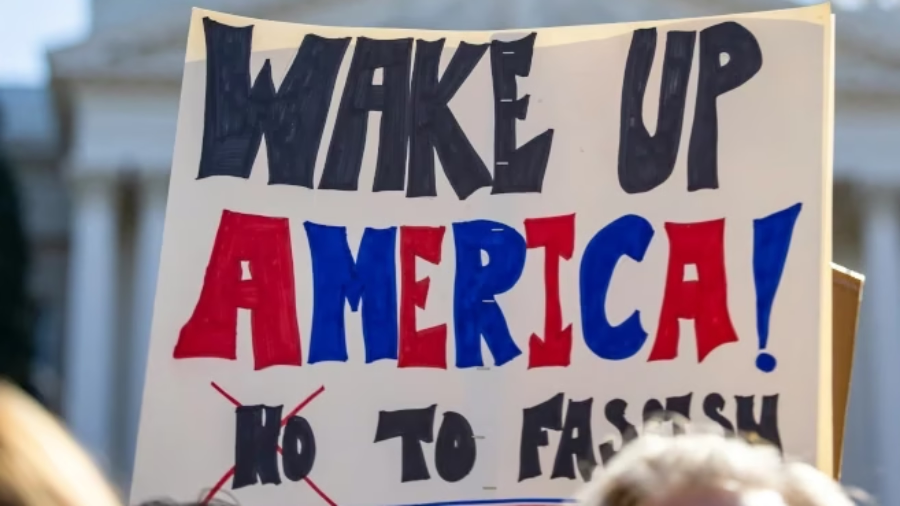
From Democracy to Autocracy: How Misinformation and Power Without Morality Are Leading America Astray

Introduction: The Silent Slide

The United States, long hailed as the world’s oldest continuous democracy, is undergoing a transformation few are willing to name aloud. The journey from democracy to autocracy is subtle yet relentless, driven by forces that prey on fear, misinformation, and moral flexibility.

This is not a sudden collapse. It is a slow erosion: institutions weakened, norms disregarded, and citizens polarized. What was once a shared belief in the rule of law has been replaced by loyalty to narrative over truth, identity over principle, and power over morality.

In this blog, we’ll explore how America is edging toward autocracy, the mechanisms fueling this shift, and the social, political, and ethical consequences of ignoring it.

Understanding Autocracy in a Modern Context

Autocracy is defined as a system of government where power concentrates in the hands of a single individual or a small elite, often bypassing constitutional checks, public accountability, and the rule of law.

Unlike historical coups or violent takeovers, modern autocracies often emerge gradually. Scholars like Steven Levitsky and Daniel Ziblatt, in How Democracies Die, argue that erosion of democratic norms, coupled with the manipulation of public perception, creates a fertile environment for autocratic leadership. (source)

In America today, we see several warning signs:

  • Disregard for electoral legitimacy
  • Politicization of the justice system
  • Erosion of independent media credibility
  • Attacks on civil institutions

These elements signal a shift from democracy to autocracy, even without overt dictatorship.

Misinformation as the Engine of Autocracy

The Weaponization of False Narratives

Misinformation is more than “fake news”; it’s a strategic tool used to shape public perception, delegitimize opposition, and concentrate power.

Examples include:

  • Election denial narratives claiming votes were “stolen” without evidence
  • COVID-19 conspiracies that undermined public health authorities
  • Media vilification campaigns against whistleblowers and investigative journalists

Such narratives erode the shared facts that democratic discourse depends on.

Social Media Amplification

According to Pew Research, 64% of Americans get news via social media platforms like Facebook and X/Twitter. (source)

Algorithms prioritize engagement, often promoting outrage and falsehoods. This creates “echo chambers” where misinformation thrives unchecked, making citizens susceptible to autocratic appeals framed as protective or patriotic.

Power Without Morality: The Ethics Vacuum

Unchecked power often coincides with moral compromise. In a democracy, ethical constraints act as guardrails; without them, autocracy accelerates.

Institutional Corruption

When leaders prioritize loyalty over competence, key institutions—courts, federal agencies, law enforcement—become tools of political power rather than guardians of law.

  • Example: Political interference in investigations or prosecutions to protect allies or punish critics
  • Example: Using executive orders to bypass legislative scrutiny

H3: Normalization of Rule-Bending

Moral flexibility becomes acceptable when leaders model it. Once citizens and politicians internalize that rules are optional, the foundation of democracy crumbles.

Cultural and Political Polarization

Polarization makes the shift from democracy to autocracy easier. When society is deeply divided, fear and grievance can justify extreme measures.

  • Tribal identity politics replace national identity
  • Opposition is framed as existential threat, not a legitimate competitor
  • Conspiracies and misinformation reinforce tribalism

This polarization was evident during events such as the January 6th Capitol attack, where partisan identity overshadowed constitutional norms. (source)

The Role of Leadership in the Autocratic Shift

Autocracies rarely emerge spontaneously; they are catalyzed by leaders who exploit crises and public fear. Leadership traits that accelerate the slide include:

  • Charismatic appeal paired with authoritarian instincts
  • Manipulation of truth to consolidate support
  • Delegitimization of independent institutions
  • Rewarding loyalty over competence

These traits create a feedback loop where followers reinforce autocratic behavior and reject dissenting voices.

Table: Democracy vs. Autocracy Indicators

Democracy IndicatorsAutocracy Indicators
Free and fair electionsElectoral manipulation and denial
Independent judiciaryPoliticized courts and prosecutions
Free pressState media control and censorship
Respect for institutionsAttacks on civil and political institutions
Rule of lawLoyalty to leader above law
Shared public factsWeaponized misinformation
Ethical governanceMorality subordinate to power

How Citizens Become Complicit

Autocratic shifts are rarely stopped by citizens, especially when:

  • Fear is amplified (economic, cultural, political)
  • Misinformation creates uncertainty or mistrust
  • Tribalism outweighs national interest

Sociologists refer to this as “coerced consent”—not everyone actively supports autocracy, but many comply passively, enabling its expansion.

The Consequences of Ignoring the Shift

Democratic Erosion

Unchecked, misinformation and moral compromise lead to:

  • Undermined elections
  • Weakened civil liberties
  • Decline in civic engagement

Institutional Fragility

Courts, law enforcement, and legislatures become extensions of political will rather than safeguards, reducing accountability.

Long-Term Societal Impacts

  • Civic distrust
  • Heightened social polarization
  • Risk of political violence
  • International erosion of America’s democratic credibility

Signs of Resistance and Hope

Despite these challenges, resistance exists:

  • Independent media outlets exposing misinformation (ProPublica)
  • Grassroots civic engagement promoting transparency
  • Legislative reforms to strengthen institutional checks
  • Civil society advocacy for accountability and ethics

What Can Be Done to Reverse the Slide?

Strengthening Institutions

  • Protect judicial independence
  • Reinforce electoral integrity
  • Safeguard law enforcement from political interference

Combating Misinformation

  • Media literacy campaigns
  • Fact-checking and responsible reporting
  • Transparency in government communications

Restoring Ethical Governance

  • Reward ethical leadership
  • Encourage whistleblower protections
  • Promote moral accountability in public office

Conclusion: The Urgency of Awareness

The shift from democracy to autocracy is not inevitable, but it is accelerating. Misinformation, unchecked power, and moral compromise are transforming American governance and society.

Citizens, institutions, and civil society must recognize the warning signs and act decisively to preserve democracy. History reminds us that democracy is fragile—it thrives only when its principles are actively defended.

America’s survival as a free, democratic nation depends on reclaiming truth, reinforcing moral governance, and restoring checks on concentrated power.

Call to Action

  • Stay informed: Follow reputable sources and fact-check information.
  • Engage civically: Participate in elections, town halls, and community forums.
  • Support transparency: Advocate for institutional accountability and whistleblower protections.
  • Share this post: Help others understand the warning signs of democratic erosion.

Together, awareness and action can halt the slide from democracy to autocracy and restore the promise of accountable governance.

References & Further Reading

  1. Levitsky, Steven & Ziblatt, Daniel. How Democracies Die. Crown Publishing, 2018. (foreignaffairs.com)
  2. Pew Research Center, Social Media and News Use, 2022. (pewresearch.org)
  3. Brookings Institution, January 6 Insurrection: Lessons Learned, 2023. (brookings.edu)
  4. ProPublica, Investigative Journalism on Political Corruption. (propublica.org)
  5. Freedom House, Freedom in the World Report 2025. (freedomhouse.org)