
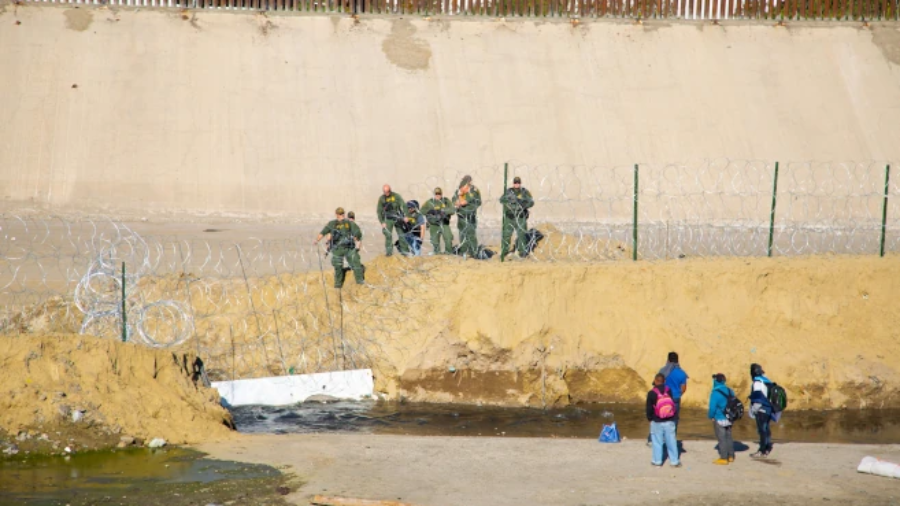
“When the desert blooms in one place, it silently dies in another — people will move.”
That image—arid land turning into dust, people marching toward any place that still yields life—is central to the question: despite anti-migration policies, can humanity ever truly end migration? To ask it is to confront deep structural, social, climatic, economic, and moral forces. In this post, I explore how anti-migration policies are being deployed around the world, what they can (and can’t) achieve, and whether the idea of a “world without migration” is realistic—or even ethical.
Introduction — Why “anti-migration policies” fascinate and frighten
The phrase anti-migration policies conjures lines of barbed wire, walls, fences, expulsion orders, deterrent funding, pushbacks at sea, and ever-stricter visa regimes. From asylum deterrence tactics in Europe to de facto bans in Gulf states, many nations are doubling down on restricting who moves and how. But migration is not merely a choice—it is an expression of inequity, climate distress, conflict, economic divergence, and human aspiration.
So the central tension: states assert the right to control their borders; people assert the right to seek safety and opportunity. Can anti-migration policies ever fully “solve” migration? Or are they destined always to fall short, forcing societies to live with a paradox?
Mapping anti-migration policies globally
Before we address whether migration can end, we first need to survey the landscape of how states try to stop, slow or manage migration.
Major types of anti-migration policies
| Strategy | Mechanism | Notable examples / issues |
|---|---|---|
| Border fortification & physical barriers | Walls, fences, border patrol intensification | U.S.–Mexico wall, fences in Hungary/Poland, Australia’s offshore processing |
| Externalization / outsourcing | Paying transit or third countries to intercept migrants | EU funding to Libya, agreements with Turkey, “safe third country” rules (Wikipedia) |
| Deterrence via harsh conditions | Detention, prolonged asylum processing, criminalization | Australia’s Nauru/Manus detention; Greece threatening jail for rejected asylum seekers (AP News) |
| Deportation & “return” agreements | Mass expulsions, bilateral readmission deals | UK’s “one in, one out” deportations to France (AP News) |
| Visa restrictions / restrictive immigration quotas | Tighter work visas, high thresholds, family migration limits | U.S. 1924 Immigration Act (migrationpolicy.org); recent UK proposed limits |
| Technological & algorithmic controls | AI border checks, risk scoring, biometric constraints | The EU is increasingly using ADM (automated decision-making) at borders — with serious ethical risks (arXiv) |
| Discursive / narrative control & misinformation | Criminalizing migrants linguistically, demonizing rhetoric | Anti-immigration posts spread faster than pro-immigration content on social media (arXiv) |
These tactics are often layered together: a border wall alone doesn’t stop people if pushbacks at sea or detention inside the country remain. The more difficult the journey, the likelier that migrants funnel into more dangerous routes.
Recent trends & shifts
- Europe’s New Pact on Migration and Asylum (effective from 2026) will push more deportations to third countries and harmonize stricter asylum rules (Wikipedia).
- Greece is introducing prison sentences for rejected asylum seekers as part of a crackdown. (AP News)
- The UK’s new “one in, one out” policy shipped a migrant back to France, marking a harder-line shift. (AP News)
- In many countries, political leaders evoke migrant “invasions” or loss of national identity—normalizing strict control rhetoric. The influence of U.S. anti-immigration discourse in European policy is well documented (Real Instituto Elcano).
These shifts reflect more than policy changes—they reflect deeper political realignments where migration becomes a boogeyman for economic anxiety and identity upheaval.
Why anti-migration policies cannot end migration
Having mapped how states try to resist migration, let’s now dig into why such efforts will always partially fail if the root forces pushing people remain.
1. Migration is older than states
Human migration long predates nations. The Migration Period (c. 300–600 AD) saw mass movements of tribes across Europe that reshaped civilizations (Wikipedia). In modern times, industrialization and global inequality have turned migration into a structural constant. As historian Ian Goldin notes:
“People moved in search of safety, stability, and opportunity” — until the 1890s, migration within Europe mirrored cross-Atlantic flows. (IMF)
Put simply: migration is a response to geography, economics, conflict, climate and human aspiration. No border wall can stop a climate-driven drought or a violent war.
2. Push factors intensify
As conflicts, climate change, resource scarcity, weak governance, and inequality worsen, push factors either remain steady or accelerate. Anti-migration policies act on the symptom (movement), not the cause (conditions driving movement). Without addressing the deeper crises in origin countries, deterrence won’t make people stay—they’ll take ever more perilous paths.
3. Smuggling & underground routes adapt
Whenever a migration corridor is blocked, new, more dangerous routes open. Smugglers evolve. When the U.S. tightened access from Mexico, migrants rerouted through Central America or the Darien Gap. The ‘closing’ of migration paths seldom stops movement—it shifts it.
4. Human rights, asylum obligations & international law
No matter how strict, states must respect rights of asylum seekers, refugees, torture conventions, and non-refoulement principles. Many anti-migration laws skirt legal lines or make legal challenges. The safe third country doctrine is often abused—removing asylum possibility entirely (which may violate protection obligations) (Wikipedia).
5. Demographic, economic and aging pressures
Many countries now face aging populations and labor shortages. Immigrants are often part of the solution to demographic decline. If a state truly tried to end migration, it would starve its labor market, stunt innovation, and risk stagnation.
6. Moral and ethical constraints
A world without migration is a world of sealed borders and a fortress mentality. That undermines the ethos of human dignity: people seeking safety, family reunification, education, life. The moral pressure to offer refuge will always resist total closure.
Counterexamples & illusion of “success”
Some regimes boast near-zero migration, but their “success” is costly, coercive, or unsustainable.
- North Korea keeps almost all movement internal via extreme controls, but at tremendous human cost and near total suppression of freedoms.
- Gulf states often restrict citizenship and maintain a large underclass of migrant workers with precarious rights—not truly “ending migration,” but tightly controlling it.
- Japan’s rising “Japanese first” rhetoric (by the Sanseito party) is more symbolic than absolute; the nation still accepts foreign labor under strict conditions (Wikipedia).
These are not ethical models for global policy—they limit migration by limiting human freedoms.
Fresh perspectives & personal reflections
Over years of reading migration testimonies and field reports, several patterns struck me:
- Migrants don’t view movement as “illicit.” When forced, it’s survival, opportunity, family. Anti-migration laws criminalize hope.
- Many migrants said: “I would not have left, but conflict killed the choice to stay.” You can’t legislate away war or climate.
- Community networks matter enormously. Diasporas, remittances, information flow keep paths alive—closing one border may not knock out the chain of trust and networks.
- Digital tools, WhatsApp routes, satellite connections—all help shape “invisible highways” beyond state control.
These suggest that migration is not only physical movement—it is relational, human and adaptive.
Toward realistic aims: not ending, but managing & humanizing migration
Given that migration cannot (and probably should not) be entirely ended, the question becomes: how do we make it safer, more equitable, and better governed?
1. Shift from deterrence to opportunity
Instead of punishing movement, invest in local opportunity in origin countries—jobs, infrastructure, governance, climate resilience. If movement is a safety valve, strengthen conditions so that staying becomes an acceptable and dignified option.
2. Transparent, humane migration channels
Rather than shutting doors, open safe routes: labor migration visas, mobility pacts, migration corridors. A rigid gate creates clandestine tunnels; an open window lets people come safely.
3. Shared responsibility & burden sharing
No country should absorb all migration. Mechanisms like the EU’s Pact (2026), which forces burden-sharing and joint processing, point in this direction (Wikipedia).
Multilateral systems that distribute hosting, resettlement and integration costs can reduce the pressure to “close borders.”
4. Legal oversight of tech & algorithmic borders
As states deploy AI and automated decision systems at borders, strong legal frameworks must protect privacy, prevent bias, and ensure appeal rights (arXiv). Borders must serve people—not the other way around.
5. Narrative change, civic inclusion & countering misinformation
Anti-migration sentiment is powerfully shaped by narratives and social media. Studies show anti-immigration content spreads faster online than pro content (arXiv). Investing in counter-narratives, fact checks, diaspora voices, and legislative bans on hate speech can change public terrain.
6. Gradual integration & community bridges
When migration is inevitable, welcoming systems (education, language, social connection) reduce friction. Integration over exclusion yields social cohesion over conflict.
Can humanity ever end migration? The verdict
If I were to answer simply: No—migration cannot realistically be ended. But that is not defeatism. It is a recognition that migration is as much a human need as hunger or health.
- Attempting to end migration at the border level is like trying to suppress waves with a sandcastle.
- Anti-migration policies can reduce certain flows (especially lower-risk, legal ones), but they can never fully block high pressure flows.
- The only way “migration ends” is when the root causes—geopolitical inequality, climate breakdown, conflict, exclusion—are resolved at global scale. And even then, movement will persist as part of human exchange.
Rather than “end migration,” our goal should be to transform migration—make it safer, more humane, more equitable, better governed.
Key insights: what every reader should remember
- Migration is structural — rooted in global inequality, climate, conflict and aspiration.
- Anti-migration policies are always partial — they displace flows, increase danger, and often violate rights.
- Human agency resists total closure — social networks, desperation and choice always find a way.
- Ethics matter — walls may close borders, but not human dignity.
- Transformation over elimination — safer routes, equitable systems, responsibility sharing offer the real future.
Conclusion & Call to Action
Anti-migration policies are tactical experiments in border control—they will never extinguish the human drive to move, to survive, to hope. But we must channel our energy into building better systems, not tighter ones.
If you found yourself shaken by this post, here are three actions you can take:
- Share your voice: bring this topic into your community, challenge simplistic narratives.
- Support humane migration NGOs: organizations working on safe routes, legal aid, refugee support.
- Stay informed: follow reliable sources (e.g. IOM, Migration Policy Institute, UNHCR) and push for legislation that protects rights, not erodes them.
⚠️ Migration may never end—but it can be kinder, fairer, more just. That’s what’s worth fighting for.
References
- International Organization for Migration (IOM). (2024). World Migration Report 2024. Geneva: IOM.
- UNHCR. (2023). Global Trends: Forced Displacement in 2023. Geneva: UNHCR.
- European Commission. (2024). New Pact on Migration and Asylum. Brussels: European Union. Retrieved from https://ec.europa.eu
- Goldin, I. (2025). “A Moving History.” Finance & Development, International Monetary Fund. Retrieved from https://www.imf.org
- Migration Policy Institute. (2023). “The U.S. Immigration Act of 1924 and Its Legacy.” Washington, DC. Retrieved from https://www.migrationpolicy.org
- Real Instituto Elcano. (2024). The Trail of Trump’s Anti-Immigration Policies in Europe. Madrid. Retrieved from https://www.realinstitutoelcano.org
- AP News. (2024). “Greece Approves Prison Sentences for Rejected Asylum Seekers.” Retrieved from https://apnews.com
- AP News. (2024). “UK Deports Migrants Back to France under New Policy.” Retrieved from https://apnews.com
- Arxiv. (2024). “Automated Decision-Making and Migration Management at the EU Border.” Retrieved from https://arxiv.org
- Arxiv. (2024). “Misinformation and Anti-Immigration Narratives Online.” Retrieved from https://arxiv.org
- Wikipedia. (2025). Migration Period. Retrieved from https://en.wikipedia.org/wiki/Migration_Period
- Wikipedia. (2025). Safe Third Country. Retrieved from https://en.wikipedia.org/wiki/Safe_third_country
- Wikipedia. (2025). Sanseitō Party (Japan). Retrieved from https://en.wikipedia.org/wiki/Sanseit%C5%8D