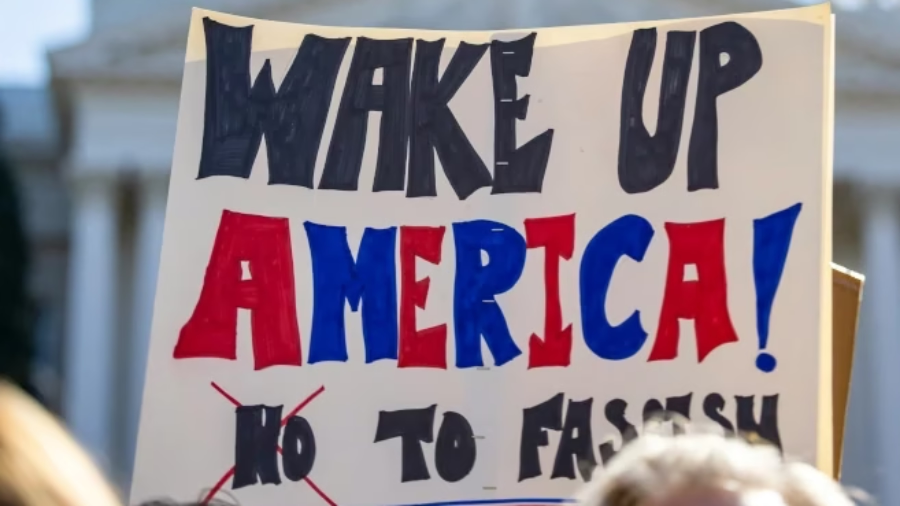
Introduction: The Rise of a Political Cult
The United States has long prided itself on democracy, debate, and the peaceful transfer of power. Yet, over the past decade, a powerful political phenomenon has emerged that threatens these pillars: Trumpism and the MAGA cult.
This movement goes beyond political ideology. It is a culture built on loyalty to a single personality, fueled by misinformation, grievance politics, and a fervent sense of identity. Trump’s rise did not create this movement—it captured and amplified deep-seated cultural anxieties, turning them into a political force that dominates contemporary American politics.
Understanding this phenomenon is not optional. It is essential to comprehending how American democracy can be manipulated, reshaped, and, at times, threatened from within.
What is Trumpism?
Trumpism is more than a political philosophy; it is a hybrid of populism, nationalism, and authoritarian tendencies, centered around loyalty to Donald J. Trump.
Core Features of Trumpism
- Personality-Centric Politics: The movement revolves around Trump’s persona rather than policy.
- Anti-Establishment Rhetoric: Institutions, experts, and long-standing political norms are portrayed as enemies.
- Grievance Politics: Appeals to cultural, economic, and racial anxieties motivate the base.
- Conspiratorial Thinking: Misinformation and conspiracies reinforce belief systems and loyalty.
- Authoritarian Impulses: Norms are subverted to maintain power and control dissent.
Trumpism is not confined to Republican voters. It has influenced media, social networks, and even political discourse globally, reshaping norms and redefining the boundaries of political acceptability. (source)
The MAGA Cult: Loyalty Over Ideology
The MAGA movement is the social and psychological manifestation of Trumpism. Unlike traditional political movements, it operates more like a cult, demanding allegiance to the leader over ideology, facts, or ethical considerations.
Cult Dynamics in Politics
- Unquestioning Loyalty: Members often defend Trump regardless of evidence or truth.
- Demonization of Outsiders: Critics, including moderate Republicans, media, and institutions, are framed as existential threats.
- Emotional Manipulation: Fear, anger, and grievance drive engagement and mobilization.
- Symbolic Rituals: Slogans, rallies, and merchandise reinforce identity and belonging.
These dynamics explain why many followers remain committed even after public controversies or legal challenges, demonstrating the psychological depth of the movement. (source)
Lies and Misinformation as Glue
One of the most potent tools of the MAGA cult is misinformation. Repeated falsehoods create an alternate reality, eroding the shared factual foundation necessary for democracy.
Weaponizing Falsehoods
- Election Fraud Claims: The 2020 election lies undermined public trust in democracy.
- COVID-19 Misinformation: Promoting unproven treatments and downplaying risks endangered public health.
- Media Vilification: Labeling credible sources as “fake news” delegitimizes independent oversight.
The repetition of these narratives fosters cognitive loyalty, conditioning followers to accept misinformation as truth. (source)
Table: Traditional Political Movements vs. Trumpism/MAGA Cult
| Traditional Movements | Trumpism/MAGA Cult |
|---|---|
| Policy-driven debate | Personality-driven loyalty |
| Respect for institutions | Attacks on judiciary, media, and Congress |
| Fact-based discourse | Misinformation and conspiracy acceptance |
| Democratic norms | Authoritarian impulses and norm subversion |
| Civil discourse | Polarization and demonization of opponents |
| Collective civic responsibility | Grievance-driven identity politics |
Racism and Cultural Division
Racism and nativism are core drivers of the MAGA cult, not just incidental features. Trumpism leverages identity politics to solidify loyalty.
Policy and Rhetoric
- Immigration Bans: Policies disproportionately targeting Muslim-majority nations (source)
- Border Enforcement: Aggressive deportation policies fueling cultural anxieties
- Racialized Messaging: Repeatedly framing minorities or immigrants as threats
These tactics cultivate fear and resentment, creating a sense of shared struggle among followers, which reinforces group cohesion.
Authoritarian Tendencies and Power Consolidation
Trumpism demonstrates hallmark authoritarian strategies: centralizing power, subverting norms, and punishing dissent.
Examples of Authoritarian Governance
- Politicizing the Department of Justice and intelligence agencies
- Overreliance on executive orders bypassing legislative checks
- Public threats to and marginalization of political opponents
This approach destabilizes democratic institutions and creates a culture of obedience rather than debate. (source)
Conspiracy Theories and the MAGA Psyche
Conspiratorial thinking is not just tolerated—it is amplified. From QAnon to election “stolen” narratives, these conspiracies provide the MAGA cult with an internal logic that justifies extreme loyalty and delegitimizes dissent.
Political and Social Impact
- Reinforcement of group identity
- Polarization of public opinion
- Justification for political violence, exemplified by January 6th (source)
Without the conspiratorial scaffolding, the cult loses its cohesion and purpose.
Why Trumpism Persisted Despite Controversies
Even after scandals, impeachment proceedings, and electoral defeat, Trumpism endures. Key reasons include:
- Emotional Loyalty: Personal identity is tied to support for Trump
- Information Control: Echo chambers reinforce beliefs
- Fear of “Other”: Cultural, racial, and political threats strengthen group cohesion
- Punishment of Dissent: Political marginalization of those who oppose Trump consolidates base loyalty
This resilience illustrates that Trumpism is not simply political—it is social, psychological, and cultural.
Consequences for American Democracy
Erosion of Trust
- Reduced faith in elections, courts, and media
- Increased polarization and partisanship
Threats to Institutions
- Politicization of independent agencies
- Normalization of executive overreach
Societal Division
- Deepening racial and cultural divides
- Tribalism replacing civic engagement
The implications are long-term, affecting governance, social cohesion, and the ability to respond to national crises effectively.
Visual Suggestions:
- Infographic: “The Anatomy of the MAGA Cult” (showing lies, loyalty, conspiracies, and identity politics)
- Timeline: Key events in Trumpism and MAGA cult formation (2015–2025)
Lessons and the Path Forward
Rebuilding Democratic Norms
- Protect judicial independence
- Strengthen electoral systems and oversight
- Promote civic education and critical media literacy
Combating Misinformation
- Support independent fact-checking
- Encourage media accountability
- Educate the public on misinformation tactics
Cultural and Political Healing
- Dialogue across ideological divides
- Encourage ethical political leadership
- Promote civic responsibility over partisan loyalty
Conclusion: The American Undoing and the Road Ahead
Trumpism and the MAGA cult represent more than a political movement—they are a cultural and psychological phenomenon that has reshaped American politics. Lies, conspiracies, authoritarian impulses, and cultural grievances form a self-reinforcing ecosystem, capturing loyalty and polarizing society.
The challenge is immense but not insurmountable. Restoring democracy requires vigilance, education, ethical governance, and the courage to confront misinformation and cult-like loyalty. The future of American democracy depends on understanding the mechanics of this movement—and taking steps to ensure it does not capture the nation again.
Call to Action
- Stay informed: Critically evaluate information sources
- Engage civically: Vote, attend town halls, and participate in community discussions
- Promote accountability: Support transparent governance and ethical leadership
- Share this post: Help others understand the threat of political cults and the dynamics of Trumpism
References
- Brookings Institution, January 6 Insurrection Analysis. (brookings.edu)
- Vox, Trump’s Travel Ban and Muslim Discrimination. (vox.com)
- Psychology Today, Trump and the Psychology of Political Cults. (psychologytoday.com)
- Foreign Affairs, Trumpism and Its Global Impact. (foreignaffairs.com)
- CDC, COVID-19 Misinformation Resources. (cdc.gov)