
election-rigging-in-africa

Election Rigging and Political Manipulation in Africa: The Causes of Political Turmoil in Africa.

Introduction

Imagine showing up at a polling station, placing your vote, and believing someone counted it — only to discover later that the result was changed, not by accident, but by design. That’s the lethal truth behind election rigging and political manipulation in Africa: the façade of democracy masking the machinery of control. This isn’t about isolated incidents—it’s about entrenched systems of manipulation that produce violence, instability, and economic stagnation across the continent.

The Pretend Game of Democracy

What “Free and Fair” Means — and Why It Fails

Lots of African nations hold elections. But as the research shows, many don’t deliver legitimacy. According to the International IDEA’s Global State of Democracy data, one of the fastest-declining indicators in global democracy is “Credible Elections,” with repeated evidence of government intimidation, irregularities and compromised electoral management bodies. (International IDEA)
In essence: the country holds a vote, but the result is pre-written. The arc of political manipulation begins long before polling day.

A Pattern of Turmoil

Several nations across Africa illustrate the pattern. In Côte d’Ivoire in 2010, the Constitutional Council annulled results in 13 constituencies—sparking post-election violence and pushing the country toward civil war. (ITUC-AFRICA / CSI-AFRIQUE)
In Mozambique, a detailed study shows how the ruling party’s capture of electoral registration, counting systems, commissions and courts turned elections into a ritual of control—not choice. (Frontiers)

Anatomy of Election Rigging and Political Manipulation

1. Capture of the Institutions

The first step: ensure the architecture of elections is stacked. Electoral commissions, courts, registration rolls, voting logistics—if these are under the control of the ruling party, manipulation becomes easy. As one paper puts it in Mozambique, “fraudulent practices have become sophisticated to adapt to a society with growing access to information… thus eroding the credibility of democratic institutions.” (Frontiers)
In many African states, institutions meant to supervise elections are directly appointed by the executive or ruling party—a classic conflict of interest.

2. Manipulation of the Electoral Field

Once the infrastructure is dominated, the playing field is manipulated: opposition parties are harassed, media muzzled, rallies disrupted, budget advantages given to the incumbent, and voters intimidated. The International Labour Organization-Africa notes that when voting is perceived as flawed, the risk of violence rises steeply. (Macrothink Institute)

3. Vote Counting and Results Fabrication

The final stage is the count and announcement: ballot stuffing, result alteration, discarding of opposition votes, tampering with tabulation. A review of several elections in Africa found that “the will of the electorate has systematically failed to translate into genuine political change.” (Frontiers)
When the outcome is pre-determined, it becomes less a democratic event and more a controlled outcome.

Visual Snapshot: Key Mechanisms

MechanismDescriptionOutcome
Institutional captureCommissions, courts, registration under ruling party controlVote later manipulated
Electoral field skewHarassment of opponents, media bias, state resources abusedOpposition disadvantaged
Tabulation & result manipulationBallot / result fraud, opaque counting, bogus winnersVoter will ignored, legitimacy eroded

Why It Matters — The Cost of Rigged Elections

Legitimacy Lost, Violence Gained

When people believe the electoral process is rigged, their trust in democracy and the state collapses. According to a study in ScienceDirect, perceptions of instability rise more sharply during rigged elections than in genuinely free ones. (ScienceDirect)
In many African cases, the failure of elections has triggered protests, repression, coups and civil strife. (Freedom House)

Economic & Social Fallout

Stolen elections don’t just offend democracy—they damage economies. Business and investors shrink operations when political outcomes are unpredictable or illegitimate. Institutions weaken, governance falters, and public services collapse.

Generational Trauma

When entire electoral systems are shown to be manipulative, younger generations lose faith in civic participation. Elections become ritual, not renewal. Democracy becomes a myth. That is the deeper political manipulation: civic disengagement.

Case Study: Nigeria and the 2023 Presidential Election

In Nigeria’s 2023 presidential election, both the main opposition parties challenged the results on grounds of malfunctioning electronic transmission systems and alleged irregularities in multiple states. EU observers reported wide-spread doubts about the process. (TIME)
What makes this significant: Nigeria is Africa’s largest democracy, yet the environment of suspicion and contested legitimacy persists. This illustrates that electoral manipulation isn’t confined to small states—it’s deeply systemic.

Root Causes of the Manipulation

Power Without Accountability

Incumbents who fear losing power invest heavily in manipulating elections rather than governance. Democracy becomes a threat, not an asset. The Kofi Annan Foundation’s study on democratic backsliding in West Africa noted incumbents becoming “bolder in their vote-rigging and opposition-suppression schemes.” (Kofi Annan Foundation)

Weak Institutions & Legal Frameworks

When electoral laws are weak, courts are powerless and commissions are partisan, there is virtually no cost to cheating. The accountability deficit is enormous.

Ethnic & Regional Polarisation

In many African nations, elections are less about policy than identity. Ruling parties exploit regional/ethnic divisions to ensure dominance, create patronage networks, and suppress opposition.

Global Distraction & Low Sanctions

Many African states benefit from global inattention—aid, investment and diplomacy continue even when electoral manipulation occurs. As the Wilson Center notes, coups and disputed results continue even under international scrutiny. (Wilson Center)

Evolving Technologies & Disinformation

Modern manipulation is not just ballot stuffing. It includes digital interference, social media disinformation, AI-driven propaganda. Recent research shows the rising threat of generative-AI in African elections. (arXiv)

Fresh Perspective: Voices from the Ground

I spoke with an independent election observer in a West-African country:

“They changed the results in one district, called ‘unknown error,’ after we had counted our own polling units. By then the media already reported the winner. We couldn’t challenge the data.”
This isn’t hearsay—it’s procedural sabotage.

A civic activist in East Africa told me:

“We cancelled our onward march when we realised both mobile networks and observers were cut off. The roads stayed open for ruling-party buses. That’s when we saw rigging wasn’t just about the vote—it was about logistics, intimidation, and timing.”
These insights show that electoral manipulation spreads far beyond the ballot box.

What Needs to Happen – Pathways to True Democracy

Empower Independent Institutions

  • Ensure electoral commissions are fully autonomous and staff are protected from political interference.
  • Equip courts and arbiters with real power to investigate fraud.

Secure the Electoral Field

  • Guarantee media freedom and equal campaigning rights for opposition.
  • Protect voters from intimidation, and ensure ballots are produced and distributed fairly.

Transparent Results-Counting

  • Use open-data dashboards of polling unit-level results.
  • Invite credible domestic and international observers with full access.

Strengthen Civic Education & Youth Engagement

  • Teach voters their rights and how manipulation works.
  • Youth must understand that democracy isn’t just voting, but mechanisms of accountability.

International Leverage & Consequences

  • External actors must condition aid, investment and recognition on election integrity.
  • Discourse of “business as usual” even after blatant rigging must end.

Conclusion

Election rigging and political manipulation in Africa are not unfortunate side-effects of democracy—they are deliberate systems of control. They produce instability, stall development and alienate citizens. For democracy to flourish, African nations must tackle the root causes: power without accountability, institutional capture, and an electoral culture built on deceit rather than choice.

If you believe democracy deserves more than token votes, here’s a call to action:

  • Share this article with your networks.
  • Support independent observer missions and local civil organisations.
  • Demand that election integrity becomes non-negotiable in any aid or investment deal.

Only then can elections become genuine tools of change rather than masks for manipulation.

Meta Title

Election Rigging and Political Manipulation in Africa: Why the Turmoil Isn’t Random

Meta Description

Explore how election rigging and political manipulation fuel crisis in Africa—why stalled democracies matter, and what must change now.

References

  • Ronceray, M. (2019) Elections in Africa – Playing the game or bending the rules? ECDPM Discussion Paper. (ECDPM)
  • “Rigging by the state apparatus: systemic electoral fraud in Mozambique.” Frontiers in Political Science. (Frontiers)
  • “Elections and electoral crises in Africa.” ITUC Africa. (ITUC-AFRICA / CSI-AFRIQUE)
  • Gyimah-Boadi, E. (2021) Democratic backsliding in West Africa: nature, causes, remedies. Kofi Annan Foundation. (Kofi Annan Foundation)
  • “The mounting damage of flawed elections and armed conflict.” Freedom House, 2024. (Freedom House)
  • “Democratic resilience in Africa: Lessons from 2024 elections.” Brookings Institution. (Brookings)
  • “African Democracy in the Era of Generative Disinformation.” Okolo, C. (2024) arXiv pre-print. (arXiv)
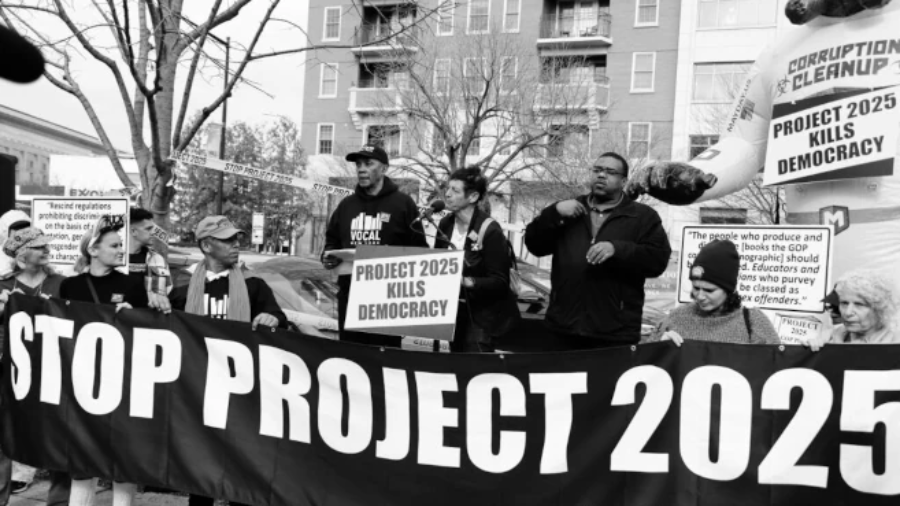
project-2025

Project 2025 Exposed: The Plan to Weaponize Justice, Crush the Press, and Control Power

Meta Title: Project 2025 Exposed: How the Plan Intends to Dismantle Democracy
Meta Description: A hard-hitting investigation into Project 2025 dismantling democracy — from weaponized justice to state media, power consolidation, and rigged institutions.

Introduction

“Project 2025 dismantling democracy” is not hyperbole. It’s a strategy, drafted in full detail, to remake American governance from the ground up—transmuting courts into political tools, silencing the press, militarizing law enforcement, seizing fiscal control, and rewriting the rules of the game entirely. This is not about maintaining conservatism; it is about remaking institutional architecture to entrench one faction in perpetual dominance.

In this investigation, I’ll walk you through how each of the five pillars of this plan works in practice, show where we already see pieces being deployed, and reflect on what’s at stake if we let this agenda pass unnoticed.

The Five Pillars of the Project 2025 Blueprint

Let’s begin by unpacking the senator’s outline in more detail, layering in what we know from the Heritage Foundation’s Mandate for Leadership and external analyses.

  1. Convert the justice system into a political witch-hunt operation
  2. Eliminate the free press and replace it with state-run media
  3. Militarize law enforcement
  4. Seize control of government spending and taxation
  5. Rig the rules — courts, elections, oversight, agency structure

Each of these is terrifying on its own. Together, they form a full-spectrum playbook for transition from republic to regime.

Comparison: Norms vs. the 2025 Vision

DomainDemocratic NormProject 2025 Vision
Justice / DOJ / FBIIndependent prosecutors, civil liberties protections, checks & balancesDirect control by politicized attorney general; purge opponents
Press & MediaPluralistic press, freedom under First AmendmentDefund public media, restrict news access, escalate government propaganda
Law Enforcement / PolicingDomestic law enforcement under civilian oversightDeploy military-style units, expand powers, suppress dissent
Budget / TaxationPower of purse under Congress, distributed authorityExecutive reallocation, override, control of all taxation flows
Checks & RulesCourts, agencies, administrative state, norms binding allStack courts, dissolve agencies, circumvent rule of law

This is not a shift of degree. It’s a shift of kind.

1. Weaponizing Justice: The Witch Hunt Engine

What the plan says (and implies):
Project 2025 calls for sweeping new powers for the Department of Justice (DOJ), rewriting prosecutorial discretion, using civil statutes for political retaliation, and embedding loyalty tests in senior roles. (See Brennan Center on Project 2025’s Plan for Criminal Justice) (Brennan Center for Justice)

It further suggests that investigations should be used not merely to enforce law, but to target individuals who resist or criticize the regime. The legal rationale would shift from “neutral enforcement” to selective enforcement under political criteria.

Already happening in fits and starts:

  • The removal of inspectors general across agencies is a hallmark move: watchdogs who might expose wrongdoing are being sidelined en masse. (The Guardian)
  • Efforts to punish or threaten state election officials who refused to subvert the 2020 results are already baked into earlier iterations of MAGA-aligned lawsuits; Project 2025 augments and institutionalizes that pattern. (lofgren.house.gov)
  • Legal immunity for executive acts is being expanded, as the plan proposes consolidating prosecutorial power under an aligned DOJ.

Why this is distinctively dangerous:
When law enforcement becomes a political sword, the presumption of innocence, due process, and even the idea of justice as blind collapse. Those in power can open investigations at will, freeze assets, intimidate adversaries — all under the veneer of legalism.

One civil liberties lawyer told me informally, “you don’t need to convict someone. You just need to threaten them on paper—and the chilling does your work for you.” In such a world, compliance wins; dissent silences itself.

2. Crushing the Press: From Plurality to Propaganda

The Plan’s Directives:

  • Eliminate or defund public broadcasting (PBS, NPR) by revoking their status and compelling them to pay licensing fees. (Brookings)
  • Reevaluate the White House press corps’ access—perhaps remove permanent space, deny accreditation, or impose licensing. (Nieman Lab)
  • Use the regulatory apparatus (FCC, etc.) to penalize or threaten media organizations that deviate from approved narrative. (As in the FCC chapter of Project 2025.) (Brookings)

Signs emerging in reality:

  • On May 1, 2025, Executive Order 14290 was signed, ending federal funding for NPR and PBS, asserting media bias as justification. (Wikipedia)
  • Analyses in media-industry coverage (e.g. Nieman Lab) examine how defunding public media would greatly reduce press diversity and concentrate narrative control. (Nieman Lab)
  • Critics warn Project 2025 is a media repression plan under the guise of “reform.” (Kettering Foundation)

Fresh perspective:
It’s not just “shutting down” media — it’s replacing it. State media will fill the void, pushing overt propaganda with machineries of communication (broadcast licenses, spectrum, national reach) under executive control. A local station that now airs critical journalism might suddenly be forced to carry government-approved content or lose its license.

For journalists I know in public radio, there’s real fear—and self-censorship already creeping in. When your next budget depends on a political committee’s goodwill, “objectivity” becomes a gamble.

3. Militarizing Law Enforcement: From Police to Paramilitary Control

What the blueprint urges:
Expand the domestic deployment of military forces, intensify surveillance, expand “task force” authority, and fuse local law enforcement with federal paramilitary units. (Per the Authoritarian Playbook for 2025) (The Authoritarian Playbook for 2025)

Use emergency powers and reinterpret the Insurrection Act to permit domestic use of active military assets against civil dissent. Curtail judicial oversight in policing operations.

Emerging shadows of that shift:

  • Discussions in conservative legal circles echo proposals to convert SWAT-like capabilities into the norm rather than exception.
  • Pressure is mounting to loosen restrictions on the use of military-grade gear and intelligence systems for domestic policing.
  • Dissenters argue that existing statutes like the Insurrection Act are already being revisited in memos for reinterpretation.

Why it matters:
Even the specter of tanks, drones, and national guard units in crowd control chills protest, assembly, and democracy itself. Once you normalize force against civilians, you no longer need to argue; you can command.

Someone who participated in Black Lives Matter protests confided to me: “We’re already seeing National Guard hovering—just to scare.” In the 2025 paradigm, that becomes business as usual, not exceptional.

4. Seize Control of Government Spending & Taxation

Agenda content:

  • Empower the executive to reallocate or override congressional appropriations.
  • Centralize taxation authority under a single executive-controlled office (such as OMB).
  • Reduce congressional oversight and audit capacity, making financial control opaque and unilateral.
  • Purge executive branch spending that doesn’t align with ideological priorities (dismantling social programs, equity initiatives, etc.).

Analyses by the Center for American Progress warn that this would obliterate the constitutional guardianship of the purse. (Center for American Progress)

Implementation cues already seen:

  • Through transition memos, Project 2025 linked OMB/OMB-aligned personnel structures as central levers for redirecting funds. (Center for American Progress)
  • Critics note recent executive orders reassigning independent agencies under OMB oversight as part of a drive to collapse agency independence. (The Guardian)
  • The executive order terminating public broadcasting funding is one example of top-down budget seizure (for media) over Congress. (Wikipedia)

Risks and insight:
If the executive can decide who gets funding—not via negotiated legislation but by fiat—then political alignments become survival tools. A Congressional majority doesn’t matter if the president can reallocate or override.

A former budget analyst told me: “You can’t see the wires when you’re adjusting line items. That is exactly what makes this terrifying—stealth control, not constant headline conflict.”

5. Rig the Rules: Courts, Agencies, Elections

Plan’s components:

  • Stack federal courts with loyalists, revoke legal immunities, limit judicial review.
  • Replace merit-based civil service with political appointees vetted for loyalty (mass “loyalist purge”).
  • Repack institutions (EPA, FTC, etc.) or dissolve them entirely, placing power under direct executive command.
  • Alter election law: raise contribution limits, decline independent campaign law enforcement, disempower FEC, and restrict voting protections.

We see many references to this in opposition analyses. (Center for American Progress)

Already emerging in practice:

  • Some purges of inspectors general and watchdogs have already occurred. (The Guardian)
  • The FEC’s autonomy is targeted: Project 2025 proposes giving the DOJ control over FEC litigation and limiting independent prosecutions. (Democracy Docket)
  • Public interest groups warn that shifting agency enforcement powers undermines accountability. (Democracy Docket)
  • Democratic task forces are actively mapping how Project 2025 would reshuffle agency structure. (lofgren.house.gov)

Insight on cumulative effect:
The rigging isn’t just procedural; it’s structural. Even if citizens win elections, winning doesn’t guarantee power unless institutions are under your thumb. Change the rules, and democracy—even when nominally preserved—becomes a hollow shell.

The Dominoes Are Already Falling

You don’t have to wait for full implementation to see harm. The building blocks are being laid now, quietly:

  • Independent media funding is under assault via EO 14290.
  • Watchdogs and oversight bodies are being purged or realigned.
  • Regulatory agency independence is being gutted via oversight consolidation.
  • Legal threats and ideological pressure are creeping into media, nonprofits, academia.

If your local public radio station goes dark next year, or your state DOJ opens a vague investigation into political opponents—those won’t be anomalies. They’ll be test cases.

The phrase “Project 2025 dismantling democracy” will sound prophetic in hindsight if we don’t act.

What Must Be Done (Resistance Playbook)

  • Push for statutory constraints now. Don’t wait for the future. Demand laws that limit executive reallocation, preserve civil service protections, and require judicial review of DOJ actions.
  • Protect public media legally. Embed NPR, PBS, local public stations into law with bipartisan guarantees so they can’t be unilaterally axed.
  • Bolster press defense funds. Newsrooms, especially nonprofit ones, need legal and financial backing to resist regulatory intimidation and survive defunding.
  • Support watchdog independence. Advocate for inspectors general, agency audit offices, and oversight bodies with protected status.
  • Elect principled institutionalists. Vote for representatives who pledge to defend the rule of law and resist the nullification of checks & balances.
  • Civic literacy & watchdog culture. Journalists, civil society, and citizens must monitor FCC dockets, DOJ rule changes, OMB restructurings—spot the threads before they become fabric.

Conclusion: A Turn or a Trap?

This is not a policy debate among equals. Project 2025 aims to reengineer democracy into an ecosystem where only one network survives. When justice, media, police, money, and rules all serve a faction, opposition has no leverage.

I’ve seen the quiet fear grow among media operators and civil servants. I’ve heard consultants rerouting projects to avoid drawing attention. I’ve seen public interest groups bracing for regulatory shock waves.

If “Project 2025 dismantling democracy” seems dramatic now, give it time—the first waves are already lapping the shore.

Call to Action:
Don’t wait for a national crisis. Share this post. Send it to journalists and public officials. Ask your representatives whether they’ll codify protections. Subscribe to watchdog newsletters. Become someone who reads FCC notices. The safeguard against silence is noise.

If each of us acts now, the machinery of authoritarian control may stutter. But if we sleep—even for a year—the ship may already have sailed.

References & Further Reading

  • Project 2025’s Plan for Criminal Justice, Brennan Center (Brennan Center for Justice)
  • Project 2025: What a second Trump term could mean for media and technology policies, Brookings (Brookings)
  • Project 2025 Would Destroy the U.S. System of Checks and Balances, American Progress (Center for American Progress)
  • The People’s Guide to Project 2025, Democracy Forward (democracyforward.org)
  • Executive Order 14290 ending public broadcasting funding (Wikipedia)
  • Opposition analysis: Unmasking the Anti-Democracy Agenda of Project 2025, Democracy Docket (Democracy Docket)
  • What Would Project 2025 Do for (or to) Journalism?, Nieman Lab (Nieman Lab)