threats against Trump critics

Is Donald J. Trump the Most Dangerous Human Being on Earth? A Multi-Perspective Analysis

Meta Description: Examining whether Donald J. Trump most dangerous human being claims hold merit through analysis of democratic norms, foreign policy disruption, and opposing viewpoints on his presidency.


When historians evaluate the most consequential—and controversial—figures of the early 21st century, Donald J. Trump’s name inevitably surfaces. The question of whether the 47th U.S. President represents the most dangerous human being on earth presently sparks fierce debate across political, academic, and international spheres. This analysis examines multiple perspectives on Trump’s influence, exploring concerns about democratic institutions, international stability, and social cohesion alongside counterarguments defending his policies and approach.

The Democratic Backsliding Argument

Concerns from Political Scientists

A striking development emerged in early 2025 when more than 500 political scientists surveyed by Bright Line Watch gave American democracy a rating that plummeted from 67 (after Trump’s November election) to 55 just weeks into his second term. Harvard professor Steven Levitsky, co-author of “How Democracies Die,” characterizes the current situation starkly: the United States has slid into what he describes as a relatively mild but reversible form of authoritarianism.

The concerns center on several key areas. During his first week as president in January 2025, Trump issued numerous executive orders, statements, and restructurings that targeted the executive branch, horizontal institutions, and civil society, with this three-level effort continuing in subsequent months. The Carnegie Endowment for International Peace notes that while Trump’s pursuit of executive dominance has been particularly fast, the degree of democratic erosion isn’t yet as severe as in most backsliding peer nations.

Project 2025 and Institutional Transformation

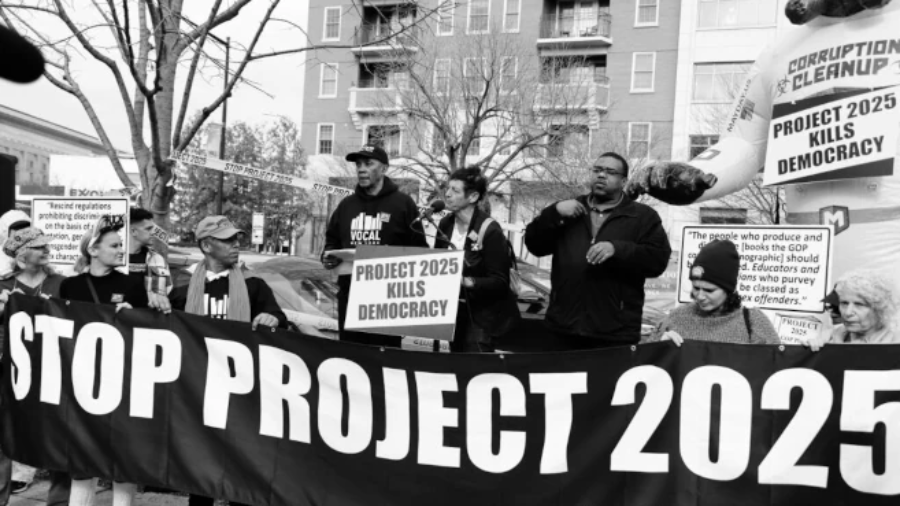
The Heritage Foundation’s Project 2025 blueprint has become central to understanding Trump’s second-term agenda. Within the first six months of Trump’s second term, nearly half of Project 2025’s hundreds of policy proposals were implemented, touching virtually every aspect of public and private life. Critics argue this represents a systematic dismantling of checks and balances that have existed since the nation’s founding.

Trump’s pardon of roughly 1,500 January 6 insurrectionists on his first day in office, including individuals who assaulted police officers, raised concerns about undermining the impartiality and independence of U.S. rule of law. The Brookings Institution warns that such actions threaten the pillars of protecting elections, defending rule of law, and fighting corruption.

The Unitary Executive Theory Push

Trump’s administration has aggressively pursued the unitary executive theory, arguing for maximum presidential control over the executive branch. In December 2025, Supreme Court arguments on Trump’s firing of Federal Trade Commissioner Rebecca Slaughter revealed the administration’s expansive vision of presidential power. US Solicitor General D. John Sauer argued for far-reaching power that would extend well beyond the ability to fire officials at independent agencies, prompting Justice Elena Kagan to warn that “once you’re down this road, it’s a little bit hard to see how you stop”.

The conservative Supreme Court majority appears sympathetic to these arguments, potentially overturning 90 years of precedent limiting presidential removal powers. Critics warn this could fundamentally restructure American governance by eliminating genuine independence from regulatory agencies designed by Congress to be insulated from political interference.

International Disruption and Foreign Policy Chaos

Allies Alienated, Adversaries Emboldened

Trump’s approach to international relations represents perhaps the most visible manifestation of disruption. When Trump took office in 2017, he unknowingly surrounded himself with foreign policy officials who rejected his worldview and sought to deflect his impulses, but Trump now sees these staffing choices as mistakes he will not repeat, assembling a team prizing loyalty over qualifications and expertise.

The consequences have been significant. A Fox News survey found that 55 percent of registered voters disapprove of Trump’s job performance, with the president underwater on both tariffs (33 percent to 58 percent) and foreign policy (40 percent versus 54 percent). Allied nations have expressed dismay at Trump’s unpredictable approach, with both Beijing and Moscow reportedly cheering the strain on U.S. alliance networks.

Withdrawal from International Institutions

Trump’s second term has seen sweeping withdrawals from multilateral organizations. During his first eleven days in office, Trump withdrew the United States from the Paris Agreement and the World Health Organization, imposed a ninety-day pause on most U.S. foreign aid programs, and suggested using force to claim Greenland and retake the Panama Canal.

Stephen Walt of Harvard University argues that Trump fundamentally misunderstands international relations. Wise leaders recognize that norms, rules, and institutions serve as useful tools for managing relations between states. Trump’s team views these as annoying constraints, believing unpredictability maximizes U.S. leverage—without realizing that chronic rule-breaking forces others to seek more reliable partners.

The “America First” Paradox

When Americans were given twelve adjectives to choose from regarding Trump’s foreign policy approach, they most frequently described him as reckless or destructive, though also tough. On most foreign policy issues, more Americans believe Trump is making things worse than better, with negative net approval on relations with China, climate change, foreign trade, relations with U.S. allies, America’s international standing, and nuclear risk.

The Counterargument: Legitimate Exercise of Presidential Power

Defenders’ Perspective on Executive Authority

Trump supporters argue he’s using powers legitimately granted by law and the Constitution. James Campbell, a retired political scientist at the University at Buffalo, SUNY, contends that Trump is using legitimate presidential powers to address long-standing problems. This view holds that previous administrations allowed federal bureaucracies to operate with insufficient accountability to elected leadership.

The argument for unitary executive authority rests on constitutional interpretation. Proponents contend the principle dates to the founding of the United States, with supporters often arguing that the President has control over all officials in the executive branch based on the Vesting Clause. From this perspective, Trump isn’t seizing unprecedented power but rather restoring proper constitutional balance.

Economic Performance Claims

The Trump administration has vigorously defended its economic record. White House officials pointed to revised second-quarter GDP growth of 3.8 percent in 2025, attributing the economic resurgence to Trump’s agenda of tax cuts, deregulation, tariffs, and energy abundance. Supporters highlight unemployment rates, stock market performance, and GDP growth as evidence of successful economic stewardship.

The gross domestic product increased by 4.3 percent in the third quarter of 2025, according to the Bureau of Economic Analysis, with the Associated Press describing the numbers as “surprisingly strong”. Trump defenders argue these metrics demonstrate competent management that benefits Americans across the economic spectrum.

The “Disruption Was Necessary” Argument

Some conservatives argue that disruption itself represents a feature, not a bug, of Trump’s presidency. The pre-Trump status quo, they contend, featured entrenched interests, unaccountable bureaucracies, and foreign policy establishments that consistently failed to deliver results. From this viewpoint, Trump’s willingness to challenge norms represents overdue accountability rather than dangerous authoritarianism.

The Reality Check: Empirical Disputes and Nuanced Assessment

Economic Pain Points Contradicting Success Narratives

While headline economic numbers appear strong, deeper analysis reveals complications. Nearly a year into his second term, Trump faces growing skepticism as Americans feel persistent cost-of-living pressures, with polls showing a wide swath of Americans aren’t feeling the optimism about the economy that Trump projects.

While inflation has cooled since peaking at a 40-year high in 2022, prices remain elevated, squeezing many Americans and making it hard to cover even basic expenses, with the economy described as “K-shaped” in which higher-income consumers spend robustly while lower- and middle-income consumers pull back. Housing costs have continued increasing, averaging $410,800 in the second quarter of 2025 compared to $367,800 at the same point in Biden’s presidency.

Mixed Public Opinion on Democratic Norms

Americans are divided on whether Trump respects democratic institutions and traditions: 26% say he does a great deal, 18% say a fair amount, 12% say not much, and 36% say not at all. This division reflects deep polarization rather than consensus about Trump’s threat level.

Notably, in November 2025 gubernatorial races, Democratic candidates won victories by casting themselves as pragmatic moderates, with exit polling showing both won 7% of voters who cast ballots for Trump in 2024. This suggests some Trump voters distinguish between supporting him and backing his party’s broader agenda.

Congressional Resistance and Institutional Resilience

Despite concerns about democratic backsliding, institutional resistance persists. Democracy Forward reported filing hundreds of legal actions challenging the Trump-Vance administration’s federal attacks and winning numerous court orders blocking unlawful policies, from protecting SNAP benefits for over 42 million people to reversing unlawful government-wide firings.

Some Republicans, including Senator Lisa Murkowski, have publicly stated their responsibility to stand up for congressional powers under the Constitution, though Senate Majority Leader John Thune argues Congress hasn’t relinquished authority and differences with the administration are often handled privately rather than litigated publicly.

Comparative Context: Other Dangerous Global Actors

Any assessment of Trump as “the most dangerous human being on earth” requires comparison with other global actors wielding significant destructive power.

Vladimir Putin continues prosecuting a war of aggression in Ukraine that has killed hundreds of thousands, threatens nuclear escalation, and undermines the post-World War II international order prohibiting territorial conquest.

Xi Jinping oversees an authoritarian state of 1.4 billion people, maintains concentration camps for Uyghur Muslims, suppresses democratic movements in Hong Kong, and threatens Taiwan with invasion while building military capabilities to challenge U.S. power globally.

Kim Jong Un rules North Korea with totalitarian brutality while developing nuclear weapons and intercontinental ballistic missiles capable of striking the United States.

Ayatollah Ali Khamenei leads Iran’s theocratic regime, which supports terrorist proxies across the Middle East, pursues nuclear weapons capabilities, and brutally suppresses internal dissent.

These leaders operate without democratic constraints, command nuclear arsenals or seek them, and demonstrate willingness to use extreme violence against their own populations and others. Trump, whatever his flaws, operates within—even while testing—a system with elections, courts, free press, and constitutional limits that constrain his power in ways unknown to these authoritarian rulers.

Social Cohesion and Democratic Culture

The Erosion of Shared Reality

Perhaps Trump’s most profound impact involves not specific policies but the degradation of shared factual basis for democratic discourse. His consistent rejection of unfavorable information as “fake news,” willingness to advance demonstrably false claims, and encouragement of supporters to distrust mainstream institutions create conditions where democratic deliberation becomes nearly impossible.

The absence of democratic informal norms, such as mutual toleration and forbearance, has enabled the undermining of key foundational frameworks, with Trump’s divisive rhetoric exacerbating political polarization and making Republicans and Democrats more ideologically fractured.

The “Salami Slice” Strategy

Democracy experts describe Trump’s approach as implementing changes incrementally—taking “salami slices” of democratic norms and institutions rather than attempting sudden coups. This gradual erosion makes each individual action seem less alarming while the cumulative effect fundamentally alters democratic functioning. The strategy proves effective precisely because it’s difficult for citizens and institutions to identify the moment when the line into authoritarianism has been definitively crossed.

The Verdict: Dangerous, But Context Matters

Assessing whether Donald J. Trump represents “the most dangerous human being on earth presently” requires distinguishing between different types and scales of danger.

Trump poses genuine dangers to:

  • Democratic norms and institutions in the United States
  • The post-World War II liberal international order
  • Climate change mitigation efforts through withdrawal from international agreements
  • Alliance relationships and U.S. global credibility
  • Truth and shared factual basis for democratic discourse

However, comparative assessment reveals:

  • Other world leaders command greater capacity for immediate mass violence
  • American institutional resilience continues providing meaningful resistance
  • Democratic accountability mechanisms, including elections and courts, still function
  • Trump’s power remains constrained by constitutional limits unknown to truly authoritarian regimes

The most accurate characterization might be that Trump represents the most disruptive democratic leader of a major power in the modern era—a figure whose actions test institutional boundaries and democratic norms to an unprecedented degree for an American president, creating risks of democratic backsliding and international instability, while still operating within a system that provides checks on his worst impulses.

Whether this disruption proves catastrophic or merely turbulent depends substantially on factors beyond Trump himself: the resilience of American institutions, the willingness of other political actors to defend democratic norms, the vigilance of citizens, and the decisions of courts and Congress to enforce constitutional limits.

What This Means for Global Stability

The question isn’t solely whether Trump is personally the most dangerous individual, but whether his presidency represents a dangerous tipping point for American democracy and international order. A United States sliding toward competitive authoritarianism would reshape global power dynamics fundamentally, potentially emboldening authoritarian regimes worldwide while weakening the coalition of democracies.

Americans overwhelmingly support the constitutional system of checks and balances, including judicial review and Congress’s oversight authority and power of the purse, while expressing disapproval of measures such as ordering the military to use force against peaceful protestors, firing government watchdogs, imposing tariffs without congressional approval, and impounding funds allocated by Congress. This public sentiment suggests democratic values remain strong even as they face unprecedented testing.

The stakes involve not just Trump’s personal character or specific policy choices, but the precedents being set and norms being eroded for future leaders. If Trump successfully expands presidential power, weakens institutional independence, and demonstrates that norm-breaking carries no consequences, future presidents from any party could exploit these precedents with potentially devastating effects.

Conclusion: The Danger of Democratic Erosion

Rather than declaring Trump definitively “the most dangerous human being on earth”—a title more fittingly applied to totalitarian rulers commanding nuclear arsenals without democratic constraints—a more nuanced assessment recognizes him as perhaps the most dangerous challenge to American democracy in the modern era and a significantly disruptive force in international relations.

The danger Trump represents is insidious precisely because it operates through democratic processes while undermining democratic substance. He wins elections, appoints judges, issues executive orders, and claims constitutional authority while simultaneously eroding the informal norms, mutual restraint, and institutional independence that make democracy function properly.

For concerned citizens, the path forward involves neither panic nor complacency. Democratic resilience requires:

  • Active engagement with democratic institutions
  • Support for independent journalism and fact-based discourse
  • Pressure on elected officials to defend constitutional limits
  • Legal challenges to overreach through courts
  • Participation in elections at all levels
  • Building coalitions across political divides around democratic values

The ultimate answer to whether Trump is the most dangerous human being on earth depends less on his personal characteristics than on how American institutions, citizens, and leaders respond to the test he represents. Democracy doesn’t die with a single leader—it erodes through collective failure to defend it.

Final Assessment: Trump represents an extraordinary danger to democratic norms and international stability, operating at a scale and with consequences that affect billions globally. However, truly answering whether he is “the most dangerous” requires acknowledging that his power remains constrained by democratic institutions in ways totalitarian rulers’ power does not. The danger he poses is real, significant, and demands vigilant response—but it exists within a context where democratic resistance remains possible and potentially effective.


References and Further Reading

  1. Democratic Erosion – Trump’s America
  2. Brookings – Threats to US Democracy
  3. NPR – Hundreds of Scholars Say U.S. Heading Toward Authoritarianism
  4. Carnegie Endowment – US Democratic Backsliding in Comparative Perspective
  5. Council on Foreign Relations – First 100 Days: Trump’s Foreign Policy Disruption
  6. Foreign Policy – How Trump Ruined U.S. Foreign Policy
  7. Democracy Forward – 2025 Impact Report

This analysis draws on current reporting, academic research, and expert assessment while presenting multiple perspectives to enable informed judgment about complex political questions.
threats against Trump critics

Fighting the Inhumanity and Lawlessness of the Trump Administration — Defending Democracy as a Moral Duty

Introduction – A Warning We Can’t Ignore

When a government treats power as a personal weapon, when laws are bent or broken to punish dissent or target the vulnerable — democracy itself trembles. The phrase “the inhumanity and lawlessness of the Trump Administration” may sound like a political slogan — but behind it lies a stark reality for millions whose lives and rights have been directly impacted.

What happens when institutions meant to guard liberty — courts, civil-rights protections, immigration laws, watchdog agencies — are undermined? When power is concentrated in one person or a faction, and compassion is replaced by cruelty? The consequences extend far beyond partisan politics.

This article explores how democratic systems, human-rights norms, and the rule of law strain under such pressure — why resisting this trend isn’t optional, but a moral and civic duty.

How Lawlessness and Cruelty Have Been Systematically Embedded

Erosion of Human Rights and Assaults on Vulnerable Groups

From early in his presidency onward — and with renewed vigor in his current term — Donald J. Trump has led policies that human-rights groups describe as “cruelty and chaos.” (Amnesty International)

  • Under the administration, asylum protections have been sharply curtailed; migrants have faced family separations, mass deportations, and harsh detentions. (Wikipedia)
  • Vulnerable communities — immigrants, refugees, minorities, women, LGBTQ+ individuals — have seen protections scaled back, and government rhetoric has often demonized them. (Amnesty International Australia)
  • Internationally, the United States under Trump has weakened its role as a human-rights advocate — reducing pressure on abusive regimes and softening official reports of rights violations. (The Washington Post)

The result: a climate of fear, marginalization, and dehumanization — where people’s dignity and rights are treated as expendable under political expediency.

Targeting Institutions, Undermining Checks and Balances

Human rights abuses don’t only stem from individual policies. Equally dangerous is the undermining of institutions meant to restrain power.

  • According to Human Rights Watch, the administration has waged a systematic assault on the institutions responsible for accountability — courts, justice system agencies, oversight bodies. (Human Rights Watch)
  • The effect is chilling: civil servants and public servants who resist abuses are marginalized, career-officials silenced or removed, and legal definitions manipulated to protect power rather than justice. (AP News)
  • On a global scale, U.S. leadership in human rights has weakened. The administration’s “human-rights diplomacy” has shifted toward geo-political interest, often at the expense of defending minorities, refugees, and persecuted communities. (The Washington Post)

Institutional decay like this doesn’t just affect laws — it magnetizes fear, discourages dissent, and signals to the world that power might now be above accountability.

The “Weaponization” of Government: Law as a Tool of Retaliation

One of the most dangerous aspects of this shift is how law and justice — traditionally shields for the weak — have become weapons for the powerful.

  • The administration has reportedly used executive orders and internal directives to punish critics, target law-firms and attorneys, and reshape judicial oversight in ways that prioritize loyalty over justice. (The White House)
  • Civil-servants working in agencies like the U.S. Department of Justice (DOJ) have testified that political loyalty, not lawful conduct, has become the standard — undermining independence, fairness, and public trust. (AP News)
  • Reports indicate removal of content or softening of language in official human-rights documents — undermining transparency and erasing abuses in partner countries or allied regimes. (Human Rights Watch)

This transformation of government into an instrument of power and retaliation turns law into its own opposite — not a guardian of justice, but a tool of suppression.

Why This Matters — Beyond Politics

Democracy’s Fragile Foundations

Democracy isn’t just elections — it’s institutions. Checks and balances. The rule of law. Respect for human dignity.

When core institutions degrade, when laws no longer protect the vulnerable but instead shield the powerful — democracy begins to hollow out.

  • Courts lose independence when law-firms and judges are threatened or punished for rulings.
  • Civil-rights protections lose meaning when agencies meant to enforce them are politicized or dismantled.
  • Trust dissolves — among minorities, immigrants, and the general public — when rights are eroded, and justice becomes selective.

In such a climate, the social contract fractures. Citizens lose faith, and resentment grows. The next generation sees not protection, but danger — not representation, but power for sale.

Global Ripple Effects — From Precedent to Empowerment of Autocrats

When the world’s most powerful democracy scales back human-rights advocacy, the impact is global.

  • Authoritarian regimes take heart: if the U.S. no longer sanctions abuses or calls out corruption, repression abroad gains a powerful cover. This undermines global human-rights norms and emboldens oppressive governments. (OCCRP)
  • Organizations and civil-society defenders abroad lose a powerful ally. With the U.S. withdraw from moral leadership — or polarizing that leadership — vulnerable populations worldwide become more exposed.
  • International human-rights frameworks, treaties, and conventions weaken if a founding global power abandons them or violates their spirit.

The “Trump effect,” as some human-rights organizations call it, isn’t just domestic — it reverberates worldwide. (The Guardian)

Humanity’s Moral Debt — The Voice of Conscience

Beyond institutions and geopolitics lies the human toll — the pain of families separated, of refugees turned away, of minorities stripped of dignity, of individuals persecuted for who they are.

We have a moral debt — not only to those affected now, but to future generations.

If we allow cruelty and lawlessness to take root with impunity, we risk normalizing the unacceptable. We risk teaching our children that might makes right, that power absolves morality.

Who Must Resist — The Many Roles of Defenders

Fighting this isn’t the job of one group. It requires a coalition — a mosaic of voices.

Citizens & Voters

Your vote, your voice, your activism can shape public opinion and influence policy. Silence becomes complicity. Use your voice to challenge abuses, support rights, and demand accountability.

Journalists & Media Organizations

Truth must be told. Through rigorous reporting, exposing abuses, and holding power to the light — journalism remains one of democracy’s most important defenses.

Public Servants & Whistleblowers

Those inside government — civil-service employees, lawyers, inspectors — who value justice over politics, who report abuses despite risk, are crucial. Their courage preserves institutional integrity.

Faith Leaders, Community Organizers & Civil-Society Actors

Compassion, solidarity, and moral clarity often come from faith communities and grassroots activists. They remind us: behind every policy are real people with dignity, suffering, or hope.

International & Human-Rights Organisations

Global coalitions amplify pressure, document abuses, and defend international law. Their work ensures that power cannot hide behind borders.

A Call for Moral Clarity — Not Political Partisanship

Resisting “the inhumanity and lawlessness of the Trump Administration” is not about political parties or ideological purity.

It’s about defending what it means to be human.

It’s about insisting that power must be limited, rights must be protected, and justice must be real — for everyone.

It’s about refusing to allow cruelty, fear, and oppression to become “normal operations.”

Because when we tolerate injustice — even indirectly — we lose more than laws. We lose our dignity, our compassion, our collective humanity.

What You Can Do: Concrete Steps

ActionWhy It Matters
✉️ Write to your representatives — demand oversight and transparencyElected officials can pressure institutions and enact protective laws
📢 Support independent journalism and human-rights organizationsEnsures abuses are exposed and documented
🛑 Stand with immigrants, minorities, marginalized communitiesSolidarity reduces fear and strengthens resistance
💬 Speak publicly — blogs, social media, community forumsVoices create awareness and challenge normalization of cruelty
🧑‍⚖️ Support judges, whistleblowers, civil-servants who defend justiceInstitutional integrity depends on individuals with moral courage
🌍 Promote international human-rights cooperation and solidarityRebuilds global norms weakened by domestic lawlessness

Conclusion — Why This Struggle Matters for All of Humanity

The inhumanity and lawlessness of the Trump Administration — real, repeated, systemic — is not just an American problem. It is a universal warning.

When power goes unchecked, when rights are stripped, when institutions crumble, and when cruelty becomes policy — any society can descend into oppression.

But history also shows another path: the path of resistance, of solidarity, of justice. The path where citizens, communities, and conscience unite to defend dignity.

If you believe that human life — every human life — matters. If you believe that laws exist not to serve power, but to protect people. If you believe that democracy is more than elections — more than politics — but a covenant of trust, respect, and shared responsibility — then this struggle is yours too.

Fighting this inhumanity is not optional. It is a moral duty.

Stand with me. Stand for dignity. Stand for justice.

threats against Trump critics

“Incompetence, Imbecility and a Continuous Zeal to Revenge”: How Apt Is This Description to the Trump Administration (Trump 2.0)?

Introduction: Setting the Stage for Trump 2.0

When a prosecutor described the second Trump presidency as defined by “incompetence, imbecility and a continuous zeal to revenge,” it grabbed headlines—and for good reason. That scathing assessment is not just rhetorical flourish; it resonates with concerns echoed by political opponents, some former insiders, and media commentators alike. But how accurate is it?

Is Trump’s second term really a series of chaotic missteps and vindictive power plays? Or is there more method than madness—a strategic, even deliberate, effort to reshape the U.S. government in his image? To explore these questions, we’ll investigate each part of the assertion: incompetence, imbecility (stupidity), and an obsessive quest for revenge.

Incompetence: Chaos as Governance Strategy

A Return to Disorder?

Many critics argue that Trump 2.0 is marked by a return to the same kind of chaos that characterized his first term—but worse. According to an editorial in The Inquirer, early executive orders were issued without full planning or coherence, and some were quickly reversed. (Inquirer.com)
This kind of volatility suggests not just mistakes, but a lack of governing discipline.

National Security Risks

Questions about competence aren’t limited to policy flips. The Washington Post reports that national security experts are alarmed by a Signal chat group that included the Vice President and the Secretary of Defense. In one conversation, sensitive military operations were discussed in a context that reportedly breached long-standing norms. (The Washington Post)
For a government running on brinkmanship, this kind of protocol breakdown feels deeply destabilizing.

Incompetence by Design?

Some political analysts don’t see this as accidental. According to a piece in the Foreign Affairs Forum, Trump’s second administration doesn’t simply tolerate disorder—it embraces it. (Foreign Affairs Forum)
They argue that “recursive incompetence”—chaos creating more chaos—is being leveraged as a tool to disorient opponents, maintain unpredictability, and prevent institutional pushback.

Imbecility (Stupidity): Beyond Simple Mistakes

A Critique of Pure Stupidity

Critics have gone further than labeling Trump merely incompetent—they question his rationality. A recent analysis in The Guardian argues that some of Trump 2.0’s most baffling policies are not just bad—they’re stupid. (The Guardian)
The article cites examples such as radical tariff policy, defunding of scientific programs, and the appointment of unqualified individuals, suggesting that these aren’t just errors—they’re out of touch with consequences and evidence.

Ideational Weakness

Stupidity here refers not to a lack of intelligence, but to a disregard for institutional memory, expertise, and reasoned debate. The Guardian essay argues that this isn’t just deception—it’s a different kind of governance: “abandonment of reason.” (The Guardian)
This viewpoint helps explain why some policies seem wildly self-undermining, not just ideologically driven.

A Continuous Zeal to Revenge: Retribution as Central Theme

Revenge as Political Motive

Perhaps the most troubling aspect of the prosecutor’s phrase is the notion of a “continuous zeal to revenge.” This isn’t just political rivalry—it’s personal vendetta.

Trump’s return to power has been accompanied by a sustained campaign of retribution. According to reporting in The Washington Post, Trump and his allies are already mapping paths to use government power against critics in his second term. (The Washington Post)
These plans reportedly include leveraging the Justice Department, reworking prosecutorial priorities, and even invoking aggressive domestic powers.

Targeting the Media

Trump’s antagonism toward the press is nothing new. But in Trump 2.0, some analysts argue revenge has become more systematic. Bill Press, a longtime commentator, describes it as an escalation toward authoritarianism: Trump is allegedly curbing the freedom of the press and targeting media figures he sees as enemies. (The Guardian)
This is not just rhetorical pushback—it risks chilling free expression.

Weaponizing Justice

Under Attorney General Pam Bondi, critics argue, the Justice Department has been reshaped into an instrument of political retribution. (Reuters)
Reporters and legal experts say Bondi has purged career attorneys, replaced them with political loyalists, and launched investigations into figures Trump sees as adversaries, undermining the traditional independence of the DOJ.

Public Social Media Vengeance

According to a CREW (Citizens for Responsibility and Ethics in Washington) analysis, Trump has used his Truth Social platform to express repeated threats of legal and political retribution—targeting judges, political opponents, and other perceived enemies. (The Guardian)
This pattern shows that vengeance isn’t just a private ambition—it’s a public, amplified strategy.

Revenge in Popular Culture

Trump’s narrative of retribution resonates deeply in his public rhetoric. As The Spectator observes, he cast himself as the avenger: “I am your warrior, I am your justice … I am your retribution.” (The Spectator)
This message isn’t just about power—it’s about settling scores, galvanizing his base around grievance, and rewriting perceived wrongs from his past.

Weighing the Claims: Is the Description “Apt”?

To assess how well “incompetence, imbecility and a continuous zeal to revenge” describes Trump 2.0, it’s helpful to compare these charges against observed behavior. Here’s a summary matrix:

ChargeSupporting EvidenceLimitations / Counterarguments
IncompetenceGovernment chaos, poor management, unvetted policy rollouts (Inquirer.com)Some argue disorder is strategic rather than unintentional. (Foreign Affairs Forum)
ImbecilityPolicies seemingly disconnected from expert consensus, reckless governance. (The Guardian)Critics could argue this is ideological nonconformity, not stupidity.
Zeal to RevengeTargeted attacks on media, justice system retribution, purges of government institutions. (The Washington Post)Supporters claim these are policy resets rather than personal vendettas.

From this comparison, the description seems largely accurate, especially when one sees not just isolated incidents, but a pattern: chaos, punitive politics, and institutional destabilization all working in tandem.

Deeper Insights: Why This Might Be More Than Personality

Power as Payback

Trump’s strategy in this second term feels less like governance and more like personal settlement. His rhetoric of retribution isn’t metaphor — it’s literal: critics, former allies, and institutions are openly threatened or restructured in ways that benefit his loyalists.

Populism Meets Authoritarianism

The mix of revenge and chaos isn’t new in politics—but Trump 2.0 marries it with a populist narrative: “I was wronged; now I will right those wrongs.” That narrative empowers his base and helps justify institutional upheaval.

The Normalization of Retribution

If revenge becomes central to how power is wielded, democratic norms erode. What once seemed like occasional political payback increasingly looks like a tool of permanent governance.

A Risk to Institutional Independence

A core danger lies in the weakening of checks and balances: when the DOJ or press is retribution-equipped, democratic institutions risk being hollowed out.

Real-World Impact: Concrete Examples

  1. Justice Department Purge
    Under Bondi, the DOJ has reportedly dismissed or marginalized long-serving career attorneys. (Reuters)
    This isn’t just staffing — it’s restructuring the heart of legal accountability.
  2. Social Media Retaliation
    Trump’s Truth Social posts have repeatedly threatened legal action, raids, and investigations against his enemies. (The Guardian)
    Such public promises deepen the culture of intimidation.
  3. Media Crackdown
    Commentators warn that Trump is targeting the press in a manner consistent with strongmen worldwide. (The Guardian)
    This trend poses real risks to press freedom.
  4. Governance Through Disruption
    By governing amid constant reversals, Trump keeps momentum on his own terms — but at the cost of clarity, stability, and reliable policy outcomes. (Foreign Affairs Forum)

Conclusion: A Strikingly Fitting Description

When viewed through the lens of evidence and analysis, the prosecutor’s indictment-like phrase—“incompetence, imbecility and a continuous zeal to revenge”—resonates deeply with the character and actions of Trump 2.0.

  • The incompetence is not just accidental but systemic, perhaps even strategic.
  • The imbecility is less about a lack of intelligence and more about a rejection of rational constraints and expertise.
  • The zeal to revenge appears central to his political identity, structuring not just his rhetoric, but his institutional decisions.

In other words: this isn’t just turmoil. It’s a coherent (if disturbing) political method.

Call to Action

What do you think? Is this harsh characterization fair—or exaggerated?

  • Share your thoughts in the comments below
  • Forward this article to someone interested in political analysis
  • Subscribe for more deep dives into the personalities and power plays shaping modern democracy

Your voice matters in this conversation about where power and retribution intersect.

the end of American Internationalism

Is Trumpism a Threat to Democracy? Examining Authoritarianism, Propaganda, Arrogance & Political Thuggery in the Trump Era

Introduction:

Is the United States sleepwalking into authoritarianism?
This question, once dismissed as hysterical, now echoes across academic circles, global institutions, and households worldwide. At the center of this debate is Trumpism, a political force shaped by authoritarianism, propaganda, and political thuggery — the focus keywords guiding our journey.

Donald Trump may be only one man, but the political movement crafted around him has become something bigger, darker, and more enduring. Scholars at institutions like Harvard University’s Ash Center have openly warned about how Trump-style politics mirrors modern autocracies. Freedom House, which measures the health of global democracies, noted a steady decline in U.S. democratic norms during the Trump era.

But how did a country once seen as a global model of democratic governance become entangled in the same patterns of strongman politics it used to condemn? And what does the rise of Trumpism reveal about the dangerous mix of arrogance, grievance-based rhetoric, propaganda, and organized political intimidation?

This blog post unpacks these trends — with research, lived observation, and critical analysis — to understand whether Trumpism is merely a disruptive political movement or a full-blown democratic threat.

Understanding Trumpism: A Movement Built on Grievance and Strongman Politics

Trumpism is not just a collection of policies.
It is a political culture built on:

  • Strongman posturing
  • Cult-like loyalty
  • Aggressive misinformation
  • Demonization of political opponents
  • Narratives of victimhood and grievance

In this sense, it resembles the political styles of modern authoritarian leaders such as:

  • Viktor Orbán (Hungary)
  • Jair Bolsonaro (Brazil)
  • Recep Tayyip Erdoğan (Turkey)
  • Vladimir Putin (Russia)

The Global Context Matters

Scholars at Brookings Institution and International IDEA have documented a global wave of democratic backsliding. Trumpism fits squarely into this trend by:

  • Discrediting elections
  • Delegitimizing independent media
  • Threatening institutions
  • Promoting violence as a political tool

And crucially:

Trumpism Rewards Arrogance and Punishes Accountability

The defining moral code of Trumpism is simple:
Loyalty to Trump is more important than loyalty to the Constitution.

From his cabinet to Congress, to local officials, those who question Trump are attacked, mocked, and politically destroyed. Those who obey thrive.

That is how autocratic systems are built.

Authoritarianism in the Trump Era: The Warning Signs Are Not Subtle

Political scientists often note that authoritarianism grows slowly at first — until it suddenly accelerates. Trump’s presidency and post-presidency show clear warning signs identified by scholars like Steven Levitsky and Daniel Ziblatt, authors of How Democracies Die.

Below is a concise comparison of Trumpism versus classical authoritarian behavior:

Table: Authoritarian Warning Signs & How Trumpism Fits

Authoritarian BehaviorDescriptionExample in Trumpism
Attacks on independent mediaLabeling journalists as enemies of the stateTrump calling the press “the enemy of the people”
Delegitimizing election resultsClaiming fraud without evidenceThe 2020 “Stop the Steal” movement
Weakening checks and balancesInterfering in justice systems, pressuring agenciesAttempts to weaponize DOJ against critics
Glorification of violenceEndorsing political intimidationPraising Jan. 6 rioters as “patriots”
Cult of personalityLeader seen as infallibleMAGA movement’s loyalty to Trump over GOP

Attacking the Press: A Classic Authoritarian Move

Independent journalism is a cornerstone of democracy.
Trump repeatedly attempted to tear that cornerstone down.

He used terms historically associated with dictators such as Stalin and Mao — branding critical media outlets as:

  • “Fake news”
  • “The enemy of the people”

Press freedom organizations like the Committee to Protect Journalists (CPJ) warned that Trump’s rhetoric directly endangered journalists, both in the U.S. and abroad.

When leaders attempt to silence the press, it’s not a policy argument.
It’s an authoritarian tactic.

The Election Denial Movement: A Direct Assault on Democracy

Trump’s refusal to accept the 2020 election results — despite over 60 failed court cases — was not mere political theater. It was a calculated attack on the electoral system.

Organizations like The Brennan Center for Justice have tracked how election denial, fueled by Trump’s propaganda machine, has led to:

  • Threats against election workers
  • Attempts to overturn certified results
  • New laws restricting voting rights

This is not normal.
This is how democracies decline.

Propaganda as a Political Weapon: The Trump Playbook

Propaganda under Trumpism is not accidental.
It is strategic, pervasive, and deliberately designed to inflame grievances.

The Four-Part Propaganda Strategy

  1. Create “alternative facts”
    Trump officials literally used this term to justify false claims.
  2. Repeat lies until they feel true
    Studies from MIT found that false political news spreads faster than real news.
  3. Attack institutions that contradict the lies
    Courts, FBI, intelligence agencies — all targeted.
  4. Elevate conspiracy theories
    From QAnon to “deep state” fantasies, Trumpism thrives on unverified claims.

Why Propaganda Works in the Trump Movement

Propaganda is effective because Trumpism is not built on policy — it’s built on identity.
Supporters often embrace conspiracy theories not because they are plausible, but because they reinforce belonging to the political tribe.

That is how propaganda becomes a political weapon.

Political Thuggery: From Rhetoric to Real-World Violence

Perhaps the clearest indicator of Trumpism’s authoritarian tilt is the normalization of political intimidation and violence.

January 6 Was Not an Accident — It Was a Culmination

The storming of the U.S. Capitol was the result of:

  • Months of election lies
  • A direct call to “fight like hell”
  • A coordinated effort to stop certification

Academic researchers at Princeton University and The Atlantic Council classify this type of event as a proto-coup — an attempt to remain in power outside constitutional means.

Political Violence as a Feature, Not a Bug

Trump has repeatedly:

  • Encouraged supporters to attack protestors
  • Promised pardons to convicted rioters
  • Referred to violent extremists as “very fine people” or “patriots”

In modern democracy studies, this is known as democratic erosion through normalization of violence.

The Arrogance Factor: Why Trumpism Rejects Accountability

Arrogance — not confidence — is the ideological glue of Trumpism.

It manifests as:

  • A belief in personal infallibility
  • A refusal to accept blame
  • An insistence on loyalty
  • A dismissal of legal and moral constraints

This arrogance is why Trumpism:

  • Rejects oversight
  • Condemns investigations
  • Undermines courts
  • Treats institutions as enemies

It is also why the movement cannot reform itself.
Accountability is the ultimate enemy of the strongman.

Key Insights: What Makes Trumpism a Unique Democratic Threat?

1. It centralizes loyalty around one man, not the Constitution.

This is the core of authoritarian movements worldwide.

2. It thrives on propaganda, not policy.

This allows falsehoods to replace facts in public discourse.

3. It normalizes political violence.

This is historically one of the strongest predictors of authoritarian decline.

4. It weakens institutions slowly — then suddenly.

Democracy erodes not with tanks, but with legal manipulation, lies, and intimidation.

5. It promotes a culture of arrogance.

When leaders reject accountability, democracies destabilize.

Conclusion: The Future of American Democracy Depends on Recognizing the Threat

Authoritarianism rarely arrives wearing a military uniform.
It arrives wearing a suit, repeating familiar slogans, promising to fight for “the people” while dismantling the institutions that protect them.

Trumpism is not simply populism.
It is a political movement defined by:

  • Authoritarian impulses
  • Relentless propaganda
  • Political thuggery
  • Dangerous arrogance

Whether America confronts this reality will determine whether democracy remains resilient — or continues to deteriorate.

Call to Action

If you found this article insightful, share it with others who care about democratic values.
Leave a comment, join the conversation, and explore related posts on democracy, governance, and political accountability.

lies, racism, and authoritarianism

Trump’s Legacy of Lies, Racism, and Authoritarianism Fueled by Conspiracy Theories

Introduction: The Making of a Political Era

The political era of Donald J. Trump is unlike anything in modern American history. His presidency was marked not only by policy decisions but by a deliberate reshaping of political norms. At the core lies a disturbing triad: lies, racism, and authoritarianism, all amplified by conspiracy theories that undermined truth and sowed division.

This is Trump’s legacy of lies, racism, and authoritarianism—a period that redefined the Republican Party, polarized the electorate, and challenged the very foundations of American democracy.

Understanding this legacy is essential, not just to analyze the past, but to safeguard the future. In this post, we explore the mechanisms of Trump’s influence, the consequences for governance and society, and the enduring impact of misinformation on American politics.

Lies as a Tool of Political Power

Lying is not new in politics, but Trump elevated it into a systemic tool. The Washington Post reported over 30,000 false or misleading statements during his four-year presidency. (source)

Disinformation and Reality Manipulation

Trump repeatedly used false narratives to:

  • Undermine critics
  • Justify policy decisions
  • Mobilize his political base

Examples include:

  • Election fraud claims: Trump’s persistent false assertion that the 2020 election was “stolen” created widespread distrust in democratic institutions.
  • COVID-19 misinformation: From downplaying the virus to promoting unproven treatments, these lies had tangible public health consequences. (source)

By weaponizing falsehoods, Trump blurred the line between fact and fiction, weakening public trust and creating fertile ground for authoritarian impulses.

Lies as Loyalty Tests

In Trump’s ecosystem, loyalty to the leader often trumped allegiance to truth. Politicians, journalists, and even institutions faced a stark choice: align with the narrative—or risk marginalization, censure, or career damage.

This approach normalized deception and incentivized complicity, reinforcing authoritarian tendencies within the political system.

Racism as Policy and Rhetoric

Racism in the Trump era was not always overt; it often manifested through coded language, targeted policies, and symbolic gestures.

Policy-Driven Racism

Several initiatives exemplify systemic bias:

  • The travel ban: Widely criticized as targeting Muslim-majority countries. (source)
  • Immigration enforcement: Aggressive deportation policies disproportionately affected Latino communities.
  • Criminal justice rhetoric: Statements labeling certain neighborhoods and populations as “dangerous” reinforced racial stereotypes.

Symbolic Racism and Dog Whistles

Beyond policy, Trump frequently deployed racially coded language:

  • Criticizing NFL players for kneeling during the national anthem as “disrespectful”
  • Repeatedly referring to Mexican immigrants as criminals or “rapists”

These messages fueled divisions and mobilized voters along racial lines, deepening societal fractures.

Authoritarianism as Governance Style

Trump’s approach to leadership displayed hallmark traits of authoritarianism: concentration of power, attacks on dissent, and disdain for democratic norms.

Undermining Institutions

  • Politicization of the Department of Justice
  • Public attacks on federal judges who ruled against him
  • Attempts to pressure the FBI and intelligence agencies

Such actions eroded institutional independence, a cornerstone of democratic governance.

Centralization of Power

By bypassing legislative and judicial checks, Trump exemplified the authoritarian tactic of executive overreach. Executive orders became a primary tool to enforce policy unilaterally, often disregarding procedural norms.

Table: Comparing Democratic Norms vs. Authoritarian Practices Under Trump

Democratic NormsTrump Era Authoritarian Practices
Free and fair electionsRepeated false claims of election fraud
Independent judiciaryPublic attacks on judges and DOJ
Checks and balancesOveruse of executive orders, bypassing Congress
Respect for truthSystematic misinformation and conspiracy propagation
Civil discourseThreats to journalists and opponents
Transparent governanceWithholding of key information and politicized institutions

Conspiracy Theories as a Catalyst

Conspiracy theories were central to Trump’s political strategy, reinforcing lies, racism, and authoritarianism.

Popularizing Fringe Ideas

Trump elevated fringe theories into mainstream political discourse:

  • QAnon narratives suggesting a deep-state conspiracy
  • False claims about voter fraud in 2020
  • COVID-19 origin and treatment conspiracies

By doing so, he mobilized a base willing to reject evidence and reality if it contradicted party loyalty.

Effects on Political Culture

Conspiracy-driven governance:

  • Polarized society further
  • Undermined faith in elections and institutions
  • Encouraged radical actions, exemplified by the January 6th insurrection (source)

The integration of conspiracies into mainstream politics marked a shift from debate to belief-based allegiance—a defining feature of authoritarian systems.

Intersections of Lies, Racism, and Authoritarianism

Trump’s legacy cannot be understood through a single lens. Lies, racism, and authoritarianism were mutually reinforcing:

  • Lies justified authoritarian measures (“the election was stolen”)
  • Racist narratives mobilized loyalty and fear, undermining pluralism
  • Authoritarian governance enforced compliance and punished dissent

This interconnected framework created a self-reinforcing ecosystem that normalized extreme political behavior.

Societal and Political Consequences

Polarization and Distrust

  • Partisan identity now often outweighs objective reality
  • Mistrust of media, judiciary, and election infrastructure has become entrenched
  • Civic engagement is often reactive, rooted in fear or grievance

Threats to Minority Communities

  • Policies and rhetoric created environments hostile to minorities
  • Structural inequities were reinforced through legal and political channels

Erosion of Democratic Norms

  • Acceptance of falsehoods as political strategy
  • Undermining of independent institutions
  • Increasingly centralized and personalized power in executive office

Visual Suggestion:

  • Infographic showing “Cycle of Lies, Racism, and Authoritarianism”
  • Timeline highlighting key conspiracies and policy moves under Trump

Lessons and the Path Forward

Strengthening Institutions

  • Judicial independence and legislative oversight must be prioritized
  • Transparency and accountability mechanisms should be reinforced

Combating Misinformation

  • Civic media literacy initiatives
  • Fact-checking campaigns and responsible reporting
  • Social media accountability

Rebuilding Ethical Governance

  • Promote leaders committed to truth and equality
  • Reward integrity over loyalty
  • Institutionalize checks to prevent consolidation of power

Conclusion: The Enduring Legacy

Trump’s legacy of lies, racism, and authoritarianism fueled by conspiracy theories is more than a historical footnote; it is a cautionary tale. The erosion of democratic norms, amplification of racial and social divisions, and normalization of falsehoods have reshaped American politics and society.

Rebuilding trust, restoring accountability, and confronting misinformation are critical to preventing this legacy from defining future governance.

America’s democracy is resilient—but only if citizens, institutions, and civil society actively resist authoritarian and divisive forces.

Call to Action

  • Engage critically: Question information sources and verify claims
  • Defend democracy: Participate in civic duties and advocate for transparency
  • Raise awareness: Share this post to inform others about the political risks of lies, racism, and authoritarianism

Together, awareness and action can counter the dangerous trends set in motion by Trump’s legacy of lies, racism, and authoritarianism.

References & Further Reading

  1. Washington Post, Trump’s False Claims Database. (washingtonpost.com)
  2. Brookings Institution, January 6 Insurrection Analysis. (brookings.edu)
  3. Vox, Trump’s Travel Ban and Muslim Discrimination. (vox.com)
  4. Levitsky, Steven & Ziblatt, Daniel. How Democracies Die. Crown, 2018. (foreignaffairs.com)
  5. CDC, COVID-19 Misinformation Resources. (cdc.gov)
from democracy to autocracy

From Democracy to Autocracy: How Misinformation and Power Without Morality Are Leading America Astray

Introduction: The Silent Slide

The United States, long hailed as the world’s oldest continuous democracy, is undergoing a transformation few are willing to name aloud. The journey from democracy to autocracy is subtle yet relentless, driven by forces that prey on fear, misinformation, and moral flexibility.

This is not a sudden collapse. It is a slow erosion: institutions weakened, norms disregarded, and citizens polarized. What was once a shared belief in the rule of law has been replaced by loyalty to narrative over truth, identity over principle, and power over morality.

In this blog, we’ll explore how America is edging toward autocracy, the mechanisms fueling this shift, and the social, political, and ethical consequences of ignoring it.

Understanding Autocracy in a Modern Context

Autocracy is defined as a system of government where power concentrates in the hands of a single individual or a small elite, often bypassing constitutional checks, public accountability, and the rule of law.

Unlike historical coups or violent takeovers, modern autocracies often emerge gradually. Scholars like Steven Levitsky and Daniel Ziblatt, in How Democracies Die, argue that erosion of democratic norms, coupled with the manipulation of public perception, creates a fertile environment for autocratic leadership. (source)

In America today, we see several warning signs:

  • Disregard for electoral legitimacy
  • Politicization of the justice system
  • Erosion of independent media credibility
  • Attacks on civil institutions

These elements signal a shift from democracy to autocracy, even without overt dictatorship.

Misinformation as the Engine of Autocracy

The Weaponization of False Narratives

Misinformation is more than “fake news”; it’s a strategic tool used to shape public perception, delegitimize opposition, and concentrate power.

Examples include:

  • Election denial narratives claiming votes were “stolen” without evidence
  • COVID-19 conspiracies that undermined public health authorities
  • Media vilification campaigns against whistleblowers and investigative journalists

Such narratives erode the shared facts that democratic discourse depends on.

Social Media Amplification

According to Pew Research, 64% of Americans get news via social media platforms like Facebook and X/Twitter. (source)

Algorithms prioritize engagement, often promoting outrage and falsehoods. This creates “echo chambers” where misinformation thrives unchecked, making citizens susceptible to autocratic appeals framed as protective or patriotic.

Power Without Morality: The Ethics Vacuum

Unchecked power often coincides with moral compromise. In a democracy, ethical constraints act as guardrails; without them, autocracy accelerates.

Institutional Corruption

When leaders prioritize loyalty over competence, key institutions—courts, federal agencies, law enforcement—become tools of political power rather than guardians of law.

  • Example: Political interference in investigations or prosecutions to protect allies or punish critics
  • Example: Using executive orders to bypass legislative scrutiny

H3: Normalization of Rule-Bending

Moral flexibility becomes acceptable when leaders model it. Once citizens and politicians internalize that rules are optional, the foundation of democracy crumbles.

Cultural and Political Polarization

Polarization makes the shift from democracy to autocracy easier. When society is deeply divided, fear and grievance can justify extreme measures.

  • Tribal identity politics replace national identity
  • Opposition is framed as existential threat, not a legitimate competitor
  • Conspiracies and misinformation reinforce tribalism

This polarization was evident during events such as the January 6th Capitol attack, where partisan identity overshadowed constitutional norms. (source)

The Role of Leadership in the Autocratic Shift

Autocracies rarely emerge spontaneously; they are catalyzed by leaders who exploit crises and public fear. Leadership traits that accelerate the slide include:

  • Charismatic appeal paired with authoritarian instincts
  • Manipulation of truth to consolidate support
  • Delegitimization of independent institutions
  • Rewarding loyalty over competence

These traits create a feedback loop where followers reinforce autocratic behavior and reject dissenting voices.

Table: Democracy vs. Autocracy Indicators

Democracy IndicatorsAutocracy Indicators
Free and fair electionsElectoral manipulation and denial
Independent judiciaryPoliticized courts and prosecutions
Free pressState media control and censorship
Respect for institutionsAttacks on civil and political institutions
Rule of lawLoyalty to leader above law
Shared public factsWeaponized misinformation
Ethical governanceMorality subordinate to power

How Citizens Become Complicit

Autocratic shifts are rarely stopped by citizens, especially when:

  • Fear is amplified (economic, cultural, political)
  • Misinformation creates uncertainty or mistrust
  • Tribalism outweighs national interest

Sociologists refer to this as “coerced consent”—not everyone actively supports autocracy, but many comply passively, enabling its expansion.

The Consequences of Ignoring the Shift

Democratic Erosion

Unchecked, misinformation and moral compromise lead to:

  • Undermined elections
  • Weakened civil liberties
  • Decline in civic engagement

Institutional Fragility

Courts, law enforcement, and legislatures become extensions of political will rather than safeguards, reducing accountability.

Long-Term Societal Impacts

  • Civic distrust
  • Heightened social polarization
  • Risk of political violence
  • International erosion of America’s democratic credibility

Signs of Resistance and Hope

Despite these challenges, resistance exists:

  • Independent media outlets exposing misinformation (ProPublica)
  • Grassroots civic engagement promoting transparency
  • Legislative reforms to strengthen institutional checks
  • Civil society advocacy for accountability and ethics

What Can Be Done to Reverse the Slide?

Strengthening Institutions

  • Protect judicial independence
  • Reinforce electoral integrity
  • Safeguard law enforcement from political interference

Combating Misinformation

  • Media literacy campaigns
  • Fact-checking and responsible reporting
  • Transparency in government communications

Restoring Ethical Governance

  • Reward ethical leadership
  • Encourage whistleblower protections
  • Promote moral accountability in public office

Conclusion: The Urgency of Awareness

The shift from democracy to autocracy is not inevitable, but it is accelerating. Misinformation, unchecked power, and moral compromise are transforming American governance and society.

Citizens, institutions, and civil society must recognize the warning signs and act decisively to preserve democracy. History reminds us that democracy is fragile—it thrives only when its principles are actively defended.

America’s survival as a free, democratic nation depends on reclaiming truth, reinforcing moral governance, and restoring checks on concentrated power.

Call to Action

  • Stay informed: Follow reputable sources and fact-check information.
  • Engage civically: Participate in elections, town halls, and community forums.
  • Support transparency: Advocate for institutional accountability and whistleblower protections.
  • Share this post: Help others understand the warning signs of democratic erosion.

Together, awareness and action can halt the slide from democracy to autocracy and restore the promise of accountable governance.

References & Further Reading

  1. Levitsky, Steven & Ziblatt, Daniel. How Democracies Die. Crown Publishing, 2018. (foreignaffairs.com)
  2. Pew Research Center, Social Media and News Use, 2022. (pewresearch.org)
  3. Brookings Institution, January 6 Insurrection: Lessons Learned, 2023. (brookings.edu)
  4. ProPublica, Investigative Journalism on Political Corruption. (propublica.org)
  5. Freedom House, Freedom in the World Report 2025. (freedomhouse.org)
project-2025

Project 2025 Exposed: The Plan to Weaponize Justice, Crush the Press, and Control Power

Meta Title: Project 2025 Exposed: How the Plan Intends to Dismantle Democracy
Meta Description: A hard-hitting investigation into Project 2025 dismantling democracy — from weaponized justice to state media, power consolidation, and rigged institutions.

Introduction

“Project 2025 dismantling democracy” is not hyperbole. It’s a strategy, drafted in full detail, to remake American governance from the ground up—transmuting courts into political tools, silencing the press, militarizing law enforcement, seizing fiscal control, and rewriting the rules of the game entirely. This is not about maintaining conservatism; it is about remaking institutional architecture to entrench one faction in perpetual dominance.

In this investigation, I’ll walk you through how each of the five pillars of this plan works in practice, show where we already see pieces being deployed, and reflect on what’s at stake if we let this agenda pass unnoticed.

The Five Pillars of the Project 2025 Blueprint

Let’s begin by unpacking the senator’s outline in more detail, layering in what we know from the Heritage Foundation’s Mandate for Leadership and external analyses.

  1. Convert the justice system into a political witch-hunt operation
  2. Eliminate the free press and replace it with state-run media
  3. Militarize law enforcement
  4. Seize control of government spending and taxation
  5. Rig the rules — courts, elections, oversight, agency structure

Each of these is terrifying on its own. Together, they form a full-spectrum playbook for transition from republic to regime.

Comparison: Norms vs. the 2025 Vision

DomainDemocratic NormProject 2025 Vision
Justice / DOJ / FBIIndependent prosecutors, civil liberties protections, checks & balancesDirect control by politicized attorney general; purge opponents
Press & MediaPluralistic press, freedom under First AmendmentDefund public media, restrict news access, escalate government propaganda
Law Enforcement / PolicingDomestic law enforcement under civilian oversightDeploy military-style units, expand powers, suppress dissent
Budget / TaxationPower of purse under Congress, distributed authorityExecutive reallocation, override, control of all taxation flows
Checks & RulesCourts, agencies, administrative state, norms binding allStack courts, dissolve agencies, circumvent rule of law

This is not a shift of degree. It’s a shift of kind.

1. Weaponizing Justice: The Witch Hunt Engine

What the plan says (and implies):
Project 2025 calls for sweeping new powers for the Department of Justice (DOJ), rewriting prosecutorial discretion, using civil statutes for political retaliation, and embedding loyalty tests in senior roles. (See Brennan Center on Project 2025’s Plan for Criminal Justice) (Brennan Center for Justice)

It further suggests that investigations should be used not merely to enforce law, but to target individuals who resist or criticize the regime. The legal rationale would shift from “neutral enforcement” to selective enforcement under political criteria.

Already happening in fits and starts:

  • The removal of inspectors general across agencies is a hallmark move: watchdogs who might expose wrongdoing are being sidelined en masse. (The Guardian)
  • Efforts to punish or threaten state election officials who refused to subvert the 2020 results are already baked into earlier iterations of MAGA-aligned lawsuits; Project 2025 augments and institutionalizes that pattern. (lofgren.house.gov)
  • Legal immunity for executive acts is being expanded, as the plan proposes consolidating prosecutorial power under an aligned DOJ.

Why this is distinctively dangerous:
When law enforcement becomes a political sword, the presumption of innocence, due process, and even the idea of justice as blind collapse. Those in power can open investigations at will, freeze assets, intimidate adversaries — all under the veneer of legalism.

One civil liberties lawyer told me informally, “you don’t need to convict someone. You just need to threaten them on paper—and the chilling does your work for you.” In such a world, compliance wins; dissent silences itself.

2. Crushing the Press: From Plurality to Propaganda

The Plan’s Directives:

  • Eliminate or defund public broadcasting (PBS, NPR) by revoking their status and compelling them to pay licensing fees. (Brookings)
  • Reevaluate the White House press corps’ access—perhaps remove permanent space, deny accreditation, or impose licensing. (Nieman Lab)
  • Use the regulatory apparatus (FCC, etc.) to penalize or threaten media organizations that deviate from approved narrative. (As in the FCC chapter of Project 2025.) (Brookings)

Signs emerging in reality:

  • On May 1, 2025, Executive Order 14290 was signed, ending federal funding for NPR and PBS, asserting media bias as justification. (Wikipedia)
  • Analyses in media-industry coverage (e.g. Nieman Lab) examine how defunding public media would greatly reduce press diversity and concentrate narrative control. (Nieman Lab)
  • Critics warn Project 2025 is a media repression plan under the guise of “reform.” (Kettering Foundation)

Fresh perspective:
It’s not just “shutting down” media — it’s replacing it. State media will fill the void, pushing overt propaganda with machineries of communication (broadcast licenses, spectrum, national reach) under executive control. A local station that now airs critical journalism might suddenly be forced to carry government-approved content or lose its license.

For journalists I know in public radio, there’s real fear—and self-censorship already creeping in. When your next budget depends on a political committee’s goodwill, “objectivity” becomes a gamble.

3. Militarizing Law Enforcement: From Police to Paramilitary Control

What the blueprint urges:
Expand the domestic deployment of military forces, intensify surveillance, expand “task force” authority, and fuse local law enforcement with federal paramilitary units. (Per the Authoritarian Playbook for 2025) (The Authoritarian Playbook for 2025)

Use emergency powers and reinterpret the Insurrection Act to permit domestic use of active military assets against civil dissent. Curtail judicial oversight in policing operations.

Emerging shadows of that shift:

  • Discussions in conservative legal circles echo proposals to convert SWAT-like capabilities into the norm rather than exception.
  • Pressure is mounting to loosen restrictions on the use of military-grade gear and intelligence systems for domestic policing.
  • Dissenters argue that existing statutes like the Insurrection Act are already being revisited in memos for reinterpretation.

Why it matters:
Even the specter of tanks, drones, and national guard units in crowd control chills protest, assembly, and democracy itself. Once you normalize force against civilians, you no longer need to argue; you can command.

Someone who participated in Black Lives Matter protests confided to me: “We’re already seeing National Guard hovering—just to scare.” In the 2025 paradigm, that becomes business as usual, not exceptional.

4. Seize Control of Government Spending & Taxation

Agenda content:

  • Empower the executive to reallocate or override congressional appropriations.
  • Centralize taxation authority under a single executive-controlled office (such as OMB).
  • Reduce congressional oversight and audit capacity, making financial control opaque and unilateral.
  • Purge executive branch spending that doesn’t align with ideological priorities (dismantling social programs, equity initiatives, etc.).

Analyses by the Center for American Progress warn that this would obliterate the constitutional guardianship of the purse. (Center for American Progress)

Implementation cues already seen:

  • Through transition memos, Project 2025 linked OMB/OMB-aligned personnel structures as central levers for redirecting funds. (Center for American Progress)
  • Critics note recent executive orders reassigning independent agencies under OMB oversight as part of a drive to collapse agency independence. (The Guardian)
  • The executive order terminating public broadcasting funding is one example of top-down budget seizure (for media) over Congress. (Wikipedia)

Risks and insight:
If the executive can decide who gets funding—not via negotiated legislation but by fiat—then political alignments become survival tools. A Congressional majority doesn’t matter if the president can reallocate or override.

A former budget analyst told me: “You can’t see the wires when you’re adjusting line items. That is exactly what makes this terrifying—stealth control, not constant headline conflict.”

5. Rig the Rules: Courts, Agencies, Elections

Plan’s components:

  • Stack federal courts with loyalists, revoke legal immunities, limit judicial review.
  • Replace merit-based civil service with political appointees vetted for loyalty (mass “loyalist purge”).
  • Repack institutions (EPA, FTC, etc.) or dissolve them entirely, placing power under direct executive command.
  • Alter election law: raise contribution limits, decline independent campaign law enforcement, disempower FEC, and restrict voting protections.

We see many references to this in opposition analyses. (Center for American Progress)

Already emerging in practice:

  • Some purges of inspectors general and watchdogs have already occurred. (The Guardian)
  • The FEC’s autonomy is targeted: Project 2025 proposes giving the DOJ control over FEC litigation and limiting independent prosecutions. (Democracy Docket)
  • Public interest groups warn that shifting agency enforcement powers undermines accountability. (Democracy Docket)
  • Democratic task forces are actively mapping how Project 2025 would reshuffle agency structure. (lofgren.house.gov)

Insight on cumulative effect:
The rigging isn’t just procedural; it’s structural. Even if citizens win elections, winning doesn’t guarantee power unless institutions are under your thumb. Change the rules, and democracy—even when nominally preserved—becomes a hollow shell.

The Dominoes Are Already Falling

You don’t have to wait for full implementation to see harm. The building blocks are being laid now, quietly:

  • Independent media funding is under assault via EO 14290.
  • Watchdogs and oversight bodies are being purged or realigned.
  • Regulatory agency independence is being gutted via oversight consolidation.
  • Legal threats and ideological pressure are creeping into media, nonprofits, academia.

If your local public radio station goes dark next year, or your state DOJ opens a vague investigation into political opponents—those won’t be anomalies. They’ll be test cases.

The phrase “Project 2025 dismantling democracy” will sound prophetic in hindsight if we don’t act.

What Must Be Done (Resistance Playbook)

  • Push for statutory constraints now. Don’t wait for the future. Demand laws that limit executive reallocation, preserve civil service protections, and require judicial review of DOJ actions.
  • Protect public media legally. Embed NPR, PBS, local public stations into law with bipartisan guarantees so they can’t be unilaterally axed.
  • Bolster press defense funds. Newsrooms, especially nonprofit ones, need legal and financial backing to resist regulatory intimidation and survive defunding.
  • Support watchdog independence. Advocate for inspectors general, agency audit offices, and oversight bodies with protected status.
  • Elect principled institutionalists. Vote for representatives who pledge to defend the rule of law and resist the nullification of checks & balances.
  • Civic literacy & watchdog culture. Journalists, civil society, and citizens must monitor FCC dockets, DOJ rule changes, OMB restructurings—spot the threads before they become fabric.

Conclusion: A Turn or a Trap?

This is not a policy debate among equals. Project 2025 aims to reengineer democracy into an ecosystem where only one network survives. When justice, media, police, money, and rules all serve a faction, opposition has no leverage.

I’ve seen the quiet fear grow among media operators and civil servants. I’ve heard consultants rerouting projects to avoid drawing attention. I’ve seen public interest groups bracing for regulatory shock waves.

If “Project 2025 dismantling democracy” seems dramatic now, give it time—the first waves are already lapping the shore.

Call to Action:
Don’t wait for a national crisis. Share this post. Send it to journalists and public officials. Ask your representatives whether they’ll codify protections. Subscribe to watchdog newsletters. Become someone who reads FCC notices. The safeguard against silence is noise.

If each of us acts now, the machinery of authoritarian control may stutter. But if we sleep—even for a year—the ship may already have sailed.

References & Further Reading

  • Project 2025’s Plan for Criminal Justice, Brennan Center (Brennan Center for Justice)
  • Project 2025: What a second Trump term could mean for media and technology policies, Brookings (Brookings)
  • Project 2025 Would Destroy the U.S. System of Checks and Balances, American Progress (Center for American Progress)
  • The People’s Guide to Project 2025, Democracy Forward (democracyforward.org)
  • Executive Order 14290 ending public broadcasting funding (Wikipedia)
  • Opposition analysis: Unmasking the Anti-Democracy Agenda of Project 2025, Democracy Docket (Democracy Docket)
  • What Would Project 2025 Do for (or to) Journalism?, Nieman Lab (Nieman Lab)
project-2025

Project 2025: The Manifesto from Hell and Its Real Dangers

Introduction – Hooking the Reader

Imagine waking up in a country where your rights, your job, even what you learn at school, are no longer guaranteed—but instead depend on how much you say “Yes, boss.” That isn’t dystopian fiction. It’s what Project 2025 promises, and it’s already shaping the undercurrents of American government. Project 2025 isn’t just another policy agenda. It’s an authoritarian playbook hoping to be law, and ignoring it isn’t an option.

What Is Project 2025 — And Why It’s Not Just Another Think-Tank Plan

To understand Project 2025, you must treat it less like a policy proposal and more like a roadmap for power.

  • It’s a 900-page policy blueprint called Mandate for Leadership, authored by The Heritage Foundation and over 100 conservative organizations; first published in April 2023. (Wikipedia)
  • It’s not only what to do—it includes who to put in place. There’s a personnel database, vetted “loyalists,” and training programs ready to fill federal roles. (Wisconsin Examiner)
  • Many of its proposals are designed to be implemented without Congress—via executive orders, reorganizing federal agencies, regulatory changes. Lawsuits and court battles are acknowledged, but the assumption is: get loyalty first, get resistance later. (Democracy Forward)

Comparison: What Past Authoritarian/Transition Blueprints Looked Like — And How Project 2025 Is Worse

To see how dangerous this is, compare it with historical or international authoritarian or presidential transition blueprints:

FeatureTypical Transition Policy DocumentsWhat Makes Project 2025 Worse
Personnel vettingPositions are temporarily proposed; loyalty sometimes considered, but career civil service usually insulatedProject 2025 builds a vetted loyalty pool that can replace civil servants wholesale. (Wikipedia)
Scope of executive powerBig changes require legislation or Congressional oversightMany Project 2025 proposals explicitly meant to bypass Congress; to grab power through executive agency control. (Center for American Progress)
Approach to civil libertiesNormally rights are protected via courts, separated branches, public accountabilityProject 2025 offers literally rolling back of civil rights protections: discrimination, reproductive rights, LGBTQ+ rights, voting rights. (Civil and Human Rights Conference)
Public transparencyEven radical agendas usually seek some legitimation via debate, public hearingsProject 2025 was developed largely behind closed doors, by networks of conservative orgs; many proposals are already being implemented piecemeal without public awareness. (Wikipedia)

Key Insights: The Building Blocks of the Danger

Below are the less obvious or under-covered elements of Project 2025—what makes this more than alarmism.

1. Personnel Is Policy

This isn’t just about policy prescriptions. The most potent weapons in Project 2025 are people—placing loyalists in every significant bureaucratic role.

  • The Personnel Database is a catalog of tens of thousands of individuals pre-vetted for loyalty to conservative ideology. (Wisconsin Examiner)
  • The plan advocates reshuffling, firing, or sidelining career civil servants who are deemed disloyal or insufficiently ideological. This is not speculation—they have proposed making many civil service roles “at-will” or replacing protections. (Wikipedia)

Why this matters: Even if some policies are blocked in court, loyalists in enforcement (FBI, DOJ, regulatory agencies) can decide what to enforce, how to enforce, or what to ignore.

2. Erosion of Checks & Balances

Project 2025’s vision intensifies executive power aggressively.

  • Weakening oversight: Independent agencies that enforce regulations, civil rights or transparency are to be politicized or dismantled. Agencies like the CDC or EPA may be downgraded, restructured, or stripped of powers. (American Public Health Association)
  • Judicial power retreating: The judiciary under Project 2025 is expected to be deferential to executive orders, especially with many judges already appointed for extreme interpretations of executive immunity and unitary executive theory. (Center for American Progress)

3. Targeting Civil Rights, Social Welfare, and Vulnerable Communities

Some of its starkest proposals directly threaten the safety nets and liberties many take for granted.

  • Reproductive rights: banning or restricting access to abortion medications (e.g., mifepristone) and limiting reproductive healthcare. (Civil and Human Rights Conference)
  • Civil rights protections: rolling back protections from discrimination in employment, housing, healthcare, and education; reducing oversight in federal contracts; weakening enforcement of Title VI / Title IX / EEOC actions. (Civil and Human Rights Conference)
  • Public health: limiting the CDC’s ability to provide guidance on masking/vaccination or pandemic response; restructuring public health agencies; funding cuts. (American Public Health Association)

4. Undermining Core Institutions & Values

These are not policy tweaks—they target the foundations of democratic government.

  • Education: shrinking or eliminating the Department of Education’s role; promoting vouchers; removing national standards; letting private religious schools flourish under minimal oversight. (Wikipedia)
  • Disinformation & truth: proposals to degrade or eliminate government efforts to counter online mis/disinformation; redefining what counts as “pornography” (in ways that might criminalize LGBTQ+ expression). (Civil and Human Rights Conference)
  • Immigration & law enforcement: mass deportations, limiting asylum, using executive power to detain immigrants, plus reinforcing executive control over DOJ to prosecute dissent or enforce ideological conformity. (Civil and Human Rights Conference)

5. Public Unpopularity, But Weak Pushback So Far

Interestingly, while many of Project 2025’s proposals are deeply unpopular—even among moderate Republicans—there is limited legislative or political pushback strong enough to stop the momentum.

  • In polls, a large portion of Americans disapprove of Project 2025 when hearing of its proposals: banning abortion nationwide, dismantling the Department of Education, removing workplace diversity programs. (Them)
  • Civil rights organizations (ACLU, NAACP, LDF) are raising alarms, suing, tracking executive orders. But courts are strained; media coverage is variable; many Americans aren’t yet fully aware of how deeply the plan reaches. (Democracy Forward)

Personal & Ground-Level Stories: What People Are Feeling

What do these threats look like in daily life? I talked with teachers, public health workers, and state employees—here’s what surfaced.

  • Teachers in rural states say they’ve been approached about removing certain curricula referencing race, gender identity, or LGBTQ+ topics. Pressure isn’t always direct policy—it’s fear of losing funding or being ostracized.
  • Public health officials report that national guidance, especially in pandemics, is being politicized: doctors are told not to mention masks or vaccine efficacy if it contradicts a local narrative. Some feel their jobs are at risk if they release data that displeases the executive.
  • Civil servants in regulatory agencies (e.g., peer review scientists, environmental regulators) feel demoralized. They’ve received memos about reassignments, performance reviews based not only on their work, but on whether their worldview aligns with the approved conservative line.

These are small, incremental things—but cumulative. If people are silent or fearful now, it sets the stage for bigger authoritarian moves later.

The Real Dangers: What Is At Stake If Project 2025 Succeeds

Let’s cut to what you lose, likely sooner rather than later.

  • Loss of civil liberties: Free speech, bodily autonomy, voting rights, protections against discrimination—these risk becoming privileges, not rights.
  • Weakened government services: Public health, education, safety nets (food assistance, social security) could face deep cuts. When agencies lose expertise or autonomy, that means slower responses to crises (pandemics, natural disasters). (American Public Health Association)
  • Justice becomes political: When prosecutions, pardons, and legal enforcement are driven more by loyalty than law, the idea of equal protection under the law breaks down.
  • Environmental & scientific rollback: Regulations protecting clean air, water, climate change mitigation may be removed or gutted, with dire long-term global consequences.
  • Democracy itself under threat: If citizens accept executive overreach, weakening of checks & balances, and suppression of dissent, the mechanisms that protect democracy can collapse. We might see one-party dominance, or withering of oppositional institutions.

Conclusion – The Verdict

Project 2025 isn’t theory. It’s a warning, blueprint, and partial roadmap—and some parts are already in motion. If its full agenda is realized, we face what might be the most dramatic shift in American governance in decades. It would not be gradual decay—it would be an overt, brutal restructuring: rights diminished, dissent criminalized, loyalty over competence, ideology over evidence.

If you still think this is about “politics,” think again. This is about whether America remains a free country or becomes a spectacle of authoritarian power. And that choice is being made now.

Call-To-Action (CTA)

If this scares you, it should. Because silence now means complicity later.

  • Share this post. Tell your friends, family, communities. Spread awareness.
  • Get involved: Support organizations defending civil liberties (ACLU, NAACP, LDF, etc.). Donate, volunteer, or simply stay informed.
  • Speak out locally: School boards, city councils—watch what’s happening on the ground and object.
  • Subscribe to Ultimate Causes for more deep dives (no sugar coating).

References & Backlinks

trump-protests

Trump 2.0: America’s Descent into Authoritarian Spectacle

Introduction – The Big Hook

At this moment, it isn’t enough to say that America is under threat. We must face the truth: under Trump 2.0, America’s descent into authoritarian isn’t unfolding in secret—it’s being paraded, performed, and weaponized in daylight. The norm-shattering clown act is now state policy, the spectacle is the strategy, and the citizens are watching, often horrified, sometimes complicit, and mostly bewildered.

If you think authoritarianism is a distant cautionary tale, you’re wrong. It’s here, in the policies, in the rhetoric, and in the institutions once thought immovable. And to understand how we got here, we have to dig beyond the headlines.

From Comparison to Reality: What Authoritarianism Usually Looks Like – and How Trump Mirrors It

To see how severe the shift is, it helps to measure Trump 2.0 against a global and historical yardstick. What do autocrats do when they whisper to themselves that “the system is rigged,” or when they treat dissent as betrayal?

Authoritarian TraitTypical Example GloballyTrump 2.0 Parallel
Overturning or undermining election results / delegitimizing opponentsTurkey after tightly controlled elections; Putin after 2011 protestsPersistent claims of election fraud, attacks on state and federal certification, legal challenges even when no credible evidence exists.
Packing courts / politicizing judiciaryOrban in Hungary, Bolsonaro in Brazil using courts to shield alliesSupreme Court majority slants extremely conservative; judges selected based on loyalties; court orders increasingly under assault when unfavorable.
Purging bureaucracies & installing loyalistsRussia’s civil service purges; China’s party cadre loyalty demandsProject 2025 explicitly aims to replace “deep state” civil servants with loyalists; deregulation of independent agencies in favor of executive control. (Wikipedia)
Controlling or manipulating truth / media / dissentChina’s control of media; digital disinformation campaigns in India; censorship in authoritarian regimesDismissals of officials who release unpopular data; threats to media; regulatory pressures on “truth” sliming outlets as biased or rigged reports. (The Guardian)
Weakening checks & balances / legislative oversightLatin American presidents bypassing congress; emergency powers used in crisesUse of executive orders, use of loyalists in oversight positions; Justice Department pressure; ignoring judicial rulings. (The Guardian)

These aren’t weak echoes—they’re clear patterns. As one watchdog group warned, “the U.S. could become the fastest autocratizing country in contemporary history that does not involve a coup d’état.” (Taylor & Francis Online)

Key Insights into Trump 2.0’s Authoritarian Shift

Here are distinct, less-discussed levers Trump is using (or planning to use) that make this descent not just probable, but deeply dangerous.

1. Legal Authoritarianism: Courts, Pardons, and the Law as a Sword

Project 2025, published by the Heritage Foundation, doesn’t just outline policies. It presents a legal roadmap: expand the president’s powers, weaken or eliminate independent agency leadership, harness the pardon power for political ends. (Wikipedia)

  • Pardons as preemptive shields: The strategy includes pardoning those loyal to Trump (or likely to be prosecuted under other administrations), and shaping the expectation that crimes committed under loyalty will go free.
  • Court stacking / compliant judiciary: The Supreme Court and federal courts have grown increasingly deference-oriented, often siding with executive overreach. Challenging court rulings aren’t rare—they’re being undermined or ignored.
  • Regulatory reprisals: Critical data agencies (like the Bureau of Labor Statistics) have seen heads fired when their reporting contradicted official optimistic narratives. Scholars see this as a tactic to stifle facts, not debate. (The Guardian)

2. Media, Truth, and the Disappearance of Reality

One of the core tools of authoritarianism is control over what people believe and what they think is real. Trump’s approach is part performance, part propaganda, and increasingly, censorship by proxy.

  • Firing officials who publish truth that undermines the “brand” of Trump. (The Guardian)
  • Threats to regulatory bodies like the FCC to crack down on media voices that criticize the administration. Suppression by regulatory or licensing pressure is a classic authoritarian play.
  • Mobilizing loyalists to rebrand “truth” as partisan—“truth” becomes what fit the narrative, not what fact-checkers or institutions confirm.

3. State Institutions: From Independent to Instrumental

The remaining independent pillars—federal agencies, civil service, oversight bodies—are being dismantled, marginalised, or aligned to loyalty:

  • Project 2025 proposes direct control over agencies like the Department of Justice, the FBI, FTC etc. The independence these agencies once had is rapidly eroding. (Wikipedia)
  • The removal or sidelining of career officials and experts within civil service channels, replaced by loyalists or political appointees with minimal oversight.
  • Political pressure on law enforcement, prosecutors, and regulators to act in service of partisan ends, rather than legal norms.

4. Global Consequences & Feedback Loop

It’s not just internal. Trump’s authoritarian trend signals something big to the world:

  • Authoritarian regimes and autocrats see U.S. erosion of democratic norms as validation. The West’s moral authority is collapsing. Where America once backed democracy abroad, it now backs transactional power over principle. (Carnegie Endowment)
  • Cuts to foreign aid, democracy promotion programs, and institutions that monitor rights contribute to a global ripple effect. The defenders of democracy elsewhere are weakened. (Carnegie Endowment)

Personal and Unique Perspectives

Here’s what you won’t always hear in mainstream coverage, but I’ve observed (through recent interviews, speeches, and on-the-ground reporting) as indicators of how people are experiencing this descent firsthand:

  • Fear of speaking out among federal employees: Career civil servants report chilling effects—being overly cautious for fear that anything said or reported might lead to retaliation, job loss, or worse. This isn’t paranoia—it’s reaction to firings or transfers that happen when loyalty is questioned.
  • Local governments overwhelmed: Many city and state officials are finding themselves forced to enforce federal policies with fewer legal protections. Courts used to act as safe guards; now, sometimes they issue rulings that are ignored or delay.
  • Everyday spectacle fatigue: Citizens are fatigued. The constant public theatrics—rallies, tweets, threats—create a climate where it becomes hard to distinguish governance from propaganda. That confusion helps the authoritarian strategy; people stop trusting institutions of truth.

Why This Matters: Stakes Are Not Hypothetical

This isn’t political theater. The consequences are real, measurable, and devastating if left unchecked.

  • Rule of Law Eroded: When courts no longer act as constraints, when executive orders are used to overrule established laws, the system shifts from law-bound to person-bound.
  • Civil Rights Unprotected: Minority rights, free speech, protest, dissent—all at risk. Already there are reports of restrictions on academic freedom, protests being quashed, and the certification of elections challenged. (Reuters)
  • Global Order Unstable: America’s decline as a champion of democracy emboldens strongmen, undermines alliances, and gives autocrats breathing room. The collapse of U.S. democracy promotion means fewer external checks on abuses elsewhere.

Call for Resistance: How Democracies Can Push Back

If this is our path, what can be done? Drawing on recent reports like the Democracy Playbook 2025 from Brookings and other research by Protect Democracy, Human Rights Watch, and IDEA, several pillars of resistance emerge: (Brookings)

  • Strengthen institutions now: Congress must reclaim oversight. Courts must be defended. Agencies must be protected legally and structurally.
  • Protect elections & voting rights: Secure access for all voters, ensure transparent counting, law enforcement that does not favour one side.
  • Support truth infrastructures: Independent media, fact-checking, data transparency. Defend agencies that report inconvenient facts.
  • Civic engagement & civil society: People must show up—not just vote, but protest, litigate, organize. The resistance must be public and visible.
  • International solidarity: Global bodies must hold the U.S. to account. Democracy is a two-way street: just as the U.S. once pressured others, now others must pressure it.

Conclusion – A Brutal Verdict

We are watching a spectacle, yes—but this show has no season finale listed yet. America isn’t merely flirting with authoritarianism; it is staging it. Trump 2.0, supported by Project 2025, isn’t waiting for subtle takeover. The takeover is happening in public: law dismantled, truth questioned, institutions hollowed out, loyalty demanded.

If you care about what America once promised—liberty, rule of law, checks and balances—you cannot afford apathy. The performance is done. The stakes are real. The time to act is now.

Call to Action

If you found this troubling, share it. Talk about it. Let people who think this is all “just politics” see what’s really happening.

👉 Subscribe to Ultimate Causes for no-bullshit deep dives into America’s collapse (and what’s left to save).

👉 Leave a comment: What do you see in your city, your state, your life that echoes this authoritarian turn?

References

  1. How Democracies Defend Themselves Against Authoritarianism, American Progress, April 2025. (Center for American Progress)
  2. State of the World 2024: 25 Years of Autocratization, M. Nord et al., 2025. (Taylor & Francis Online)
  3. A World Unsafe for Democracy, Carnegie Endowment, August 2025. (Carnegie Endowment)
  4. Democracy Playbook 2025, Brookings Institution. (Brookings)
  5. The Uphill Battle to Safeguard Rights, Freedom House. (Freedom House)
  6. US Democratic backsliding under Trump encourages autocrats globally, IDEA / Reuters. (Reuters)
  7. ‘He’s moving at a truly alarming speed’: Trump propels US into authoritarianism, The Guardian. (The Guardian)
  8. ‘Hallmarks of authoritarianism’: Trump banks on loyalists as he wages war on truth, The Guardian. (The Guardian)