
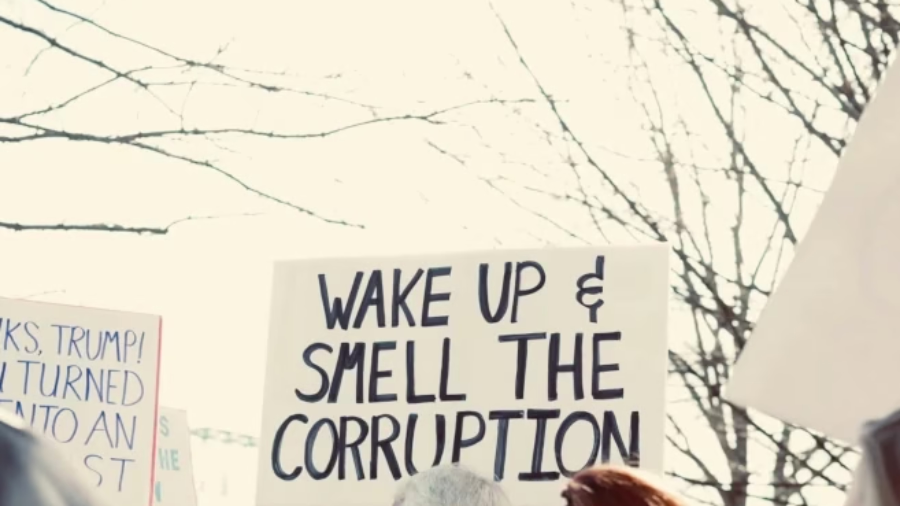
Introduction: A Presidency Under the Lens
The Trump administration will be remembered not just for its policy shifts, but for the unprecedented ways power was exercised—and, in many cases, abused. From accusations of personal enrichment to the use of political influence for personal and partisan gain, corruption, extortion, and the crisis of accountability became recurring themes throughout the presidency.
Unlike traditional political scandals, these episodes were often systemic, implicating institutions, allies, and family members. What emerged was a pattern of governance that blurred the line between public service and private gain, raising urgent questions about the durability of American democratic norms.
Understanding this pattern is critical, as it reveals how unchecked power, when combined with weak accountability mechanisms, can undermine the very foundations of governance.
Defining Corruption and Extortion in a Political Context
Before examining the Trump administration, it’s important to define the terms:
- Corruption: The abuse of public office for private gain, including bribery, embezzlement, and nepotism.
- Extortion: The use of power or threats to obtain money, favors, or influence.
- Crisis of Accountability: A systemic failure in which mechanisms that enforce transparency, ethical conduct, and legal compliance are weakened or ignored.
In the Trump era, these elements often intertwined, producing a governance style where loyalty was rewarded, dissent punished, and institutional checks were frequently bypassed.
Patterns of Corruption in the Trump Administration
Financial Conflicts of Interest
Donald Trump maintained ownership of his businesses while in office, creating a persistent risk of conflicts of interest:
- Foreign Deals: High-profile foreign governments continued to patronize Trump properties during his presidency, raising ethical questions. (source)
- Trump Foundation: The foundation was dissolved following allegations of using charitable funds for political and personal purposes.
These actions blurred the line between public duty and private enrichment, undermining the integrity of the presidency.
Nepotism and Loyalty Over Merit
The Trump administration frequently prioritized personal loyalty over experience or expertise:
- Family members, including Jared Kushner and Ivanka Trump, held key advisory roles
- Senior positions often went to political allies or donors with minimal policy experience
- High turnover and the marginalization of career civil servants eroded institutional knowledge and competence
This strategy fostered a culture where loyalty was currency, and ethical boundaries were flexible.
Lobbying and Pay-to-Play Allegations
The Trump era saw numerous allegations of using public office for private gain:
- Some administration officials faced scrutiny for connections to industries they regulated
- High-profile pardons and policy decisions occasionally coincided with political donations or lobbying pressure
- The blurring of lines between personal, political, and public interests created opportunities for corruption to thrive
Extortion as a Political Tool
Extortion, or the perceived use of power to coerce action, became a hallmark of Trump’s political style.
Ukraine and the Impeachment Crisis
The most prominent example of extortion was the Ukraine scandal:
- Trump was accused of withholding military aid to pressure Ukraine into launching investigations that could benefit him politically (source)
- This episode became the centerpiece of his first impeachment, illustrating how executive power could be used to seek personal political advantage
Pressure on Domestic Officials
- Federal prosecutors and inspectors general faced political pressure to drop investigations
- Governors and state officials were sometimes threatened with funding cuts over loyalty or policy alignment
These tactics reinforced a climate where institutional independence was subordinated to personal and partisan objectives.
Table: Examples of Corruption and Extortion in the Trump Era
| Incident | Type | Impact | Accountability Outcome |
|---|---|---|---|
| Ukraine military aid | Extortion | Impeachment inquiry; partisan division | Senate acquitted |
| Trump business dealings | Corruption/Conflict of interest | Ethical concerns over foreign influence | Largely unaddressed legally |
| Trump Foundation misuse | Corruption | Funds diverted for personal/political gain | Foundation dissolved; fines imposed |
| Federal prosecutors pressured | Extortion | Erosion of DOJ independence | Public scrutiny; limited consequences |
The Crisis of Accountability
The administration’s systemic undermining of oversight institutions intensified the crisis:
Undermining Checks and Balances
- Politicizing the Department of Justice and law enforcement agencies
- Replacing inspectors general with politically loyal appointees
- Limiting congressional oversight through executive privilege claims
These moves weakened accountability mechanisms and allowed unethical behavior to flourish with minimal consequences.
Media and Public Perception
- Attacks on the media (“fake news”) delegitimized independent reporting
- Social media amplified disinformation while discouraging critical analysis
- Public trust in institutions eroded as accountability mechanisms were portrayed as partisan
This erosion of trust compounded the effects of corruption and extortion, creating a feedback loop of political polarization and institutional vulnerability.
Implications for American Governance
Political Polarization
Corruption and extortion were not merely ethical failures—they became political tools:
- Partisan loyalty often outweighed legal or ethical standards
- Political opponents were targeted while supporters were rewarded
- Governance became performative, prioritizing political theater over institutional stability
Weakening of Democratic Norms
- Norms regarding transparency, ethics, and institutional independence were compromised
- Precedents set during this era may influence future administrations
- The erosion of public trust creates long-term challenges for democratic resilience
Lessons for the Future
- Strengthen institutional independence to resist executive overreach
- Reinforce legal frameworks for conflict-of-interest enforcement
- Promote civic literacy to help the public identify and respond to corruption
Visual Suggestions:
- Infographic: “Corruption and Extortion in the Trump Administration”
- Flowchart: How power was weaponized to bypass accountability
- Timeline: Key scandals and impeachment proceedings
Conclusion: A Legacy of Power Misused
Corruption, extortion, and the crisis of accountability defined much of the Trump administration. By prioritizing personal gain and loyalty over institutional norms and ethical standards, the administration left a lasting imprint on the presidency and American governance.
The era serves as a cautionary tale: when power is weaponized without checks, the consequences ripple across political, economic, and social systems. Restoring trust and accountability will require vigilant oversight, institutional reform, and a recommitment to democratic principles.
Call to Action
- Stay informed: Follow credible news and analysis to understand governance issues
- Engage civically: Advocate for transparency, ethical leadership, and oversight
- Share insights: Educate peers about the risks of unchecked power in government
References
- New York Times, Trump Business Conflicts and Ethical Concerns. (nytimes.com)
- NPR, Trump Impeachment and Ukraine Scandal Explained. (npr.org)
- Washington Post, Trump Foundation Misuse and Dissolution. (washingtonpost.com)
- Brookings, Accountability and Oversight in the Trump Administration. (brookings.edu)
- Politico, Loyalty Over Merit: Nepotism in the White House. (politico.com)
