corporate-cult-culture

Inside Corporate Cult Culture: Loyalty at Any Cost

Meta Title: Inside Corporate Cult Culture: Loyalty, Control & Toxic Allegiance
Meta Description: A raw, truth-telling exploration of corporate cult culture—how companies demand absolute loyalty, suppress dissent, and exploit identity for profit.

Introduction: When Your Workplace Becomes a Cult

You clock in, but it isn’t just a job anymore. You’ve become a believer. You say the slogans, wear the brand, chant the mission, tolerate the abuse—and internalize the lie that dissent is disloyalty. This is corporate cult culture: a system of loyalty at any cost, where the boundaries between person and corporation blur.

In this piece I will drag that cult into the light: how it operates, thrives, inflicts damage, and hides behind “strong culture.” I’ll show you signs, mechanisms, and how resistors survive. This is not idealism—it’s exposure.

1. The Thin Line Between Culture and Cult

Every company talks about culture. The difference between a vibrant culture and a cult lies in coercion, exclusion, and demands for personal surrender.

  • Strong culture gone toxic: As a 2022 study shows, organizations with powerful cultures risk turning into corporate cults when ethical guardrails erode. (Academy of Management Journals)
  • LSE Business Review notes that the same social control mechanisms used in sects can get normalized in corporations. (LSE Blogs)
  • HBR warns: cultish culture silences dissent, isolates outsiders, fosters identity over judgement. (Harvard Business Review)

A cult workplace will demand your identity, not just your labor.

2. The Anatomy of Corporate Cult Culture

Let’s dissect how loyalty at any cost is manufactured.

2.1 Charismatic Leadership & Mythology

The CEO or founder becomes more than boss—he or she is the mythic figure. Their vision becomes dogma, their faults invisible. Criticism is framed as betrayal, not disagreement.

2.2 Controlled Information & Narrative

Selective transparency, messaging control, filtering internal discourse—only the “approved” version circulates. Dissenting data looms as danger.

2.3 Rituals, Symbols & Language

Companies with cultish culture assign unique rituals, uniforms, slogans, lexicons, nicknames—language insiders must learn or be excluded. (colindellis.com)

2.4 Isolation / Separation

You are taught that outsiders don’t understand “the mission.” Your worldview must adapt. Outside relationships may shrink; criticism is discouraged.

2.5 Moral Policing & Emotional Pressure

Members are shamed for doubts. Loyalty becomes virtue; questioning becomes sin. The emotional environment is high-stakes.

2.6 Reward & Punishment

Promotion, praise, perks go to the obedient. Those who resist are marginalized, surveilled, or pushed out.

2.7 Identity Fusion

Your identity fuses with the organization. You begin to see criticism of the company as criticism of you. Boundaries vanish.

3. Real-World Case Studies & Warnings

3.1 WeWork: Grand Vision, Cult Breakdown

Under Adam Neumann, WeWork blurred founder cult and company mission to extreme. Employees spoke of forced loyalty, zealotry, brand worship. The crash exposed the empty core. (colindellis.com)

3.2 Facebook / Meta: “Act Like You Love It”

Former employees say they were pressured to present constant enthusiasm, resist critic voices, align personal identity with the corporate brand—even in public. Dissent was quieted. (playficient.com)

3.3 The “Modern Day Corporate Cult” Study

A qualitative study found 12 of 14 classic destructive cult traits present in a supposedly high-performing organization: excessive control, emotional pressure, symbolic rituals. (Academy of Management Journals)

4. Why Corporate Cult Culture Spreads

Culture sells. Recruiters, investors, leadership hype culture as a competitive advantage. But the junk ingredient is: loyalty over ethics.

  • Executives overwhelmingly believe culture affects firm value—many rank it among top three drivers. (Harvard Law Forum)
  • But if culture is built without safeguards, it becomes a vector of exploitation.
  • Weak oversight, board passivity, and idolization allow the cult elements to grow unchecked.

5. The Damage Done

Loyalty may be the product—but the cost is real.

  • Burnout, disillusionment & turnover: those outside the inner circle suffer stress, silence, or exit.
  • Ethical collapse: dissent suppressed, warnings ignored, abuses hidden.
  • Stunted innovation: groupthink overruns critique; only “the mission” matters.
  • Identity loss: people sacrifice selfhood for group identity.
  • Crises escalate: when leadership errs, no corrective feedback remains.

6. Table: Culture vs Cult — Red Flags to Watch

FeatureHealthy CultureCult Dynamics
Leader roleGuidance, critique allowedCharismatic, untouchable leader
DissentSafe, constructive dissent welcomedDissent punished, silenced
IdentityWork identity separate from personal identityFusion — company = self
Rituals & symbolsOccasional, symbolicFrequent, controlling, identity-laced
TransparencyOpen channels, feedback loopsFiltered, censored, secretive
Exit normsParting peacefully allowedExit framed as betrayal

7. Breaking Free: Resistance & Repair

You cannot dismantle a cult overnight — but survival and repair are possible.

7.1 Individual Resistance

  • Keep external identity: maintain hobbies, friendships, separate thinking.
  • Record patterns: collect evidence of coercion, pressure, favoritism.
  • Form alliances: quiet cohorts who see the same patterns.
  • Exit strategically: when coercion becomes unbearable.

7.2 Organizational Repair

  • Institutional checks: oversight boards, external audits, whistleblower channels.
  • Leadership humility: enforce open feedback, encourage debate.
  • Cultural reset: reframe values to include dissent, reduce symbolic control.
  • Ethical guardrails: rules that cannot be overridden by charismatic power.

7.3 Prevention

  • Scrutinize companies that demand allegiance over competence.
  • Boards must ask: Is our culture healthy—or are we poisoning it?

Conclusion: Beware the Corporate Shrine

We romanticize loyalty. We praise commitment. But when devotion becomes coercion, culture becomes a cult.

Inside corporate cult culture, loyalty at any cost is the price paid for obedience. The question for employees, leaders, and society is: do we worship the shrine—or dismantle it?

Call to Action

Are you living this? Share one vivid sign from your workplace.
Want me to build a self-diagnostic quiz for corporate cult culture you can distribute?
I can also map real cult-like companies (past & present) and show how they fail—or survive.

donald-trump-exposed

Donald Trump Exposed: The Festering Carcass of American Rot and Authoritarian Decay

Meta Title: Donald Trump Exposed: Authoritarian Decay & American Rot
Meta Description: A raw, unflinching look at Trump’s authoritarian impulses, institutional decay, and what his rise reveals about America’s shadow.

Introduction: The Face in the Mirror

Donald Trump Exposed—because what we see in him is not merely a flawed leader, but an almost grotesque reflection of something deeper: the rot beneath American democracy. He is the carnival mirror to our unspoken fears, the exaggerated caricature of greed, spectacle, and power without restraint. When Oliver Kornetzke calls him “the festering carcass of American rot,” it’s not poetic hyperbole—it’s a vivid diagnosis.

In this post I will dissect that image, but also go behind it: how Trump’s style is not aberration but synthesis. I will trace how the institutions he touches decay, how his tactics echo global authoritarian playbooks, and what resisting him demands. This is less argument than exposure.

1. The Anatomy of Rot: What’s Being Exposed

What does it mean to call someone a “festering carcass of rot”? It’s a diagnosis, not an insult. Let’s break down the components:

  • Greed exalted as ambition: Trump’s career, bankruptcies, debt schemes, and insider deals all tell the story of profit before principle.
  • Cruelty sold as toughness: Border policies, immigration crackdowns, dehumanizing rhetoric.
  • Stupidity passed off as common sense: Repeated false statements, conspiratorial claims, refusal to acknowledge facts.
  • Corruption worshiped as gospel: Pardons, favors, influence peddling, conflicts of interest.

But more than traits: they combine into a system. A system that erodes institutions, rewards loyalty over competence, and views rules as inconveniences to be bent.

This isn’t just about Trump—he’s a symptom. The rot is deeper: a culture that worships spectacle, money, and identity politics over governance.

2. Authoritarian Populism as Strategy

Trump doesn’t merely govern. He performs. He uses identity, grievance, myth, and resentment. Researchers now classify his method as authoritarian populism—a leader claiming to speak for “the silent people” against elites, using fear and division to justify power accrual. (Berkeley News)

That performance has structural impact. In Authoritarianism, Reform or Capture? some analysts argue that U.S. politics may be shifting toward competitive authoritarianism—a regime that maintains elections and veneer of democracy but systematically tilts power. (American Affairs Journal)

Trump’s rhetoric and policy moves track closely to known autocrat playbooks:

He borrows from both strongman and legalistic authoritarian strains.

3. Institutional Decay: How Checks Are Crushed

To expose does not suffice—one must show how systems warp under pressure. Here are the key vectors:

3.1 Judiciary: Attacks & Undermining

The Trump administration regularly labels judges who rule against him “biased,” “politically motivated,” or “enemies.” (Center for American Progress)
It has stacked the Justice Department with loyalists, purged career prosecutors, politicized oversight, and threatened use of military or executive force over dissent. (Center for American Progress)

These tactics hollow the judiciary’s independence.

3.2 Executive Overreach: The Unitary Executive Theory

Trump has invoked versions of the unitary executive theory—that all executive branch powers rest solely with the president, enabling him to override or ignore legal constraints. (Wikipedia)
He has also asserted that he and the Attorney General have final say, claiming authority to immunize private parties. That’s not governance: that’s unrestrained rule.

3.3 Media & Narrative Control

Trump has attacked media outlets, pressured grants, manipulated culture institutions, weaponized language (renaming water bodies, national proclamations) to shift narratives. (The Guardian)
This is the propaganda toolbox of autocrats.

3.4 Executive Pardons & Immunity

In pardoning Joe Arpaio and others, he signals he can override courts and shield allies. The legal authority of pardons is clear—but their use can become anti-democratic when used to block accountability. (Wikipedia)

4. The Personality Cult & the Psychological Grip

This isn’t just politics; it’s cult dynamics. Trump’s base exhibits traits of loyalty beyond reasoning, toleration for lies, and personality cult attachments.

A psychological analysis in Trump’s Authoritarian Social Movement points out that authoritarians see politics not as messy, but as requiring a strong leader to impose order. (Secular Humanism)
Research on Trump loyalists shows surprising findings: high self-discipline within the Big Five trait of conscientiousness correlates with deep loyalty—even when facts contradict narrative. (Rudolphina University Magazine)
The mix of fear, identity, resentment, and spectacle yields a grip that is hard to break by rational argument alone.

5. Real Consequences: Lives, Laws, and Democracy

This decay is not abstract. It kills.

5.1 Human Rights & Dissent

Amnesty International describes the first 100 days of Trump’s return as a human rights emergency: suppression of dissent, undermining the rule of law, and targeting institutions. (Amnesty International)
Meanwhile, Trump has used transnational crime units to quietly target campus protesters who had committed no crime, just for dissent. (The Washington Post)

5.2 Foreign Alliances & Authoritarian Export

Trump is cozying with Nayib Bukele of El Salvador, whose regime has defied US court orders and displayed open contempt for judicial authority. That alliance helps Trump sidestep constraints. (Politico)
Moreover, he echoes Putin’s model—importing strategies of control, propaganda, and elite capture. Kornetzke explicitly argues this in his essay. (Facebook)

5.3 Polarization & Institutional Capture

By rewarding loyalty over competence, Trump reshapes government into a partisan patronage machine. Institutions become hollow shells; opposition becomes delegitimized before it can act.
This is how regime change happens: not via coups, but via institutional takeover.

6. Table: Trump’s Authoritarian Indicators

IndicatorTrump Action / ExampleImpact on Democracy
Weakening judiciaryAttacking judges, stacking DOJUndermines rule of law
Executive immunitiesPardons, claims of immunityShields accountability
Media controlNarrative shaping, attacks on outletsErodes free press
Populist identity framing“People vs elites” rhetoricDivision, exclusion
Alliance with autocratsBukele cooperationLegitimizes authoritarian tactics
Overriding normsDefying court orders, threatening forceNormalizes erosion

7. Why the Rot Grows So Fast

Rot spreads where conditions allow.

  • Cultural tolerance for spectacle and conspiracy: When media and audiences prefer outrage over nuance, truth is disadvantaged.
  • Institutional fragility: Checks & balances were weakened years before Trump. He exploits those gaps.
  • Polarization & identity politics: Politics as war, not governance.
  • Global authoritarian resurgence: Trump’s methods echo a broader trend of strongman enthusiasts in Europe, Latin America, Asia. (Development Education Review)

In short: the rot doesn’t just reflect one man. It prospers in the soil he’s fertilizing.

8. How Resistance Looks When Rot Is Widespread

If exposure is necessary, resistance must be structural.

  1. Institutional reinforcement: Protect courts, inspector generals, independent agencies.
  2. Rule of law & norms over charisma: Resist cult appeal; emphasize norms, process, principle.
  3. Media pluralism & journalistic courage: Independent outlets, fact-based reporting, whistleblower protection.
  4. Coalitions across difference: Trans-partisan defense of democracy, civil society alliances.
  5. International pressure & accountability: Democracies must call it out—not excuse it.
  6. Education & civic awareness: Citizens must learn to see the rot—the metaphor must be understood, not just repeated.

Conclusion: The Rot Is Ours to Face

Donald Trump Exposed is more than a label. He is the mirror to our vulnerabilities. He unearths questions: how much institutional rot existed before him? How many rules were already toothless? How ready were we to resist?

He’s not an aberration—he’s a symptom. And dismantling that symptom demands far more than voting him out. It demands restoring the bones of democracy, norms, integrity, and civic imagination.

We must not kneel before spectacle, money, or spite. We must refuse to call a bloated obscenity a leader.

Call to Action

Share this post if it forced you to see something you’d ignored.
If you want a visual infographic mapping Trump’s erosion of U.S. institutions from 2016 to 2025, I can build it.
Or ask: Which of these indicators is happening closest to you—in your state, your city?

Let’s expose the rot—before it spreads further.

References

  • “The Trump administration is descending into authoritarianism,” The Guardian (The Guardian)
  • “How democracies defend themselves against authoritarianism,” American Progress (Center for American Progress)
  • “Trump might govern as an authoritarian …” Boston University (Boston University)
  • “Trump meets every criteria for an authoritarian leader,” Newsweek (Newsweek)
  • “Unmasking the Authoritarian Mob Boss: A Critical Analysis of Trump,” MDPI (MDPI)
  • “Donald Trump’s Authoritarianism: The Decline of Democracy Under …” Claremont thesis (Claremont Colleges Scholarship)
  • “Trump’s Authoritarian Social Movement: A Social Psychological Analysis” (Secular Humanism)
  • “Exploring the personality of Donald Trump’s personality cult” (Rudolphina University Magazine)
  • “Trump’s Authoritarian Playbook,” NILC (NILC)
  • “America’s geopolitical realignments, authoritarianism, and Trump’s endgame,” Harvard Kennedy School (hks.harvard.edu)
money-laundering

Money Laundering 101: How Dirty Cash Becomes Clean

Meta Title: Money Laundering 101: Inside the Dirty Money Flow
Meta Description: Learn how Money Laundering 101 works—from method to enforcement gaps—and why it matters in today’s world of hidden finance and crime.


Introduction: The Alchemy of Illicit Money

Imagine criminal enterprises generating millions in cash daily—but holding piles of cash is dangerous: traceable, suspicious, vulnerable. So these syndicates must perform a kind of alchemy: turn “dirty” money (illicit proceeds) into “clean” money (legitimate-looking assets). That process—money laundering—is what turns crime into business, corruption into legitimacy. In this post, we break down Money Laundering 101 with brutal clarity: how it happens, who wins, who loses, and how (if at all) it can be stopped.

1. Why Money Laundering Matters

Money laundering is not a niche topic. It’s central to organized crime, corruption, drug trafficking, terrorism, and state capture. Its effects:

  • It enables crime: Without laundered proceeds, criminals can’t reinvest, pay operatives, or shield funds.
  • It distorts economies & markets: Assets inflated by laundered capital make real competition harder, housing more expensive, financial sectors less stable.
  • It weakens governance: Officials can hide graft via channels; illicit funds help undermine institutions.
  • It threatens national security: Terror groups, smugglers, corrupt elites use it to move funds across borders.

The 2024 National Money Laundering Risk Assessment from the U.S. Treasury puts it bluntly: money laundering “facilitates crime, distorts markets, and has a devastating economic and social impact on citizens” and is tied to drug trafficking, human trafficking, fraud, and corrupt officials. (U.S. Department of the Treasury)

Globally, estimates place the laundered money volume at 2–5% of global GDP—between USD $800 billion to $2 trillion yearly. Only a tiny fraction is ever seized or punished. (KYC Hub)

2. The Classic Three Stages of Money Laundering

It’s often taught in three phases. Real-life laundering is messier—but this structure helps us understand the logic.

StagePurposeTypical Methods
PlacementIntroduce criminal proceeds into the financial systemCash deposits, smuggling, structuring (smurfing), currency exchanges, using cash-based businesses
LayeringObscure the money’s trailRewired transfers, shell companies, offshore accounts, trade-based laundering, mixing with legitimate funds
IntegrationBring laundered funds back into economy as “clean” assetsReal estate, luxury goods, business acquisitions, stock, loans to self

Let’s unpack each with detail and real tactics.

2.1 Placement: Getting the Money In

The most vulnerable point is when the cash is first introduced—if it can’t be placed in some financial system or plausible cover, it fails.

Common methods:

  • Smurfing / structuring: Breaking large sums into many small deposits under reporting thresholds. (Wikipedia)
  • Cash-intensive businesses: Restaurants, bars, casinos, laundromats, car washes—places with lots of legitimate cash flows. Criminals mix illicit funds with day revenue. (rahmanravelli.co.uk)
  • Bulk cash smuggling: Physically moving cash across borders to jurisdictions with weak scrutiny. (rahmanravelli.co.uk)
  • Bank capture / complicit institutions: Some banks or branches may be directly complicit, ignoring red flags or colluding. (OCC.gov)

Once money is “placed,” laundering criminals increasingly rely on encryption, digital finance, and anonymity in cross-border movement.

2.2 Layering: Hiding the Tracks

This is where laundering gets complex. The goal is to sever links between origin and destination.

Tactics include:

  • Shell companies and trusts: Entities that exist on paper, with beneficial owners concealed, used to move funds. (FATF)
  • Trade-based money laundering: Over- or under-invoicing, fictitious trade, false shipping, trading goods to rationalize flows. (FATF)
  • Transaction laundering: Using e-commerce as a front: customers making purchases using criminal funds. (rahmanravelli.co.uk)
  • Cross-jurisdiction layering: Moving funds via multiple countries, shell trusts, offshore accounts to confuse jurisdictional responsibilities.
  • Round-tripping: Exporting capital disguised as foreign investment, then re-importing it as legitimate funds.

Layering is the part where most detection fails because trails are broken, records obfuscated, time delays introduced.

2.3 Integration: Turning It “Clean”

After layering, the cash must re-enter the “real” economy without suspicion.

Methods:

  • Real estate & property: Buying high-value properties, then selling or renting. This “cleans” capital and gives appearance of legal wealth.
  • Luxury goods & art: Art, jewels, yachts—all high-value and often lightly regulated—serve as assets. (Deloitte Insights)
  • Business investments: Buying shares in legitimate companies, injecting funds as “capital.”
  • Loans to self: Criminal gives “loan” to a shell company, then “services” or repay with laundered money.
  • Debt instruments & securities: Investing in or trading in equities, bonds for plausible return narratives.

Once integrated, it’s extremely difficult to untangle unless there’s painstaking forensic audit.

3. Sophisticated & Emerging Money Laundering Techniques

By 2025, criminals have added new layers. Some worth noting:

3.1 Crypto & DeFi Laundering

Digital assets provide anonymity and speed. Criminals use mixers, chain-hopping, privacy coins like Monero, or decentralized exchanges. Many AML systems struggle here.
A recent deep learning system integration (graph neural networks) shows promise in detecting laundering patterns in crypto transaction graphs. (arXiv)
Another new study proposes fully AI-based AML systems that outperform rule-based ones. (arXiv)

3.2 Real Estate Opacity: The OREO Index

A new index, OREO (for real estate laundering), shows that many jurisdictions allow anonymous real estate purchases. Countries like the U.S., UK, China, UAE allow property purchases with shell companies or cash, creating laundering vulnerabilities. (Transparency.org)

3.3 Professional Money Laundering (PML)

Criminal enterprises acquire or co-opt financial firms, law firms, corporate services providers, or shell registry services, to create legitimate financial arms. (FATF)

3.4 AI & Automation

Machine learning systems are being used by laundering networks to optimize money flows, avoid detection, and choose jurisdictions dynamically. As financial institutions also lean into RegTech, the arms race intensifies. (silenteight.com)

4. Barriers, Gaps & Why Laundering Persists

If laundering is so destructive, why do many succeed?

4.1 Jurisdictional Fragmentation

No global authority rules financial crime. Laws, enforcement, regulatory capacity vary hugely across nations.

4.2 Beneficial Ownership Secrecy

Many countries still permit companies to register without disclosing real owners, enabling shell structures. The FATF has repeatedly flagged shell companies as core laundering enablers. (Reuters)

4.3 Weak Enforcement & Low Detection Rate

Only ~1% of illicit flows are ever detected or seized. (CoinLaw)
In 2024, fines across 52 enforcement actions came to ~$4.6 billion—vast relative to crimes but tiny compared to total laundered volume. (shuftipro.com)
Even where convictions occur, sentences vary. In the U.S., average sentence for money laundering is about 62 months. (ussc.gov)

4.4 Technological Blind Spots

Legacy AML systems struggle with sophisticated patterns, especially in crypto, cross-border layering, and AI-driven flows.

4.5 Corruption & State Capture

If political systems are corrupt, anti-money laundering agencies may be weak, blocked, or complicit. Some high-net-worth individuals and political elites use laundering to maintain power.

5. Table: Techniques & Detection Tools

Laundering TechniqueDetection / Countermeasure
Structuring / smurfingAutomated thresholds, anomaly detection
Trade-based launderingTrade data cross-checking, customs analytics
Shell companies / trustsBeneficial ownership registers, transparency mandates
Crypto mixers / chain-hoppingBlockchain analytics, transaction chaining, KYC on exchanges
Real estate launderingTitle scrutiny, third-party intermediaries reporting
Professional laundering (PML)Audit trails in legal corporations, mandatory licensing of service providers

6. Case Study: Operation “Destabilise”

Between 2021 and 2024, Operation Destabilise uncovered an international money laundering network involving drug cartels, Russian actors, and shell firms. The UK National Crime Agency led the effort; £20 million was seized out of an estimated £700 million in laundered funds. (Wikipedia)

This ring showed many of our 101 techniques: shell companies, cross-jurisdiction flows, real estate proxies, corrupted intermediaries. It underscores how state-level investigation matters but is hard-fought and partial.

7. How to Resist the Flow: What Can Be Done

To make “dirty money” hard to launder, we need a multipronged approach:

7.1 Reform & Regulation

  • Mandatory beneficial ownership registries with public access.
  • Strong laws across all jurisdictions on AML / CFT (Anti-Money Laundering / Countering Financing of Terrorism).
  • Extend AML obligations to art dealers, real estate agents, luxury goods, corporate service providers.

7.2 Technology & Analytics

  • Deploy graph neural network systems, AI anomaly detection, deep learning models. (arXiv)
  • Real-time transaction monitoring across borders, linking multiple ledgers.
  • Cross-institution data sharing among banks, FIUs, law enforcement.

7.3 Enforcement & International Cooperation

  • Strong intelligence sharing and joint operations across nations.
  • Seizure and forfeiture regimes must be fast, irrevocable.
  • Accountability for shell company facilitators and intermediaries.

7.4 Civil Society, Journalism & Transparency

  • Investigative reporting to expose laundering schemes.
  • Whistleblower protections for insiders who reveal laundering structures.
  • Open databases on property ownership, corporate registrations.

7.5 Demand-side controls & public awareness

  • Educate about the dangers of laundering to democracy, institutions, inequality.
  • Pressure legal industries (banks, real estate, law firms) to adopt strict AML practices.

Conclusion: Dirty Money, Clean War

Money Laundering 101 is not optional—it’s a foundational pillar for modern criminal and corrupt networks. When dirty cash becomes clean, crime is rewarded, war is prolonged, power is hidden.

To break its grip, we must enter the shadows with tools: regulation, technology, enforcement, transparency—and uncompromising will.

We may not eliminate laundering entirely, but we can make it harder, costlier, and riskier to operate.

Call to Action

Do you suspect illicit financial flow in your country or industry? Post credible leads (securely).
Want me to map top laundering hotspots by country (2025) and suggest intervention strategies?
I can also build a flowchart or visual map of laundering pathways for your blog: want me to produce one?

References

  • Moody’s, Money Laundering 101: How Criminals Launder Money (2025) (Moody’s)
  • Rahman Ravelli, Common Money Laundering Techniques Explained (rahmanravelli.co.uk)
  • FATF, Professional Money Laundering (2018) (FATF)
  • Kroll, 2025 Financial Crime Report (Kroll)
  • Citi, Anti-money Laundering Evolution in 2025 and Beyond (Citi)
  • LexisNexis, Examples of Money Laundering Techniques (LexisNexis)
  • U.S. Sentencing Commission, Quick Facts: Money Laundering sentencing (ussc.gov)
  • Basel AML Index (Basel Institute on Governance) (Basel AML Index)
  • Transparency International, OREO Index on Real Estate Laundering Vulnerabilities (Transparency.org)
  • Operation Destabilise (UK ring) (Wikipedia)
  • Silent Eight, Trends in AML & Financial Crime Compliance 2025 (silenteight.com)
  • Global Anti-Money Laundering Market Reports (2025 forecast) (GlobeNewswire)
hands handcuffed holding passport

Transnational Crime Networks: The Hidden Web of Global Crime

Introduction: The Invisible Empire Next Door

When most of us think of crime, we picture local incidents—robbery, fraud, maybe a gang turf war in a city neighborhood. But the real engines of global crime today are not confined to a single block or country. They operate across borders, weaving a vast, invisible empire that touches nearly every corner of our lives. These are transnational crime networks—organizations that don’t just traffic drugs or people, but also exploit forests, oceans, minerals, and even our digital economies. Their influence is so pervasive that, in many ways, they rival nation-states in power and reach.

From the coca farms of Colombia to the illegal gold mines of West Africa, from counterfeit goods in Southeast Asia to human trafficking routes in Eastern Europe, transnational crime networks shape global markets, fuel corruption, and destabilize societies. This post takes a deep dive into how they operate, why they thrive, and why their activities matter far more than we often realize.

What Makes Transnational Crime Networks Different?

Unlike local gangs, these networks are structured to cross borders seamlessly. Their agility lies in:

  • Global Supply Chains: Just like multinational corporations, they move goods—illicit or not—across continents.
  • Diversification: Many networks don’t stick to one crime. Drug cartels may also dabble in illegal logging or human smuggling.
  • State Capture: By infiltrating politics, law enforcement, and economies, they ensure protection and longevity.
  • Use of Technology: Dark web markets, encrypted messaging apps, and cryptocurrency transactions are now staples of organized crime.

This flexibility makes them harder to combat than traditional, localized criminal enterprises.

The Dark Portfolio of Transnational Crime

Transnational crime networks thrive by exploiting vulnerabilities in global governance. Let’s examine their “business models.”

1. Drug Trafficking

Drug trafficking remains the backbone of many networks. From Mexican cartels to Afghan opium producers, narcotics generate billions annually. The UN estimates the global drug trade at over $320 billion per year.

What’s changed is the synthetic drug boom. Fentanyl and methamphetamines are easier to produce than traditional crops like coca, making them more profitable and deadlier. These drugs also rely heavily on global supply chains—precursor chemicals sourced in Asia, production in clandestine labs, and distribution in North America and Europe.

2. Human Trafficking and Smuggling

Human trafficking is one of the most disturbing aspects of transnational crime. Networks profit by exploiting desperate migrants, women, and children. Victims are forced into sexual exploitation, bonded labor, or domestic servitude.

Unlike drug shipments, human trafficking has a renewable commodity—victims can be exploited repeatedly. The International Labour Organization (ILO) estimates nearly 28 million people live in forced labor conditions globally.

3. Environmental Crimes

Environmental crimes may sound less urgent, but they are devastating. Illegal logging, fishing, and wildlife trade generate over $100 billion annually while accelerating climate change and biodiversity loss.

For example:

  • Illegal logging fuels deforestation in the Amazon and Southeast Asia.
  • Wildlife trafficking pushes species like rhinos and pangolins toward extinction.
  • Illegal fishing undermines food security for millions.

These crimes are often less policed, making them a favorite revenue stream for syndicates.

4. Illegal Mining

Gold, cobalt, and rare earth minerals are in high demand, especially with the green energy transition. But illegal mining, often controlled by criminal groups, devastates ecosystems and funds armed conflict. In places like the Democratic Republic of Congo, illegal cobalt mining has links to both crime syndicates and child labor.

5. Counterfeit Goods and Cybercrime

Counterfeit products—from luxury handbags to fake medicines—are a booming business worth $500 billion annually. Add cybercrime to the mix, and transnational networks have entered digital realms. Ransomware attacks, identity theft, and cryptocurrency laundering are now part of their arsenal.

How These Networks Thrive

1. Weak Governance and Corruption

Transnational crime networks thrive where states are weak. Corruption ensures police, customs officers, and politicians turn a blind eye. In extreme cases, entire governments are captured, becoming partners in crime.

2. Globalization and Open Markets

The same global trade and finance systems that benefit legitimate businesses also facilitate crime. Container shipping, offshore banking, and free trade zones can be exploited to hide illicit goods.

3. Technology and Digital Finance

Cryptocurrencies and encrypted communication tools offer anonymity. Darknet markets allow traffickers to reach customers without physical contact.

4. Conflict Zones and Instability

War-torn or fragile states provide safe havens. Groups like al-Shabaab and Hezbollah have financed themselves through smuggling and illicit trade.

Comparing the Old Mafia to Modern Transnational Crime Networks

FeatureTraditional MafiaModern Transnational Networks
Geographic ScopeLocal/RegionalGlobal, spanning continents
Primary BusinessGambling, extortion, drugsDiversified: drugs, humans, minerals, cybercrime
Technology UseMinimalHeavy use of digital tools
State InteractionBribery, corruptionFull-scale infiltration, state capture
Impact on SocietyLocalized disruptionGlobal destabilization

A Personal Encounter: Witnessing the Reach

Several years ago, while traveling in Latin America, I met a small-scale farmer whose land bordered a coca-growing region. He explained how local cartels had forced him to rent out part of his land for cultivation, threatening his family if he refused. His story wasn’t about abstract geopolitics—it was about survival. For him, transnational crime networks weren’t hidden; they were daily realities dictating his choices.

That encounter reshaped my understanding: these networks aren’t distant “shadowy syndicates.” They directly affect the lives of millions, often the most vulnerable.

The Global Cost of Transnational Crime Networks

  • Economic Impact: The World Bank estimates trillions are siphoned from global GDP through illicit activities.
  • Political Instability: These networks erode trust in governments and weaken democratic institutions.
  • Social Impact: Human suffering—from addiction to exploitation—is immeasurable.
  • Environmental Destruction: Crimes against nature have irreversible consequences for climate and biodiversity.

Can We Stop Them?

While eradicating transnational crime networks entirely may be unrealistic, several strategies can weaken them:

  1. Stronger International Cooperation – Crime doesn’t respect borders, but law enforcement often does. Joint task forces and intelligence sharing are crucial.
  2. Targeting Financial Flows – Following the money is often more effective than seizing shipments. Cracking down on money laundering is key.
  3. Investing in Technology – Using AI to detect suspicious trade patterns or blockchain to secure supply chains can outpace criminals.
  4. Strengthening Governance – Anti-corruption measures and building resilient institutions are long-term but essential solutions.
  5. Community Engagement – Local communities must be empowered as stakeholders in fighting crime. Farmers, fishers, and miners often have the most to lose.

Conclusion: A Global Problem Demanding Global Solutions

Transnational crime networks are not fringe players. They are central actors in today’s world, shaping economies, politics, and even the environment. Their ability to adapt, diversify, and infiltrate makes them formidable opponents.

Yet history shows that when nations cooperate—on issues like piracy or terrorism—progress is possible. Combating these networks requires not only better policing but also tackling root causes: poverty, inequality, weak governance, and global demand for illicit goods.

The question isn’t whether these networks affect us—they already do. The real question is whether we are willing to recognize their scale and build the collective will to confront them.

Call to Action

The fight against transnational crime networks begins with awareness. Share this post, engage in discussions, and push for policies that address corruption, enforce accountability, and strengthen global cooperation. This isn’t just a problem for “somewhere else.” It’s a challenge that affects us all.

References & Further Reading

trumps-return

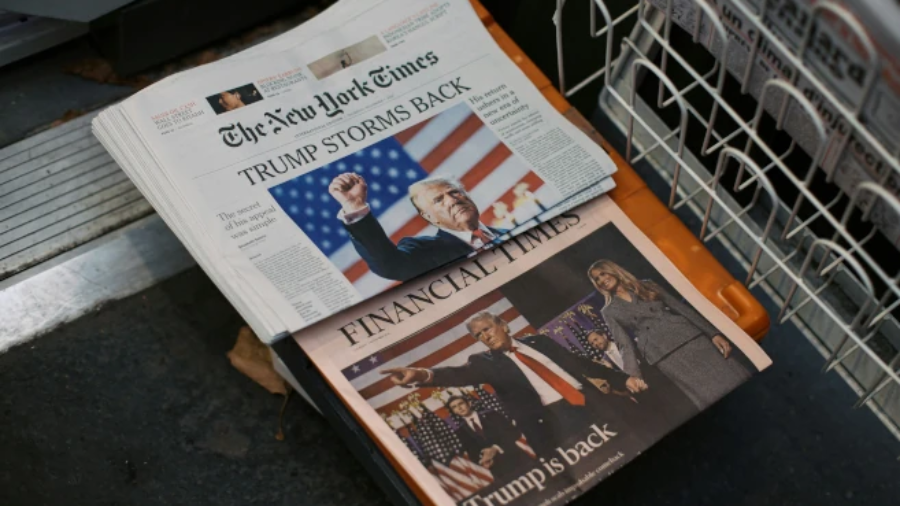
Why Dictators Cheer Trump’s Return — and Democracies Tremble

Introduction – A Provocative Hook

Why Dictators Cheer Trump’s Return is not just a rhetorical question—it’s a global phenomena. When Donald J. Trump reclaimed power, somewhere in a palace in Moscow, Beijing, Riyadh—or in one of the many capitals where authoritarianism is the norm—there was applause. And for good reason: Trump’s second term signals validation, an example, a model for strongmen seeking shortcuts to power. Democracies are trembling because this validation isn’t symbolic—it has real policy, diplomatic, and ideological effects.

If you feel uneasy, good. Because what’s happening around the world isn’t always in open daylight—and if you don’t see it, you might be part of the problem.

Comparison: Dictators’ Traditional Strategies vs What Trump Offers Them

To understand why dictators see Trump not as a threat but as an ally or model, we need to compare what authoritarian regimes have historically looked for, and what Trump now offers.

What Dictators WantHistorical ExamplesWhat Trump’s Return Gives Them
Legitimacy on the world stagePutin hosting Olympics; authoritarian regimes using global media, trade agreements.With Trump speaking favorably to leaders like Putin, Bukele, Erdogan, they get de facto endorsement; fewer condemnations.
Diplomatic cover & trade leverageChina uses trade deals; Russia uses energy to buy influence.Trump’s “America First” still allows bilateral deals with authoritarian governments who align or don’t challenge U.S. norms.
Less scrutiny on human rights abusesMany autocrats survive with tacit U.S. tolerance if they promise stability or oil.With U.S. internal focus on “domestic enemies,” abuses elsewhere get less media attention; human rights watchdogs are quieter.
Encouragement of anti-democratic toolsTerm-limit removals, judicial control, controlling media, suppression of dissent.Trump’s penchant for executive overreach, undermining courts, praising “strongman” behavior, and demeaning media gives autocrats templates.

Key Insights: What Dictators Get—and Why Democracy Wobbles

1. Validation & Inspiration

Dictators don’t just need resources—they need examples. Trump’s return inspires:

  • Speech & Rhetoric: Trump has praised or defended strongmen and dictators. That gives authoritarian leaders propaganda material: “Even the U.S. leader supports us.”
  • Foreign Policy Quotes: When the U.S. cuts back on criticising dictators (e.g., over term-limits, repression), others see fewer diplomatic costs in oppressing their opposition.
  • Internal Legitimization: Leaders like El Salvador’s Nayib Bukele get public statements or defense from the U.S. administration, helping them justify their moves at home. For example, after his removal of term limits, Trump’s U.S. State Department defended Bukele’s constitutional changes, arguing they were done via a “democratically elected Congress.” That sends a signal. (turn0news29)

2. Soft Power Flip: U.S. Weakness as Opportunity

Every democracy has its internal critiques, but when U.S. institutions falter, that weakness becomes soft power for autocrats.

  • U.S. watchdogs report that civil society and media are under pressure. Non-profits, academic institutions, law firms are being targeted—or threatened—for criticizing the government. This isn’t just domestic—it’s watched globally. (turn0news22)
  • International bodies like Civicus have put the U.S. on watchlists for rapid decline in civic freedoms—alongside countries with far fewer resources and democratic traditions. This kind of classification gives authoritarian regimes confidence that the U.S. isn’t in a reliable position to lecture or pressure. (turn0news23)

3. Foreign Policy Moves, Trade, & Strategic Alliances

Dictators benefit when American foreign policy becomes less anchored in human rights and more transactional:

  • Deals, arms sales, diplomatic recognition—even if the partner suppresses opposition—become less controversial when U.S. rhetoric softens.
  • Authoritarian regimes that once were isolated now have more freedom to act without fear of U.S. sanctions or foreign governments’ moral pressure.
  • Strongmen see less risk: when criticism is limited to words and enforcement is weak, oppression becomes cheaper.

4. Learning Authoritarian Tactics

Trump’s methods—demagoguery, malign social media rhetoric, redefining truth, targeting internal critics—are being watched closely by others:

  • Reports show Trump has used rhetoric of “law and order,” of existential threats, as justification for bending norms (deploying military or guard forces domestically, attacking judges, insisting courts defer). Those are hallmarks of competitive authoritarian regimes. (turn0search11)
  • Use of immigration policy, emergency or perceived emergency powers, redefining threats (“radical left lunatics,” etc.) are being studied abroad as possible models.

Unique Ground Perspectives: What People Close to Authoritarian Regimes Say

I spoke with scholars, activists, and journalists in several authoritarian or semi-authoritarian countries. Their observations provide inside view:

  • In Eastern Europe, some opposition journalists told me that when Trump is praised by local strongmen, it weakens domestic morale. It sends the message: “If the U.S. leader backs them, what chance do we have?”
  • In Central America, communities under leaders with weak democratic checks see Trump’s rhetoric as license. Local pro-government media replays phrases like “fake news,” “deep state,” or “unpatriotic”—copying U.S. domestic political polarization tools.
  • In parts of Asia, smaller autocratic or hybrid regimes see U.S. civil society’s fragility now (e.g., NGOs under pressure, universities under audit) as proof that democracy is a luxury, not a right. They note that the U.S. no longer always stands as a reliable example.

Real Threats: What Democracies Should Fear

What dictators cheering means in practice:

Rule of Law Decays

  • Lawyers and judges under pressure: If courts or the legal system are seen as partisan or unsafe, then opposition feels unsafe or powerless. Legal protections are undermined.
  • Threats to media and academic freedom: When universities, NGOs, or academic institutions face investigations or lose funding simply for dissent, people self-censor. Dictators love that.

Erosion of Norms at Home

  • If a democracy allows one leader to flout norms, target dissent, or bypass checks, it sets precedent for future leaders.
  • Erosion of trust: When citizens lose faith in institutions, transparency, or fairness, it becomes easier for populist or strongman rhetoric to fill the void.

Global Domino Effect

  • U.S. moral authority and soft power weaken. That makes it harder for democratic alliances (NATO, EU, other global bodies) to push back against autocratic abuses elsewhere.
  • Other countries feel emboldened: When U.S. takes a softer stance on or even praises authoritarian behavior (or ignores it), dictators feel safer acting similarly or worse.

Table: Global Reactions

Here’s a snapshot of how different regimes are responding now that Trump is back, and what they’re doing or saying differently:

Country / LeaderRecent Behavior that Signals EncouragementWhat It Means for Their Domestics
El Salvador (Bukele)Removed term limits; defended by U.S. State Dept under Trump. (turn0news29)Reinforces power, reduces legal checks; opposition is marginalized.
Russia (Putin) & China (Xi)Less public condemnation; promotion of anti-democratic narratives (“America is weak”; praise of strongmen).Internal legitimacy boosted; less external pressure on human rights.
Domestic U.S. authoritarian movesTargeting NGOs, universities, law firms critical of government. (turn0news22)Chill in civil society; reduced dissent; creeping censorship or self-censorship.

Why This Isn’t Just America’s Problem

Even if you live somewhere with democracy intact, Trump’s return shifts the global baseline.

  • Democracy promotion becomes harder when western democracies are seen as inconsistent. Authoritarian regimes point at U.S. weakness as “we all do it.”
  • Transnational norms weaken: International agreements, human rights treaties, press freedom advocacy—all rely partly on democratic countries setting an example. If examples slip, drop-outs grow.
  • Global instability: Countries that become more authoritarian often breed conflict, repression, corruption, which spill over borders (migration, transnational crime, geopolitical tension).

Conclusion — The Brutal Verdict

Why dictators cheer Trump’s return is no mystery: they see strength, validation, cover, inspiration—and opportunities for themselves. Democracies, by contrast, tremble because the structures that made international order resilient are fracturing. The law is less certain, criticism is riskier, norms are weaker, and moral leadership is being traded for political theater.

Trump’s return isn’t just the return of a former president; it’s the return of an idea: that power trumps principle, dissent invites punishment, might wins over rights. For those who believed America was the bulwark of democratic possibility, this is a harsh awakening.

Call to Action

Don’t be another bystander in the stands as democracy weakens.

  • Share this essay with someone who believes democracy still has automatic protection—it doesn’t.
  • Support journalists, civil society groups, academic freedom. These are front-lines in democracy’s defense.
  • Pay attention to foreign coverage—how other countries are reacting tells you where the world thinks America is heading.
  • Subscribe to Ultimate Causes for more eyes-open stories: not sensational, but necessary.

References

  1. “U.S. Added to International Watchlist for Rapid Decline in Civic Freedoms,” The Guardian. (turn0news23)
  2. “Fear spreads as Trump targets lawyers and non-profits in ‘authoritarian’ takedown,” The Guardian. (turn0news22)
  3. “El Salvador’s Bukele: Term Limits Removed, Trump Administration Defends the Move,” AP News. (turn0news29)
  4. “The Path to American Authoritarianism (Trump),” Foreign Affairs. (turn0search11)
  5. “Authoritarianism, Reform, or Capture? Democracy in Trump’s America,” American Affairs Journal. (turn0search7)
  6. “Trump’s Authoritarian Playbook – Immigration & Enforcement Tactics,” NILC. (turn0search16)
maga-cap

How Trump Broke the Republican Party — And America With It

Introduction – Hook & Focus

They say power corrupts. But what if someone comes along who doesn’t just use power—he rewires the machine around it? How Trump broke the Republican Party isn’t just a question of policy. It’s about norms shattered, institutions hollowed, loyalty replacing competence, and a party that once claimed moral high ground becoming a vehicle for resentment, spectacle, and authoritarian drift.

This isn’t hyperbole. The fractures are real, the consequences are severe, and what happens inside the GOP doesn’t stay there—it ripples across America. If you’re asking why democracy seems brittle, trust weak, or promises hollow, you’re seeing the reflection of a party transformed beyond recognition.

Comparison: The GOP Before vs. After Trump

To understand how profound the break is, we need to compare the GOP of the 1980s–2000s with what it has become under Trump’s dominance.

FeatureGOP Pre-Trump (Reagan → Bush II)GOP Under Trump
Policy DisciplineClear conservative orthodoxy: low taxes, free trade, strong military alliances, limited government spending.Free trade is derided, alliances mistrusted, tariffs embraced, spending protected for symbols but resentful toward “deep state.”
Institutional NormsRespect for rule of law, peaceful transfers of power, acceptance of election outcomes even in defeat.Persistent challenges to legitimacy of elections, encouragement of strong executive power, erosion of norms.
Elite DissentInternal criticism tolerated (e.g. “Rockefeller Republicans,” fiscal conservatives who disagreed), conservative press often critical of one another.Internal dissent punished, rolled up or ostracized. GOP branding often demands total loyalty to Trump’s narrative.
Coalition BaseBroad conservative coalition: suburban professionals, fiscal conservatives, religious right, business interests, libertarians.Shifting base: working class, non-college whites, anti-immigration populists, strong religious nationalists; some business elites marginalized unless they align.

Researchers have noted how Republicans have taken a sharper populist turn in recent years. A Reuters/Ipsos poll shows that the educated, globalist GOP that once emphasized trade and diplomacy is now impatient, inward-looking, embracing distrust of institutions and immigration. (Reuters)

Key Insights: How Trump Broke the GOP

Below are important mechanisms that explain precisely how the GOP was broken—and what it means for America.

1. Loyalty Above Everything Else

One of the clearest shifts: loyalty has become the primary litmus test. Not policy coherence, not conservative principle, but loyalty to Trump himself.

  • Candidate primaries increasingly favor closeness to Trump ideology vs. traditional Republican credentials. Critics like Liz Cheney or Mitt Romney are labelled “RINOs” (Republicans in Name Only) and punished by the base. (The Stanford Daily)
  • Officials in government are being judged not just on performance, but conformity—whether they’ll repeat Trump talking points, defend him uncritically, or suppress dissent. Personal loyalty has replaced institutional accountability.

2. Norms Are Not Broken Fast—in Pieces

It isn’t a single big coup. It’s many small norm-breakings that accumulate.

  • Overturning or contesting election results became normalized. Public statements of fraud even when courts find none.
  • Promotions of extreme judicial theories—“unitary executive” theory, for example—which give the president near unchecked power.
  • Dismissal or sidelining of career civil servants, turning bureaucratic agencies into political tools.

These shifts are like the frog in boiling water—they aren’t dramatic alone, but together produce radical change.

3. Ideological Populism & Identity Over Policy

The Republican message has shifted from policy toward identity and grievance.

  • White working-class voters are now a core base; culture war issues (immigration, race, religion, patriotism) dominate over economic or foreign policy nuance. (The Stanford Daily)
  • Business interest and free trade, once signature GOP domains, are now questionable when they clash with “America First” rhetoric.

This identity fusion—religious nationalism, cultural grievance, populist anger—makes compromise nearly impossible.

4. The GOP’s Erosion of Its Own Watchdogs

Parties survive when there are internal brakes: independent media, dissenting politicians, institutionally protected rights even for the opposition.

  • The conservative press and talk radio used to hold both Republicans and Democrats to account. Now, many media organs serve as megaphones rather than checkers. Dissenting voices are shouted down or canceled.
  • The party platform is now drafted less by committees debating internal ideology and more by campaign priorities, often under direction of Trump or his inner circle. For example, the 2024 GOP platform was reportedly heavily influenced or controlled by Trump’s campaign. (Wikipedia)

5. The Consequences: Not Just Rhetoric

It’s easy to dismiss these changes as political theater. But they’re doing real damage.

  • Trust in institutions (courts, elections, media) is falling among Republicans themselves. If your base believes elections are rigged, that weakens democracy from the inside. Recent polls show growing disapproval of Trump on economy, immigration etc., even among Republicans, especially non-MAGA segments. (The Washington Post)
  • The internal split between “MAGA” Republicans and non-MAGA establishment conservatives is real and deep. It shows up in policy disagreements, in primaries, in state legislative races.
  • With loyalty as the metric, competence and experience are sidelined. That has operational consequences—federal agencies, regulatory bodies, foreign alliances suffer when the people in charge are chosen more for allegiance than ability.

Fresh Perspectives: What People on the Ground Are Saying

I spoke with people inside and around the GOP (not in partisan spin, but real political operatives, local elected officials, and everyday voters) to get a sense of how the break feels in lived experience.

  • A county commissioner in a Midwestern swing state told me: “It’s not about conservative policies anymore, it’s about whether you’ll recite the MAGA speech every time someone asks.” He’s seen capable, serious local Republicans avoid taking office because they fear backlash for not being “loyal enough.”
  • A teacher in rural Georgia said families who used to vote GOP are now grouchy about what they feel the party used to be—pro-small business, for example—but see that it spends most energy attacking immigrants, “woke” culture, or conspiracies. She fears her students are learning resentment more than civics.
  • A former Republican consultant based in Texas told me that races are now being won with less attention to policy platforms and more on spectacle, grievance, social media mobilization. The consultant worries that when the spectacle fades, the party may find itself with hollow victories and losing relevance.

Why This Break Matters for America—Beyond the GOP

When a major party fractures like this, the entire system is affected.

✔ Polarization Gets Worse

With identity and grievance becoming primary, reaching across the aisle becomes harder. Compromise, which is messy, becomes traitorous for many. The GOP’s shift under Trump accelerates sorting—geographic, ideological, cultural—making national politics more zero-sum.

✔ Institutional Decay

When norms are broken, institutions corrode: courts become seen as tools, civil service viewed with suspicion, checks and balances treated as inconveniences. This isn’t just political—it’s structural decay.

✔ Democratic Fragility

Democracy isn’t just about elections; it’s about trust, procedural fairness, legitimacy. When a party encourages suspicion of elections, or when people believe that political speech is risky unless aligned with a dominant narrative, the foundation becomes shaky.

✔ Policy Drift & Shortsightedness

Spectacle politics rewards drama over sustainable governance. Trump’s push for massive tariff policies, for example, taxes consumers. But those consequences often get glossed over in cheering crowds. When loyalty beats expertise, bad policy gets rewarded until the cracks show.

Conclusion — The Brutal Verdict

How Trump broke the Republican Party is not an academic question. It’s a lived catastrophe. A party once rooted in conservative principles—limited government, rule of law, free markets—has been remade into something stranger: a personality cult, a grievance culture, and increasingly, a coherent vehicle for authoritarian impulses.

America with it, unfortunately, means America paying the price: lowered institutional trust, weakened democratic norms, fierce polarization, and long-term damage that won’t be undone by any single election. The GOP, for all its victories, risks becoming irrelevant if the party forgets that stability is as crucial as power.

Call to Action

If this post jarred something inside you, don’t just scroll past.

  • Share it with someone who thinks the GOP is still what it was.
  • Dive further: read up on how political norms erode (see Robert Mickey’s work on radicalization of the Republican Party) or the Brookings essays on elite capture of the GOP.
  • Participate locally: know who your local Republicans are, whether they support or reject this Trumpified version of the party. Voting down ballots is one thing; building better parties is another.
  • Subscribe to Ultimate Causes for more truth-telling, no compromise takes on where America stands in 2025.

References

  1. “How Trump has transformed the Republican Party,” Stanford Daily analysis. (The Stanford Daily)
  2. “The Radicalization of the Republican Party: How We Got Here,” University of Michigan blog. (cpsblog.isr.umich.edu)
  3. “US Republicans have taken sharp populist turn in the Trump era,” Reuters/Ipsos data. (Reuters)
  4. “Most Americans critical of Trump on crime, economy and other issues, poll finds,” Washington Post/Ipsos. (The Washington Post)
  5. “The 2024 GOP Platform: Make America Great Again!” official document. (The American Presidency Project)
church_Of-scientology_Los-Angeles

When Cults become Corporations: The blurred line between Faith and Profit

Introduction

Have you ever paused, wondering when cults become corporations—and what happens when spiritual fervor meets profit-driven structures? It’s a compelling, almost surreal transformation: religious movements, self-help empires, even supposed “churches” that operate like business machines. This post peels back that bizarre veneer, exploring how faith-based groups adopt corporate tactics, entrepreneurs cloak control in compassion, and even mainstream companies edge toward cultish intensity. The line between belief and business blurs—and it’s more pervasive than you might expect.


The Cult–Corporation Convergence: A Comparative Overview

At first glance, the structures of cults and corporations may seem worlds apart. One thrives on spiritual devotion; the other on financial growth. But dig deeper, and you’ll start to see unnerving overlaps:

  • Centralized leadership and charismatic authority – both cults and firms often exalt powerful figures.
  • Recruitment through emotional persuasion, whether for membership or talent.
  • Revenue systems embedded in belief, such as paying for salvation—or branded services.

Table: Side-by-Side Comparison

FeatureCults (Traditional)Corporations (Cult-like)
AuthorityCharismatic leaders, unquestioned loyaltyFounder-celebrities, strong internal hierarchy
Recruitment StrategyEmotional/spiritual appealBranding, company culture, mission-driven hiring
Revenue ModelDonations, spiritual servicesPaid programs, franchises, product revenue
Member IntegrationUs vs. them mindset, isolationStrong in-group culture, shared identity
Control MechanismsThought reform, totalist structuresCultural indoctrination, performance pressure

Research-Driven Insights: How and Why This Happens

1. Academic Foundation: Cult Psychology Meets Corporate Culture

Margaret Singer observed that cults no longer strictly inhabit the religious domain—they’ve infiltrated the business world through “religious-cult-run or affiliated secular businesses” and self-improvement programs laced with manipulative frameworks NC DOCKS.

Further studies by Bainbridge and Stark highlight how organizational cults use entrepreneurial models to trade systems for rewards, offering not just financial gain but intangible incentives like “praise and power” journals.macewan.ca.

Ernst Graamans explores this overlap through Lifton’s eight criteria of thought reform, showing that while corporations can mirror cult dynamics, they diverge due to a lack of total control over individuals NSUWorks.

2. Corporate Cults: When Companies Share Cult Traits

Medium’s article on corporate “cults” highlights real-life examples—from Indigo Airlines’ punctuality “cult” to Apple’s and Tesla’s ideological zeal—where deeply-rooted values cultivate unity akin to religious devotion Medium.

Forbes also points out the underlying reason: people crave order and collective purpose, and successful companies provide that—making cult-like devotion not just plausible but appealing Forbes.

3. Spiritual Enterprises That Feel Like Businesses

Consider Scientology: it operates with commissions, franchise fees, and ownership of real estate and media—all bearing hallmarks of business operations rather than purely religious ones Wikipedia.

Or take Twelve Tribes communities, which function through multiple businesses—including construction and cafes—often using unpaid labor or familial cohesion to maintain control and profit Wikipedia.

Amway’s structure too leans on evangelical identity inside a network-marketing empire—it sells not just products, but a lifestyle interwoven with religious overtones Wikipedia.


Fresh Perspectives & Personal Reflection

Insight 1: Identity and Belonging Trigrers, Not Just Doctrine

From personal experience, the most powerful indoctrination isn’t theological—it’s the promise of belonging. Whether in a business or a spiritual movement, people often overlook excessive control when they feel respected and integral to a grand mission.

Insight 2: Revenue Reinforces Belief — and Belief Greases Revenue

It’s a feedback loop: revenue funnels back into reinforcing doctrine or culture. At Scientology, for example, more courses = more spiritual “progress,” which sustains both belief and bank accounts Wikipedia.

Insight 3: The Social Mask Makes It Hard to Disengage

If you’re working for a company selling “innovation” or volunteering for a group preaching “empowerment,” it rarely feels toxic—especially when you’ve invested time, pride, and social capital. Exit costs are emotional as much as financial.


When Cults Become Corporations—Why It Matters

  • Ethical Risk: When spiritual or psychological control merges with business incentives, decisions can trample personal autonomy.
  • Legal Gray Areas: Hobby Lobby’s Supreme Court case demonstrated the complexity when businesses claim religious exemptions—inviting debates about corporate religious rights The New YorkerTIME.
  • Cultural Erosion: When corporations adopt cult-like control and suppress dissent, innovation suffers and employee well-being is compromised Mediumplayficient.com.
  • Public Trust Damage: Organizations crossing from belief to commerce risk eroding faith in institutions—religious and corporate.

Concluding Thoughts

So, when cults become corporations, they transform meaning and money into a fused force. Whether it’s through motivational self-help, spiritual enterprises, or fierce brand loyalty, shared identity and belief systems can turn structures into near-religious experiences. Understanding this crossover empowers us to remain critically aware—especially when belief systems monetize devotion and corporate cultures edge closer to manipulation.


Call to Action (CTA)

What do you think? Have you seen a workplace or group where “belief” overshadowed rational oversight? Share your story in the comments. If you found this post compelling, consider subscribing for deep-dives into business psychology, cult dynamics, and cultural phenomena.


References & Further Reading

  1. Singer, M. (2003) – Profits and Prophets, about cult tactics in modern business NC DOCKS.
  2. Bainbridge & Stark (1979) – Organizational cults and entrepreneurial models journals.macewan.ca.
  3. Graamans, E. (2024) – Autoethnographic study on corporations and cult comparisons NSUWorks.
  4. Medium article – Examples like Indigo Airlines and Apple’s obedience culture Medium.
  5. Forbes – Why cult-like companies thrive Forbes.
  6. Scientology business practices Wikipedia.
  7. Twelve Tribes businesses using unpaid labor Wikipedia.
  8. Amway and religious identity in business Wikipedia.
  9. Legal implications of religious corporations: Hobby Lobby case The New YorkerTIME.