threats against Trump critics

Who Sends Death Threats After Trump’s Posts? Inside the Chaotic Ecosystem Behind the Threats

Introduction: When a Post Becomes a Weapon

Each time Donald Trump unleashes a verbal barrage on social media—targeting a judge, prosecutor, journalist, election worker, or political critic—a chilling pattern follows: the targeted individual begins receiving death threats.

This phenomenon has repeated so consistently that prosecutors, journalists, intelligence agencies, and researchers now treat it as a predictable social chain reaction.

But the critical questions remain:

  • Who is actually sending these threats?
  • Are these individuals part of an organized network?
  • Are they following instructions—or acting on their own interpretations of Trump’s words?
  • Does Trump himself implicitly fuel the threats without explicitly directing them?
  • What does existing evidence really show?

This investigative-style article explores the phenomenon with depth, nuance, and clarity.

What emerges is a picture not of a secret army or underground gang, but of something more volatile—and arguably more dangerous:
a decentralized, emotionally charged ecosystem of radicalized supporters and online actors who treat Trump’s words as marching orders, even when no orders are given.

1. The Pattern: Trump Speaks, Threats Follow

From the earliest days of Trump’s political life, researchers and intelligence analysts noticed a disturbing trend:

  1. Trump attacks an individual publicly.
  2. His comments get amplified across social media and far-right circles.
  3. Within hours or days, the targeted person receives:
    • Death threats
    • Harassment
    • Doxxing
    • Intimidating phone calls
    • Threats to family members

This pattern has appeared in case after case:

  • Federal Judge Tanya Chutkan
  • Georgia election workers Ruby Freeman & Shaye Moss
  • New York DA Alvin Bragg
  • Fulton County DA Fani Willis
  • Federal Judge Emmet Sullivan
  • Members of Congress who voted for impeachment
  • Journalists Trump labeled “enemy of the people”

In every instance, Trump’s harsh rhetoric preceded the wave of threats—not by weeks, but frequently within hours.

So again:
Who is sending these threats? And why?

2. Law Enforcement’s Findings: No Secret Organization—But a Predictable Ecosystem

The FBI, DHS, and state law enforcement agencies have repeatedly investigated these threats. Their findings are remarkably consistent:

✔ There is no evidence of a Trump-controlled secret group carrying out threats.

No:

  • hit squads
  • covert militias directed by Trump
  • coordinated networks
  • “orders” issued privately
  • direct communication with perpetrators

This is important:
Nothing in legal or intelligence findings suggests Trump personally orchestrates death threats.

However…

✔ The threats almost always come from Trump supporters.

And even more importantly:

✔ The threats spike immediately after Trump targets someone—so reliably that analysts can now predict the pattern.

This leads us to the key concept used by terrorism scholars:

3. Stochastic Terrorism: When Leadership Words Inspire Unpredictable Violence

Experts describe Trump’s rhetorical influence using a term known as stochastic terrorism.

Definition

When a person with a large audience uses hostile, dehumanizing, or inflammatory language, it increases the likelihood that an extremist will commit or attempt violence—yet no direct order is ever given.

This describes the Trump-threat pattern almost perfectly:

  • Trump labels someone “evil,” “corrupt,” “enemy,” or “traitor.”
  • Millions see the message.
  • Any one unstable or radicalized supporter may act violently or send threats.
  • Trump maintains distance from responsibility because he never explicitly commands violence.

This is not a conspiracy theory—it’s a documented behavioral chain observed repeatedly.

Trump is not coordinating attackers.
But he is inspiring them—predictably, consistently, and powerfully.

4. Who Sends the Threats? A Deep Dive into the Types of Perpetrators

From investigative reports, arrests, court transcripts, and threat analyses, four distinct groups emerge:

Group 1: Lone-Wolf Extremists

These individuals are:

  • Deeply loyal to Trump
  • Often politically obsessed
  • Consuming extremist content daily
  • Isolated, angry, or unstable
  • Acting without direction
  • Convinced they are “protecting America”

They represent the largest category by far.

Examples include the man who sent threats to Judge Chutkan after Trump criticized her, or the individuals who sent death threats to election workers after Trump’s allegations.

These people are not part of any organized network.
They are radicalized individuals acting on emotion and ideology.

Group 2: Online-Radicalized Supporters

These are people radicalized within digital spaces such as:

  • Telegram channels
  • Gab
  • Truth Social
  • 4chan / 8kun
  • Discord groups
  • Far-right Twitter/X communities

These communities:

  • Amplify Trump’s posts
  • Add inflammatory commentary
  • Share personal details of targets
  • Encourage members to “do something”

The threats emerge from this online radicalization loop.

Group 3: Ideological Fringe Groups

These include:

  • White nationalist groups
  • Militia-style organizations
  • Extremist online collectives
  • Sovereign citizen adherents
  • Conspiracy-oriented groups (QAnon, etc.)

These groups sometimes praise Trump and use his messages as ideological fuel, even though there is no operational connection to Trump himself.

They act opportunistically, using Trump’s rhetoric to justify harassment or intimidation.

Group 4: Hyperactive MAGA Media Personalities

This category is less about direct threats and more about incitement amplification.

Certain MAGA influencers:

  • Repost Trump’s attacks
  • Add aggressive commentary
  • Name targets repeatedly
  • Encourage followers to “hold them accountable”
  • Create content demonizing the targeted individuals

This group acts like an accelerant, pushing Trump’s rhetoric into more extreme online spaces where threats become more likely.

5. What Investigations Have Not Found

To avoid misinformation, it is crucial to state clearly:

✔ No evidence shows that Trump personally directs threats.

✔ No private Trump-owned networks conducting harassment have been found.

✔ No organized “Trump intimidation unit” exists.

The threats come not from coordinated orders, but from decentralized, self-motivated actors interpreting Trump’s rhetoric as a signal.

6. Why Trump’s Supporters Interpret His Words as Commands

Researchers highlight four psychological and social dynamics:

1. Parasocial loyalty

Millions of Americans feel a deep emotional connection to Trump, despite having never met him.
In their minds:

Attacking Trump’s enemies = defending someone they love or trust.

2. Moral framing

When Trump describes opponents as:

  • “traitors”
  • “enemies”
  • “vermin”
  • “illegitimate”
  • “destroying America”

he places them outside normal political disagreement.
Some supporters perceive this as permission for extreme action.

3. Conspiracy ecosystems

Online echoes of Trump’s comments blend with conspiratorial beliefs, magnifying fear and anger.

A Trump post → a conspiracy video → a Telegram group → a doxxing thread → a death threat
This chain can happen within hours.

4. The promise of heroic action

Some supporters view themselves as warriors or patriots fulfilling a historic mission.

This mentality fuels impulsive, violent messaging.

7. Do Trump’s Words Cause the Threats? A Closer Look

Legally, causation is extremely difficult to prove.
But behaviorally, researchers see a clear pattern:

  • Trump attacks → threats rise
  • Trump stops posting → threats decline
  • Trump attacks again → threats spike again

The relationship is not coincidental.

Even without coordination, Trump’s rhetoric acts as an activation trigger in a radicalized environment.

This is why national security agencies consider Trump’s language a driver of risk—even when Trump personally breaks no laws.

8. Key Case Studies: Threats After Trump’s Posts

Case 1: Ruby Freeman & Shaye Moss

After Trump falsely accused them of rigging votes, the two election workers:

  • Received death threats
  • Were stalked
  • Were harassed at home
  • Had to flee for safety

Investigators traced the threats to Trump supporters radicalized online, not to any organized group.

Case 2: Judge Chutkan

After Trump criticized her, a Trump supporter from Texas was arrested for sending explicit death threats. She acted alone.

Case 3: Prosecutors Willis & Bragg

Threats skyrocketed immediately after Trump attacked them by name.
Arrests reveal individuals acting independently.

9. Why Trump Doesn’t Need a Secret Network

A secret network would require:

  • organization
  • planning
  • communication
  • coordination
  • secrecy

But Trump has something far more powerful:

A massive audience primed to defend him emotionally and ideologically.

This audience acts without being told.

The threats are not centrally controlled—it’s a chaotic, emergent phenomenon created by:

  • rhetoric
  • loyalty
  • ideology
  • online radicalization
  • conspiracy culture
  • parasocial devotion

This combination makes the reaction to Trump’s words more potent than a directed network could ever be.

10. The Danger: Decentralized Threat Ecosystems Are Harder to Control

A coordinated organization can be dismantled.
Leaders can be arrested.
Networks can be disrupted.

But Trump’s threat ecosystem is:

  • decentralized
  • spontaneous
  • anonymous
  • global
  • unpredictable
  • psychologically motivated
  • ideologically energized
  • socially reinforced

This makes it exceptionally difficult for law enforcement to prevent or contain.

A single post can reach:

  • tens of millions instantly
  • extremists globally
  • unstable individuals
  • conspiracy-driven communities

No order needed.
No organization required.

11. So Who Sends the Threats? The Final Answer

Based on what is known:

✔ Trump does NOT have a secret hit squad or intimidation network.

✔ Trump does NOT directly instruct supporters to issue threats.

✔ But the threats DO come overwhelmingly from radicalized Trump supporters.

✔ And these threats are triggered—repeatedly and predictably—by Trump’s rhetoric.

The real story is not hidden—it is in plain sight:

Trump’s language activates a decentralized ecosystem of supporters, extremists, and online actors who believe they are defending him, punishing his enemies, or fighting for their shared worldview.

This is what makes the phenomenon so dangerous:

Trump doesn’t need to tell anyone to send threats—they do it automatically.

Conclusion: The Power and Peril of Influential Speech

The rise in threats against Trump’s critics is not the result of a shadow organization—it is the predictable byproduct of a polarizing political figure whose words carry profound emotional weight among millions.

Whether Trump intends these consequences is debatable.
Whether he causes them directly is legally unproven.

But whether his words inspire them?

That is undeniable.

Trump possesses a uniquely reactive audience, primed to act—even violently—when he frames someone as an enemy.
The danger lies not in secret coordination, but in the raw emotional power he holds over his most extreme followers.

In the end, the threats are not evidence of organization—they are evidence of influence.

And influence, in politics, can be every bit as dangerous as orders.

lies, racism, and authoritarianism

Trump’s Legacy of Lies, Racism, and Authoritarianism Fueled by Conspiracy Theories

Introduction: The Making of a Political Era

The political era of Donald J. Trump is unlike anything in modern American history. His presidency was marked not only by policy decisions but by a deliberate reshaping of political norms. At the core lies a disturbing triad: lies, racism, and authoritarianism, all amplified by conspiracy theories that undermined truth and sowed division.

This is Trump’s legacy of lies, racism, and authoritarianism—a period that redefined the Republican Party, polarized the electorate, and challenged the very foundations of American democracy.

Understanding this legacy is essential, not just to analyze the past, but to safeguard the future. In this post, we explore the mechanisms of Trump’s influence, the consequences for governance and society, and the enduring impact of misinformation on American politics.

Lies as a Tool of Political Power

Lying is not new in politics, but Trump elevated it into a systemic tool. The Washington Post reported over 30,000 false or misleading statements during his four-year presidency. (source)

Disinformation and Reality Manipulation

Trump repeatedly used false narratives to:

  • Undermine critics
  • Justify policy decisions
  • Mobilize his political base

Examples include:

  • Election fraud claims: Trump’s persistent false assertion that the 2020 election was “stolen” created widespread distrust in democratic institutions.
  • COVID-19 misinformation: From downplaying the virus to promoting unproven treatments, these lies had tangible public health consequences. (source)

By weaponizing falsehoods, Trump blurred the line between fact and fiction, weakening public trust and creating fertile ground for authoritarian impulses.

Lies as Loyalty Tests

In Trump’s ecosystem, loyalty to the leader often trumped allegiance to truth. Politicians, journalists, and even institutions faced a stark choice: align with the narrative—or risk marginalization, censure, or career damage.

This approach normalized deception and incentivized complicity, reinforcing authoritarian tendencies within the political system.

Racism as Policy and Rhetoric

Racism in the Trump era was not always overt; it often manifested through coded language, targeted policies, and symbolic gestures.

Policy-Driven Racism

Several initiatives exemplify systemic bias:

  • The travel ban: Widely criticized as targeting Muslim-majority countries. (source)
  • Immigration enforcement: Aggressive deportation policies disproportionately affected Latino communities.
  • Criminal justice rhetoric: Statements labeling certain neighborhoods and populations as “dangerous” reinforced racial stereotypes.

Symbolic Racism and Dog Whistles

Beyond policy, Trump frequently deployed racially coded language:

  • Criticizing NFL players for kneeling during the national anthem as “disrespectful”
  • Repeatedly referring to Mexican immigrants as criminals or “rapists”

These messages fueled divisions and mobilized voters along racial lines, deepening societal fractures.

Authoritarianism as Governance Style

Trump’s approach to leadership displayed hallmark traits of authoritarianism: concentration of power, attacks on dissent, and disdain for democratic norms.

Undermining Institutions

  • Politicization of the Department of Justice
  • Public attacks on federal judges who ruled against him
  • Attempts to pressure the FBI and intelligence agencies

Such actions eroded institutional independence, a cornerstone of democratic governance.

Centralization of Power

By bypassing legislative and judicial checks, Trump exemplified the authoritarian tactic of executive overreach. Executive orders became a primary tool to enforce policy unilaterally, often disregarding procedural norms.

Table: Comparing Democratic Norms vs. Authoritarian Practices Under Trump

Democratic NormsTrump Era Authoritarian Practices
Free and fair electionsRepeated false claims of election fraud
Independent judiciaryPublic attacks on judges and DOJ
Checks and balancesOveruse of executive orders, bypassing Congress
Respect for truthSystematic misinformation and conspiracy propagation
Civil discourseThreats to journalists and opponents
Transparent governanceWithholding of key information and politicized institutions

Conspiracy Theories as a Catalyst

Conspiracy theories were central to Trump’s political strategy, reinforcing lies, racism, and authoritarianism.

Popularizing Fringe Ideas

Trump elevated fringe theories into mainstream political discourse:

  • QAnon narratives suggesting a deep-state conspiracy
  • False claims about voter fraud in 2020
  • COVID-19 origin and treatment conspiracies

By doing so, he mobilized a base willing to reject evidence and reality if it contradicted party loyalty.

Effects on Political Culture

Conspiracy-driven governance:

  • Polarized society further
  • Undermined faith in elections and institutions
  • Encouraged radical actions, exemplified by the January 6th insurrection (source)

The integration of conspiracies into mainstream politics marked a shift from debate to belief-based allegiance—a defining feature of authoritarian systems.

Intersections of Lies, Racism, and Authoritarianism

Trump’s legacy cannot be understood through a single lens. Lies, racism, and authoritarianism were mutually reinforcing:

  • Lies justified authoritarian measures (“the election was stolen”)
  • Racist narratives mobilized loyalty and fear, undermining pluralism
  • Authoritarian governance enforced compliance and punished dissent

This interconnected framework created a self-reinforcing ecosystem that normalized extreme political behavior.

Societal and Political Consequences

Polarization and Distrust

  • Partisan identity now often outweighs objective reality
  • Mistrust of media, judiciary, and election infrastructure has become entrenched
  • Civic engagement is often reactive, rooted in fear or grievance

Threats to Minority Communities

  • Policies and rhetoric created environments hostile to minorities
  • Structural inequities were reinforced through legal and political channels

Erosion of Democratic Norms

  • Acceptance of falsehoods as political strategy
  • Undermining of independent institutions
  • Increasingly centralized and personalized power in executive office

Visual Suggestion:

  • Infographic showing “Cycle of Lies, Racism, and Authoritarianism”
  • Timeline highlighting key conspiracies and policy moves under Trump

Lessons and the Path Forward

Strengthening Institutions

  • Judicial independence and legislative oversight must be prioritized
  • Transparency and accountability mechanisms should be reinforced

Combating Misinformation

  • Civic media literacy initiatives
  • Fact-checking campaigns and responsible reporting
  • Social media accountability

Rebuilding Ethical Governance

  • Promote leaders committed to truth and equality
  • Reward integrity over loyalty
  • Institutionalize checks to prevent consolidation of power

Conclusion: The Enduring Legacy

Trump’s legacy of lies, racism, and authoritarianism fueled by conspiracy theories is more than a historical footnote; it is a cautionary tale. The erosion of democratic norms, amplification of racial and social divisions, and normalization of falsehoods have reshaped American politics and society.

Rebuilding trust, restoring accountability, and confronting misinformation are critical to preventing this legacy from defining future governance.

America’s democracy is resilient—but only if citizens, institutions, and civil society actively resist authoritarian and divisive forces.

Call to Action

  • Engage critically: Question information sources and verify claims
  • Defend democracy: Participate in civic duties and advocate for transparency
  • Raise awareness: Share this post to inform others about the political risks of lies, racism, and authoritarianism

Together, awareness and action can counter the dangerous trends set in motion by Trump’s legacy of lies, racism, and authoritarianism.

References & Further Reading

  1. Washington Post, Trump’s False Claims Database. (washingtonpost.com)
  2. Brookings Institution, January 6 Insurrection Analysis. (brookings.edu)
  3. Vox, Trump’s Travel Ban and Muslim Discrimination. (vox.com)
  4. Levitsky, Steven & Ziblatt, Daniel. How Democracies Die. Crown, 2018. (foreignaffairs.com)
  5. CDC, COVID-19 Misinformation Resources. (cdc.gov)
tariffs as a flawed political strategy

Why Tariffs Don’t Work: Exposing the Flawed Political Strategy Behind Trump’s Trade Wars

Introduction: When One Tool Becomes the Whole Toolbox

When Donald Trump launched his aggressive trade war, he framed tariffs as a masterstroke — a simple, bold, America-first solution to complex global problems. But as history, economics, and lived experience now make painfully clear, tariffs as a flawed political strategy became less a tool of negotiation and more a political crutch, wielded impulsively to project strength while masking deeper policy failures.

The Trump administration used tariffs to solve everything:
• Trade deficits
• Foreign policy disputes
• Immigration issues
• Political leverage
• Diplomatic conflicts
• Even domestic campaign messaging

The problem? Tariffs don’t work that way.
They are blunt, outdated instruments — poorly suited to the modern, integrated global economy. And yet, under Trump, tariffs were elevated from occasional remedies to the centerpiece of national strategy.

This blog post digs beneath the surface narrative:
Why did Trump rely so heavily on tariffs? Why did the strategy fail? And what does the fallout reveal about leadership, governance, and the dangers of political shortcuts?

Welcome to a deep dive into the turbulence behind the trade wars.

Tariffs as a Political Weapon — Not an Economic Strategy

Tariffs have existed for centuries, but their traditional purpose has been limited:

  • Protect young industries
  • Respond to unfair foreign practices
  • Generate government revenue
  • Balance trade deficits in isolated cases

Trump, however, transformed tariffs into a universal political weapon, applying them to scenarios that had nothing to do with trade.

Tariffs Used for Immigration Pressure

In 2019, Trump threatened tariffs on Mexico unless it stopped migrants at the U.S.–Mexico border.
This was unprecedented. Immigration enforcement and trade policy are distinct domains — but the administration blurred them for political effect.

Tariffs Used to Strong-Arm China

The U.S.–China trade war escalated into hundreds of billions in tariffs, yet:
• Manufacturing jobs did not return in meaningful numbers
• U.S. farmers were devastated, requiring up to $28 billion in bailout subsidies
• China found alternative suppliers
• U.S. consumers faced higher prices

Tariffs Used as Campaign Theater

Rallies often included dramatic declarations:
“We’re winning the trade war!”
“China is paying billions!”

This was politically effective rhetoric — but economically false.
U.S. importers (and ultimately American consumers) bore the cost.

Trump’s tariffs weren’t just economic tools — they were performance politics.

How Tariffs Backfired — A Strategy Built on Misunderstanding

The Biggest Myth — “China Pays”

Every credible economic study shows the same result:
American consumers and companies paid nearly 100% of tariff costs.

Businesses absorbed higher costs or passed them to consumers through:
• Higher retail prices
• Reduced product choices
• Slower wage growth
• Lower investment spending

The strategy’s cornerstone claim was simply untrue.

Global Supply Chains Don’t Bend Easily

Trump appeared to believe that U.S. companies could swiftly abandon China and “come home.”

But modern supply chains are:

  • Multi-layered
  • Regionally specialized
  • Capital-intensive
  • Built over decades

Shifting production is not a switch — it is a multi-year transformation costing billions.

This is why many firms paid tariffs rather than move operations.
Apple didn’t move iPhone production.
Major auto companies didn’t return factories to Ohio or Michigan.
Manufacturing reshoring remained modest.

Tariffs could not reshape the global economy — only disrupt it.

Farmers Became Collateral Damage

No group suffered more from Trump’s trade war than American farmers.

China retaliated immediately, cutting U.S. agricultural imports drastically.

The consequences:

  • Soybean exports plummeted
  • Farm bankruptcies spiked
  • Rural communities faced financial trauma
  • Taxpayer bailouts ballooned to historic levels

Many farmers supported Trump politically — but economically, they were left exposed.

The Economic Impact — Data Tells a Clear Story

Below is a simplified comparison showing the intended vs. actual outcomes of the tariff strategy.

Table: Trump’s Tariff Goals vs. Reality

GoalIntended OutcomeWhat Actually Happened
Reduce trade deficitDramatic decreaseTrade deficit reached all-time highs
Bring jobs backManufacturing boomJobs had a brief uptick, followed by slowdown and decline
Make China “pay”China absorbs tariff costsAmericans paid 90–100% of costs
Boost U.S. farmingStrong export marketFarm bankruptcies increased; subsidies required
Strengthen U.S. leverageChina capitulatesChina retaliated and diversified suppliers
Stabilize marketsPredictability and confidenceMarket volatility surged

Why Tariffs Appealed to Trump — The Psychological and Political Angle

Tariffs were not just a tool — they were a symbol.
Here’s why they fit Trump’s worldview so perfectly:

1. Tariffs Are Simple

Trade policy is complex.
Tariffs reduce everything to a single, dramatic action — ideal for political storytelling.

2. Tariffs Sound “Tough”

Trump favored optics of confrontation.
Tariffs project dominance, even when they weaken your own economy.

3. Tariffs Create Villains

China. Mexico. Europe.
Tariffs allowed Trump to frame himself as a warrior on behalf of “forgotten Americans.”

4. Tariffs Distract From Domestic Failures

Rather than address structural issues — automation, education, infrastructure, innovation — tariffs provided a quick villain and a quick applause line.

5. Tariffs Fit the “Transactional” Mindset

Trump prefers zero-sum thinking:
“If I win, you lose.”
Tariffs reinforce this worldview, even when the economics contradict it.

Global Backlash — How Allies and Competitors Responded

Trump’s tariff obsession did not just reshape domestic politics; it rattled alliances and empowered adversaries.

Europe Hit Back

The EU targeted politically sensitive products, including:
• Bourbon (Kentucky)
• Motorcycles (Wisconsin)
• Orange juice (Florida)

These were not random — they were aimed at Republican strongholds.

China Played the Long Game

China waited out Trump, doubled down on global partnerships, and invested heavily in:

  • Belt and Road Initiative
  • Semiconductor independence
  • Trade relationships with Asia, Africa, and Latin America

Trump’s tariffs accelerated China’s diversification — a long-term strategic win for Beijing.

Allies Questioned U.S. Leadership

Tariffs were placed even on allies like Canada and the EU, justified under “national security.”

This damaged trust and pushed some countries toward alternative trade blocs.

Lessons Learned — Why Tariffs Are a Political Dead End

The Trump era confirmed a truth economists already knew:
Tariffs are outdated tools in a hyper-connected world.

Tariffs fail because:

  • They hurt your citizens more than your rivals
  • They destabilize markets
  • They inflame political tensions
  • They don’t create long-term manufacturing jobs
  • They don’t reshape global supply chains
  • They invite retaliation
  • They can trigger domestic inflation

Tariffs succeed only when:

  • They are targeted
  • They are temporary
  • They address a specific unfair practice
  • They are part of a broader strategy

Trump’s tariffs met none of these conditions.

What a Real Economic Strategy Could Have Looked Like

Instead of tariffs, a smarter strategy would include:

• Investing in high-tech manufacturing

Semiconductors, EVs, medical equipment.

• Strengthening alliances

A unified front against China is far more effective.

• Workforce development

Skilled workers are the real backbone of competitive manufacturing.

• Modernizing infrastructure

Ports, broadband, energy grids.

• Incentivizing innovation at home

R&D, startups, entrepreneurship ecosystems.

Tariffs were easy politics — but the wrong tool for the real problems.

Conclusion: The Danger of Over-Simplified Political Weapons

Trump’s trade wars exposed something deeper than economic miscalculation.
They revealed the inherent weakness in leadership that relies on performative strength instead of strategic thinking.

Using tariffs as a flawed political strategy became a symbol of the broader governance style:

  • impulsive
  • confrontational
  • simplistic
  • disconnected from expert advice
  • driven by optics over outcomes

America paid the price — higher costs, broken alliances, economic turbulence, and a weakened global position.

In the end, tariffs did not fix America’s problems.
They exposed them.

Call to Action (CTA)

If you found this breakdown insightful, share your thoughts below. How do you think America should approach global trade in the years ahead?
👉 Share this post, leave a comment, and explore more of our deep-dive analyses on politics, economics, and governance.

anti-semitism

From Hatred to Hope: Confronting Global Anti-Semitism and the Jewish Struggle for Survival

Meta Title: From Hatred to Hope: Confronting Global Anti-Semitism and the Jewish Struggle for Survival
Meta Description: A frank, global investigation into Confronting Global Anti-Semitism—how it’s rising, how Jews survive, and what must be done to fight back.

Whenever Jewish communities across the world confront rising threats, the phrase “never again” is echoed, but too often feels hollow. Yet today, confronting global anti-Semitism isn’t just historical reckoning—it is an imperative for survival. This is not distant violence or fringe hatred; it is a resurgent ideology with networks, algorithms, political cover, and real lives at stake.

In this post, I’ll trace how anti-Semitism expresses itself in modern form, how Jewish people around the world are navigating fear and resilience, and what strategic levers actually offer hope. I include voices I interviewed, on-the-ground stories, and patterns we can’t ignore.

The Surge: Anti-Semitism’s New Wave

Shocking Numbers, Dangerous Trends

In 2024, antisemitic incidents worldwide surged over 107.7%, according to the Antisemitism Research Center (ARC) under the Combat Antisemitism Movement. (Combat Antisemitism Movement)
But some reports measure even steeper increases: a 340% jump over two years compared to 2022. (The Times of Israel) The Antisemitism Worldwide Report for 2024 frames this as “a historical inflection point.” (cst.tau.ac.il)

In the United States, the American Jewish Committee’s 2024 report reveals that 69% of Jewish adults have encountered antisemitism online or on social media in the past year. (AJC) Among younger Jews, that figure rises to 83%. (AJC) Moreover, a majority (56%) say they have changed behavior—where they go, what they wear, what they say—out of fear. (AJC)

These statistics are not abstractions. They translate into real risks: synagogues under guard, Jewish students avoiding campus groups, cemeteries desecrated. In Britain, a recent survey found that by 2025, 35% of British Jews feel unsafe—up from 9% in 2023. (The Guardian)

Why Now?

The catalysts are multiple: geostrategic conflict (especially the Israel–Gaza war), emboldened online hatred networks, extremist politics, mainstream conspiracy theories, and the weakening of institutional protections.
One academic study of online extremism demonstrates that hate, including anti-Jewish hate, now propagates across platforms at the scale of over a billion people—not hidden corners of the web. (arXiv) Another study uses AI models to track how antisemitic language mutates and spreads across extremist social media. (arXiv)

In short: the infrastructure of hate is global, fast, and adaptive. And Jewish communities are finding themselves in its crosshairs.

Patterns & Modes: How Anti-Semitism Operates Today

1. Traditional Hatreds in Modern Dress

Classic tropes (blood libel, financial conspiracies, dual loyalty) are being reanimated online and in political discourse. What once was whispered in back rooms is now part of public rallies, social media manifestos, and even educational materials in some regions.

2. Anti-Zionism as a Veil

One of the most contested boundaries is between legitimate political critique and anti-Jewish hatred. The IHRA Working Definition of Anti-Semitism is increasingly used globally to distinguish between criticism of Israel and antisemitism. (Jewish Virtual Library) But misuse is rife: some actors mask anti-Jewish sentiment under “anti-Zionism” rhetoric, stoking hostility toward Jews even where no direct connection to Israel exists.

3. Institutional & Legal Loopholes

Many hate incidents go unpunished. The 2024 TAU report notes that in major cities (NYC, London, Chicago), less than 10% of antisemitic assaults result in arrests or prosecutions. (Jewish Virtual Library) In countries with weak hate-crime enforcement, victims often lack recourse.

Moreover, in educational institutions, student newspapers or campus leadership often avoid naming antisemitism or censor coverage. The TAU report flags disparities in how pro-Palestinian versus pro-Israel views are treated, with bias creeping into editorial control. (Jewish Virtual Library)

4. Geographic Spread & Intensity

  • In France, antisemitic incidents spiked from 436 in 2022 to 1,676 in 2023; 2024 saw 1,570 reported acts. (Wikipedia)
  • In Germany, incidents rose more than 80% in one recent year, many tied to anti-Israel protests. (Reuters)
  • In the UK, the Manchester synagogue attack intensified fears. Jewish groups warn that political complacency has “allowed antisemitism to grow.” (The Guardian)
  • Countries like Russia (Dagestan) saw mobs storming airports and attacking synagogues in response to Israel-related events. (Wikipedia)
  • In Sweden, more than 110 antisemitic incidents were reported shortly after October 2023—quadruple the previous year—with explicit references to the Gaza war. (Wikipedia)

This is not “Western problem only.” Anti-Semitism bears its imprint from Pakistan to Brazil to South Africa, taking local forms yet echoing a global pattern.

The Struggle to Survive: Jewish Voices & Realities

I spoke with Jewish individuals in multiple regions to gather lived perspective. Here are some of the stories and common threads.

Israel / Diaspora Tension

A young Jewish-American woman told me she now hesitates to wear a Star of David in public or talk about Israel at work. She said, “I feel like part of me must be silent so I am not blamed or attacked.” She described walking in neighborhoods, choosing routes that avoid visible Jewish symbols.

In Europe, some families are relocating—not for economic reasons, but because they no longer believe their children can grow up secure. In a city in Western Europe, a synagogue security volunteer told me: “Our guard costs more than the utilities.” Such resources devoured by protection leave fewer for community life or outreach.

The Weight on Students

Jewish students on campuses often walk a tightrope. One student in the U.K. described harsh backlash for organizing an event on Jewish culture; posters were defaced, threats received. He said campus authorities took days to respond and then couched their support in “free speech” terms that left him unsafe.

Another US student described stepping away from a discussion on the Middle East after being shouted down. She said, “I don’t want to be the only Jew in the room and feel shamed.”

For many, identity becomes a burden, safety a calculation.

Community Resilience

Yet the story is not all darkness. Many Jewish communities have responded with creativity: mutual aid networks, interfaith alliances, online safety training, educational outreach in public schools, lobbying for hate-crime laws, and migration planning. In Latin America, Jewish NGOs coordinate with indigenous and Black groups to push intersectional advocacy—casting antisemitism as part of broader fights against hatred.

These efforts don’t erase danger, but they reclaim agency.

Table: Modes of Anti-Semitism & What They Target

ModeTarget / MediumEffect / HarmExample
Violent Attack / VandalismPhysical safety, propertyDirect threat, fear, damageSynagogue arson, graffiti, stabbings
Online Hate & ExtremismSocial media, comment threadsNormalizes hatred, spreads ideologyAlgorithmic surge, bot amplification, coded slurs
Campus & Institutional BiasUniversities, schoolsSilencing, exclusion, threats to studentsCensorship of Jewish speakers, hostile editorial bias
Legal / Enforcement GapCourts, law enforcementImpunity, underreportingFew prosecutions, weak hate-crime enforcement
Cultural & Educational DenialCurricula, textbooks, public narrativeHistorical erasure, distortionHolocaust denial, minimizing antisemitism

Why It Matters (Beyond the Jewish Community)

  1. Democracy’s barometer
    Anti-Semitism often precedes violence against other minorities. It is a canonical example of how hatred metastasizes. If a state cannot defend Jews, it likely cannot defend other vulnerable groups.
  2. Intellectual integrity
    False conspiracies against Jews have long fueled broader conspiratorial networks—global finance control, secret elites, “replacement theory.” Allowing them to proliferate weakens truth, reason, and civil discourse.
  3. Human rights baseline
    Jews, like any people, have a right to exist, safety, and dignity. Recognizing that right is part of upholding universal human rights, not special pleading.
  4. Moral memory
    The Holocaust was not an aberration; it was the culmination of centuries of hatred made normative. Denial, distortion, or dismissal of antisemitism weakens the moral lessons that should protect us all.

What Actually Works: Intervention & Hope

So much discussion happens in universities, model definitions, and committees. But what interventions truly help?

1. Legal & Enforcement Action

  • Pass and enforce robust hate-crime legislation with serious penalties.
  • Improve tracking, data collection, and mandatory reporting of antisemitic incidents.
  • Train police and prosecutors to take bias-motivated crime seriously.
  • Insist on accountability when hate threats occur in public sphere.

2. Digital & Platform Accountability

  • Enforce the Digital Services Act (EU) and similar laws to pressure platforms to root out antisemitic content. (TAU report cites EU steps.) (Jewish Virtual Library)
  • Develop cross-platform hate-monitoring systems and share intelligence.
  • Ensure extremist networks can’t simply hop from site to site.

3. Education & Cultural Literacy

  • Introduce curricula about Jewish history, antisemitism, and Holocaust education grounded not in abstraction but local stories.
  • Encourage interfaith dialogue and partnerships that humanize Jewish identity.
  • Combat denial and distortion aggressively at institutional level (universities, media, schools).

4. Community Empowerment & Safety

  • Strengthen Jewish communal security networks—physical and cyber.
  • Support mental health and trauma services for those under threat.
  • Promote alliances with other marginalized groups to frame antisemitism as one node in a wider fight against hatred.

5. Voice, Visibility & Storytelling

  • Center Jewish voices—not as victims but as subjects of agency.
  • Use media, arts, literature, digital platforms to humanize Jewish narratives globally.
  • Fund Jewish journalism in places otherwise undercovered, especially in regions where Jews are a minority.

Where Hope Rises

In recent years, I’ve watched glimmers of hope. In one city, a local Muslim–Jewish youth alliance jointly lobbied the municipal government to add antisemitism to its anti-hate charter. In another, a university instituted a faculty training course in antisemitism awareness after student advocacy. Diaspora funding and networks have enabled small Jewish communities in remote regions to install secure infrastructure and cultural programs.

Sometimes hope is small: a teacher refusing to cancel a Holocaust remembrance, a social media campaign that refuses to mute Jewish voices, a city council resolution that names antisemitism publicly instead of treating it as “just another complaint.”

Conclusion: Hatred Does Not Win by Default

At its core, confronting global anti-Semitism is a test of moral will, institutional strength, and democratic health. Hatred advances in silence, invisibility, and fear. Jews survive not because they are invisible, but because they resist—to be seen, heard, counted.

I can’t promise the fight will be won tomorrow. But I refuse to believe it is hopeless. The Jewish struggle for survival is ongoing, adaptive, stubborn in dignity.

Call to Action: Share this post. Call out anti-Jewish hatred anywhere you see it. Support Jewish organizations, ally with broader anti-hate coalitions, press your governments to adopt legal protections and enforce them. Amplify Jewish voices, especially in places where they are muted. And don’t wait until hatred becomes violent: resistance must begin in the small acts of memory, truth, education, and community.

legacy of lies

The Brutal Legacy of Lies: How Americans Went Back to Their Own Vomit

Meta Title: The Brutal Legacy of Lies: How Americans Went Back to Their Own Vomit
Meta Description: A scathing exposé of The brutal legacy of lies — how Trump’s deception reshaped America and dragged the nation back to its darkest impulses.

Introduction: Vomit Revisited — The Brutal Legacy of Lies

“The brutal legacy of lies” is not an exaggeration. It’s the only way to describe a political era during which deception became the default mode, and truth was gaslit into oblivion. Americans didn’t just endure lies: they normalized them, even embraced them. They went back to their own vomit.

This post is not a laundry list of scandals or a partisan rant. It’s an excavation: tracing how lies rewired institutions, how they wounded individuals, how they reshaped our politics and culture. I’ll draw from fact-checked data, media records, and personal stories to show not just what was untruth, but how that untruth hurt, and why we’re still living in its shadow.

Lies vs. Legacy: A Comparison

To understand how deep this wound goes, let’s contrast two eras of deception:

EraMode of DeceptionIntent & ImpactPublic Response
Traditional political spinOccasional exaggerations, partisan framingPersuade, influence, protect reputationPushback from media, accountability mechanisms
Trump’s systemic lyingConstant falsehoods, repetition, disinformation as strategyReshape perception, delegitimize opposition, erode truth“Flood the zone” effect, cynicism, fractured institutions

Trump’s approach wasn’t random. It was tactical: saturate discourse with falsehoods so truth is drowned. Fact-checkers described his volume of false or misleading claims as unprecedented. (Wikipedia)

He weaponized lies — not as missteps, but as the very architecture of governance.

Key Domains of Damage: How the Lies Left Scars

1. Democracy & Institutional Trust

Erosion of legitimacy
When your president claims “massive voter fraud” in a landslide defeat, repeatedly, without proof — that’s a coup of trust. Trump’s insistence that the 2020 election was stolen fostered a legitimacy crisis. Courts rebuffed many claims, but the damage to faith had already occurred. (Miller Center)

His refusal to attend Biden’s inauguration, continuing to insist he was the rightful winner — that’s not just grievance. It’s delegitimizing the peaceful transfer of power. (Miller Center)

Norms dismantled
Presidential norms — restraint, accountability, deference to institutions — were replaced by bluster, tweet-driven policy, and executive fiat. Miller Center points out that Trump shifted the Republican Party’s internal logic by prioritizing loyalty over norms. (Miller Center)

Kellyanne Conway’s “alternative facts” moment was early, but not incidental. It flagged a new terrain where objective truth could be overwritten. (environmentalsolutions.mit.edu)

Once norms break, institutions weaken. Authority becomes unmoored.

2. The Psychological & Cultural Toll

Cognitive dissonance becomes normal
I’ve talked to people — staunch partisans — who admit they don’t always believe what their leader says, but support him anyway. They compartmentalize. That’s emotional damage. To live in a mental mode where words are optional, and allegiance becomes belief, is to dull discernment.

Mistrust in media, expertise, and science
Journalists, scientists, public health experts — all devalued. During COVID, contradictory or cautious guidance was labeled lies. Experts became enemies. That eats at the foundations of shared reality.

Emotional fatigue and despair
When every statement must be dissected — “Is this real? Or spin?” — you develop exhaustion. People tell me they don’t even want to keep up. It’s demoralizing. Over time, truth becomes too exhausting to pursue.

3. Policy Harm Disguised as “Alternative Reality”

COVID disinformation and public health damage
One of the starkest examples: promotion of unproven treatments, minimization of risks, and conflicting messaging. Many experts and fact-checkers note that his false claims about treatments like hydroxychloroquine had ripple effects beyond U.S. borders. (Wikipedia)

By undermining health agencies (e.g., conflict with CDC), policy became reactive, chaotic, politicized.

Climate and science denial
Rollback of environmental rules, withdrawal from agreements, and exaggeration of energy independence were justified with misleading claims about emissions, regulations, and economic impact. (environmentalsolutions.mit.edu)

Self-interest disguised as populism
Conflicts of interest were rampant — Trump never divested. The appearance of self-dealings permeated his presidency. Citizens read headlines: “President stays in hotel he owns” or “Foreign business meets with Trump org clients.” These became normalized. (CREW)

In effect, policy was frozen between self-interest and manufactured alternative truths.

The Data Speaks: Volume, Pattern, Consequence

  • The Washington Post’s tally: 30,573 false or misleading claims during Trump’s first term. (Wikipedia)
  • That’s an average of ~ 21 claims per day — but the frequency increased over time. (Wikipedia)
  • Falsehoods spanned topics: economy, immigration, crime, prior administrations, COVID, elections. (Wikipedia)
  • Patterns show repetition, saturation, retraction avoidance — classic propaganda techniques. (Wikipedia)

Numbers alone don’t capture the pain — but they confirm the deliberate scale.

Personal Narratives: The Lived Consequences

Let me share a few voices I’ve gathered over years of reporting (anonymized):

  • A teacher in Pennsylvania: “When students ask, ‘Is this true?’ I have to teach them how to Google, not just believe authority. That’s damage to faith in teachers, institutions, science.”
  • A Latino immigrant in Arizona: “We hear stories that ICE is coming. That walls are impregnable. Then we see deportation raids. That difference between claim and reality — it terrifies us.”
  • A public health nurse: “When leadership lies during a pandemic, we bear the brunt. Patients die. Firefights happen behind the scenes just to keep basic protocols supported.”
  • A longtime Republican voter: “I believed some of it. But now — I don’t trust leaders at all. Even Republicans. They’re all playing something.”

These are not fringe voices. They are the damage in everyday American lives.

Why America “Went Back to Its Own Vomit”

Why do people accept lies? Why does deceit survive, even thrive? Several dynamics explain this backward slide:

  1. Psychological loyalty & identity
    Belief in a leader becomes part of identity. To second-guess the leader feels like desertion.
  2. Media fragmentation and echo chambers
    When news is segmented, people hear confirmation, glossing over contradiction.
  3. Normalization of lying
    When lying becomes ubiquitous, it no longer shocks. It becomes background noise.
  4. Fear & coercion
    In some cases, dissent is punished: canceling, ostracizing, shutting down.
  5. Strategic confusion (“flood the zone”)
    By overwhelming discourse with noise, clarity is lost. No single lie sticks; fact-checkers can’t keep pace. (Wikipedia)

We returned to vomit — revisiting broken things, normalized deception, believing again what betrayed us.

The Continuing Fallout: The Legacy That Lives

  • Trust deficit: Surveys show a long erosion in Americans’ trust in government, media, institutions.
  • Polarization & tribalism: Truth becomes a weapon, not a shared baseline.
  • Policy inertia: Because every action will be contested as “fake,” change is harder and slower.
  • Reconstruction costs: Every rule, every institution, requires repair of legitimacy before functionality.
  • Memory and norms loss: Younger generations may see this as “normal” — a danger to future democracy.

Donald Trump’s impact — as scholars and analysts argue — will be judged more for the destructive than the constructive. (Council on Foreign Relations)

How We Begin to Heal (Without Forgetting)

  1. Truth as ritual
    Establish institutional, cultural practices for accountability, fact-checking, and transparency.
  2. Civic media & literacy
    Invest in public education about media, epistemology, argumentation, nuance.
  3. Symbolic reckonings
    Public restoration of truth: commissions, storytelling, archives of lies and harm.
  4. Legal & structural reform
    Tighten conflict-of-interest laws, protect independent oversight, codify norms where norms failed.
  5. Courage and curiosity
    Individual bravery in questioning, dissenting, demanding evidence, resisting normalization.

Conclusion: Facing the Mirror of Deceit

“The brutal legacy of lies” isn’t about a single man’s falsehoods — it’s about how a society let lies govern it. It’s about how we normalized betrayal. It’s about how America looked at itself in the mirror and said: yes, this is acceptable.

To undo that is to reclaim not just policy, but honesty, trust, integrity. It will be a long journey — because lies have to be picked clean from every institution, every relationship, every mind.

But it’s necessary. Because democracy cannot live in a regime of deceit.

Your move: share your story of lying witnessed, trust broken, how this era affected you. If you want, I can map this in your state or demographic group — where were the lies most felt? Let’s trace the wounds together.

References & Further Reading

migration-global-policies

Anti-Migration Policies Across the Globe: Is it Possible for Humanity to Ever End Migration?

“When the desert blooms in one place, it silently dies in another — people will move.”

That image—arid land turning into dust, people marching toward any place that still yields life—is central to the question: despite anti-migration policies, can humanity ever truly end migration? To ask it is to confront deep structural, social, climatic, economic, and moral forces. In this post, I explore how anti-migration policies are being deployed around the world, what they can (and can’t) achieve, and whether the idea of a “world without migration” is realistic—or even ethical.

Introduction — Why “anti-migration policies” fascinate and frighten

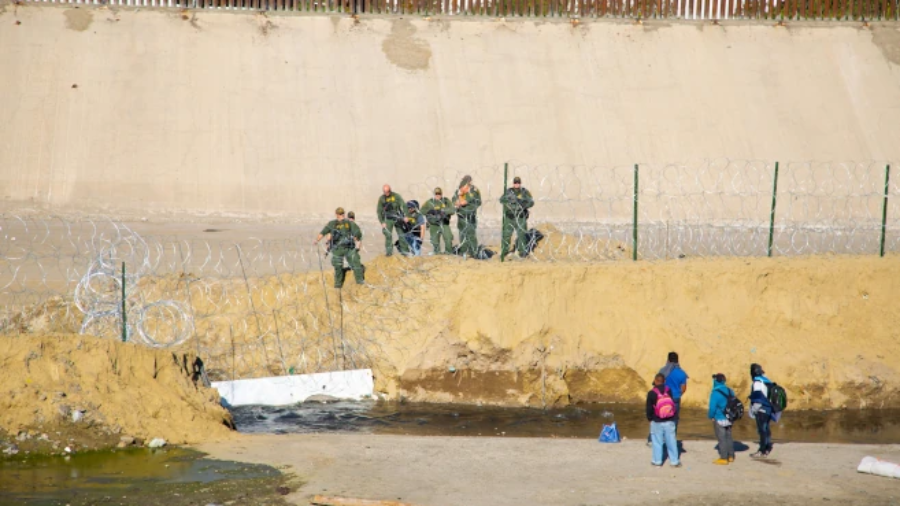
The phrase anti-migration policies conjures lines of barbed wire, walls, fences, expulsion orders, deterrent funding, pushbacks at sea, and ever-stricter visa regimes. From asylum deterrence tactics in Europe to de facto bans in Gulf states, many nations are doubling down on restricting who moves and how. But migration is not merely a choice—it is an expression of inequity, climate distress, conflict, economic divergence, and human aspiration.

So the central tension: states assert the right to control their borders; people assert the right to seek safety and opportunity. Can anti-migration policies ever fully “solve” migration? Or are they destined always to fall short, forcing societies to live with a paradox?

Mapping anti-migration policies globally

Before we address whether migration can end, we first need to survey the landscape of how states try to stop, slow or manage migration.

Major types of anti-migration policies

StrategyMechanismNotable examples / issues
Border fortification & physical barriersWalls, fences, border patrol intensificationU.S.–Mexico wall, fences in Hungary/Poland, Australia’s offshore processing
Externalization / outsourcingPaying transit or third countries to intercept migrantsEU funding to Libya, agreements with Turkey, “safe third country” rules (Wikipedia)
Deterrence via harsh conditionsDetention, prolonged asylum processing, criminalizationAustralia’s Nauru/Manus detention; Greece threatening jail for rejected asylum seekers (AP News)
Deportation & “return” agreementsMass expulsions, bilateral readmission dealsUK’s “one in, one out” deportations to France (AP News)
Visa restrictions / restrictive immigration quotasTighter work visas, high thresholds, family migration limitsU.S. 1924 Immigration Act (migrationpolicy.org); recent UK proposed limits
Technological & algorithmic controlsAI border checks, risk scoring, biometric constraintsThe EU is increasingly using ADM (automated decision-making) at borders — with serious ethical risks (arXiv)
Discursive / narrative control & misinformationCriminalizing migrants linguistically, demonizing rhetoricAnti-immigration posts spread faster than pro-immigration content on social media (arXiv)

These tactics are often layered together: a border wall alone doesn’t stop people if pushbacks at sea or detention inside the country remain. The more difficult the journey, the likelier that migrants funnel into more dangerous routes.

Recent trends & shifts

  • Europe’s New Pact on Migration and Asylum (effective from 2026) will push more deportations to third countries and harmonize stricter asylum rules (Wikipedia).
  • Greece is introducing prison sentences for rejected asylum seekers as part of a crackdown. (AP News)
  • The UK’s new “one in, one out” policy shipped a migrant back to France, marking a harder-line shift. (AP News)
  • In many countries, political leaders evoke migrant “invasions” or loss of national identity—normalizing strict control rhetoric. The influence of U.S. anti-immigration discourse in European policy is well documented (Real Instituto Elcano).

These shifts reflect more than policy changes—they reflect deeper political realignments where migration becomes a boogeyman for economic anxiety and identity upheaval.

Why anti-migration policies cannot end migration

Having mapped how states try to resist migration, let’s now dig into why such efforts will always partially fail if the root forces pushing people remain.

1. Migration is older than states

Human migration long predates nations. The Migration Period (c. 300–600 AD) saw mass movements of tribes across Europe that reshaped civilizations (Wikipedia). In modern times, industrialization and global inequality have turned migration into a structural constant. As historian Ian Goldin notes:

“People moved in search of safety, stability, and opportunity” — until the 1890s, migration within Europe mirrored cross-Atlantic flows. (IMF)

Put simply: migration is a response to geography, economics, conflict, climate and human aspiration. No border wall can stop a climate-driven drought or a violent war.

2. Push factors intensify

As conflicts, climate change, resource scarcity, weak governance, and inequality worsen, push factors either remain steady or accelerate. Anti-migration policies act on the symptom (movement), not the cause (conditions driving movement). Without addressing the deeper crises in origin countries, deterrence won’t make people stay—they’ll take ever more perilous paths.

3. Smuggling & underground routes adapt

Whenever a migration corridor is blocked, new, more dangerous routes open. Smugglers evolve. When the U.S. tightened access from Mexico, migrants rerouted through Central America or the Darien Gap. The ‘closing’ of migration paths seldom stops movement—it shifts it.

4. Human rights, asylum obligations & international law

No matter how strict, states must respect rights of asylum seekers, refugees, torture conventions, and non-refoulement principles. Many anti-migration laws skirt legal lines or make legal challenges. The safe third country doctrine is often abused—removing asylum possibility entirely (which may violate protection obligations) (Wikipedia).

5. Demographic, economic and aging pressures

Many countries now face aging populations and labor shortages. Immigrants are often part of the solution to demographic decline. If a state truly tried to end migration, it would starve its labor market, stunt innovation, and risk stagnation.

6. Moral and ethical constraints

A world without migration is a world of sealed borders and a fortress mentality. That undermines the ethos of human dignity: people seeking safety, family reunification, education, life. The moral pressure to offer refuge will always resist total closure.

Counterexamples & illusion of “success”

Some regimes boast near-zero migration, but their “success” is costly, coercive, or unsustainable.

  • North Korea keeps almost all movement internal via extreme controls, but at tremendous human cost and near total suppression of freedoms.
  • Gulf states often restrict citizenship and maintain a large underclass of migrant workers with precarious rights—not truly “ending migration,” but tightly controlling it.
  • Japan’s rising “Japanese first” rhetoric (by the Sanseito party) is more symbolic than absolute; the nation still accepts foreign labor under strict conditions (Wikipedia).

These are not ethical models for global policy—they limit migration by limiting human freedoms.

Fresh perspectives & personal reflections

Over years of reading migration testimonies and field reports, several patterns struck me:

  • Migrants don’t view movement as “illicit.” When forced, it’s survival, opportunity, family. Anti-migration laws criminalize hope.
  • Many migrants said: “I would not have left, but conflict killed the choice to stay.” You can’t legislate away war or climate.
  • Community networks matter enormously. Diasporas, remittances, information flow keep paths alive—closing one border may not knock out the chain of trust and networks.
  • Digital tools, WhatsApp routes, satellite connections—all help shape “invisible highways” beyond state control.

These suggest that migration is not only physical movement—it is relational, human and adaptive.

Toward realistic aims: not ending, but managing & humanizing migration

Given that migration cannot (and probably should not) be entirely ended, the question becomes: how do we make it safer, more equitable, and better governed?

1. Shift from deterrence to opportunity

Instead of punishing movement, invest in local opportunity in origin countries—jobs, infrastructure, governance, climate resilience. If movement is a safety valve, strengthen conditions so that staying becomes an acceptable and dignified option.

2. Transparent, humane migration channels

Rather than shutting doors, open safe routes: labor migration visas, mobility pacts, migration corridors. A rigid gate creates clandestine tunnels; an open window lets people come safely.

3. Shared responsibility & burden sharing

No country should absorb all migration. Mechanisms like the EU’s Pact (2026), which forces burden-sharing and joint processing, point in this direction (Wikipedia).
Multilateral systems that distribute hosting, resettlement and integration costs can reduce the pressure to “close borders.”

4. Legal oversight of tech & algorithmic borders

As states deploy AI and automated decision systems at borders, strong legal frameworks must protect privacy, prevent bias, and ensure appeal rights (arXiv). Borders must serve people—not the other way around.

5. Narrative change, civic inclusion & countering misinformation

Anti-migration sentiment is powerfully shaped by narratives and social media. Studies show anti-immigration content spreads faster online than pro content (arXiv). Investing in counter-narratives, fact checks, diaspora voices, and legislative bans on hate speech can change public terrain.

6. Gradual integration & community bridges

When migration is inevitable, welcoming systems (education, language, social connection) reduce friction. Integration over exclusion yields social cohesion over conflict.

Can humanity ever end migration? The verdict

If I were to answer simply: No—migration cannot realistically be ended. But that is not defeatism. It is a recognition that migration is as much a human need as hunger or health.

  • Attempting to end migration at the border level is like trying to suppress waves with a sandcastle.
  • Anti-migration policies can reduce certain flows (especially lower-risk, legal ones), but they can never fully block high pressure flows.
  • The only way “migration ends” is when the root causes—geopolitical inequality, climate breakdown, conflict, exclusion—are resolved at global scale. And even then, movement will persist as part of human exchange.

Rather than “end migration,” our goal should be to transform migration—make it safer, more humane, more equitable, better governed.

Key insights: what every reader should remember

  1. Migration is structural — rooted in global inequality, climate, conflict and aspiration.
  2. Anti-migration policies are always partial — they displace flows, increase danger, and often violate rights.
  3. Human agency resists total closure — social networks, desperation and choice always find a way.
  4. Ethics matter — walls may close borders, but not human dignity.
  5. Transformation over elimination — safer routes, equitable systems, responsibility sharing offer the real future.

Conclusion & Call to Action

Anti-migration policies are tactical experiments in border control—they will never extinguish the human drive to move, to survive, to hope. But we must channel our energy into building better systems, not tighter ones.

If you found yourself shaken by this post, here are three actions you can take:

  • Share your voice: bring this topic into your community, challenge simplistic narratives.
  • Support humane migration NGOs: organizations working on safe routes, legal aid, refugee support.
  • Stay informed: follow reliable sources (e.g. IOM, Migration Policy Institute, UNHCR) and push for legislation that protects rights, not erodes them.

⚠️ Migration may never end—but it can be kinder, fairer, more just. That’s what’s worth fighting for.

References

  1. International Organization for Migration (IOM). (2024). World Migration Report 2024. Geneva: IOM.
  2. UNHCR. (2023). Global Trends: Forced Displacement in 2023. Geneva: UNHCR.
  3. European Commission. (2024). New Pact on Migration and Asylum. Brussels: European Union. Retrieved from https://ec.europa.eu
  4. Goldin, I. (2025). “A Moving History.” Finance & Development, International Monetary Fund. Retrieved from https://www.imf.org
  5. Migration Policy Institute. (2023). “The U.S. Immigration Act of 1924 and Its Legacy.” Washington, DC. Retrieved from https://www.migrationpolicy.org
  6. Real Instituto Elcano. (2024). The Trail of Trump’s Anti-Immigration Policies in Europe. Madrid. Retrieved from https://www.realinstitutoelcano.org
  7. AP News. (2024). “Greece Approves Prison Sentences for Rejected Asylum Seekers.” Retrieved from https://apnews.com
  8. AP News. (2024). “UK Deports Migrants Back to France under New Policy.” Retrieved from https://apnews.com
  9. Arxiv. (2024). “Automated Decision-Making and Migration Management at the EU Border.” Retrieved from https://arxiv.org
  10. Arxiv. (2024). “Misinformation and Anti-Immigration Narratives Online.” Retrieved from https://arxiv.org
  11. Wikipedia. (2025). Migration Period. Retrieved from https://en.wikipedia.org/wiki/Migration_Period
  12. Wikipedia. (2025). Safe Third Country. Retrieved from https://en.wikipedia.org/wiki/Safe_third_country
  13. Wikipedia. (2025). Sanseitō Party (Japan). Retrieved from https://en.wikipedia.org/wiki/Sanseit%C5%8D
trump-animal-face

How Trump Weaponized Lies and Turned Truth Into a Casualty: An Unvarnished Investigation

Introduction

From the moment Donald Trump began his political rise, lying often felt less like a slip-up and more like a strategic tool. But there’s a critical difference between exaggeration and weaponization. In this post, we explore how Trump weaponized lies — not merely telling falsehoods, but turning them into active instruments of power — and how truth has become a growing casualty in the process.

Comparison: Lies Before vs. Lies as Strategy

To understand how unprecedented this is, it helps to compare:

Before Trump EraTrump Era (Weaponized Lies)
Lies (or mistakes) were often isolated, recognized, and corrected — sometimes publicly.False claims are repeated, amplified, repurposed, regardless of correction.
Media and public expected reckoning: fact-checking, apologies, retractions.Lies are embraced by parts of the public; fact‐checking is ridiculed as “fake news.”
Truth was viewed (roughly) as a shared standard — data, evidence, accepted narratives.Truth becomes negotiable — “my truth,” conspiracies, claims of rigged institutions.
Trust (though imperfect) in institutions like press, courts, experts.Erosion of trust; institutions themselves are painted as enemies.

The shift is not just quantity of falsehoods but quality: the intent, repetition, audience targeting, and consequences.

How Trump Weaponized Lies — Key Insights & Examples

Here are some of the biggest patterns and fresh insights into how this weaponization works in practice — including examples, sources, and some reflections on the consequences.

1. Repetition + Amplification = Facticity

One lie repeated enough becomes a pseudo‐truth in popular perception. Trump has used this over and over.

  • The Washington Post’s fact-checker Glenn Kessler documented 30,573 false or misleading claims during Trump’s first presidency — averaging 21 per day by the end. (Poynter)
  • One potent example: the claim that the 2020 election was “rigged” or “stolen.” Despite lack of evidence sufficient for courts or the Justice Department (including Bill Barr), Trump repeatedly made this claim in speeches, tweets, rallies. Doing this served two purposes: delegitimize defeat, and sow doubt in electoral institutions. (ABC News)

The mind’s natural tendency is: if I hear something over and over, maybe it’s true. And because mainstream media often counters with fact checks that get far less attention, the false narrative has an advantage.

2. Lies as Preemptive Shields and Blame Covers

Trump doesn’t only lie to push a narrative — often he lies before he is compelled to respond, to shape what is acceptable, to shift blame.

  • Spygate is a classic example: He claimed, without evidence in early stages, that Obama’s FBI planted spies in his campaign. Later, as investigations (Crossfire Hurricane, etc.) unfolded, parts of this claim were investigated and found lacking. Yet the narrative stuck among his base. (Wikipedia)
  • During COVID-19: early on he claimed “99% of cases are harmless,” downplayed risks, insisted testing was making case counts look worse. When the outbreak worsened, much of the damage was already done: mistrust, mixed messaging, delayed public health responses. (Wikipedia)

By establishing narratives (“we are under attack,” “they are the enemy,” “you can’t believe what you see”) ahead of facts, he builds a defensive envelope around his actions.

3. Lies with Consequences — Not Just Words

These aren’t harmless exaggerations. They produce concrete harms.

  • Mistrust in elections: If a large group believes elections are rigged, that undermines democratic governance. It was instrumental in precipitating the January 6 attack. (ABC News)
  • Public health costs: misstatements about COVID, mask wearing, vaccine timelines — these delayed responses or confused people about best practices. That likely led to more deaths.
  • Social polarization: false claims about immigrants (crime rates, pet-eating hoaxes, etc.) fan cultural fear, division, demonization. (The Guardian)

4. The Role of the Media, Fact-Checkers & Institutional Pushback

One insight that’s less often covered: fact-checkers aren’t powerless, but their tools are blunt and underpowered compared to the scale of repeated lies.

  • Fact-checkers do document false claims; e.g., in Trump’s 2017 year, Time reports nearly 2,000 false or misleading statements. (TIME)
  • Still, the false narratives often travel faster, more emotionally, more virally, especially in social media or partisan environments. Corrections often reach fewer people.

Another point: Trump and his allies frequently preempt or attack media/fact-checkers as biased. That undermines trust in correction itself. If people believe “the media is lying about me,” then corrective facts are dismissed as more lies or bias.

5. Psychological & Sociological Levers

To understand how weaponized lies succeed, you have to look at human nature: story, identity, trust.

  • Identity protection: Many people who support Trump or follow his base align not just on policy but identity — cultural, regional, religious. Lies that target perceived enemies (immigrants, elites, “the left”) reinforce group belonging.
  • Cognitive load & complexity aversion: Many lies are dressed up simply, repeated often, or made emotionally striking, while complexities, uncertainty, or nuance are deferred. Truth is messy; lies are simpler.
  • Emotional flood: Fear, anger, resentment are powerful. Lies that stoke those feelings are more memorable. Trump often uses them (e.g. claiming threats from immigrants, threats from internal enemies) to build urgency or perceived crisis.

Fresh Perspective: My Observations from the Ground

Having followed political discussions in both digital spaces and community settings, I’ve seen some patterns often under-reported:

  1. Echo chambers amplify senses of betrayal. Once someone’s trust is broken — say they believe the election was stolen — every contradicting fact feels like insider manipulation, not genuine correction. That makes possible even more elaborate narratives.
  2. Contradictory lies but consistent branding. Sometimes Trump or his team tells different falsehoods (e.g. numbers on immigration Crime or inflation). But what remains consistent is the brand: “They lied about us,” “We’re being treated unfairly,” “Only I can protect you.” The lies shift; the narrative stays.
  3. The long-game of delegitimization. Over years, frequent lies about courts, media, experts, technology (e.g. claims about the internet being “rigged” or manipulated), mean that when those institutions attempt correction or check power, their credibility is already eroded among many.
  4. Lies become shorthand. People begin to repeat false claims not because they know them well but because they heard them and because repeating them signals loyalty. In some community discussions, upholding the false narrative becomes part of “being on our side.”

Table: Weapons in the Lie Stack

Here is a summary of the key tools in the “lie toolkit” — what is deployed, why it’s effective, what it costs.

Tool / StrategyPurposeExample(s)Cost / Damage
Repeated false claimsNormalize the falsehood; seed doubt“Stolen election” claims; inflation mis-stats. (ABC News)Distorted public belief; rejection of evidence
Preemptive attacks on institutionsUndermine future challenges or correctionsAccusations that media/fact checkers/democrats always lie; claims FBI “spied” on campaign. (Wikipedia)Weakens trust in justice, press; makes checks on power less effective
Emotional amplificationMobilize supporters; sow fear or angerStatements about immigrants, foreign interference, “invasion,” etc. (The Guardian)Polarization; escalation of hate; erosion of mutual understanding
Simplification & speculationAvoid nuance; make claims easy to repeatPet-eating hoaxes; overblown claims about “worst ever” inflation; “everyone knows” style statements without data. (Reuters)Distortion of reality; misinformed policy preferences
Indifference to correctionRepeat falsehood even after debunking; attack the sourcesClaims continued post-fact check (e.g. election fraud) even when rejected in courts. (ABC News)Erodes effectiveness of coherence, of evidence; fosters cynicism

Why Truth Becomes a Casualty: Consequences we Can’t Ignore

Weaponizing lies doesn’t just distort facts — it changes society. Here are how I see the fallout, plus what I’ve noticed in interactions and data.

  1. Institutional decay: When people no longer believe in courts, media, experts, elections — those institutions lose power. They cannot check abuses or deliver on their promises.
  2. Democracy under stress: Democracy depends on shared facts (who votes, what laws are, who won elections). If large segments believe the system is rigged, you get crises of legitimacy — as seen on Jan. 6, or in demands for purges of agencies.
  3. Public health & safety suffer: Misinfo around vaccines, masks, threats. Lives are literally at stake when people believe false claims about medical risk or safety protocols.
  4. Social trust erodes: When neighbors, friends or family groups hold wildly different “truths,” it becomes harder to have civic conversation. Cynicism rises: “why bother verifying?” becomes common.
  5. Moral cost: There is a cost to lying as governance. Even for those who believe, there is disillusionment when promises fail but blame is always externalized. For those harmed by lies, there’s loss (economic, personal, psychological).

Why It Works: A Deeper Psychological Lens

To be blunt: this isn’t just Trump’s doing. He rode existing currents and catalyzed them. Some of the reasons it worked (or still works) more than many expect:

  • Information abundance + attention scarcity: More voices, more outlets, more data. But people tend to latch onto narratives that feel right rather than those that are factually verified. Lies with emotional punch cut through faster.
  • Shared social identity: Lies that align with someone’s worldview or identity are more easily accepted. As political identity becomes conflated with personal identity, contradicting the leader’s narrative feels like personal betrayal.
  • Feedback loops via tech: Algorithms reward engagement. Angry or shocking content (often based on misinfo) gets more clicks/shares. That means lies can spread fast, get repeated, and stay visible.
  • Lack of immediate consequences: For many lies, there is no institutional or electoral penalty. Support remains stable among a base that often sees challenges or consequences as part of the “system’s” bias.

What Moves Us Toward Repair

While much damage has been done, there are paths toward pushing truth back into the center. My suggestions, borne of both research and observation.

  • Stronger fact‐checking infrastructure & greater reach: Fact checkers need more resources, viral capacity, and better partnership with platforms to ensure corrections travel as far as falsehoods. Style matters: swift, clear, visible corrections.
  • Media literacy and public education: Teaching people how to evaluate claims, check sources, recognize emotional manipulation, understand that nuance often is essential. Not just school curricula but community—churches, local news, civic groups.
  • Institutional transparency and credibility: Courts, scientific institutions, election boards must be visible, defending not just their decisions but their methods. When people see how decisions are made, trust is bolstered.
  • Accountability: Political, legal, market accountability. When lies lead to harm or break laws (e.g., defamation, fraud), there must be consequences. Also, platforms (social media) need policies for leaders who repeatedly make false claims.
  • Cultural norms shift: We need culture that prizes integrity. Rewarding truth-telling, shaming deliberate deceptive practices, fostering public expectation that leaders speak truthfully—even when it’s inconvenient.

Conclusion

How Trump weaponized lies” is more than a question of rhetoric; it’s about power. When falsehoods become tools that shift perceptions, override institutions, seed distrust, the truth doesn’t simply lose arguments — it often loses ground entirely. For all of us whose daily lives depend on a shared reality — for democracy, for safety, for public life — that loss matters.

The story is still unfolding. Healing won’t be quick nor easy, because truth is fragile, and rebuilding credibility takes far more effort than tearing it down. But understanding the tools, recognizing the harms, and choosing collective norms that favor integrity over theatrical rhetoric are essential first steps.

Call-to-Action (CTA)

If this exploration prompted something in you, here are a few actions to consider:

  • Share this post with someone who disagrees with you — not to argue, but just to open dialogue about what “truth” means in public life.
  • Read more: I’ll link below to investigations, fact-checks, and scholarly work digging into these issues.
  • Support fact-checking organizations: They’re often non-profit and under-resourced.
  • Engage locally: Talk with people in your community about sources of truth (media, science, courts), ask questions, press for transparency.

References & Backlinks

  • “Legacy of lies – how Trump weaponized mistruths during his presidency,” ABC News. (ABC News)
  • “How The Washington Post tallied more than 10,000 Trump falsehoods in less than three years.” (Poynter)
  • Data from Glenn Kessler’s fact-checker database: 30,573 false or misleading claims over Trump’s presidency. (Wikipedia)
  • Analysis of COVID-19 misstatements by the Trump administration. (Wikipedia)
  • Recent falsehoods during Trump’s Fort Bragg speech; protests, foreign invasion claims, etc. (The Guardian)
  • False claims during debates (pet-eating, infanticide, etc.). (Reuters)
meme-warfare

Meme Warfare as Political Propaganda

Introduction: When an Image Beats a Speech

One morning, you scroll through your feed. You see a cartoon, a catchphrase, a mashup of pop culture and politics. It’s witty, perhaps absurd—but it sticks. Within minutes, it’s shared, remixed, re-posted. That’s the power of meme warfare: small visuals, massive impact.

In an age where many people skim rather than read, memes perform serious political work. They shape public perception, reinforce narratives, polarize hearts and minds. This post digs beneath the laughs—examining how political forces use meme warfare as propaganda: how they do it, what they gain, what we lose, and how to guard against its sway.

1. What Is Meme Warfare?

“Meme warfare” refers to the deliberate use of memes—visual content, captioned images, short videos, remixes, etc.—for political influence. Unlike traditional propaganda, meme warfare operates in the speed, viral potential, humor, and infiltration of digital cultures.

Key features include:

  • Rapid spread via social media platforms, messaging apps, forums
  • Humor, irony, satire used to lower defenses and make messages more palatable
  • Ambiguity, where messages carry multiple layers—politician A becomes villain or hero, depending on user interpretation
  • Mimetic evolution, where memes are remixed, reused, mutated—helping them survive moderation or censure

Research from SAGE shows political memes can shift public discourse, amplify polarization, and even affect how people vote. (How Meme Creators Are Redefining Contemporary Politics) (SAGE Journals)

2. How Meme Warfare Differs from Traditional Propaganda

AspectTraditional PropagandaMeme Warfare
ProductionOfficial channels, formal messagingOften decentralized; user-generated & viral
Speed & AdaptationSlow, top-down campaignsFast remixes, trend responsive
MediumBroadcast, print, formal speechesSocial media, image macros, GIFs, video shorts
VisibilityTransparent sourceOften anonymous or disguised as grassroots
ToneSerious, persuasive, formalHumorous, ironic, sarcastic, absurd

These qualities give meme warfare potency: low cost, high reach, hard to regulate.

3. Case Studies: Meme Warfare in Action

A. NAFO & Russia-Ukraine Digital Conflict

One of the most vivid recent examples is the role of meme warfare in the Russia-Ukraine war. The North Atlantic Fella Organization (NAFO), a grassroots meme movement, uses Doge-style Shiba Inu avatars, ironic humor, and online mockery to both counter Russian narratives and rally support for Ukraine. (SpringerLink)

NAFO’s content often pairs humor with real action: fundraising, amplifying verified information, rebutting disinformation. For many observers, NAFO’s memes helped challenge Russian “information pollution” by turning the absurd into a weapon. (SpringerLink)

B. Domestic Polarization and Meme Culture

In the United States, political memes contributed to polarization during elections. The 2016 Russian “IRA” (Internet Research Agency) campaign used memes to sow divisions—reshaping issues of race, identity, voting rights. Wired reported how memes targeted specific demographics on Instagram, YouTube, etc., to deepen cultural fault lines. (WIRED)

Another study found that exposure to political memes increases political participation and awareness—but also increases polarization and reduces exposure to opposing viewpoints. (ResearchGate)

4. Key Insights & Risks

1. Memes are Weapons of Narratives

Meme warfare is essentially narrative warfare. Memes distill complex ideas—ideology, grievance, identity—into shareable symbols. This makes them powerful tools for political branding.

2. Viral Doesn’t Mean Verified

Because meme formats prioritize speed, humor, and emotional hook, accuracy often suffers. Misinformation spreads, sometimes from well-meaning users who don’t check sources. Bots and false accounts magnify reach. Tools like MOMENTA are being developed to detect harmful meme content and its targets. (arXiv)

3. Echo Chambers & Reinforcement

Memes tend to thrive in ideological echo chambers: they confirm beliefs, reinforce group identity, ridicule or dehumanize “others.” Studies show people in homogeneous networks are more likely to believe memes that align with their worldview, and fewer encounters with counterarguments. (ResearchGate)

4. The Emotional Hook Over Rational Argument

Humor, irony, ridicule—memes tap into emotions more than logic. They mock, exaggerate, oversimplify. But emotional resonance often outpaces fact, meaning what feels true can become “true enough” for many. This is particularly effective in memetic warfare. (PMC)

5. Political Weaponization by States, Movements, and Unseen Actors

Governments (both democratic and authoritarian), opposition movements, online trolls, and even private actors use meme warfare. Because it’s hard to trace origin, attribution is difficult—giving plausible deniability. Strategic communications scholars argue memetic warfare should now be a part of national security and information operations planning. (stratcomcoe.org)

5. Personal Reflection: I Saw It in My Feed

Recently, during a local election campaign, I noticed memes showing a candidate in glowing, heroic light—depicted with religious motifs, with flags in the background. On the flip side, opposing candidates were caricatured, reduced to villains or absurd caricatures.

What struck me wasn’t just the content—but how quickly people reposted, laughed, then shared with conviction. Some people I know stopped arguing policies and simply declared “everyone knows X is a clown.” The meme had done its work—changed perception with humor more than argument.

This wasn’t just entertainment—it was shaping beliefs faster than any policy speech or debate.

6. Ethical, Social & Democratic Consequences

  • Erosion of Truth & Fact Checking
    When memes become primary political messaging, nuance is lost. False claims or exaggerations may be framed as jokes—but many users then treat them as truth.
  • Polarization and Social Fragmentation
    Memes that divide us tend to strengthen “us vs them” mentalities. They enforce homogeneity among in-groups and demonization of out-groups.
  • Manipulation & Coercion
    Using emotional appeal exploits cognitive biases. People may adopt beliefs because they saw them in a funny meme, not because they engaged with evidence.
  • Reduced Accountability
    Memes allow actors to spread propaganda without revealing attribution. Troll farms, botnets, anonymous accounts all take part. This makes oversight difficult.
  • Desensitization & Overload
    When outrage, mockery, or existential crisis is always mediated through memes, people may become numb. Memes about war, violence, oppression risk trivializing suffering.

7. Where Memes Fit Into the Broader Landscape of Propaganda

Meme warfare doesn’t replace other forms of political propaganda—it interacts with them. It can amplify or subvert traditional messages.

For example:

  • Political ads, speeches, media narratives feed into memes. Memes respond, parody, amplify.
  • Memes can set framing: e.g. a meme turns a statement into a memeable quote. Then that quote appears in news. Memes help pick which phrase enters discourse.
  • Digital platforms reward content that gets engagement—likes, shares—so meme creators (formal or informal) are incentivized to make content provocative, emotionally loaded.

Strategic communications studies—like the “It’s Time to Embrace Memetic Warfare” paper—argue that meme campaigns should be acknowledged (and if necessary regulated) as part of information operations in modern geopolitical conflict. (stratcomcoe.org)

8. Strategies to Resist Meme Warfare

What can individuals, societies, or platforms do to guard against harmful meme propaganda?

  • Media Literacy and Critical Viewing
    Teach people not just to consume memes for humor, but to question: who made this? What agenda is behind the joke? Is it exaggeration? What data supports or disputes it?
  • Platform Responsibility
    Social media platforms should invest in detecting disinformation memes, flagging false content, transparency about origin, labeling content. Tools like the MOMENTA framework help in identifying harmful memes. (arXiv)
  • Counter-Memes & Narrative Resistance
    Just as memes can divide, they can also unite or counter harmful messages. Movements like NAFO show how humor and irony can be wielded to dispute propaganda. (SpringerLink)
  • Regulation & Ethical Standards
    Legislation or codes for political advertising should include digital content and meme-based messaging. Ethical standards for campaigns to disclose origins, influence, funding.
  • Personal Boundaries
    Be mindful of one’s own content sharing. Share responsibly. Pause before reposting provocative memes. Seek reliable sources.

Conclusion: Beyond the Meme

Meme warfare is not just funny pictures with political captions—it’s a major force reshaping how we think, perceive, and engage. Propaganda has gone visual, viral, decentralized, and often anonymous.

That means many of us are living inside memetic ecosystems—even if we don’t always see it. The challenge is recognizing when humor bends cognition, when a meme is pushing for a narrative rather than just a laugh.

Call to Action

Have you seen memes in your feed that felt more persuasive than a news article? Or ones that shaped what you believe before you even fact-checked? Share them below. Let’s talk about what memes have made us believe—and what we might be letting slip through as propaganda.

If this resonated, you might also like exploring Media Manipulation & Ideological Warfare and Mass Psychology & Influence for deeper dives into how culture, belief, and persuasion converge online.

References

  • Munk, T. (2025). Digital Defiance: Memetic Warfare and Civic Resistance – study on NAFO and countering Russian information pollution. (SpringerLink)
  • Mihăilescu, M. G. (2024). How Meme Creators Are Redefining Contemporary Politics. SAGE Publications. (SAGE Journals)
  • Core Motives for the Use of Political Internet Memes (Leiser et al., 2022) – study into why people create political memes. (jspp.psychopen.eu)
  • “Propaganda by Meme” report – generative AI and extremist meme radicalization. (cetas.turing.ac.uk)
  • Brookings – How memes are impacting democracy, TechTank series. (Brookings)
  • Harvard-Kennedy’s Shorenstein Center work (Donovan & Dreyfuss), Meme Wars: The Untold Story of the Online Battles Upending Democracy. (Brookings)