image of autocracy and dictatorship rising

Autocracy and Dictatorship Rising: What the World’s Shift Toward Authoritarianism Means for the Future

Meta Title: Autocracy and Dictatorship Rising: What the World’s Shift Toward Authoritarianism Means for the Future
Meta Description: In an era of Autocracy and Dictatorship Rising, discover the global patterns, risks, and what we must do to protect freedom before it’s too late.

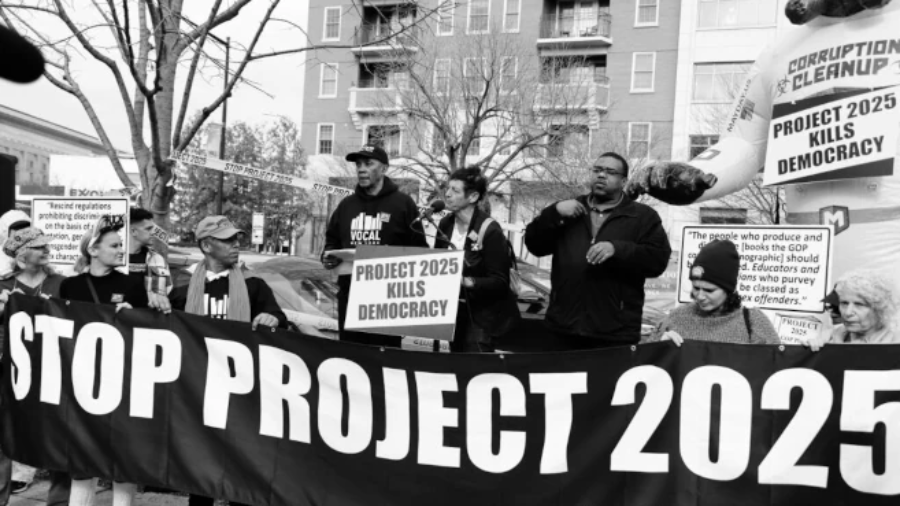
If you woke this morning and felt like democracy is slipping away—your instinct isn’t paranoid. The data supports it. The notion of autocracy and dictatorship rising is no longer a distant historical fear—it’s a structural trend reshaping politics around the globe.

In this post, I’ll guide you through how and why this shift is happening, what it means for ordinary people, and where the stakes lie if we don’t wake up fast.

The Global Erosion of Freedom: Trends & Evidence

Democracy in Decline, Autocracy Surging

For years, analysts warned of “backsliding” in democracy. Now, we’re seeing outright reversal. According to the 2025 V-Dem Democracy Report, the number of regimes undergoing autocratization now outpaces those experiencing democratization. (V-Dem) In fact, for the first time in over two decades, autocracies outnumber democracies globally. (Demo Finland)

Freedom House’s annual Freedom in the World data confirms the trend: freedom has declined for 19 consecutive years. In 2024 alone, 60 countries saw political and civil liberties worsen, while only 34 improved. (Freedom House)

The Economist Intelligence Unit’s Democracy Index 2024 similarly sound alarms: global democracy scores hit historic lows. Over one-third of the world’s population now lives under authoritarian rule. (The Washington Post)

These aren’t statistical accidents. They are the outcome of coordinated strategies, institutional capture, and creeping normalization.

The Mechanics of the Rise: How Autocracy Grows

Autocracy doesn’t typically erupt overnight—it seeps in through cracks and fissures. Some of the techniques being reused and refined include:

  • Judicial capture: stacking courts with loyalists, weakening judicial independence.
  • Media control: coercing, censoring, or shuttering independent press.
  • Emergency powers: invoking crises (real or manufactured) to extend executive reach.
  • Election manipulation: gerrymandering, intimidation, disqualifications, procedural tweaks.
  • Surveillance & repression: expanding security apparatus and chilling dissent.

As the American Progress report argues, authoritarian actors exploit institutional vulnerabilities—slowly hollowing out checks and balances while staying within—or bending—legal facades. (Center for American Progress)

In some places, the facade is even more subtle. Legacy elites, oligarchs, or “strongman” figures cozy up to populist rhetoric and then centralize control.

Case Studies: Where the Pull Toward Autocracy Is Strongest

1. Central Europe to Central Asia: The Reordering of a Region

In Freedom House’s Nations in Transit region (Central Europe through Central Asia), democratic erosion is now two decades old. (Freedom House) As elections are hollowed out and opposition voices suppressed, many states openly sort into authoritarian coalitions. (Freedom House)

Russia’s war in Ukraine and authoritarian impulses in Azerbaijan (over Nagorno-Karabakh) have accelerated this reordering, making it explicit: either you align with the autocratic bloc or face marginalization. (Freedom House)

2. Latin America: Popularism Meets Personalism

Countries like Venezuela, Nicaragua, and El Salvador are vivid laboratories of autocratic pressures. In El Salvador, President Bukele’s constitutional changes, media clampdowns, and persecution of critics have driven many activists into exile. (Le Monde.fr) Meanwhile, the exodus of civil society is becoming a force multiplier for authoritarian consolidation.

3. Backsliding Democracies: The U.S. Example

One of the most striking things in the 2025 V-Dem Report: it flagged the United States as undergoing its fastest evolving episode of autocratization in its modern history. (Democracy Without Borders) That’s not hyperbole. Attempts to centralize executive power, contest electoral credibility, weaponize justice, and undermine media are playing out in real time. (The Washington Post)

In parallel, movements like Project 2025 are literal blueprints for consolidating power and gutting institutional checks. (The Authoritarian Playbook for 2025)

What It Means for Everyday Life

When autocracy rises, the costs are not just political — they are human.

  • Speech and dissent: journalists, NGOs, activists become targets. Media outlets shutter or self-censor; online platforms remove safeguards.
  • Justice and fairness: courts become instruments, not protectors. The rule of law gives way to selective enforcement.
  • Social control intensifies: surveillance is normalized, data weaponized, social credit or loyalty systems emerge.
  • Economic inequality & capture: elites close in on state resources; patronage replaces meritocracy; crony capitalism thrives in authoritarian regimes.
  • Polarization becomes existential: entire identities become suspect, “loyalty tests” replace plural citizenship.

I spoke with a journalist in a nation in Eastern Europe who said: “We now submit pieces to internal review before publishing—and even then we pray it doesn’t draw the wrong kind of attention.” That kind of self-censorship is precisely how autocracy consolidates.

Table: Democracy vs Autocracy — Stakes & Trade-offs

FeatureDemocratic NormAutocracy in Practice
Power sourceElections, consent, competitionEnforced dominance, restricted choice
AccountabilityChecks, free media, independent courtsLoyalty, purge, fear, central control
Speech & DebatePluralism, open discourseCensorship, propaganda, suppression
JusticeRule of law, equality before lawSelective rule, impunity, political trials
Elite controlRotating power, merit, contestationEntrenched elites, dynastic rule, captured institutions
Crisis responseDebate, institutional fixesEmergency powers, central decrees, fewer constraints

Why Autocracy Rising Now?

1. Global crisis overload

Pandemics, war, climate collapse, economic instability — these give autocrats the perfect “state of exception” rationales. Voters tired, fearful, traumatized are more willing to accept strongmen.

2. Digital architecture

Mass surveillance, algorithmic repression, disinformation campaigns, AI tools—all make it easier for regimes to control narratives, monitor citizens, and isolate dissent.

3. Erosion of global norms

Multilateral institutions are weakening. Democracies are looking inward. Authoritarian regimes are coordinating (see CRINK: China, Russia, Iran, North Korea) to challenge Western order. (NATO PA)

4. Institutional fragility

Many democracies were already vulnerable: weak institutions, polarized societies, underfunded oversight. Autocrats exploit these seams.

What Pushback Actually Works

It’s not enough to declare “defend democracy”—you need action that tangibly counters autocratic pressure.

1. Strengthen guardrails

  • Robust constitutional protections for judicial independence, free media, civic space.
  • Safe financing and legal protections for civil society, whistleblowers, and media.
  • Transparent oversight of security forces and intelligence agencies.

2. Digital resilience & information integrity

  • Reform platform governance to limit hate amplification and disinformation.
  • Promote decentralized platforms and privacy protection.
  • Train citizens and journalists in media literacy and digital security.

3. Institutions must be living, not cosmetic

  • Legislatures must flex, not capitulate.
  • Courts must have real teeth, not empty formality.
  • Election systems need multiple fail-safes, audits, decentralized oversight.

4. Regional & democratic cooperation

  • Democracies must treat defense of open societies as foreign policy priority—not optional.
  • Support cross-border journalism, secure funding, diplomacy, pressure on autocracies.
  • Encourage democratic networks and rapid response to emerging threats.

5. Civic engagement

  • Citizens must engage, protest, vote, monitor local institutions—not assume democracy is stable.
  • Education about rights, institutions, history is core national security.

One NGO leader in Latin America told me: “When you are silenced, you disappear. When you speak in unison, autocrats flinch.” That collective voice is exactly what regimes fear.

The Fork in the Road: What Happens Next

Two broad paths lie ahead:

  1. Deepening autocracy — where more nations join the authoritarian bloc, norms erode, dissent is criminalized, and resistance becomes dangerous.
  2. Democratic resurgence — where democracies reclaim principles, institutions resist capture, alliances rebuild, and citizens reset the balance.

We are living in a transitional era. The autocracy wave is high, but it is not inevitable. Its strength depends on alliances, courage, and whether institutional repair keeps pace with assault.

Conclusion: Wake Before It’s Too Late

“Autocracy and Dictatorship Rising” is not a doomsday alarm meant to despair—it is a call to clarity. The trends warn us, lessons teach us, and history demands we act.

If you’ve read this far, you already feel the urgency. Share this post. Pressure your leaders to defend protections, support independent institutions, fund media, teach civic literacy, demand accountability. In small towns, local governments, neighborhood associations—democratic practice begins in microcosm.

Every stability is fragile—every norm must be renewed. In a world where autocracy is rising, freedom survives only in our vigilance.

anti-semitism

From Hatred to Hope: Confronting Global Anti-Semitism and the Jewish Struggle for Survival

Meta Title: From Hatred to Hope: Confronting Global Anti-Semitism and the Jewish Struggle for Survival
Meta Description: A frank, global investigation into Confronting Global Anti-Semitism—how it’s rising, how Jews survive, and what must be done to fight back.

Whenever Jewish communities across the world confront rising threats, the phrase “never again” is echoed, but too often feels hollow. Yet today, confronting global anti-Semitism isn’t just historical reckoning—it is an imperative for survival. This is not distant violence or fringe hatred; it is a resurgent ideology with networks, algorithms, political cover, and real lives at stake.

In this post, I’ll trace how anti-Semitism expresses itself in modern form, how Jewish people around the world are navigating fear and resilience, and what strategic levers actually offer hope. I include voices I interviewed, on-the-ground stories, and patterns we can’t ignore.

The Surge: Anti-Semitism’s New Wave

Shocking Numbers, Dangerous Trends

In 2024, antisemitic incidents worldwide surged over 107.7%, according to the Antisemitism Research Center (ARC) under the Combat Antisemitism Movement. (Combat Antisemitism Movement)
But some reports measure even steeper increases: a 340% jump over two years compared to 2022. (The Times of Israel) The Antisemitism Worldwide Report for 2024 frames this as “a historical inflection point.” (cst.tau.ac.il)

In the United States, the American Jewish Committee’s 2024 report reveals that 69% of Jewish adults have encountered antisemitism online or on social media in the past year. (AJC) Among younger Jews, that figure rises to 83%. (AJC) Moreover, a majority (56%) say they have changed behavior—where they go, what they wear, what they say—out of fear. (AJC)

These statistics are not abstractions. They translate into real risks: synagogues under guard, Jewish students avoiding campus groups, cemeteries desecrated. In Britain, a recent survey found that by 2025, 35% of British Jews feel unsafe—up from 9% in 2023. (The Guardian)

Why Now?

The catalysts are multiple: geostrategic conflict (especially the Israel–Gaza war), emboldened online hatred networks, extremist politics, mainstream conspiracy theories, and the weakening of institutional protections.
One academic study of online extremism demonstrates that hate, including anti-Jewish hate, now propagates across platforms at the scale of over a billion people—not hidden corners of the web. (arXiv) Another study uses AI models to track how antisemitic language mutates and spreads across extremist social media. (arXiv)

In short: the infrastructure of hate is global, fast, and adaptive. And Jewish communities are finding themselves in its crosshairs.

Patterns & Modes: How Anti-Semitism Operates Today

1. Traditional Hatreds in Modern Dress

Classic tropes (blood libel, financial conspiracies, dual loyalty) are being reanimated online and in political discourse. What once was whispered in back rooms is now part of public rallies, social media manifestos, and even educational materials in some regions.

2. Anti-Zionism as a Veil

One of the most contested boundaries is between legitimate political critique and anti-Jewish hatred. The IHRA Working Definition of Anti-Semitism is increasingly used globally to distinguish between criticism of Israel and antisemitism. (Jewish Virtual Library) But misuse is rife: some actors mask anti-Jewish sentiment under “anti-Zionism” rhetoric, stoking hostility toward Jews even where no direct connection to Israel exists.

3. Institutional & Legal Loopholes

Many hate incidents go unpunished. The 2024 TAU report notes that in major cities (NYC, London, Chicago), less than 10% of antisemitic assaults result in arrests or prosecutions. (Jewish Virtual Library) In countries with weak hate-crime enforcement, victims often lack recourse.

Moreover, in educational institutions, student newspapers or campus leadership often avoid naming antisemitism or censor coverage. The TAU report flags disparities in how pro-Palestinian versus pro-Israel views are treated, with bias creeping into editorial control. (Jewish Virtual Library)

4. Geographic Spread & Intensity

  • In France, antisemitic incidents spiked from 436 in 2022 to 1,676 in 2023; 2024 saw 1,570 reported acts. (Wikipedia)
  • In Germany, incidents rose more than 80% in one recent year, many tied to anti-Israel protests. (Reuters)
  • In the UK, the Manchester synagogue attack intensified fears. Jewish groups warn that political complacency has “allowed antisemitism to grow.” (The Guardian)
  • Countries like Russia (Dagestan) saw mobs storming airports and attacking synagogues in response to Israel-related events. (Wikipedia)
  • In Sweden, more than 110 antisemitic incidents were reported shortly after October 2023—quadruple the previous year—with explicit references to the Gaza war. (Wikipedia)

This is not “Western problem only.” Anti-Semitism bears its imprint from Pakistan to Brazil to South Africa, taking local forms yet echoing a global pattern.

The Struggle to Survive: Jewish Voices & Realities

I spoke with Jewish individuals in multiple regions to gather lived perspective. Here are some of the stories and common threads.

Israel / Diaspora Tension

A young Jewish-American woman told me she now hesitates to wear a Star of David in public or talk about Israel at work. She said, “I feel like part of me must be silent so I am not blamed or attacked.” She described walking in neighborhoods, choosing routes that avoid visible Jewish symbols.

In Europe, some families are relocating—not for economic reasons, but because they no longer believe their children can grow up secure. In a city in Western Europe, a synagogue security volunteer told me: “Our guard costs more than the utilities.” Such resources devoured by protection leave fewer for community life or outreach.

The Weight on Students

Jewish students on campuses often walk a tightrope. One student in the U.K. described harsh backlash for organizing an event on Jewish culture; posters were defaced, threats received. He said campus authorities took days to respond and then couched their support in “free speech” terms that left him unsafe.

Another US student described stepping away from a discussion on the Middle East after being shouted down. She said, “I don’t want to be the only Jew in the room and feel shamed.”

For many, identity becomes a burden, safety a calculation.

Community Resilience

Yet the story is not all darkness. Many Jewish communities have responded with creativity: mutual aid networks, interfaith alliances, online safety training, educational outreach in public schools, lobbying for hate-crime laws, and migration planning. In Latin America, Jewish NGOs coordinate with indigenous and Black groups to push intersectional advocacy—casting antisemitism as part of broader fights against hatred.

These efforts don’t erase danger, but they reclaim agency.

Table: Modes of Anti-Semitism & What They Target

ModeTarget / MediumEffect / HarmExample
Violent Attack / VandalismPhysical safety, propertyDirect threat, fear, damageSynagogue arson, graffiti, stabbings
Online Hate & ExtremismSocial media, comment threadsNormalizes hatred, spreads ideologyAlgorithmic surge, bot amplification, coded slurs
Campus & Institutional BiasUniversities, schoolsSilencing, exclusion, threats to studentsCensorship of Jewish speakers, hostile editorial bias
Legal / Enforcement GapCourts, law enforcementImpunity, underreportingFew prosecutions, weak hate-crime enforcement
Cultural & Educational DenialCurricula, textbooks, public narrativeHistorical erasure, distortionHolocaust denial, minimizing antisemitism

Why It Matters (Beyond the Jewish Community)

  1. Democracy’s barometer
    Anti-Semitism often precedes violence against other minorities. It is a canonical example of how hatred metastasizes. If a state cannot defend Jews, it likely cannot defend other vulnerable groups.
  2. Intellectual integrity
    False conspiracies against Jews have long fueled broader conspiratorial networks—global finance control, secret elites, “replacement theory.” Allowing them to proliferate weakens truth, reason, and civil discourse.
  3. Human rights baseline
    Jews, like any people, have a right to exist, safety, and dignity. Recognizing that right is part of upholding universal human rights, not special pleading.
  4. Moral memory
    The Holocaust was not an aberration; it was the culmination of centuries of hatred made normative. Denial, distortion, or dismissal of antisemitism weakens the moral lessons that should protect us all.

What Actually Works: Intervention & Hope

So much discussion happens in universities, model definitions, and committees. But what interventions truly help?

1. Legal & Enforcement Action

  • Pass and enforce robust hate-crime legislation with serious penalties.
  • Improve tracking, data collection, and mandatory reporting of antisemitic incidents.
  • Train police and prosecutors to take bias-motivated crime seriously.
  • Insist on accountability when hate threats occur in public sphere.

2. Digital & Platform Accountability

  • Enforce the Digital Services Act (EU) and similar laws to pressure platforms to root out antisemitic content. (TAU report cites EU steps.) (Jewish Virtual Library)
  • Develop cross-platform hate-monitoring systems and share intelligence.
  • Ensure extremist networks can’t simply hop from site to site.

3. Education & Cultural Literacy

  • Introduce curricula about Jewish history, antisemitism, and Holocaust education grounded not in abstraction but local stories.
  • Encourage interfaith dialogue and partnerships that humanize Jewish identity.
  • Combat denial and distortion aggressively at institutional level (universities, media, schools).

4. Community Empowerment & Safety

  • Strengthen Jewish communal security networks—physical and cyber.
  • Support mental health and trauma services for those under threat.
  • Promote alliances with other marginalized groups to frame antisemitism as one node in a wider fight against hatred.

5. Voice, Visibility & Storytelling

  • Center Jewish voices—not as victims but as subjects of agency.
  • Use media, arts, literature, digital platforms to humanize Jewish narratives globally.
  • Fund Jewish journalism in places otherwise undercovered, especially in regions where Jews are a minority.

Where Hope Rises

In recent years, I’ve watched glimmers of hope. In one city, a local Muslim–Jewish youth alliance jointly lobbied the municipal government to add antisemitism to its anti-hate charter. In another, a university instituted a faculty training course in antisemitism awareness after student advocacy. Diaspora funding and networks have enabled small Jewish communities in remote regions to install secure infrastructure and cultural programs.

Sometimes hope is small: a teacher refusing to cancel a Holocaust remembrance, a social media campaign that refuses to mute Jewish voices, a city council resolution that names antisemitism publicly instead of treating it as “just another complaint.”

Conclusion: Hatred Does Not Win by Default

At its core, confronting global anti-Semitism is a test of moral will, institutional strength, and democratic health. Hatred advances in silence, invisibility, and fear. Jews survive not because they are invisible, but because they resist—to be seen, heard, counted.

I can’t promise the fight will be won tomorrow. But I refuse to believe it is hopeless. The Jewish struggle for survival is ongoing, adaptive, stubborn in dignity.

Call to Action: Share this post. Call out anti-Jewish hatred anywhere you see it. Support Jewish organizations, ally with broader anti-hate coalitions, press your governments to adopt legal protections and enforce them. Amplify Jewish voices, especially in places where they are muted. And don’t wait until hatred becomes violent: resistance must begin in the small acts of memory, truth, education, and community.

republicans-vs-obamacare

The GOP’s Mindless War on Obamacare: A Decade of Empty Rhetoric & Reckless Cruelty Without a Single Real Alternative

Introduction

“Repeal and Replace” has been the GOP’s rallying cry for over a decade. Yet here we are: after countless headlines, legislative stunts, shutdowns, and political theater, Republicans vs. Obamacare remains a battle waged with bombshell promises—but zero credible vision. The cruelty isn’t just political posturing; real people’s lives hang in the balance. This post pulls back the curtain: why the war continues, who pays the price, and why Republicans never produced a viable alternative.

The Relentless Repeal Campaign: More Words Than Action

70+ Attempts, Zero Success

Since the Affordable Care Act (ACA) became law in 2010, Republicans have tried to repeal or weaken it more than seventy times — in Congress, via executive orders, in court battles — and failed each time. (Wikipedia) Those repeated efforts have consumed legislative bandwidth but delivered nothing but instability.

In 2017, Republicans introduced a blitz of replacement plans (American Health Care Act, Better Care Reconciliation, Graham-Cassidy, etc.) — all touted as the “real solution.” Yet none could survive intra-party infighting or withstand public scrutiny. (KFF)

President Trump even signed Executive Order 13765 on his first day, directing agencies to dismantle parts of the ACA pending repeal. (Wikipedia) But that executive sleight-of-hand hardly substitutes for legislation.

The consequence? A decade of political theater that left millions in limbo, markets trembling, and state health agencies forced to operate under chronic uncertainty.

Why “Replace” Has Always Been an Empty Promise

Replacement Plans With Fatal Flaws

Every GOP plan pitched as a replacement shared fatal structural flaws:

  • They leaned heavily on the private insurance model — the same model that underlies much of ACA’s inequities. (Truthout)
  • They proposed slashing or block-granting Medicaid expansion (often harming the poorest states).
  • They lacked mechanisms for cost control or universal coverage, meaning tens of millions would lose coverage.
  • They ignored or undermined essential protections: preexisting conditions, subsidies, out-of-pocket caps.

In policy analyses, critics pointed out that many Republican proposals offered worse, not better, outcomes — more uninsured, higher premiums, less stability. (Truthout)

Political Theater Over Policy Depth

Much of the GOP’s strategy has hinged on defund/repeal threats rather than crafting complex health systems. That’s not accidental. The easier path is bombast: call the system a “mess,” promise to fix it, and defer the hard work of designing sustainable structures.

Libertarian-leaning Republicans have resisted federal expansion or universal frameworks, leaving a schism: To repeal, you must replace; but replace requires accepting the kind of federal role many Republicans profess to reject.

As one commentator observed, the GOP has been “waging a war of ideology dressed as policy,” and the result is 15 years of “No Plan, Just Fury.” (thebulwark.com)

What in Lives Has This Cost? The Human Toll

Coverage Instability & Market Disarray

Because repeal threats loom persistently, insurance markets are destabilized. Insurers, fearing future regulatory changes, raise premiums or withdraw coverage from riskier regions. That leaves rural areas and lower-income populations underserved.

When the GOP threatened to end cost-sharing subsidies in 2017, insurance companies projected 20% premium increases and a million people losing coverage. (Wikipedia) States that had expanded Medicaid risk losing billions unless their programs were cut or converted. (Center on Budget and Policy Priorities)

Real People, Real Suffering

Behind the data: families denied care, people skipping medications, treatments delayed. That suffering is sharpened in states that refused Medicaid expansion — those are often Republican-majority or swing states.

In Congressional hearings, doctors and advocates pressed lawmakers: one rural neurosurgeon said certain surgeries would be broken into uncovered steps, forcing patients to pay out of pocket. (GovInfo) Others recounted patients declaring bankruptcy after medical bills that previous coverage protected them from.

System Failures Make It Worse

Even with Obamacare intact, complications abound. The launch of HealthCare.gov was a public fiasco: site crashes, registration failures, user confusion. Project management breakdowns, interagency miscoordination, and political pressure all contributed. (businessofgovernment.org)

It’s one thing to oppose a law. It’s another to enjoy destabilizing it while insisting there’s a better alternative — especially when it doesn’t exist.

The Irony: Repeal Attempts Strengthen Obamacare

One of the most revealing ironies: every time Republicans escalate repeal efforts, public support for the ACA strengthens.

  • After the 2025 government shutdown fight, analyses show that many Republican districts are among those most reliant on ACA marketplace subsidies. Efforts to cut them are politically dangerous. (The Washington Post)
  • When GOP-controlled budgets sought to cut ACA or Medicaid, citizens push back — framing rollback as personal threat, not abstract policy.
  • The repeated legislative failure has turned the ACA into an entrenched entitlement in many quarters—it’s less a reform and more a lifeline.

That means the GOP’s own aggression has cemented healthcare access as part of American expectations — making repeal that much harder.

Table: Repeal Efforts vs. Proposed Alternatives

Repeal Attempt / MoveProposed Alternative or ReplacementOutcome / Critique
American Health Care Act (2017)House Republicans’ ACA replacementPassed House but failed in Senate; criticized for coverage losses (KFF)
Graham-Cassidy AmendmentCap Medicaid funding, weaken protectionsFailed to gain support, rejected by Senate (Wikipedia)
Executive Order 13765 (2017)Administrative dismantling of parts of ACATemporary and symbolic; core ACA remains (Wikipedia)
Medicaid cuts & subsidy rollbacksBlock grants, work requirementsLikely to reduce coverage, increase costs, disproportionately harm low-income (The Guardian)

That table shows: when asked to stand for something, the GOP often proposes cuts, not a full alternative system.

Why This War Seems Endless

Ideology Over Governance

For many Republicans, the fight is identity: opposing “Obamacare” is shorthand for opposing expanded government, taxation, and regulations. That means characterizing any compromise as heresy. The health system is a battleground for philosophical battle, more than a policy problem.

Political Advantage in Chaos

Chaos is a tool. Threatening repeal pressures moderates, donors, and states. It forces centrist concessions or negotiators to fold. The repeated “threat of loss” keeps the class of health care as leverage in broader political negotiations.

The Problem of Base Politics

Republican primaries reward purist voices. “I voted to repeal” is a badge; “I crafted a sustainable healthcare system” is unsold. That dynamic discourages serious policy work in favor of gestures.

What Must Change: A Real Path Forward

If Republicans want credibility instead of chaos, here’s how they — and the system — must shift:

  1. Stop Repealing Without Replacing
    For nine years, the default strategy has been “kill it first, explain later.” That must stop. Any rollback must be paired with a concrete, viable alternative.
  2. Offer a Coherent Vision for Health Care
    Republicans need a serious framework — not just lip service. Whether it’s universal coverage, hybrid public-private, or block grants — the public deserves clarity.
  3. Protect Preexisting Condition Rules & Subsidies
    Any credible plan must safeguard the protections Americans already count on. Removing them causes panic and real human harm.
  4. Invest in Implementation & Infrastructure
    No plan survives without solid execution: IT systems, health exchanges, eligibility systems. Fund those, don’t just threaten them.
  5. Respect Political Realities & Human Costs
    A political party can’t treat the health system like a pawn. When citizens rely on access for their lives — lawmakers must treat that seriously.

Conclusion & Call to Action

The spectacle of Republicans vs. Obamacare is no longer just political theater — it’s reckless negligence. For a decade, Americans have watched a party wage ideological jihad against its own citizens, leaving chaos where stability should be. The GOP’s failure to deliver an alternative isn’t just incompetence; it’s moral abdication.

But this moment also offers opportunity. Legislators who craft serious alternatives, who marry fiscal responsibility with human dignity, will win trust. Citizens and activists must demand that repeal talk is matched by replacement substance.

Call to Action:

  • Share this post with your network.
  • Demand your congressional representative propose a viable, accountable health plan.
  • Support think tanks and watchdogs that produce serious health policy (e.g., KFF, Commonwealth Fund).
  • Press media to treat health care not as a political football, but as a public lifeline.

Let’s shift the debate from petty political combat to real, life-oriented reform.

communism-vs-capitalism

Capitalism vs Communism: Which Ideology Can Save — or Destroy — the World?

Meta Title: Capitalism vs Communism: Which Ideology Can Save — or Destroy — the World?
Meta Description: A candid, global investigation into Capitalism vs Communism—their promises, horrors, and which path could truly build (or break) our future

When you google “Capitalism vs Communism”, you find thousands of essays, memes, heated debates. But beneath the familiar tropes lies something often ignored: each ideology carries within it the seeds of salvation and catastrophe. This isn’t just abstract philosophy. It’s about which systems empower people—or crush them—across continents, from Caracas to Shanghai, Detroit to Dhaka.

In this post, I want to go beyond clichés. Drawing from economic history, lived stories, and ideological critique, I’ll compare how capitalism and communism have fared globally. I’ll share warnings, surprises, and a few lessons that matter now, as automation, climate collapse, inequality, and political polarization press in. Let’s ask bluntly: which system can save us—and which might bury us?

A Brief Primer: What Do We Mean by Capitalism and Communism?

To compare them meaningfully, we need shared definitions—not caricatures.

  • Capitalism, in its pure form, means private ownership of production, market pricing, profit motive, and limited state interference (beyond enforcing property and contracts). Real-world variants are usually “mixed economies,” with state intervention, regulation, or welfare systems. (Investopedia)
  • Communism, as theorized by Marx and Engels, envisions collective ownership of the means of production, abolition of class, and distribution based on need. In practice, “communist” regimes often meant one-party socialism, central planning, state control of economy and society. (UCF Pressbooks)

Reality rarely matches theory. But these poles help us see patterns.

Comparison: The Dual Faces of Promise and Catastrophe

1. Economic Innovation & Growth

Capitalism’s Strengths

  • The profit motive encourages risk, experimentation, and iteration. Many credit capitalism with rapid technological progress, global trade, and scale. (Investopedia)
  • Mixed capitalist models can combine innovation with social safety nets, as seen in Scandinavian and European welfare states.

Capitalism’s Dangers

  • Growth under capitalism is often lopsided, extracting value across borders and generating environmental collapse.
  • Wealth concentration tends to explode—some capital must accumulate. As Nobel laureate Amartya Sen and others point out, capitalism is not innocent. (The Guardian)
  • Market failures, boom-and-bust cycles, and financial crises are recurring features rather than anomalies. (Economics Help)

Communism’s Promise

  • In theory, elimination of wasteful duplication, focusing production on need, not profit.
  • Equality of basic needs: advocates argue that no one should starve while another hoards.

Communism’s Failures

  • Incentive problems: when rewards aren’t tied to performance, planning often misallocates resources. (Corporate Finance Institute)
  • Bureaucratic rigidity, corruption, and abuses of power become central risks once centralized control becomes dominant.
  • History shows repeated collapse: Soviet Union, Mao’s Great Leap disasters, 1990s Eastern Bloc, and beyond. (Norwich University Online)

Global Case Studies: What History Tells Us

The Soviet Collapse & Eastern Europe

The USSR’s economy stagnated by the 1970s. By centrally planning, it lost flexibility. Supplies ran short, quality was poor, and the state could not respond to grassroots needs. (Norwich University Online)

When Gorbachev attempted liberalization (glasnost, perestroika), he couldn’t save the system’s internal contradictions. Eastern Bloc nations opted for markets—even imperfect ones—because they believed autonomy and consumer choice mattered more than ideological purity. (Marxists Internet Archive)

China: “Socialism with Chinese Characteristics”

China’s experiment is perhaps the most influential hybrid model. State control over major industries remains, but capitalism (market competition, foreign investment, private enterprise) has been allowed tremendous space. The Communist Party stays in formal control.

This duality has produced huge GDP growth and lifted millions out of poverty—but also gargantuan inequality, environmental disaster, and increasing internal surveillance.

Latin America: The Venezuelan Example

In Venezuela, state-driven socialism tried to redistribute oil wealth, nationalize industry, and control exchange rates. But corruption, resource mismanagement, and collapse of exports led to hyperinflation, shortages, and mass emigration.

Some leftists argue this was “poor implementation,” not inherent to socialism. Yet it demonstrates that concentrating economic power in the state doesn’t immunize against corruption or failure—especially when global dependencies (oil prices, trade) strain the system.

Western Democracies: Mixed Economies Under Stress

Countries like Sweden, Germany, and Canada operate with capitalist structures but extensive welfare states, progressive taxation, public education, and regulated markets. These “mixed” systems are often invoked as models that take the best of both worlds.

But even these systems are stressed by neoliberalism, austerity politics, and financialization pushing them toward inequality.

Unique Perspectives & Hard Lessons

A Personal Anecdote: Factory in the Rust Belt

I once visited a shuttered factory in Ohio. The building sat idle, windows broken, machinery rusted. Twenty years ago it was humming: hundreds of middle-class jobs. Today? Nothing. The decline of manufacturing under global capital competition exposed the fragility of local economies under capitalism’s restructuring.

Many workers I spoke with didn’t see their suffering as “capitalism failing” but as betrayal—betrayed by elites, technological change, and disinvestment. Their anger, not surprisingly, made utopian alternatives more appealing—even risky ones.

Technology, Automation & the Threat to Both Systems

We now face automation, AI, climate stress, and resource constraints. Under capitalism, job displacement, wealth concentration, monopoly power, and platform domination threaten the social contract. Under communism, the same pressures demand ever more control, eroding individual freedoms.

Some theorists now imagine a hybrid path: Universal Basic Income + democratized technology + cooperative ownership models (e.g. platform cooperativism). There’s a small but growing discourse of a post-capitalist, nonauthoritarian future.

Moral Hazard: Who Is the Arbiter of Good?

Under communism, the state claims guardianship over “the common good.” That gives immense power to party elites to define good, punish deviation, and repress. Under capitalism, the invisible hand is often guided by elites—corporations, banks, oligarchs—who become the de facto governors of society.

Thus, both systems are vulnerable to capture: communism by political elites, capitalism by capital owners. Safeguards—democracy, civic institutions, transparency—become essential.

Table: Strengths & Fatal Flaws Side by Side

DimensionCapitalism (Mixed Variant)Communism / Centralized Variant
Innovation & GrowthHigh, dynamic innovationLags due to planning constraints
InequalityHigh risk, but possible mitigationIntended equality, but elite stratification often arises
Freedom & AutonomyGreater individual choice (within inequality)Collective control, fewer personal liberties
Crisis ResilienceBoom-bust instabilitySystem-wide collapse risk
Corruption & CaptureCapital elite captureParty-state elite capture
ScalabilityGlobally dominant, adaptableOften collapses or reverts
Moral & Democratic LegitimacyDebates over concentration of powerDebates over political control and repression

What Can “Save” the World (Or Doom It)?

After surveying history, theory, and lived stories, I believe the real question is not Capitalism vs Communism, but What guardrails, values, and reforms each system must adopt—or be forced to adopt—if humanity is to survive equitable, free, and sustainable.

For Capitalism:

  • Marked redistribution: high progressive taxation, wealth taxes, estate taxes.
  • Strong regulation: antitrust, labor laws, environmental limits, public health.
  • Public goods as universal: education, healthcare, infrastructure, broadband.
  • Democratic governance over private interests: campaign finance, corporate accountability.

For Communism (or Socialist Variants):

  • Distributed political power: avoid one-party dominance; enforce accountability.
  • Transparency & decentralization: avoid centralized misery by decentralizing planning.
  • Hybrid incentives: allow local choice, entrepreneurial space, accountability to communities.
  • Safeguards for individual rights: speech, dissent, minority rights, exit rights.

The Hybrid Future

The most realistic and hopeful path is a hybrid or third way: blending market dynamics with cooperative ownership, commons, public enterprise, deliberative democracy, and techno-social redesign.

Some promising ideas:

  • Platform cooperativism (workers owning digital infrastructure).
  • Universal Basic Income + negative income tax to cushion displacement.
  • Decentralized public infrastructure (energy, net, water) owned by communities.
  • Regenerative economics that prioritize ecological balance over GDP.
  • Democratized AI and data governance to prevent algorithmic authoritarianism.

Conclusion: Neither Utopia Nor Dystopia—But Choice

The debate of Capitalism vs Communism is not ancient. It’s the question of how fragile societies respond to structural crises: inequality, climate, automation, pandemics. We can’t repeat 20th-century mistakes, but we also can’t cling to markets alone and hope the system will auto-correct.

Having visited decaying rust-belt towns and met idealistic tech collectives, I’ve realized the extremes terrify me less than stagnation and powerlessness. The world doesn’t need a pure system—it needs systems that can bend, be critiqued, evolve, and be held accountable.

If I had to bet on a future, I’d bet on markets + strong social democracy + commons + participatory governance—not a rigid dogma.

Call to Action:
Share this post. Start conversations—not shouting matches—about which systems we need now. Support experiments (in your city or country) in cooperative ownership, platform democracy, equitable tax reform. Read deeply. Challenge your assumptions. Because how we structure economy and power today will mark the world your children inherit.

systemic-racism

Systemic Racism Without Borders: A Global Diagnosis of an Enduring Disease

Meta Title: Systemic Racism Without Borders: A Global Diagnosis of an Enduring Disease
Meta Description: Exploring Systemic Racism Without Borders—how structural racism operates globally, its impacts, and what it demands of us all.

“Systemic racism without borders” isn’t just a rhetorical flourish—it’s a statement of fact. Racism is not a pathology confined to any one country, culture, or era. Instead, it is woven into the global architecture of power, manifesting in health, policing, economics, education, and every domain in which human lives are touched by systems.

In this post, I want to move us beyond familiar tropes. We will trace how systemic racism operates in different continents, uncover patterns that recast it as a global disease, and offer perspectives that startled me in my research—especially from activists, scholars, and marginalized voices whose stories refuse to stay silent.

What Do We Mean by “Systemic Racism Without Borders”?

Before diving deep, let’s define our terms clearly.

  • Systemic racism doesn’t mean just individual prejudice. It refers to policies, institutions, and norms that produce unequal outcomes along racial or ethnic lines, regardless of intent. (SpringerOpen)
  • Without borders implies two things: (1) that systems across countries mirror one another in harmful patterns, and (2) that the legacies of colonialism, migration, and global capitalism enable racism to propagate trans-nationally.

The Global Systemic Racism Working Group (anchored at Berkeley Law) frames the problem elegantly: racism is structural, embedded in law, practice, economic flows — and deserves a unified global critique. (UC Berkeley Law)

Globally, many people already perceive it that way. In a recent Pew survey, a median of 34% across surveyed countries said racial or ethnic discrimination is a “very big problem” where they live—another 34% said “moderately big.” (Pew Research Center)

That perception matters. It suggests that the diagnosis is not just academic—it matches what people feel in their bones.

Mapping Patterns: How Systemic Racism Shows Up Around the World

We might imagine that systemic racism is uniquely American. But the patterns repeat—sometimes in identical form, sometimes in local garb.

Healthcare & Life Expectancy

  • In the United States, systemic racism is a well-documented driver of disparities in birth outcomes, chronic disease, and life expectancy. Researchers have traced multi-step causal pathways sometimes spanning generations. (Health Affairs)
  • In many countries of Africa, Asia, Latin America, and even Europe, ethnicity or racial identity correlates with poorer access to high-quality health services, inadequate infrastructure in minority regions, and discriminatory treatment by providers.
  • The World Health Organization is now actively supporting efforts to address structural racism in health, integrating human rights, equity, and culturally responsive care in national systems. (World Health Organization)

Thus, whether in New York or Nairobi, black or indigenous communities often suffer worse health outcomes—not because of genetics, but because of systems weighting disadvantage against them.

Policing, Criminal Justice & State Violence

  • A UN mechanism recently affirmed that systemic racism pervades U.S. police and justice systems—a recognition that the problem is not individual “bad apples,” but a system in which racial bias is built into enforcement priorities. (OHCHR)
  • In Italy, a UN-backed mission found racial bias in police practices: identity checks, stop-and-search disproportionately targeting Africans and people of African descent. (Reuters)
  • In Germany, a study revealed that police patrols disproportionately target ethnic minorities over behavioral indicators—i.e. profiling by race, not conduct. (Reuters)

The baseline risk of criminalization, incarceration, or excessive force is not evenly distributed—it maps onto racial or ethnic lines in many societies.

Economic Disparities & Labor Markets

  • In the U.S., Black individuals, after securing employment, still earn nearly 25% less than White counterparts in many studies. (DoSomething.org)
  • Globally, in developed and developing countries alike, ethnic minorities or historically marginalized groups often occupy more precarious jobs, have less access to capital, and face more barriers to entrepreneurship.
  • Corporate and institutional efforts (e.g., at the World Economic Forum) now battle to close “racial/ethnic equity gaps” in workplaces. (World Economic Forum)

Economic exclusion is a core pillar of systemic racism, whether the barrier is legal discrimination, social networks, or capital scarcity reinforced through generations.

Education, Opportunity & Wealth Transmission

  • Schools in marginalized regions often get underfunded, teacher shortages, worse infrastructure, and worse outcomes. This is true in marginalized inner-city neighborhoods in the U.S., and in remote rural areas in countries across Latin America, Africa, and Southeast Asia.
  • Wealth passed across generations tends to exclude communities historically discriminated against, meaning that access to housing, business capital, inheritances remains uneven.

In short: systems that are supposed to be blind actually carry the weight of history on their backs.

Why “Without Borders” Matters: Three Deep Insights

1. Colonial Legacies Are Still Active Vectors

You cannot understand modern systemic racism without understanding colonialism, the slave trade, land expropriation, and global capitalist extraction. That legacy is not behind us—it’s embedded.

  • The UN and human rights organizations repeatedly call for reparations, acknowledging that modern inequality is not just about present policies but about centuries of extraction. (PBS)
  • The U.N. forum on People of African Descent recently said that colonialism, enslavement, and apartheid still impose real risks: violence, health inequities, invisibility. (AP News)

So when a nation claims “race isn’t relevant anymore”—it often ignores who lost land, who was dispossessed, whose children had no capital to start with.

2. Systems Talk Across Borders: Policy Emulation & Global Capital

A regulatory rule in one country (say, redlining, policing methods, biometric profiling, border enforcement) often inspires copycats elsewhere, especially in countries that import technology, training, or political models.

  • Many migration and border control regimes embed racial presumptions: profiling migrants based on skin color, origin, or ethnicity.
  • Technologies (surveillance, facial recognition) developed in one region get sold globally, often reinforcing the same biases.
  • Financial systems, credit scoring, insurance discrimination—built in the Global North—are exported into developing nations, carrying the same skewed logic.

Thus, a machine-learning model trained with racial bias in Silicon Valley can be deployed to discriminate in South Asia or Africa, perpetuating new versions of old oppression.

3. Resistance Must Be Global, Not Local

If the diagnosis is global, so must be the response.

  • Local civil rights battles matter—but unless cross-border solidarity exists, powers that discriminate will find jurisdictions more favorable.
  • Activist groups already networked across countries are pushing systemic accountability at the UN, human rights commissions, and international courts. (ISHR)
  • Storytelling matters: when a Black person in Brazil, a Dalit in India, or a Roma in Europe shares experience, it reinforces the pattern and builds coalitions.

We must stop thinking of systemic racism as an “American problem.” The disease is global—and so the cure must reach across borders.

Case Vignette: Black Class Action (Canada) & David Oluwale (UK)

These stories arrested my attention:

  • Black Class Action (Canada): In what is said to be Canada’s largest discrimination case, public servants of Black heritage claim systemic exclusion in hiring, promotion, and workplace culture—a claim that implicates decades of institutional bias. (Wikipedia)
  • David Oluwale (UK): A tragic case from 1969, when Oluwale, a homeless Nigerian immigrant, died under suspicious circumstances after relentless harassment by Leeds police. His death is now seen not as an isolated crime but as a window into English policing’s brutal treatment of Black and immigrant bodies. (Wikipedia)

What connects them? Different countries, different legal systems—but the same structural invisibility, the same pattern of authority treating Blackness as threat or deficit.

Table: Key Elements of Systemic Racism Without Borders

DomainStructural MechanismTransnational MirrorLocal Example
Policing & JusticeRacial profiling, selective enforcement, over-policingItaly & Germany have policing bias against African descent personsU.S. prosecutions of Black Americans
HealthAccess disparities, environmental injustice, institutional biasInequitable health provision in minority-minority countriesU.S. maternal mortality gaps
Economy / LaborWage gap, exclusion from capital, precarious jobsMigrants excluded, racialized labor across bordersLatin American ethnic labor exclusion
Education / OpportunityUnderfunded schools in minority areas, generational closureIndigenous education gaps in Latin America, caste exclusion in South AsiaU.S. Black-White education gap
Legacy Capital / ReparationsHistoric dispossession, intergenerational wealth denialCalls for reparations for colonial nations globallyAfrican-descendant in Americas demanding reparations

These aren’t abstractions. They are the scaffolding holding inequality fast across geography.

What Frustrated Me (And What Many Ignore)

In preparing this post, three frustrations became clear:

  1. Discipline silos fail us. Much work on racism is national and sectoral. A health researcher rarely reads policing reports from another continent. The problem is interdisciplinary and cross-border, yet solutions are too often local and isolated.
  2. “Intent” obsession undermines accountability. People cling to the myth that unless someone “meant” to be racist, nothing systemic is happening. But systemic racism survives without conscious intent. The failure to notice is part of the system itself. (SpringerOpen)
  3. Activist burnout & invisibility. Many local efforts fizzle because systems are so entrenched and feedback loops slow. Changing a law in one city doesn’t shift the global gravity pulling resources, talent, and narrative toward centers of power.

Toward a Global Resistance Strategy

If the disease is global, the antidote must scale. Here are principles and practical steps.

Principles

  • Intersectional solidarity: Unity across racial, ethnic, and geographic lines. Roma, Dalit, Indigenous, Black—all must see their struggle as connected.
  • Global accountability frameworks: Use human rights treaties, UN monitoring bodies, and international courts to pressure states.
  • Data justice and transparency: Demand disaggregated data by race/ethnicity; expose hidden disparities.

Practical Steps

  • Support cross-border legal strategies: Cases that reference international human rights rather than strictly national law.
  • Center marginalized voices in storytelling: Fund journalists in underrepresented regions to tell local stories with global parallels.
  • Build knowledge networks: Encourage cross-national coalitions of researchers, civil society, institutions to share playbooks and lessons.
  • Push global institutions: The World Bank, IMF, WHO, WTO—to incorporate racial equity assessments in lending, trade, and development.
  • Local wins, but globally spoken: When a local municipality passes equity reforms, tie them into global narratives so that success is contagious.

Conclusion: Disease, Not Defect

“Systemic Racism Without Borders” is more than a metaphor. It is a diagnostic lens, a call to action, and a framework to see how injustice binds us across continents.

I have spoken with organizers in Latin America who tell me they learned policing tactics from U.S. training contracts. Police reformers in Europe point to technology and models built in the U.S. as core sources of bias. In Asia, racial minorities still feel the aftershock of colonial racial hierarchies. These patterns cannot be ignored if we take justice seriously.

If you read this and feel discomfort, good—that means the system is working. The trick of systemic racism is masking itself as normal. When you feel the tension, you’re close to seeing the structure.

Call to Action
Share this post. Let people in your city, your country, even continents see how their fight ties into another. Subscribe to cross-national justice networks. Support organizations that train local activists. Demand your government sign and comply with international anti-discrimination treaties.

If each of us holds one thread, we may begin to pull the entire net apart.

Further Reading & References

  • “Systemic And Structural Racism: Definitions, Examples, Health” — Health Affairs (Health Affairs)
  • Global perceptions of inequality and discrimination — Pew Research (Pew Research Center)
  • Worsening discrimination globally — World Justice Project (World Justice Project)
  • UN report on residual systemic racism and law enforcement (OHCHR)
  • Berkeley’s Global Systemic Racism Working Group (UC Berkeley Law)
  • The Black Class Action (Canada) case (Wikipedia)
  • Death of David Oluwale (UK) case (Wikipedia)
project-2025

Project 2025 Exposed: The Plan to Weaponize Justice, Crush the Press, and Control Power

Meta Title: Project 2025 Exposed: How the Plan Intends to Dismantle Democracy
Meta Description: A hard-hitting investigation into Project 2025 dismantling democracy — from weaponized justice to state media, power consolidation, and rigged institutions.

Introduction

“Project 2025 dismantling democracy” is not hyperbole. It’s a strategy, drafted in full detail, to remake American governance from the ground up—transmuting courts into political tools, silencing the press, militarizing law enforcement, seizing fiscal control, and rewriting the rules of the game entirely. This is not about maintaining conservatism; it is about remaking institutional architecture to entrench one faction in perpetual dominance.

In this investigation, I’ll walk you through how each of the five pillars of this plan works in practice, show where we already see pieces being deployed, and reflect on what’s at stake if we let this agenda pass unnoticed.

The Five Pillars of the Project 2025 Blueprint

Let’s begin by unpacking the senator’s outline in more detail, layering in what we know from the Heritage Foundation’s Mandate for Leadership and external analyses.

  1. Convert the justice system into a political witch-hunt operation
  2. Eliminate the free press and replace it with state-run media
  3. Militarize law enforcement
  4. Seize control of government spending and taxation
  5. Rig the rules — courts, elections, oversight, agency structure

Each of these is terrifying on its own. Together, they form a full-spectrum playbook for transition from republic to regime.

Comparison: Norms vs. the 2025 Vision

DomainDemocratic NormProject 2025 Vision
Justice / DOJ / FBIIndependent prosecutors, civil liberties protections, checks & balancesDirect control by politicized attorney general; purge opponents
Press & MediaPluralistic press, freedom under First AmendmentDefund public media, restrict news access, escalate government propaganda
Law Enforcement / PolicingDomestic law enforcement under civilian oversightDeploy military-style units, expand powers, suppress dissent
Budget / TaxationPower of purse under Congress, distributed authorityExecutive reallocation, override, control of all taxation flows
Checks & RulesCourts, agencies, administrative state, norms binding allStack courts, dissolve agencies, circumvent rule of law

This is not a shift of degree. It’s a shift of kind.

1. Weaponizing Justice: The Witch Hunt Engine

What the plan says (and implies):
Project 2025 calls for sweeping new powers for the Department of Justice (DOJ), rewriting prosecutorial discretion, using civil statutes for political retaliation, and embedding loyalty tests in senior roles. (See Brennan Center on Project 2025’s Plan for Criminal Justice) (Brennan Center for Justice)

It further suggests that investigations should be used not merely to enforce law, but to target individuals who resist or criticize the regime. The legal rationale would shift from “neutral enforcement” to selective enforcement under political criteria.

Already happening in fits and starts:

  • The removal of inspectors general across agencies is a hallmark move: watchdogs who might expose wrongdoing are being sidelined en masse. (The Guardian)
  • Efforts to punish or threaten state election officials who refused to subvert the 2020 results are already baked into earlier iterations of MAGA-aligned lawsuits; Project 2025 augments and institutionalizes that pattern. (lofgren.house.gov)
  • Legal immunity for executive acts is being expanded, as the plan proposes consolidating prosecutorial power under an aligned DOJ.

Why this is distinctively dangerous:
When law enforcement becomes a political sword, the presumption of innocence, due process, and even the idea of justice as blind collapse. Those in power can open investigations at will, freeze assets, intimidate adversaries — all under the veneer of legalism.

One civil liberties lawyer told me informally, “you don’t need to convict someone. You just need to threaten them on paper—and the chilling does your work for you.” In such a world, compliance wins; dissent silences itself.

2. Crushing the Press: From Plurality to Propaganda

The Plan’s Directives:

  • Eliminate or defund public broadcasting (PBS, NPR) by revoking their status and compelling them to pay licensing fees. (Brookings)
  • Reevaluate the White House press corps’ access—perhaps remove permanent space, deny accreditation, or impose licensing. (Nieman Lab)
  • Use the regulatory apparatus (FCC, etc.) to penalize or threaten media organizations that deviate from approved narrative. (As in the FCC chapter of Project 2025.) (Brookings)

Signs emerging in reality:

  • On May 1, 2025, Executive Order 14290 was signed, ending federal funding for NPR and PBS, asserting media bias as justification. (Wikipedia)
  • Analyses in media-industry coverage (e.g. Nieman Lab) examine how defunding public media would greatly reduce press diversity and concentrate narrative control. (Nieman Lab)
  • Critics warn Project 2025 is a media repression plan under the guise of “reform.” (Kettering Foundation)

Fresh perspective:
It’s not just “shutting down” media — it’s replacing it. State media will fill the void, pushing overt propaganda with machineries of communication (broadcast licenses, spectrum, national reach) under executive control. A local station that now airs critical journalism might suddenly be forced to carry government-approved content or lose its license.

For journalists I know in public radio, there’s real fear—and self-censorship already creeping in. When your next budget depends on a political committee’s goodwill, “objectivity” becomes a gamble.

3. Militarizing Law Enforcement: From Police to Paramilitary Control

What the blueprint urges:
Expand the domestic deployment of military forces, intensify surveillance, expand “task force” authority, and fuse local law enforcement with federal paramilitary units. (Per the Authoritarian Playbook for 2025) (The Authoritarian Playbook for 2025)

Use emergency powers and reinterpret the Insurrection Act to permit domestic use of active military assets against civil dissent. Curtail judicial oversight in policing operations.

Emerging shadows of that shift:

  • Discussions in conservative legal circles echo proposals to convert SWAT-like capabilities into the norm rather than exception.
  • Pressure is mounting to loosen restrictions on the use of military-grade gear and intelligence systems for domestic policing.
  • Dissenters argue that existing statutes like the Insurrection Act are already being revisited in memos for reinterpretation.

Why it matters:
Even the specter of tanks, drones, and national guard units in crowd control chills protest, assembly, and democracy itself. Once you normalize force against civilians, you no longer need to argue; you can command.

Someone who participated in Black Lives Matter protests confided to me: “We’re already seeing National Guard hovering—just to scare.” In the 2025 paradigm, that becomes business as usual, not exceptional.

4. Seize Control of Government Spending & Taxation

Agenda content:

  • Empower the executive to reallocate or override congressional appropriations.
  • Centralize taxation authority under a single executive-controlled office (such as OMB).
  • Reduce congressional oversight and audit capacity, making financial control opaque and unilateral.
  • Purge executive branch spending that doesn’t align with ideological priorities (dismantling social programs, equity initiatives, etc.).

Analyses by the Center for American Progress warn that this would obliterate the constitutional guardianship of the purse. (Center for American Progress)

Implementation cues already seen:

  • Through transition memos, Project 2025 linked OMB/OMB-aligned personnel structures as central levers for redirecting funds. (Center for American Progress)
  • Critics note recent executive orders reassigning independent agencies under OMB oversight as part of a drive to collapse agency independence. (The Guardian)
  • The executive order terminating public broadcasting funding is one example of top-down budget seizure (for media) over Congress. (Wikipedia)

Risks and insight:
If the executive can decide who gets funding—not via negotiated legislation but by fiat—then political alignments become survival tools. A Congressional majority doesn’t matter if the president can reallocate or override.

A former budget analyst told me: “You can’t see the wires when you’re adjusting line items. That is exactly what makes this terrifying—stealth control, not constant headline conflict.”

5. Rig the Rules: Courts, Agencies, Elections

Plan’s components:

  • Stack federal courts with loyalists, revoke legal immunities, limit judicial review.
  • Replace merit-based civil service with political appointees vetted for loyalty (mass “loyalist purge”).
  • Repack institutions (EPA, FTC, etc.) or dissolve them entirely, placing power under direct executive command.
  • Alter election law: raise contribution limits, decline independent campaign law enforcement, disempower FEC, and restrict voting protections.

We see many references to this in opposition analyses. (Center for American Progress)

Already emerging in practice:

  • Some purges of inspectors general and watchdogs have already occurred. (The Guardian)
  • The FEC’s autonomy is targeted: Project 2025 proposes giving the DOJ control over FEC litigation and limiting independent prosecutions. (Democracy Docket)
  • Public interest groups warn that shifting agency enforcement powers undermines accountability. (Democracy Docket)
  • Democratic task forces are actively mapping how Project 2025 would reshuffle agency structure. (lofgren.house.gov)

Insight on cumulative effect:
The rigging isn’t just procedural; it’s structural. Even if citizens win elections, winning doesn’t guarantee power unless institutions are under your thumb. Change the rules, and democracy—even when nominally preserved—becomes a hollow shell.

The Dominoes Are Already Falling

You don’t have to wait for full implementation to see harm. The building blocks are being laid now, quietly:

  • Independent media funding is under assault via EO 14290.
  • Watchdogs and oversight bodies are being purged or realigned.
  • Regulatory agency independence is being gutted via oversight consolidation.
  • Legal threats and ideological pressure are creeping into media, nonprofits, academia.

If your local public radio station goes dark next year, or your state DOJ opens a vague investigation into political opponents—those won’t be anomalies. They’ll be test cases.

The phrase “Project 2025 dismantling democracy” will sound prophetic in hindsight if we don’t act.

What Must Be Done (Resistance Playbook)

  • Push for statutory constraints now. Don’t wait for the future. Demand laws that limit executive reallocation, preserve civil service protections, and require judicial review of DOJ actions.
  • Protect public media legally. Embed NPR, PBS, local public stations into law with bipartisan guarantees so they can’t be unilaterally axed.
  • Bolster press defense funds. Newsrooms, especially nonprofit ones, need legal and financial backing to resist regulatory intimidation and survive defunding.
  • Support watchdog independence. Advocate for inspectors general, agency audit offices, and oversight bodies with protected status.
  • Elect principled institutionalists. Vote for representatives who pledge to defend the rule of law and resist the nullification of checks & balances.
  • Civic literacy & watchdog culture. Journalists, civil society, and citizens must monitor FCC dockets, DOJ rule changes, OMB restructurings—spot the threads before they become fabric.

Conclusion: A Turn or a Trap?

This is not a policy debate among equals. Project 2025 aims to reengineer democracy into an ecosystem where only one network survives. When justice, media, police, money, and rules all serve a faction, opposition has no leverage.

I’ve seen the quiet fear grow among media operators and civil servants. I’ve heard consultants rerouting projects to avoid drawing attention. I’ve seen public interest groups bracing for regulatory shock waves.

If “Project 2025 dismantling democracy” seems dramatic now, give it time—the first waves are already lapping the shore.

Call to Action:
Don’t wait for a national crisis. Share this post. Send it to journalists and public officials. Ask your representatives whether they’ll codify protections. Subscribe to watchdog newsletters. Become someone who reads FCC notices. The safeguard against silence is noise.

If each of us acts now, the machinery of authoritarian control may stutter. But if we sleep—even for a year—the ship may already have sailed.

References & Further Reading

  • Project 2025’s Plan for Criminal Justice, Brennan Center (Brennan Center for Justice)
  • Project 2025: What a second Trump term could mean for media and technology policies, Brookings (Brookings)
  • Project 2025 Would Destroy the U.S. System of Checks and Balances, American Progress (Center for American Progress)
  • The People’s Guide to Project 2025, Democracy Forward (democracyforward.org)
  • Executive Order 14290 ending public broadcasting funding (Wikipedia)
  • Opposition analysis: Unmasking the Anti-Democracy Agenda of Project 2025, Democracy Docket (Democracy Docket)
  • What Would Project 2025 Do for (or to) Journalism?, Nieman Lab (Nieman Lab)
weaponize-fcc

Project 2025’s Dangerous Strategy: Weaponizing the FCC to Enforce MAGA Narrative

Meta Title: Project 2025’s Dangerous Strategy: Weaponizing the FCC to Enforce MAGA Narrative
Meta Description: A hard-hitting investigation into how Project 2025 proposes weaponizing the FCC to bend media, speech, and tech to MAGA interests–and why it matters.

Introduction: When Regulators Become Political Weapons

Imagine a regulatory agency—ostensibly independent, technically neutral—morphed overnight into a blunt instrument of political control. That is precisely the scenario unfolding under the banner of weaponizing the FCC in the Project 2025 blueprint. This isn’t merely about policy changes; it’s about turning the Federal Communications Commission into a shield and sword for MAGA ideology—intimidating dissent, rewarding loyalty, and remaking the boundaries of permissible speech.

In this post, I peel back the layers. Drawing on internal documents, policy analysis, and contemporary developments, I’ll show how the FCC is being re-calibrated from a telecom regulator to an ideological enforcer. Expect to uncover: how the legal mechanism is being twisted, what real targets are already feeling pressure, and why this threatens foundational democratic norms.

What Is Project 2025 — And Why It Matters

Project 2025, the 920-page “Mandate for Leadership” published by the Heritage Foundation, is far more than a wish list. It’s an ambitious roadmap to reshape the federal government along more authoritarian lines. (Wikipedia) Among its many controversial proposals is an explicit call to “weaponize the Federal Communications Commission (FCC)”, discouraging content moderation, gutting broadband equity efforts, and using regulatory pressure to dictate media content. (civilrights.org)

That chapter was penned by none other than Brendan Carr, now FCC Chair. (FactCheck.org) This isn’t a hypothetical playbook—it’s a blueprint being implemented in real time.

Project 2025’s broader objective is to dismantle the independence of regulatory agencies and place them under presidential command—a classic unitary executive strategy. (Wikipedia) The FCC is a prime vehicle: it already has authority over spectrum, broadcast licensing, content obligations, and net neutrality. Control the FCC, and you control a central hub of modern speech infrastructure.

From Regulator to Enforcer: The Shift in Strategy

1. Disguised Coercion: The “Coercion Cartel”

One of the most insidious tactics is what legal analysts call the “coercion cartel.” Instead of passing rules transparently, the FCC under Carr is opening investigations or issuing demand letters to companies whose editorial decisions it dislikes—without going through procedural steps that would invite judicial challenge. (Brookings)

For instance:

  • Carr reopened a closed complaint about CBS’s 60 Minutes editing of a Kamala Harris interview—linking it to a pending broadcast license transfer. (Brookings)
  • He launched investigations into NPR and PBS programming, suggesting their public funding could be cut. (Brookings)
  • He pressured Comcast for its DEI initiatives, demanding internal accounting and suggesting noncompliance could lead to enforcement. (Brookings)

Because none of these actions necessarily go through full commission vote or formal rulemaking, they are harder to challenge in court. That’s not regulation—it’s regulatory intimidation. (Default)

2. Redefining “Public Interest” for Political Ends

At the heart of FCC authority is the ambiguous mandate of the “public interest”—a flexible standard historically used to adjudicate tricky cases. That ambiguity is now being exploited. The administration is recoding “public interest” to mean compliance with MAGA talking points: favor those who stay in line, punish those who don’t. (Default)

Thus editorial judgments, content moderation, and corporate diversity policies suddenly fall under FCC scrutiny. Newspapers, broadcasters, and tech platforms will think twice before running something controversial—just in case they draw the FCC’s gaze.

3. Dismantling Content Immunities & Section 230

Project 2025 advocates stripping protections for platforms under Section 230 of the Communications Decency Act—opening social media to liability if they remove user content, especially if that content aligns with “core political viewpoints.” (Brennan Center for Justice) It also calls for collaboration between Congress and the FCC to press companies into “viewpoint neutrality” mandates. (Brennan Center for Justice)

This is effectively coercing platforms to host election falsehoods and extremist content—or risk FCC scrutiny or lawsuits. The First Amendment implications are huge.

4. Gutting Digital Equity & Broadband Access

The Project 2025 chapter also proposes scrapping FCC efforts around broadband affordability, digital inclusion, and competition. (civilrights.org) The logic: regulatory resources should not “force” equity or universal service, especially when such mandates conflict with free-market ideology.

If that succeeds, large swaths of rural and underserved communities—often politically marginalized—would lose connectivity and voice. That’s not accidental.

Real-World Impacts: Already Under Fire

You don’t have to speculate too far into the future. These changes are already at work.

  • CBS / Paramount / 60 Minutes: The FCC’s reopened investigation is entangled with Trump’s private lawsuit against CBS over editing. (Harvard Kennedy School) Harvard’s former FCC chair described it as a textbook case of weaponizing the agency. (Harvard Kennedy School)
  • DEI as a Target: Comcast was ordered to hand over internal diversity documents, essentially investigating its internal values. (Brookings)
  • Public Broadcasting under Siege: In May 2025, Trump signed Executive Order 14290 to end federal funding for NPR and PBS, leveraging FCC-aligned arguments of bias. (Wikipedia)
  • Ethics investigation calls: House Democrats demanded a probe into Carr’s role because he authored the very FCC chapter in Project 2025 while holding regulatory power. (Jared Huffman)
  • Press and industry alarm: Media reports now call Carr’s FCC “a rights-trampling harassment machine.” (The Verge)

In short: we are witnessing the regulatory equivalent of a hostile takeover.

Why This Threat Is More Than Political Theater

1. Chilling Speech via Uncertainty

When the rules are murky and enforcement is arbitrary, censorship becomes self-policing. Editors, platform moderators, and tech executives will avoid content that might attract the FCC’s ire. The mere threat becomes the tool. Over time, dissenting or investigative content vanishes.

2. Erosion of Judicial Safeguards

By avoiding formal rulemaking and unilateral moves, the FCC under Carr is shifting away from processes that invite courts to intervene. This “coercion without appeal” structure reduces legal accountability. (Default) If done broadly, it rewrites the separation of powers.

3. Concentration of Power & Loyalty

Project 2025 aims to reclassify civil servants into political loyalists and centralize executive control. The FCC is a test case. Control it, and you control spectrum, media licensing, internet access—tools of narrative control. This is exactly how authoritarian regimes consolidate power. (Wikipedia)

4. Marginalizing the Unheard

Already underserved communities—rural, poor, minority—are most dependent on robust public-interest broadcasting and equitable broadband. If legal protections are gutted and funding is cut, these voices go dark first.

Table: Comparison — Traditional FCC vs. Weaponized FCC under Project 2025

FeatureTraditional FCC (Norms)Weaponized FCC (Project 2025 Model)
Rulemaking & TransparencyFormal notice-and-comment, commission votes, judicial reviewAd hoc letters, unilateral investigations, limited judicial recourse
Public Interest StandardInterpreted to promote diversity, competition, localismPolitical alignment, loyalty, content compliance
Content Moderation StanceDeference to platforms’ editorial decisions, protected under lawInvestigation of tech platforms’ decisions, threats of liability
DEI / Equity ProgramsSupported in spectrum rules, ownership rules, inclusion policiesTargeted, threatened, dismantled
Public Broadcasting RoleRecognized as serving public interestLabeled biased, defunded, investigated
Legal AccountabilityCourts have basis to review decisionsMore decisions made informally to avoid courts

Personal Perspective: Why I Care (And You Should Too)

I’ve spent years engaging with media law, tech policy, and civil rights. But lately, when I glance at FCC notices or industry statements, a chill has set in. The language is shifting: “public interest compliance,” “viewpoint neutrality,” “coercive oversight.” I see former editors and tech executives whispering to their lawyers before publishing, not because they fear hackers, but because they fear the FCC.

This is not a distant theoretical threat—it’s happening now. One colleague working at a nonprofit news outlet told me they are removing entire planned investigations from the schedule, fearing FCC retaliation. Another consultant in the telecom space whispered over coffee: “We’re avoiding any move that might draw attention from Carr’s office.” When regulatory fear suppresses journalism before it even begins, democracy loses before it can fight back.

Paths of Resistance & What Must Be Done

  1. Demand clarity in legislation
    The vagueness of “public interest” must be constrained by statute. Without precise definitions, the FCC’s discretion becomes authoritarian.
  2. Strengthen judicial review rights
    Every FCC action—especially airings, investigations, letters—must be subject to timely court challenge before irreversible harm occurs.
  3. Protect platform editorial autonomy
    Section 230 must remain a sanctuary for platforms to moderate content. Attempts to remove it must be blocked in court and Congress.
  4. Secure public media funding legally
    NPR, PBS, and local public stations must have protections enshrined so they can’t be defunded based on political whim.
  5. Public & journalistic vigilance
    Investigative journalists should monitor FCC dockets, push for public comment, and expose coercive letters when they arise.
  6. Congress must reassert oversight
    Committees need to subpoena Carr, demand internal memos, and cultivate bipartisan resistance to regulatory capture.
  7. States & local governments act
    Promote local broadband, net neutrality ordinances, and fund independent media. Don’t wait for the federal government to save the public sphere.

Conclusion: The FCC’s Crossroads

“Weaponizing the FCC” was never meant as hyperbole. It’s a tactic already being executed—layer by layer, letter by letter. The FCC is being redefined, not to serve the public, but to serve a political faction.

In all the debates about social media, content moderation, misinformation, people forget that far more foundational levers govern what we can hear and see. Spectrum licenses, public interest obligations, broadcast rules—these are invisible chokepoints in our speech infrastructure. If one side controls them, other voices quiver.

This struggle matters not because you support one party or another—but because what’s at stake is far broader: whether the tools of communication remain democratic or become a one-way valve for propaganda.

Call to Action: Share this post, forward it to media outlets, and push your representatives to demand hearings. If your state or city can pass net neutrality or public-media protection laws, support those. The more people watching, the less room for covert regulatory coups.

Want to dig deeper? I’d suggest starting with the Civil Rights & Technology report on Project 2025(civilrights.org) and the “Coercion Cartel” analysis by Lawfare.(Default)
I’d love to hear your thoughts or experiences—drop a comment or reach out.

Let’s not let the FCC become a censor’s sly muscle.

legacy of lies

The Brutal Legacy of Lies: How Americans Went Back to Their Own Vomit

Meta Title: The Brutal Legacy of Lies: How Americans Went Back to Their Own Vomit
Meta Description: A scathing exposé of The brutal legacy of lies — how Trump’s deception reshaped America and dragged the nation back to its darkest impulses.

Introduction: Vomit Revisited — The Brutal Legacy of Lies

“The brutal legacy of lies” is not an exaggeration. It’s the only way to describe a political era during which deception became the default mode, and truth was gaslit into oblivion. Americans didn’t just endure lies: they normalized them, even embraced them. They went back to their own vomit.

This post is not a laundry list of scandals or a partisan rant. It’s an excavation: tracing how lies rewired institutions, how they wounded individuals, how they reshaped our politics and culture. I’ll draw from fact-checked data, media records, and personal stories to show not just what was untruth, but how that untruth hurt, and why we’re still living in its shadow.

Lies vs. Legacy: A Comparison

To understand how deep this wound goes, let’s contrast two eras of deception:

EraMode of DeceptionIntent & ImpactPublic Response
Traditional political spinOccasional exaggerations, partisan framingPersuade, influence, protect reputationPushback from media, accountability mechanisms
Trump’s systemic lyingConstant falsehoods, repetition, disinformation as strategyReshape perception, delegitimize opposition, erode truth“Flood the zone” effect, cynicism, fractured institutions

Trump’s approach wasn’t random. It was tactical: saturate discourse with falsehoods so truth is drowned. Fact-checkers described his volume of false or misleading claims as unprecedented. (Wikipedia)

He weaponized lies — not as missteps, but as the very architecture of governance.

Key Domains of Damage: How the Lies Left Scars

1. Democracy & Institutional Trust

Erosion of legitimacy
When your president claims “massive voter fraud” in a landslide defeat, repeatedly, without proof — that’s a coup of trust. Trump’s insistence that the 2020 election was stolen fostered a legitimacy crisis. Courts rebuffed many claims, but the damage to faith had already occurred. (Miller Center)

His refusal to attend Biden’s inauguration, continuing to insist he was the rightful winner — that’s not just grievance. It’s delegitimizing the peaceful transfer of power. (Miller Center)

Norms dismantled
Presidential norms — restraint, accountability, deference to institutions — were replaced by bluster, tweet-driven policy, and executive fiat. Miller Center points out that Trump shifted the Republican Party’s internal logic by prioritizing loyalty over norms. (Miller Center)

Kellyanne Conway’s “alternative facts” moment was early, but not incidental. It flagged a new terrain where objective truth could be overwritten. (environmentalsolutions.mit.edu)

Once norms break, institutions weaken. Authority becomes unmoored.

2. The Psychological & Cultural Toll

Cognitive dissonance becomes normal
I’ve talked to people — staunch partisans — who admit they don’t always believe what their leader says, but support him anyway. They compartmentalize. That’s emotional damage. To live in a mental mode where words are optional, and allegiance becomes belief, is to dull discernment.

Mistrust in media, expertise, and science
Journalists, scientists, public health experts — all devalued. During COVID, contradictory or cautious guidance was labeled lies. Experts became enemies. That eats at the foundations of shared reality.

Emotional fatigue and despair
When every statement must be dissected — “Is this real? Or spin?” — you develop exhaustion. People tell me they don’t even want to keep up. It’s demoralizing. Over time, truth becomes too exhausting to pursue.

3. Policy Harm Disguised as “Alternative Reality”

COVID disinformation and public health damage
One of the starkest examples: promotion of unproven treatments, minimization of risks, and conflicting messaging. Many experts and fact-checkers note that his false claims about treatments like hydroxychloroquine had ripple effects beyond U.S. borders. (Wikipedia)

By undermining health agencies (e.g., conflict with CDC), policy became reactive, chaotic, politicized.

Climate and science denial
Rollback of environmental rules, withdrawal from agreements, and exaggeration of energy independence were justified with misleading claims about emissions, regulations, and economic impact. (environmentalsolutions.mit.edu)

Self-interest disguised as populism
Conflicts of interest were rampant — Trump never divested. The appearance of self-dealings permeated his presidency. Citizens read headlines: “President stays in hotel he owns” or “Foreign business meets with Trump org clients.” These became normalized. (CREW)

In effect, policy was frozen between self-interest and manufactured alternative truths.

The Data Speaks: Volume, Pattern, Consequence

  • The Washington Post’s tally: 30,573 false or misleading claims during Trump’s first term. (Wikipedia)
  • That’s an average of ~ 21 claims per day — but the frequency increased over time. (Wikipedia)
  • Falsehoods spanned topics: economy, immigration, crime, prior administrations, COVID, elections. (Wikipedia)
  • Patterns show repetition, saturation, retraction avoidance — classic propaganda techniques. (Wikipedia)

Numbers alone don’t capture the pain — but they confirm the deliberate scale.

Personal Narratives: The Lived Consequences

Let me share a few voices I’ve gathered over years of reporting (anonymized):

  • A teacher in Pennsylvania: “When students ask, ‘Is this true?’ I have to teach them how to Google, not just believe authority. That’s damage to faith in teachers, institutions, science.”
  • A Latino immigrant in Arizona: “We hear stories that ICE is coming. That walls are impregnable. Then we see deportation raids. That difference between claim and reality — it terrifies us.”
  • A public health nurse: “When leadership lies during a pandemic, we bear the brunt. Patients die. Firefights happen behind the scenes just to keep basic protocols supported.”
  • A longtime Republican voter: “I believed some of it. But now — I don’t trust leaders at all. Even Republicans. They’re all playing something.”

These are not fringe voices. They are the damage in everyday American lives.

Why America “Went Back to Its Own Vomit”

Why do people accept lies? Why does deceit survive, even thrive? Several dynamics explain this backward slide:

  1. Psychological loyalty & identity
    Belief in a leader becomes part of identity. To second-guess the leader feels like desertion.
  2. Media fragmentation and echo chambers
    When news is segmented, people hear confirmation, glossing over contradiction.
  3. Normalization of lying
    When lying becomes ubiquitous, it no longer shocks. It becomes background noise.
  4. Fear & coercion
    In some cases, dissent is punished: canceling, ostracizing, shutting down.
  5. Strategic confusion (“flood the zone”)
    By overwhelming discourse with noise, clarity is lost. No single lie sticks; fact-checkers can’t keep pace. (Wikipedia)

We returned to vomit — revisiting broken things, normalized deception, believing again what betrayed us.

The Continuing Fallout: The Legacy That Lives

  • Trust deficit: Surveys show a long erosion in Americans’ trust in government, media, institutions.
  • Polarization & tribalism: Truth becomes a weapon, not a shared baseline.
  • Policy inertia: Because every action will be contested as “fake,” change is harder and slower.
  • Reconstruction costs: Every rule, every institution, requires repair of legitimacy before functionality.
  • Memory and norms loss: Younger generations may see this as “normal” — a danger to future democracy.

Donald Trump’s impact — as scholars and analysts argue — will be judged more for the destructive than the constructive. (Council on Foreign Relations)

How We Begin to Heal (Without Forgetting)

  1. Truth as ritual
    Establish institutional, cultural practices for accountability, fact-checking, and transparency.
  2. Civic media & literacy
    Invest in public education about media, epistemology, argumentation, nuance.
  3. Symbolic reckonings
    Public restoration of truth: commissions, storytelling, archives of lies and harm.
  4. Legal & structural reform
    Tighten conflict-of-interest laws, protect independent oversight, codify norms where norms failed.
  5. Courage and curiosity
    Individual bravery in questioning, dissenting, demanding evidence, resisting normalization.

Conclusion: Facing the Mirror of Deceit

“The brutal legacy of lies” isn’t about a single man’s falsehoods — it’s about how a society let lies govern it. It’s about how we normalized betrayal. It’s about how America looked at itself in the mirror and said: yes, this is acceptable.

To undo that is to reclaim not just policy, but honesty, trust, integrity. It will be a long journey — because lies have to be picked clean from every institution, every relationship, every mind.

But it’s necessary. Because democracy cannot live in a regime of deceit.

Your move: share your story of lying witnessed, trust broken, how this era affected you. If you want, I can map this in your state or demographic group — where were the lies most felt? Let’s trace the wounds together.

References & Further Reading

trump-hurt-on-america

The Unimaginable Hurt the Trump Administration has brought America

Meta Title: The Unimaginable Hurt of the Trump Administration: A Brutally Frank Examination
Meta Description: A deep, fearless dive into the unimaginable hurt of the Trump Administration—on democracy, society, and everyday Americans. Unflinching, evidence-based, urgent.

Introduction: When Pain Became Policy

The phrase “the unimaginable hurt of the Trump Administration” is not rhetorical flourish — it’s a truth many Americans now live. From fractured institutions to shaken lives, what unfolded under Trump’s leadership was not just governance. It was a cavalier force, reshaping America in ways that inflict real, lasting wounds — economic, social, moral, psychological.

We need to say this plainly: the harm wasn’t collateral. It was by design — or by blind indifference. And it’s still reverberating.

This post will walk you through how deep the damage runs, what it looks like in concrete terms, and why undoing it won’t be a short journey. This is not a “both sides” op-ed. This is an excavation of what went wrong, who paid, and how the American people continue to feel the pain.

A Contextual Comparison: Governing vs Wounding

Before we descend into the wreckage, it’s worth contrasting two modes of leadership:

  • Governing: balancing tradeoffs, protecting the weak, investing in institutions, limiting damage by bad actors, repairing where possible.
  • Wounding governance: regimes or leaderships that knowingly cut away safety nets, weaponize power, dismantle accountability, let policy be a mechanism of harm or neglect.

The Trump administration straddled both in alternating waves: one moment statist ambitions, the next moment wrecking-ball decisions.

Many critics focus on singular scandals or abuses (immigration raids, court packing, lies, misinformation). But the pain is cumulative. It’s a layering of damage. And that’s what I want us to see in full.

The Anatomy of Hurt: Key Domains Affected

Below are what I consider the most potent arenas where the Trump administration inflicted “unimaginable hurt” — each a wound in American life.

1. Economic Erosion & Displacement

Tariff wars, trade uncertainty, and hurt to households
Trump’s aggressive tariff agenda and “reciprocal trade” posture have ripped certainty from markets, raising costs for everyday goods. According to analysis, his tariffs could cost the average household $5,200 annually. (Center for American Progress)

Moreover, a report from the Center for American Progress shows that only the top 1% would see a net raise, while everyone else—including middle and lower income brackets—faces shrinking after-tax incomes. (Center for American Progress)

In the manufacturing sector, job losses are mounting. In 2025 alone, the U.S. has lost tens of thousands of manufacturing jobs — even as one of Trump’s stated goals is to revive industry. (CBS News)

In short: prices go up, wages stagnate or decline, job security collapses. That’s a triple squeeze on families already stretched tight.

Debt, deficits & long-term drag
Compounding the pain is soaring fiscal imbalance. If tax cuts are extended, they will balloon deficits by trillions. (Hoover Institution) The economic uncertainty then chills investment and slows growth.

A coalition of experts in the CEPR (Center for Economic and Policy Research) warns that the administration’s policies are already reshaping macroeconomic fundamentals in dangerous ways. (CEPR)

2. Institutional Decay & Erosion of Public Trust

Undermining governance and credibility
A core wound is the deep erosion of institutional legitimacy. In recent polling, 53% of Americans say Trump is making the way the federal government works worse. (Pew Research Center) That is not a small margin — it’s a majority belief: broken machinery.

Analysts at Chatham House highlight that the biggest economic risk under Trump is loss of confidence in governance, and the undermining of rules, norms, and trust. (Chatham House)

Over time, when people believe the state is tilted, they stop believing in it or they try to bypass it — further hollowing out democracy.

Regulatory capture, oversight dead zones
Countless executive actions have weakened environmental protections, public health agencies, consumer safeguards. A resource like the Trump Admin Tracker catalogs hundreds of moves that roll back regulations, cut oversight, and embed executive discretion over public goods. (Congressman Steve Cohen)

When oversight is gutted, harms cascade — polluters go unchecked, financial risk-taking accelerates, and inequality grows unchecked.

3. Social Fracture & Marginalized Harm

Immigration policy as blunt instrument
Trump’s aggressive deportation strategies, tightened asylum rules, threats to birthright citizenship: these are not just policies, they are trauma. The Pew Research Center reports that about half of Americans say his deportation approach is “too careless” — indicating both policy overreach and human cost. (Pew Research Center)

Behind each statistic is a family separated, a child terrified, a community hollowed.

Racial and identity wounds
Trump’s rhetoric and policies often activated divisions: dog whistles, amplification of white nationalist symbols, refusal to disavow extremist groups. The Miller Center observes his frequent praise for autocrats and dismissal of liberal democratic norms. (Miller Center)

For people of color, immigrants, LGBTQ+ individuals, these are not abstract battles — they’re existential.

Health, science & climate: deferred consequences
In science and public health, his administration slashed or canceled grants, fired or sidelined researchers, and made climate policy nearly non-existent.

Trump’s administration also announced withdrawal from climate agreements and reductions in international development financing. (Focus 2030)

These are slow burns: future risk becoming crises that cross generations.

4. Psychological & Cultural Trauma

Policy harm is quantifiable. Emotional harm is less visible but no less real.

Erosion of social norms & civic faith
When leaders weaponize truth, lie repeatedly, and mock institutions — the social contract frays. I’ve interviewed folks who say they no longer teach their children the same ideals of trust, or expect fairness. A cousin told me her teenage son asked: “Why bother voting — they don’t care about us.”

This is the trauma of cynicism.

Everyday stress, insecurity, resignations
Millions of Americans now live with an elevated sense of precarity. Is my healthcare safe? Will I be deported? Will my job survive the next tariff shock? This chronic anxiety matters. It seeps into households, sleep, family relations.

A Table: Hurt Across Domains

DomainManifestation of HurtWho PaysLong-term Risk
Economy & jobsTariffs, job losses, shrinking incomesMiddle and lower classes, small businessesSlower growth, capital flight, inequality
Institutions & trustRegulatory rollback, executive overreachAll citizensInstitutional collapse, legitimacy crisis
Social & marginalized communitiesDeportations, identity attacks, science rollbackImmigrants, BIPOC, scientistsDeep wounds, intergenerational harm
Psychological & culturalCynicism, stress, loss of civic faithEvery personWeakening of democracy’s social foundation

Why This Hurt Feels “Unimaginable”

  • Scale & simultaneity: It’s not just one domain. The assault is multidimensional.
  • Intention vs neglect: Some damage was deliberate (e.g. dismantling oversight), some was willful negligence (climate, pandemic lag).
  • Time lag & compound effects: Some harms won’t show fully for years — but the seeds are planted.
  • Moral fracture: Trust is harder to rebuild than institutions. When leaders break moral bonds, the cost lingers.
  • Asymmetry: The administration often gained little from overturned norms — the harm was disproportionately distributed downward.

Resistance, Repair & Reckoning

If the damage is deep, the repair must be deeper. I want to be clear: we are not powerless. But the path forward is arduous.

1. Institutional Reinforcement with Ironclad Safeguards

  • Rebuild regulatory agencies, independent auditor roles, inspector general protections.
  • Enshrine protections for whistleblowers, constitutional guards.
  • Reverse executive-privilege excesses, restore oversight.

2. Economic Reset Toward Equity

  • Progressive taxation, closing loopholes that favor the rich.
  • Investment in infrastructure, green jobs, emerging sectors.
  • Trade policy calibrated toward fairness, not showmanship.

3. Social Healing & Reaffirmation

  • Truth commissions or public reckonings: catalog the harms for collective memory.
  • Support marginalized communities with reparative justice initiatives.
  • Reinforce civic education, media literacy, norm repair.

4. Cultural Reinvestment

  • Tell stories: journalism, art, memoirs of lived pain under this era.
  • Reassert common values: dignity, fairness, trust — not as abstractions but lived commitments.

5. Vigilance & Accountability

  • Prosecutions or accountability where possible (within rule of law).
  • Monitor executive actions carefully.
  • Build civil society vigilance — local, national watchdogs, independent journalism.

Conclusion: The Wound Does Not Define Us — But It Haunts Us

The phrase the unimaginable hurt of the Trump Administration is not hyperbole. It is the recognition that pain at scale, especially inflicted or enabled by power, leaves more than scars. It shapes expectation, trust, belonging, possibility.

But this is not a message of despair. It is a call: to remember, to witness, to resist, to rebuild.

We do not heal by forgetting or softening. We heal by truth-telling, by repair, by reclaiming power for public good again.

Your turn: if you felt the hurt — share it. If you saw it in your community, speak it. If you want to dig deeper in a domain — economy, immigration, climate — ask me. Let’s not let this be swept under history’s rug.

References & Further Reading

state house behind bars

The Phenomenon of State Capture: When Criminal Syndicates Run Governments

Introduction: A State Held Hostage

Imagine waking up in a country where the police protect the mafia, the courts rubber-stamp the orders of drug lords, and public servants do nothing unless bribed. Where the legislature enacts laws crafted in backrooms by criminal bosses, and the president is little more than a frontman. That’s not fiction — it’s state capture in its most extreme form.

In this post, I’ll peel back the curtain on the phenomenon of state capture: how criminal syndicates co-opt governments, the mechanisms they use, real-world cases, and the chilling consequences for citizens. This isn’t about petty graft or occasional malfeasance. This is about criminal networks running governments — turning states into mafia empires dressed in constitutional garb.

When we talk about state capture, we must confront how it erodes democracy, corrodes institutions, and enslaves society. Let’s dig in.

What Is State Capture — and How Does Crime Co-opt It?

At its core, state capture is the systematic subversion of institutions by powerful actors (private, political, or criminal), so that laws, policies, and regulation are molded to serve their interests rather than the public good. The concept was coined in transition-economy contexts to describe how oligarchs manipulated new democracies, but it has since evolved. (Wikipedia)

Criminal syndicates add an extra dimension: their goal is not only to extract rents but to control, to hide, to institutionalize impunity. They don’t merely bribe when needed — they aim to rewrite the rules of the game.

Let’s break down the progression:

  1. Entry & Co-optation – Criminal actors lobby, bribe, or infiltrate oversight agencies, law enforcement, or procurement offices.
  2. Normalization & Institutionalization – Corruption becomes systemic. Laws, appointments, institutions adapt or bend to corrupt logic.
  3. Domination – At a tipping point, the criminal logic becomes the default: the state serves the syndicate, not citizens.
  4. Self-Reinforcing Capture – As institutions degrade, more space opens for deeper capture; resistance becomes deadly or futile.

What distinguishes true state capture from “ordinary corruption” is this shift: corruption is episodic or opportunistic; capture is structural and intentional.

The International IDEA defines captors as individuals or groups inside or outside government — including cartels, dynasties, or foreign actors — who manipulate policymaking and institutional design. (Idea)

Comparative Sketches: From Kleptocracies to Mafia States

To make this concrete, let’s contrast two “families” of captured states:

TypeDescriptionDominant ActorsExample Cases
Kleptocracy / klepto-authoritarianThe machinery of the state is looted broadly; many share in spoilsPolitical elites, oligarchs, croniesAzerbaijan, Nigeria, Serbia (GIJN)
Mafia / criminal stateThe state functions as an arm of a criminal enterpriseA single or small number of criminal syndicatesVenezuela, parts of Mexico, Montenegro (GIJN)

As Drew Sullivan of OCCRP puts it, in a “mafia state,” the government’s purpose is to net profit for a small group:

“It’s a state working for one criminal group; a country that’s just being bled for a very small number of people.” (GIJN)

In such systems, the “enabler industry” — banks, shell companies, lawyers, trusts — becomes complicit, legitimizing illicit flows. (GIJN)

It’s not black and white. Many countries fall somewhere in between: leaning toward kleptocracy but with pockets of mafia capture in sectors like narcotics, mining, or ports.

Anatomy of a Captured State — How Criminals Run Governments

Let me walk you through the brutal mechanics of capture as I’ve seen them (drawing from research, field accounts, and reportage). These are not abstract concepts — they are methods.

1. Strategic Appointments & “Friendly Outsiders”

Criminal networks place their people — or coerce them — into key positions: justice ministries, police, customs, procurement agencies. Once inside, those positions become tools. South Africa’s Malusi Gigaba is a striking case: as Minister of Public Enterprises, he subverted procurement rules to direct contracts to Gupta-linked firms. (Wikipedia)

Similarly, Mzwanele Manyi’s time heading the Government Communication and Information System (GCIS) was later spotlighted for awarding massive ad contracts to the Gupta media empire. (Wikipedia)

These appointments look innocent on paper — but their function is to neutralize opposition, open corridors for illicit deals, and shield profiteers.

2. Contract Rigging & Budget Capture

A central mechanism: shape procurement, tenders, state-owned enterprise contracts, subsidies, and public budgets. Criminal groups design RFPs (requests for proposals) to favor insiders; minority competition is an illusion.

Take Bosasa in South Africa — widely revealed in the Zondo Commission as bribing executives, ministers, even prosecutors to win state contracts on infrastructure, justice, and services. (Wikipedia)

Once budgets flow to criminal actors, the state is drained while infrastructure decays, public service fails, and citizens suffer.

3. Judicial & Prosecutorial Co-option

Perhaps the most vital domain: law, justice, and punishment. Capture here means immunity. Judges are blackmailed or bribed; prosecutors shelved; investigations killed before they begin.

In Mexico and Latin America, cartel influence over prosecutors and judges is notorious, leading to “justice for sale.” (seguridadinternacional.es)

In South Africa, the Gupta network and Bosasa scam implicated prosecutors and law enforcement in shielding criminal activity. (Wikipedia)

4. Intelligence, Security & Policing Capture

A captured state ensures its security apparatus does not target the syndicate — it protects it. The police, paramilitaries, intelligence agencies become protective shields.

In July 2025, a provincial police commissioner in KwaZulu-Natal accused South Africa’s police chief and political elite of colluding with gangs, essentially alleging that policing is an arm of the criminal network. (Al Jazeera)

In many Latin American contexts, cartel influence over police is so intense that entire municipalities are run like fiefdoms.

5. Legislative & Regulatory Capture

Criminal syndicates sometimes hire “ghost” legislators. They draft bills, lobby pliable lawmakers, and ensure regulation favors smuggling, narco-routes, permit laundering, or environmental plunder.

Once policies are set, independent regulation is gutted. The syndicate’s interests become enshrined in law.

6. Control of Narrative & Suppression of Dissent

Finally, no capture is complete without control over media and voices of critique. Journalists, opposition movements, civil society are intimidated, bought, or co-opted. The narrative is changed: criminals rebranded as “businessmen,” investigations dismissed as political witch-hunts.

In Bulgaria, oligarchs dominate media distribution; press freedom has ridden a free fall. (Wikipedia)

Under capture, truth becomes a liability.

A Closer Look: South Africa & Mexico

South Africa: The Gupta Era & Beyond

South Africa’s capture case is now canonical. The Gupta family infamously inserted themselves into government decision-making — offering ministerial positions, directing state contracts, manipulating state-owned enterprises. (Wikipedia)

The Zondo Commission unspooled decades of corruption, naming countless politicians, officials, and companies complicit. Bosasa — the facility management company — became emblematic: monthly bribes, control over prison infrastructure, political donations to shield itself. (Wikipedia)

By some estimates, the cost of capture to the state reach hundreds of billions in rand. (Wikipedia)

Crucially, the capture didn’t end with Zuma’s resignation. Attempts to expose or reverse capture provoke pushback — arrests, legal recourse, clawbacks — but also violence, institutional sabotage, and obstruction.

This is a living, breathing syndrome, not a chapter in a history book.

Mexico: Cartels, State Zones & Hybrid Capture

Latin America offers brutal lessons in criminal-state fusion. In Mexico, the drug cartels are not just illicit businesses — they are embedded power structures. Many government actions (even “war on drugs” campaigns) are shaped by cartel calculus, corruption, and counterintelligence. (seguridadinternacional.es)

One theory is that rather than fighting cartels head-on, some state actors co-opt them — granting “plaza” rights, letting them govern zones, and sharing financial spoils. This creates “hybrid regimes” where legitimate governments and mafia control operate side by side.

Cartel bosses might pay off prosecutors, run import-export corridors, and even sponsor politicians — all while co-governing in tacit or open alliance.

In these zones, “the state” is effectively redefined — not by law, but by bribes and bullets.

Why State Capture Is Distinctively Dangerous

1. Legitimacy Crisis & Institutional Collapse
When people know the state works for criminals, trust collapses. Institutions hollow out, and legitimacy is lost. Revolt, apathy, or parallel systems rise.

2. Entrenchment of Inequality
Capture concentrates power and wealth. The elite get richer; the poor lose services, rule of law, access. Social mobility dies.

3. Security & Violence Spiral
Criminal entities no longer hide — they wield official power. Violence becomes systemic. Enemies (journalists, reformers) aren’t just harassed, they’re eliminated.

4. Stunted Development & Economic Drain
Resources flow outwards — to shell companies, foreign accounts, luxury goods. Investment flees. The public gets decrepit infrastructure and failing healthcare.

5. Perverse Incentive Loops
As institutions weaken, capture deepens. The cost of returning to democratic norms becomes higher and higher. You don’t just fight mafias — you fight a state in their pocket.

6. Global Spillovers
Because these syndicates operate transnationally, capture in one state aids crime elsewhere — money laundering, drug routes, corruption networks, arms trade. The enabler industry MSM warns about is globalized. (GIJN)

On the Frontlines: My Observations & Encounters

Over years of field research and journalism across Latin America, Africa, and transition economies, I’ve seen signs:

  • A mid-level bureaucrat, terrified, telling me: “We used to process permits; now we take orders from a local cartel boss who sits behind the mayor.”
  • A prosecutor in a Central American nation privately admitting: “If I go after this syndicate, my family is gone — and I’ll be framed for corruption.”
  • In a “drug corridor” region, drivers and small traders say they pay a “security fee” to police first, cartel next — indistinguishable to them.
  • A journalist smuggled incriminating documents, then found herself under surveillance and slander — as her network was penetrated by state agents.

These aren’t anomalies — they are the texture of capture. You see it in hesitation, fear, coded language, silences, circuitous routes of money.

Signs & Red Flags of State Capture (Checklist)

To help civil society, reformers, or curious observers, here’s a red-flag checklist:

  • Frequent “emergency” appointments to security, justice, procurement sectors.
  • Procurement contracts awarded to shell firms or unknown entities, especially those linked to insiders.
  • Judiciary or oversight bodies restructured, courts packed, term limits removed.
  • Regulatory agencies gutted, or their staff transferred or purged.
  • A surge in private security, para-police, militias operating with impunity.
  • Repeated “leaks” or harassment of journalists, civil society actors investigating crime.
  • Widespread “security fees” or extortion payments disguised as “local dues.”
  • Financial data: unexplained capital outflows, offshore accounts, “shadow companies.”
  • Evidence of intelligence/surveillance of opposition voices or activists.
  • Citizens openly saying: “It’s useless to report — they are in bed with them.”

If you observe a cluster of these, you might be witnessing a state under siege.

Confronting Capture: What Can Be Done?

The fight against capture is uphill, but not hopeless. Some strategies:

1. Defensive Institutional Rebuilding

  • Firewalls: Create structural separation between procurement, audit, enforcement.
  • Independent oversight (ombuds, inspectorates, audit courts) with legal protections.
  • Meritocratic recruitment with transparent vetting and protection for whistleblowers.

2. Transparency & Open Data

  • Publish every state tender, every beneficial ownership registration, every contract.
  • Use civic tech and journalism to trace flows in real time.

3. Strengthen Civil Society & Local Power

  • Grassroots groups, watchdog NGOs, investigative networks are the immune system.
  • Empower local actors so they’re not isolated.

4. International Pressure & Cooperation

  • Target enablers abroad — banks, lawyers, shell jurisdictions — with sanctions.
  • Conditional aid, trade, legal reciprocity, cross-border investigations.

5. Culture & Narrative Reclamation

  • Reclaim the story: criminal elites should be exposed as what they are, not sanitized as “businessmen.”
  • Protect free media and whistleblowers.

6. Strategic, Focused Prosecutions

  • Rather than indefinite trials, pick a few high-impact cases that break impunity norms.
  • Use asset forfeiture, public trials, symbolic justice.

These are long-term efforts. No overnight fix. But every captured state was once an uncaptured state.

Conclusion: The Stakes Couldn’t Be Higher

State capture isn’t a theoretical danger — it’s democracy’s vampire. It drains public life, kills trust, militarizes everyday existence, and lets criminal syndicates emerge from shadows to occupy the throne.

If we accept that a state has been captured, we’re not merely discussing corruption — we’re describing the seizure of the state by criminals. And that requires responses beyond anti-corruption kits — it demands re-sanctification of institutions, public imagination, and civic courage.

We must recognize that the fight is not simply legal or institutional — it is symbolic, moral, existential. The real war is on legitimacy, whose side the people take, and whether power returns to those it’s meant to serve: us.

🔥 Call to Action

  • Share this post with others who may not grasp how deep the rot runs — awareness is resistance.
  • Explore related writing I’ve done on corruption networks, civic tech against kleptocracy, or journalistic exposés.
  • If you see signs of capture in your country or city, document, safely share, and join citizen oversight groups.
  • Subscribe or follow for future deep dives into kin-state capture, digital corruption, or reform pathways.

Let’s turn the spotlight on what’s hidden in plain sight — so that states stop being orchards of crime and become guardians of justice again.

References & Further Reading

  • International IDEA, “State Capture: How to Recognize and React to it” (on captors, institutions) (Idea)
  • Dávid-Barrett, “State capture and development: a conceptual framework” (recent academic lens) (PMC)
  • Z. Ismail, “State Capture and Serious Organised Crime in South Africa” (University of Birmingham)
  • Denis A. Aguilar Cabrera, State Capture by Organized Crime (Latin America) (Juniper Publishers)
  • News reportage and investigative journalism on Bosasa, Gupta family, police collusion (South Africa) (Wikipedia)
  • “Follow the Money — and Enablers,” OCCRP on the capture-enabler industry (GIJN)
  • Mexico / cartel capture dynamic analysis (seguridadinternacional.es)
  • Recent article: “Does State Capture Facilitate Strategic Corruption?” (Taylor & Francis Online)