Introduction: The World on Edge
In 2025, humanity finds itself navigating an unprecedented web of geopolitical tension. Across continents, from Eastern Europe to the Middle East, Asia-Pacific to Africa, conflict zones — or global hotspots — are escalating. The phrase “global hotspots threatening peace” has never been more relevant.
These conflicts are not isolated events; they create ripple effects that impact economies, migration flows, food security, and global trust in institutions. Civilians, humanitarian workers, diplomats, and even ordinary citizens feel the anxiety of a world teetering on the edge.
This article investigates the most significant global hotspots, their human consequences, and the complex interplay between local strife and international security. By examining case studies, timelines, and expert commentary, we aim to provide readers with a comprehensive understanding of why the world feels perpetually on edge — and what can be done about it.
Understanding Global Hotspots and Their Impact
What Is a Global Hotspot?
A global hotspot is a region experiencing intense, ongoing conflict, political instability, or humanitarian crises that threatens not only local populations but also international peace. Hotspots often involve:
- Ethnic or religious conflicts
- State vs. non-state violence (civil wars, insurgencies)
- Humanitarian emergencies (famine, displacement)
- Proxy wars influenced by foreign powers
The combination of violence, political fragility, and human suffering makes these regions critical for monitoring, reporting, and intervention.
How Conflicts in One Region Affect the World
Global hotspots are not contained. Conflict in one region can trigger:
- Refugee crises: Millions fleeing violence affect neighboring countries and global migration patterns.
- Economic disruption: Trade routes, oil supply, and markets are destabilized.
- Terrorism and insurgency spillover: Armed groups exploit instability to expand networks.
- Diplomatic strain: International bodies like the UN, NATO, and regional alliances face pressure to intervene.
“Local conflicts are rarely local in today’s interconnected world,” says Dr. Elena Martinez, a senior researcher at the International Peace Institute. “A civil war in one country can influence migration, security policies, and even election outcomes half a world away.”
Key Global Hotspots Today
Middle East: Syria, Yemen, and Iran Tensions
The Middle East remains the epicenter of global instability.
Syria
- Conflict Origin: 2011, Arab Spring protests escalated into civil war.
- Current Status: Fragmented control between Assad government, rebel factions, ISIS remnants, and Kurdish forces.
- Human Impact: Over 6 million internally displaced, 5.6 million refugees worldwide.
- Timeline:
- 2011: Civil uprising begins
- 2013–2017: ISIS expansion and territorial control
- 2018–2025: International interventions and localized peace agreements
Yemen
- Conflict Origin: 2014 Houthi insurgency; Saudi-led coalition intervention in 2015.
- Human Impact: 24 million people affected, cholera outbreaks, widespread famine.
- Quote: “The humanitarian crisis is beyond imagination; children are starving while bombs fall,” reports Dr. Leila al-Sayid, UN aid coordinator.
Iran Tensions
- Nuclear deal negotiations, regional proxy conflicts in Iraq, Syria, and Yemen continue to keep tensions high.
External links:
Eastern Europe: Ukraine and Neighboring Conflicts
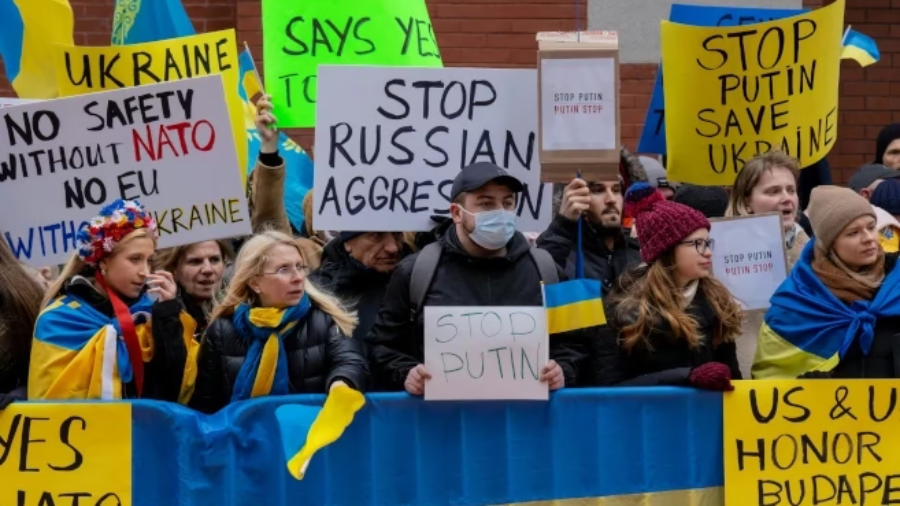
The ongoing war in Ukraine, following Russia’s 2022 invasion, remains a critical global hotspot.
- Human Impact: Over 8 million refugees, extensive civilian casualties, destruction of infrastructure.
- Political Consequences: NATO expansion debates, sanctions regimes, and global energy crises.
- Quote: “Ukraine is more than a regional conflict; it’s a test of international law and global resolve,” says Michael O’Hanlon, senior fellow at Brookings Institution.
Timeline:
- 2014: Crimea annexed
- 2022: Full-scale invasion
- 2023–2025: Ongoing frontline battles and diplomatic stalemates
External links:
Africa: Sahel, Ethiopia, and the Horn of Africa
Sahel Region
- Countries like Mali, Niger, and Burkina Faso face terrorism, ethnic violence, and climate stress.
- Over 5 million people displaced; food insecurity critical.
Ethiopia
- The Tigray conflict (2020–2022) and ongoing inter-ethnic violence continue to destabilize the Horn of Africa.
Quote:
“The Sahel is a powder keg: climate change, weak governance, and extremist networks intersect,” warns Fatima Diallo, African security analyst.
External links:
Asia-Pacific: Taiwan Strait, North Korea, and Myanmar
Taiwan Strait
- Tensions between China and Taiwan have escalated with increased military drills.
- Global supply chains and defense alliances remain on high alert.
North Korea
- Nuclear tests, missile launches, and unpredictable diplomacy pose a persistent global threat.
Myanmar
- The 2021 military coup led to violent crackdowns, ethnic conflict, and refugee flows into Bangladesh.
External links:
Why Humanity Feels on Edge
Global hotspots generate continuous anxiety:
- Refugee crises strain host nations and trigger humanitarian emergencies.
- Economic shocks affect global markets and food security.
- Geopolitical uncertainty fuels arms races and military build-ups.
“Living in a world with multiple hotspots is psychologically taxing for global populations,” notes Dr. Sarah Johnson, a conflict psychologist. “Even those not directly affected experience stress through news, social media, and economic fears.”
Global Hotspot Summary Table
| Region | Hotspot | Cause | Human Impact | External Source |
|---|---|---|---|---|
| Middle East | Syria | Civil War, Proxy Conflicts | 6+ million displaced | UNHCR |
| Middle East | Yemen | Civil War, Famine | 24M affected, cholera outbreaks | WHO |
| Eastern Europe | Ukraine | Russian Invasion | 8M refugees, civilian casualties | NATO |
| Africa | Sahel | Terrorism, Ethnic Violence | 5M displaced | UN Peacekeeping |
| Africa | Ethiopia | Civil & Ethnic Conflict | 2M displaced, food insecurity | UN OCHA |
| Asia-Pacific | Taiwan Strait | China-Taiwan Tensions | Military escalation risk | CFR |
| Asia-Pacific | North Korea | Nuclear & Missile Tests | Global security risk | IISS |
| Asia-Pacific | Myanmar | Military Coup & Ethnic Violence | Refugees & human rights crisis | BBC |
The Role of International Diplomacy and Peacekeeping
- United Nations: Peacekeeping missions, humanitarian aid, and mediation.
- NATO: Defense coordination, sanctions, and military deterrence.
- African Union & ASEAN: Regional conflict resolution and early-warning systems.
While international organizations provide crucial oversight, their efforts are often hampered by political disagreements, funding shortfalls, and strategic self-interest.
External links:
How Citizens, Media, and Civil Society Can Respond
Global hotspots are not just the concern of diplomats or military planners; public awareness, civic action, and humanitarian support matter.
- Civic Engagement: Advocating for peaceful resolutions, supporting refugee rights, or engaging in policy discussions.
- Humanitarian Aid: Supporting NGOs that provide food, shelter, and healthcare.
- Responsible Journalism: Amplifying verified information and reporting the human impact of conflicts.
“Knowledge is power,” says journalist Laura Chen. “Understanding hotspots empowers citizens to push for responsible governance and humanitarian intervention.”
Internal links: Your previous posts on global human rights, citizen activism, or faith-based humanitarian initiatives.
Conclusion: Staying Informed in a World on Edge
The world is increasingly interconnected, and crises rarely remain contained. Conflicts in one region can trigger global economic shocks, migration flows, and security concerns. From Syria to Taiwan, Ethiopia to Ukraine, the threats are tangible and persistent.
By monitoring these hotspots, supporting humanitarian efforts, and engaging in civic and diplomatic initiatives, individuals and societies can play a role in reducing tension. Awareness is the first step toward action.
Call to Action:
- Stay informed via reliable news and international organization reports.
- Support humanitarian organizations aiding displaced populations.
- Discuss global conflict responsibly with your community and networks.
- Advocate for diplomatic solutions and accountability for conflict actors.
Because a world on edge requires informed, proactive citizens, not passive observers.