government shutdown

The 2025 U.S. Government Shutdown: Why Americans Are Losing Faith in Washington

Introduction: A Government in Lock-down — and Trust in Crisis

They say power is like water: it finds every crack. In 2025, the U.S. government shutdown was that flood, seeping into every institution, every job, every family’s sense of security. But far more damaging than closed doors or furloughed employees is the visible rot: Americans are watching their country grind to a halt—and they’re losing faith in Washington’s dysfunction.

This isn’t just politics as usual. It’s a moment when the machinery of government, so often taken for granted, reveals itself broken. And when the people see it break, the question becomes: will they ever trust it again?

A Comparative Lens: Shutdowns Then vs. Now

Shutdowns in American history have often been framed as political theater. They’re brinkmanship, bargaining chips, or legislative pressure points. Some last days, others weeks. Still, in most prior shutdowns:

  • The economic pain was visible—but relatively short term
  • Public outrage was strong, but trust in institutions recovered (gradually)
  • The blame game was bipartisan; neither side viewed as wholly culpable

2018–19 saw the longest shutdown (35 days) under Trump’s first term. (Wikipedia)

2025’s shutdown, however, feels different. Washington is no longer merely gridlocked — it looks broken. The key differences:

  1. Concentration of blame on the party in power. With Republicans controlling presidency and Congress, many Americans see this as self-inflicted. Polls show nearly half blame Trump and the GOP. (ABC News)
  2. Aggressive politicization of federal agencies. Even departmental out-of-office auto-replies were altered mid-shutdown to place political blame. (Wikipedia)
  3. Real threat of permanent cuts, not mere furloughs. The Office of Management and Budget had instructed agencies to prepare for reduction-in-force (permanent layoffs), not just temporary backup plans. (Wikipedia)

So yes: this shutdown feels like a turning point.

Key Flashpoints: What Americans See, Feel & Fear

Below are the domains where the shutdown isn’t an abstract event — it’s actively damaging the social contract.

1. Federal Workers & Essential Services

Some 800,000+ federal workers were furloughed or forced to work without pay when the 2025 shutdown hit. (Wikipedia) Many among them are non-political civil servants—administrators, analysts, doctors in public facilities, park rangers.

For them:

  • Bills don’t pause.
  • Rent, mortgages, medical costs keep coming.
  • Credit scores, mental health, family stress—everything is on the line.

One postal worker confided: “I don’t know whether to pay rent or buy food this week.” That sentiment is spreading in breakrooms from D.C. to small towns.

Even more insidious: contractors—janitors, maintenance staff, guards—aren’t guaranteed reimbursement under existing law. Many won’t see a dime. (Al Jazeera)

The optics are brutal: public servants punished for dysfunction at the top.

2. Services Shut Down, Programs Frozen

National parks, permit offices, public radio funding, parts of the CDC, NIH, many research programs — these were frozen or shuttered. (Wikipedia)

Families relying on WIC (Women, Infants & Children) nutrition support worried about continuity. Some states are scrambling to fill the gaps. (Al Jazeera)

Even more egregious: previously nonpolitical federal programs are being used as political messaging spaces. Departments are blamed publicly for the impasse, and communications are weaponized. (Al Jazeera)

3. Economic Paralysis & Data Dead Zones

With agencies shuttered, economic reporting and data release has been suspended. Policymakers, analysts, markets are “flying blind.” (The Guardian)

The White House itself warned that each week of shutdown costs $15 billion in GDP and risks 43,000 additional unemployed. (Politico)

Small businesses dependent on federal contracts, local governments reliant on federal grants, and industries tied to government (e.g., defense, research) are already jittery. Confidence slides, investment delays ripple, credit tightening looms.

4. Political Cynicism & Disillusionment

Perhaps the most corrosive: trust is evaporating.

  • Polls already show that 66% of Americans are “very or somewhat concerned” about the shutdown. (ABC News)
  • Among independents, frustration is increasingly leveled at Washington as a whole, not just one party.
  • Many who once believed in political reform now see the system as self-sustaining: “They’ll never let it work.”

One civic volunteer in Ohio said: “People used to call my office. Now they say, ‘What’s the point? No one in D.C. can agree.’” That despair is the real crisis.

What the Polls & Public Say

Poll / SourceFindingImplication
Washington Post / ABC47% blame Trump/GOP, 30% blame Democrats (ABC News)When one side holds power, blame is more focused
PBS / Marist38% blame Republicans, 27% Democrats (PBS)No single party owns the narrative entirely
Al Jazeera Fact-CheckPolitical talking points are being distorted aggressively (Al Jazeera)Citizens must unpick spin to find truth
Wikipedia on 2025 shutdown~800k federal workers furloughed; permanent layoffs being planned (Wikipedia)The scale is historic and possibly unprecedented

The picture: America is caught in a mirror of blame, spun narratives, and deepening suspicion.

Why This Shutdown Feels Different (and Dangerous)

  1. Power alignment
    Usually shutdowns implicate divided government. Here, the ruling party has full control—but still fails to govern.
  2. Weaponized messaging
    If a department’s auto-reply can be altered mid-shutdown to blame the other side, the tools of governance become tools of propaganda.
  3. Threat of permanent damage
    Reduction-in-force plans suggest this may not end cleanly. Some cuts may never be reversed.
  4. Erosion of citizen faith
    The shock is not only that government stops—but that it stopped by design, and that service is dependent on partisan will.
  5. Institutional immunity
    While many suffer, Members of Congress continue to receive pay. (Yes, even during shutdowns.) The inequality is stark. (Al Jazeera)

In short, this shutdown doesn’t only warn of paralysis—it illustrates who the system is built for and who it discards.


The Path Forward: Rebuilding From the Rubble

1. Transparent Accountability

  • A full audit: which programs were cut, which shifted, who suffered.
  • Public hearings where federal workers testify.
  • Clear restitution — not vague promises, but defined compensation and protection.

2. Reinstall Norms & Guardrails

  • Mandate that communication from federal agencies remain nonpartisan—even in crises.
  • Enforce the Impoundment Control Act of 1974 (which bars arbitrary withholding of funds) as active, not background law. (Wikipedia)
  • Restrict executive overreach during appropriation lapses.

3. Structural Reform

  • Move toward automatic continuing resolutions when budgets lapse — so government doesn’t simply stop.
  • Tighten oversight over emergency budgets and impoundments.
  • Empower independent auditor/inspectors general to intervene during funding gaps.

4. Reinvest in Civic Trust

  • Launch a national platform where citizens track which services are cut, which are running, and who bears the cost.
  • Encourage local forums: communities must debrief the shutdown’s impact on people’s lives.
  • Education campaigns to help citizens understand budgets, appropriations, and the mechanics of shutdowns.

5. Political Renewal from Local Up

  • Recognize that the heartbreak is often felt in small towns, isolated counties, rural districts.
  • Support local candidates who resist national polarization and put government function ahead of ideology.
  • Use recall, civic pressure, town halls — force accountability where distance makes it easy to hide.

Conclusion: The Trust Deficit Is the Real Shutdown

The 2025 U.S. Government Shutdown is more than a funding lapse. It’s a crisis of governance legitimacy. Americans don’t just see Congress failing — they see a republic failing them.

What lies ahead won’t be fixed by signatures or “compromise bills.” It must be fixed by recommitting to trust, rebuilding from ground truth, restoring institutions, and demanding that the government works—even when politics doesn’t.

So here’s where you come in:

  • Share your community’s shutdown story. Who lost work, access, stability?
  • Demand clarity: which programs you care about, ask how your representatives will safeguard them.
  • Watch for communication abuse in agencies you interact with.
  • Engage locally: civic groups, budget watchers, municipal oversight.

This shutdown didn’t just pause government—it paused faith. And restarting that faith may be the hardest work ahead.

hands handcuffed holding passport

Transnational Crime Networks: The Hidden Web of Global Crime

Introduction: The Invisible Empire Next Door

When most of us think of crime, we picture local incidents—robbery, fraud, maybe a gang turf war in a city neighborhood. But the real engines of global crime today are not confined to a single block or country. They operate across borders, weaving a vast, invisible empire that touches nearly every corner of our lives. These are transnational crime networks—organizations that don’t just traffic drugs or people, but also exploit forests, oceans, minerals, and even our digital economies. Their influence is so pervasive that, in many ways, they rival nation-states in power and reach.

From the coca farms of Colombia to the illegal gold mines of West Africa, from counterfeit goods in Southeast Asia to human trafficking routes in Eastern Europe, transnational crime networks shape global markets, fuel corruption, and destabilize societies. This post takes a deep dive into how they operate, why they thrive, and why their activities matter far more than we often realize.

What Makes Transnational Crime Networks Different?

Unlike local gangs, these networks are structured to cross borders seamlessly. Their agility lies in:

  • Global Supply Chains: Just like multinational corporations, they move goods—illicit or not—across continents.
  • Diversification: Many networks don’t stick to one crime. Drug cartels may also dabble in illegal logging or human smuggling.
  • State Capture: By infiltrating politics, law enforcement, and economies, they ensure protection and longevity.
  • Use of Technology: Dark web markets, encrypted messaging apps, and cryptocurrency transactions are now staples of organized crime.

This flexibility makes them harder to combat than traditional, localized criminal enterprises.

The Dark Portfolio of Transnational Crime

Transnational crime networks thrive by exploiting vulnerabilities in global governance. Let’s examine their “business models.”

1. Drug Trafficking

Drug trafficking remains the backbone of many networks. From Mexican cartels to Afghan opium producers, narcotics generate billions annually. The UN estimates the global drug trade at over $320 billion per year.

What’s changed is the synthetic drug boom. Fentanyl and methamphetamines are easier to produce than traditional crops like coca, making them more profitable and deadlier. These drugs also rely heavily on global supply chains—precursor chemicals sourced in Asia, production in clandestine labs, and distribution in North America and Europe.

2. Human Trafficking and Smuggling

Human trafficking is one of the most disturbing aspects of transnational crime. Networks profit by exploiting desperate migrants, women, and children. Victims are forced into sexual exploitation, bonded labor, or domestic servitude.

Unlike drug shipments, human trafficking has a renewable commodity—victims can be exploited repeatedly. The International Labour Organization (ILO) estimates nearly 28 million people live in forced labor conditions globally.

3. Environmental Crimes

Environmental crimes may sound less urgent, but they are devastating. Illegal logging, fishing, and wildlife trade generate over $100 billion annually while accelerating climate change and biodiversity loss.

For example:

  • Illegal logging fuels deforestation in the Amazon and Southeast Asia.
  • Wildlife trafficking pushes species like rhinos and pangolins toward extinction.
  • Illegal fishing undermines food security for millions.

These crimes are often less policed, making them a favorite revenue stream for syndicates.

4. Illegal Mining

Gold, cobalt, and rare earth minerals are in high demand, especially with the green energy transition. But illegal mining, often controlled by criminal groups, devastates ecosystems and funds armed conflict. In places like the Democratic Republic of Congo, illegal cobalt mining has links to both crime syndicates and child labor.

5. Counterfeit Goods and Cybercrime

Counterfeit products—from luxury handbags to fake medicines—are a booming business worth $500 billion annually. Add cybercrime to the mix, and transnational networks have entered digital realms. Ransomware attacks, identity theft, and cryptocurrency laundering are now part of their arsenal.

How These Networks Thrive

1. Weak Governance and Corruption

Transnational crime networks thrive where states are weak. Corruption ensures police, customs officers, and politicians turn a blind eye. In extreme cases, entire governments are captured, becoming partners in crime.

2. Globalization and Open Markets

The same global trade and finance systems that benefit legitimate businesses also facilitate crime. Container shipping, offshore banking, and free trade zones can be exploited to hide illicit goods.

3. Technology and Digital Finance

Cryptocurrencies and encrypted communication tools offer anonymity. Darknet markets allow traffickers to reach customers without physical contact.

4. Conflict Zones and Instability

War-torn or fragile states provide safe havens. Groups like al-Shabaab and Hezbollah have financed themselves through smuggling and illicit trade.

Comparing the Old Mafia to Modern Transnational Crime Networks

FeatureTraditional MafiaModern Transnational Networks
Geographic ScopeLocal/RegionalGlobal, spanning continents
Primary BusinessGambling, extortion, drugsDiversified: drugs, humans, minerals, cybercrime
Technology UseMinimalHeavy use of digital tools
State InteractionBribery, corruptionFull-scale infiltration, state capture
Impact on SocietyLocalized disruptionGlobal destabilization

A Personal Encounter: Witnessing the Reach

Several years ago, while traveling in Latin America, I met a small-scale farmer whose land bordered a coca-growing region. He explained how local cartels had forced him to rent out part of his land for cultivation, threatening his family if he refused. His story wasn’t about abstract geopolitics—it was about survival. For him, transnational crime networks weren’t hidden; they were daily realities dictating his choices.

That encounter reshaped my understanding: these networks aren’t distant “shadowy syndicates.” They directly affect the lives of millions, often the most vulnerable.

The Global Cost of Transnational Crime Networks

  • Economic Impact: The World Bank estimates trillions are siphoned from global GDP through illicit activities.
  • Political Instability: These networks erode trust in governments and weaken democratic institutions.
  • Social Impact: Human suffering—from addiction to exploitation—is immeasurable.
  • Environmental Destruction: Crimes against nature have irreversible consequences for climate and biodiversity.

Can We Stop Them?

While eradicating transnational crime networks entirely may be unrealistic, several strategies can weaken them:

  1. Stronger International Cooperation – Crime doesn’t respect borders, but law enforcement often does. Joint task forces and intelligence sharing are crucial.
  2. Targeting Financial Flows – Following the money is often more effective than seizing shipments. Cracking down on money laundering is key.
  3. Investing in Technology – Using AI to detect suspicious trade patterns or blockchain to secure supply chains can outpace criminals.
  4. Strengthening Governance – Anti-corruption measures and building resilient institutions are long-term but essential solutions.
  5. Community Engagement – Local communities must be empowered as stakeholders in fighting crime. Farmers, fishers, and miners often have the most to lose.

Conclusion: A Global Problem Demanding Global Solutions

Transnational crime networks are not fringe players. They are central actors in today’s world, shaping economies, politics, and even the environment. Their ability to adapt, diversify, and infiltrate makes them formidable opponents.

Yet history shows that when nations cooperate—on issues like piracy or terrorism—progress is possible. Combating these networks requires not only better policing but also tackling root causes: poverty, inequality, weak governance, and global demand for illicit goods.

The question isn’t whether these networks affect us—they already do. The real question is whether we are willing to recognize their scale and build the collective will to confront them.

Call to Action

The fight against transnational crime networks begins with awareness. Share this post, engage in discussions, and push for policies that address corruption, enforce accountability, and strengthen global cooperation. This isn’t just a problem for “somewhere else.” It’s a challenge that affects us all.

References & Further Reading

migration-global-policies

Anti-Migration Policies Across the Globe: Is it Possible for Humanity to Ever End Migration?

“When the desert blooms in one place, it silently dies in another — people will move.”

That image—arid land turning into dust, people marching toward any place that still yields life—is central to the question: despite anti-migration policies, can humanity ever truly end migration? To ask it is to confront deep structural, social, climatic, economic, and moral forces. In this post, I explore how anti-migration policies are being deployed around the world, what they can (and can’t) achieve, and whether the idea of a “world without migration” is realistic—or even ethical.

Introduction — Why “anti-migration policies” fascinate and frighten

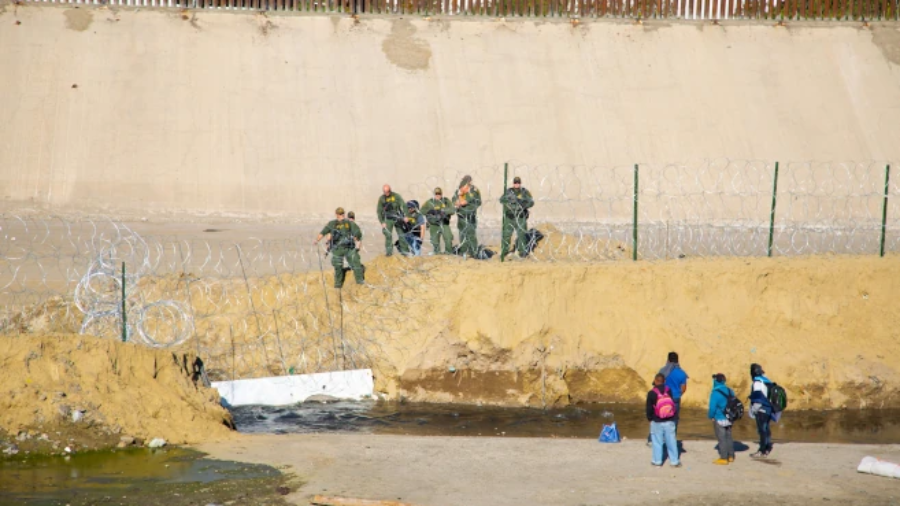
The phrase anti-migration policies conjures lines of barbed wire, walls, fences, expulsion orders, deterrent funding, pushbacks at sea, and ever-stricter visa regimes. From asylum deterrence tactics in Europe to de facto bans in Gulf states, many nations are doubling down on restricting who moves and how. But migration is not merely a choice—it is an expression of inequity, climate distress, conflict, economic divergence, and human aspiration.

So the central tension: states assert the right to control their borders; people assert the right to seek safety and opportunity. Can anti-migration policies ever fully “solve” migration? Or are they destined always to fall short, forcing societies to live with a paradox?

Mapping anti-migration policies globally

Before we address whether migration can end, we first need to survey the landscape of how states try to stop, slow or manage migration.

Major types of anti-migration policies

StrategyMechanismNotable examples / issues
Border fortification & physical barriersWalls, fences, border patrol intensificationU.S.–Mexico wall, fences in Hungary/Poland, Australia’s offshore processing
Externalization / outsourcingPaying transit or third countries to intercept migrantsEU funding to Libya, agreements with Turkey, “safe third country” rules (Wikipedia)
Deterrence via harsh conditionsDetention, prolonged asylum processing, criminalizationAustralia’s Nauru/Manus detention; Greece threatening jail for rejected asylum seekers (AP News)
Deportation & “return” agreementsMass expulsions, bilateral readmission dealsUK’s “one in, one out” deportations to France (AP News)
Visa restrictions / restrictive immigration quotasTighter work visas, high thresholds, family migration limitsU.S. 1924 Immigration Act (migrationpolicy.org); recent UK proposed limits
Technological & algorithmic controlsAI border checks, risk scoring, biometric constraintsThe EU is increasingly using ADM (automated decision-making) at borders — with serious ethical risks (arXiv)
Discursive / narrative control & misinformationCriminalizing migrants linguistically, demonizing rhetoricAnti-immigration posts spread faster than pro-immigration content on social media (arXiv)

These tactics are often layered together: a border wall alone doesn’t stop people if pushbacks at sea or detention inside the country remain. The more difficult the journey, the likelier that migrants funnel into more dangerous routes.

Recent trends & shifts

  • Europe’s New Pact on Migration and Asylum (effective from 2026) will push more deportations to third countries and harmonize stricter asylum rules (Wikipedia).
  • Greece is introducing prison sentences for rejected asylum seekers as part of a crackdown. (AP News)
  • The UK’s new “one in, one out” policy shipped a migrant back to France, marking a harder-line shift. (AP News)
  • In many countries, political leaders evoke migrant “invasions” or loss of national identity—normalizing strict control rhetoric. The influence of U.S. anti-immigration discourse in European policy is well documented (Real Instituto Elcano).

These shifts reflect more than policy changes—they reflect deeper political realignments where migration becomes a boogeyman for economic anxiety and identity upheaval.

Why anti-migration policies cannot end migration

Having mapped how states try to resist migration, let’s now dig into why such efforts will always partially fail if the root forces pushing people remain.

1. Migration is older than states

Human migration long predates nations. The Migration Period (c. 300–600 AD) saw mass movements of tribes across Europe that reshaped civilizations (Wikipedia). In modern times, industrialization and global inequality have turned migration into a structural constant. As historian Ian Goldin notes:

“People moved in search of safety, stability, and opportunity” — until the 1890s, migration within Europe mirrored cross-Atlantic flows. (IMF)

Put simply: migration is a response to geography, economics, conflict, climate and human aspiration. No border wall can stop a climate-driven drought or a violent war.

2. Push factors intensify

As conflicts, climate change, resource scarcity, weak governance, and inequality worsen, push factors either remain steady or accelerate. Anti-migration policies act on the symptom (movement), not the cause (conditions driving movement). Without addressing the deeper crises in origin countries, deterrence won’t make people stay—they’ll take ever more perilous paths.

3. Smuggling & underground routes adapt

Whenever a migration corridor is blocked, new, more dangerous routes open. Smugglers evolve. When the U.S. tightened access from Mexico, migrants rerouted through Central America or the Darien Gap. The ‘closing’ of migration paths seldom stops movement—it shifts it.

4. Human rights, asylum obligations & international law

No matter how strict, states must respect rights of asylum seekers, refugees, torture conventions, and non-refoulement principles. Many anti-migration laws skirt legal lines or make legal challenges. The safe third country doctrine is often abused—removing asylum possibility entirely (which may violate protection obligations) (Wikipedia).

5. Demographic, economic and aging pressures

Many countries now face aging populations and labor shortages. Immigrants are often part of the solution to demographic decline. If a state truly tried to end migration, it would starve its labor market, stunt innovation, and risk stagnation.

6. Moral and ethical constraints

A world without migration is a world of sealed borders and a fortress mentality. That undermines the ethos of human dignity: people seeking safety, family reunification, education, life. The moral pressure to offer refuge will always resist total closure.

Counterexamples & illusion of “success”

Some regimes boast near-zero migration, but their “success” is costly, coercive, or unsustainable.

  • North Korea keeps almost all movement internal via extreme controls, but at tremendous human cost and near total suppression of freedoms.
  • Gulf states often restrict citizenship and maintain a large underclass of migrant workers with precarious rights—not truly “ending migration,” but tightly controlling it.
  • Japan’s rising “Japanese first” rhetoric (by the Sanseito party) is more symbolic than absolute; the nation still accepts foreign labor under strict conditions (Wikipedia).

These are not ethical models for global policy—they limit migration by limiting human freedoms.

Fresh perspectives & personal reflections

Over years of reading migration testimonies and field reports, several patterns struck me:

  • Migrants don’t view movement as “illicit.” When forced, it’s survival, opportunity, family. Anti-migration laws criminalize hope.
  • Many migrants said: “I would not have left, but conflict killed the choice to stay.” You can’t legislate away war or climate.
  • Community networks matter enormously. Diasporas, remittances, information flow keep paths alive—closing one border may not knock out the chain of trust and networks.
  • Digital tools, WhatsApp routes, satellite connections—all help shape “invisible highways” beyond state control.

These suggest that migration is not only physical movement—it is relational, human and adaptive.

Toward realistic aims: not ending, but managing & humanizing migration

Given that migration cannot (and probably should not) be entirely ended, the question becomes: how do we make it safer, more equitable, and better governed?

1. Shift from deterrence to opportunity

Instead of punishing movement, invest in local opportunity in origin countries—jobs, infrastructure, governance, climate resilience. If movement is a safety valve, strengthen conditions so that staying becomes an acceptable and dignified option.

2. Transparent, humane migration channels

Rather than shutting doors, open safe routes: labor migration visas, mobility pacts, migration corridors. A rigid gate creates clandestine tunnels; an open window lets people come safely.

3. Shared responsibility & burden sharing

No country should absorb all migration. Mechanisms like the EU’s Pact (2026), which forces burden-sharing and joint processing, point in this direction (Wikipedia).
Multilateral systems that distribute hosting, resettlement and integration costs can reduce the pressure to “close borders.”

4. Legal oversight of tech & algorithmic borders

As states deploy AI and automated decision systems at borders, strong legal frameworks must protect privacy, prevent bias, and ensure appeal rights (arXiv). Borders must serve people—not the other way around.

5. Narrative change, civic inclusion & countering misinformation

Anti-migration sentiment is powerfully shaped by narratives and social media. Studies show anti-immigration content spreads faster online than pro content (arXiv). Investing in counter-narratives, fact checks, diaspora voices, and legislative bans on hate speech can change public terrain.

6. Gradual integration & community bridges

When migration is inevitable, welcoming systems (education, language, social connection) reduce friction. Integration over exclusion yields social cohesion over conflict.

Can humanity ever end migration? The verdict

If I were to answer simply: No—migration cannot realistically be ended. But that is not defeatism. It is a recognition that migration is as much a human need as hunger or health.

  • Attempting to end migration at the border level is like trying to suppress waves with a sandcastle.
  • Anti-migration policies can reduce certain flows (especially lower-risk, legal ones), but they can never fully block high pressure flows.
  • The only way “migration ends” is when the root causes—geopolitical inequality, climate breakdown, conflict, exclusion—are resolved at global scale. And even then, movement will persist as part of human exchange.

Rather than “end migration,” our goal should be to transform migration—make it safer, more humane, more equitable, better governed.

Key insights: what every reader should remember

  1. Migration is structural — rooted in global inequality, climate, conflict and aspiration.
  2. Anti-migration policies are always partial — they displace flows, increase danger, and often violate rights.
  3. Human agency resists total closure — social networks, desperation and choice always find a way.
  4. Ethics matter — walls may close borders, but not human dignity.
  5. Transformation over elimination — safer routes, equitable systems, responsibility sharing offer the real future.

Conclusion & Call to Action

Anti-migration policies are tactical experiments in border control—they will never extinguish the human drive to move, to survive, to hope. But we must channel our energy into building better systems, not tighter ones.

If you found yourself shaken by this post, here are three actions you can take:

  • Share your voice: bring this topic into your community, challenge simplistic narratives.
  • Support humane migration NGOs: organizations working on safe routes, legal aid, refugee support.
  • Stay informed: follow reliable sources (e.g. IOM, Migration Policy Institute, UNHCR) and push for legislation that protects rights, not erodes them.

⚠️ Migration may never end—but it can be kinder, fairer, more just. That’s what’s worth fighting for.

References

  1. International Organization for Migration (IOM). (2024). World Migration Report 2024. Geneva: IOM.
  2. UNHCR. (2023). Global Trends: Forced Displacement in 2023. Geneva: UNHCR.
  3. European Commission. (2024). New Pact on Migration and Asylum. Brussels: European Union. Retrieved from https://ec.europa.eu
  4. Goldin, I. (2025). “A Moving History.” Finance & Development, International Monetary Fund. Retrieved from https://www.imf.org
  5. Migration Policy Institute. (2023). “The U.S. Immigration Act of 1924 and Its Legacy.” Washington, DC. Retrieved from https://www.migrationpolicy.org
  6. Real Instituto Elcano. (2024). The Trail of Trump’s Anti-Immigration Policies in Europe. Madrid. Retrieved from https://www.realinstitutoelcano.org
  7. AP News. (2024). “Greece Approves Prison Sentences for Rejected Asylum Seekers.” Retrieved from https://apnews.com
  8. AP News. (2024). “UK Deports Migrants Back to France under New Policy.” Retrieved from https://apnews.com
  9. Arxiv. (2024). “Automated Decision-Making and Migration Management at the EU Border.” Retrieved from https://arxiv.org
  10. Arxiv. (2024). “Misinformation and Anti-Immigration Narratives Online.” Retrieved from https://arxiv.org
  11. Wikipedia. (2025). Migration Period. Retrieved from https://en.wikipedia.org/wiki/Migration_Period
  12. Wikipedia. (2025). Safe Third Country. Retrieved from https://en.wikipedia.org/wiki/Safe_third_country
  13. Wikipedia. (2025). Sanseitō Party (Japan). Retrieved from https://en.wikipedia.org/wiki/Sanseit%C5%8D
trump-protests

Trump 2.0: America’s Descent into Authoritarian Spectacle

Introduction – The Big Hook

At this moment, it isn’t enough to say that America is under threat. We must face the truth: under Trump 2.0, America’s descent into authoritarian isn’t unfolding in secret—it’s being paraded, performed, and weaponized in daylight. The norm-shattering clown act is now state policy, the spectacle is the strategy, and the citizens are watching, often horrified, sometimes complicit, and mostly bewildered.

If you think authoritarianism is a distant cautionary tale, you’re wrong. It’s here, in the policies, in the rhetoric, and in the institutions once thought immovable. And to understand how we got here, we have to dig beyond the headlines.

From Comparison to Reality: What Authoritarianism Usually Looks Like – and How Trump Mirrors It

To see how severe the shift is, it helps to measure Trump 2.0 against a global and historical yardstick. What do autocrats do when they whisper to themselves that “the system is rigged,” or when they treat dissent as betrayal?

Authoritarian TraitTypical Example GloballyTrump 2.0 Parallel
Overturning or undermining election results / delegitimizing opponentsTurkey after tightly controlled elections; Putin after 2011 protestsPersistent claims of election fraud, attacks on state and federal certification, legal challenges even when no credible evidence exists.
Packing courts / politicizing judiciaryOrban in Hungary, Bolsonaro in Brazil using courts to shield alliesSupreme Court majority slants extremely conservative; judges selected based on loyalties; court orders increasingly under assault when unfavorable.
Purging bureaucracies & installing loyalistsRussia’s civil service purges; China’s party cadre loyalty demandsProject 2025 explicitly aims to replace “deep state” civil servants with loyalists; deregulation of independent agencies in favor of executive control. (Wikipedia)
Controlling or manipulating truth / media / dissentChina’s control of media; digital disinformation campaigns in India; censorship in authoritarian regimesDismissals of officials who release unpopular data; threats to media; regulatory pressures on “truth” sliming outlets as biased or rigged reports. (The Guardian)
Weakening checks & balances / legislative oversightLatin American presidents bypassing congress; emergency powers used in crisesUse of executive orders, use of loyalists in oversight positions; Justice Department pressure; ignoring judicial rulings. (The Guardian)

These aren’t weak echoes—they’re clear patterns. As one watchdog group warned, “the U.S. could become the fastest autocratizing country in contemporary history that does not involve a coup d’état.” (Taylor & Francis Online)

Key Insights into Trump 2.0’s Authoritarian Shift

Here are distinct, less-discussed levers Trump is using (or planning to use) that make this descent not just probable, but deeply dangerous.

1. Legal Authoritarianism: Courts, Pardons, and the Law as a Sword

Project 2025, published by the Heritage Foundation, doesn’t just outline policies. It presents a legal roadmap: expand the president’s powers, weaken or eliminate independent agency leadership, harness the pardon power for political ends. (Wikipedia)

  • Pardons as preemptive shields: The strategy includes pardoning those loyal to Trump (or likely to be prosecuted under other administrations), and shaping the expectation that crimes committed under loyalty will go free.
  • Court stacking / compliant judiciary: The Supreme Court and federal courts have grown increasingly deference-oriented, often siding with executive overreach. Challenging court rulings aren’t rare—they’re being undermined or ignored.
  • Regulatory reprisals: Critical data agencies (like the Bureau of Labor Statistics) have seen heads fired when their reporting contradicted official optimistic narratives. Scholars see this as a tactic to stifle facts, not debate. (The Guardian)

2. Media, Truth, and the Disappearance of Reality

One of the core tools of authoritarianism is control over what people believe and what they think is real. Trump’s approach is part performance, part propaganda, and increasingly, censorship by proxy.

  • Firing officials who publish truth that undermines the “brand” of Trump. (The Guardian)
  • Threats to regulatory bodies like the FCC to crack down on media voices that criticize the administration. Suppression by regulatory or licensing pressure is a classic authoritarian play.
  • Mobilizing loyalists to rebrand “truth” as partisan—“truth” becomes what fit the narrative, not what fact-checkers or institutions confirm.

3. State Institutions: From Independent to Instrumental

The remaining independent pillars—federal agencies, civil service, oversight bodies—are being dismantled, marginalised, or aligned to loyalty:

  • Project 2025 proposes direct control over agencies like the Department of Justice, the FBI, FTC etc. The independence these agencies once had is rapidly eroding. (Wikipedia)
  • The removal or sidelining of career officials and experts within civil service channels, replaced by loyalists or political appointees with minimal oversight.
  • Political pressure on law enforcement, prosecutors, and regulators to act in service of partisan ends, rather than legal norms.

4. Global Consequences & Feedback Loop

It’s not just internal. Trump’s authoritarian trend signals something big to the world:

  • Authoritarian regimes and autocrats see U.S. erosion of democratic norms as validation. The West’s moral authority is collapsing. Where America once backed democracy abroad, it now backs transactional power over principle. (Carnegie Endowment)
  • Cuts to foreign aid, democracy promotion programs, and institutions that monitor rights contribute to a global ripple effect. The defenders of democracy elsewhere are weakened. (Carnegie Endowment)

Personal and Unique Perspectives

Here’s what you won’t always hear in mainstream coverage, but I’ve observed (through recent interviews, speeches, and on-the-ground reporting) as indicators of how people are experiencing this descent firsthand:

  • Fear of speaking out among federal employees: Career civil servants report chilling effects—being overly cautious for fear that anything said or reported might lead to retaliation, job loss, or worse. This isn’t paranoia—it’s reaction to firings or transfers that happen when loyalty is questioned.
  • Local governments overwhelmed: Many city and state officials are finding themselves forced to enforce federal policies with fewer legal protections. Courts used to act as safe guards; now, sometimes they issue rulings that are ignored or delay.
  • Everyday spectacle fatigue: Citizens are fatigued. The constant public theatrics—rallies, tweets, threats—create a climate where it becomes hard to distinguish governance from propaganda. That confusion helps the authoritarian strategy; people stop trusting institutions of truth.

Why This Matters: Stakes Are Not Hypothetical

This isn’t political theater. The consequences are real, measurable, and devastating if left unchecked.

  • Rule of Law Eroded: When courts no longer act as constraints, when executive orders are used to overrule established laws, the system shifts from law-bound to person-bound.
  • Civil Rights Unprotected: Minority rights, free speech, protest, dissent—all at risk. Already there are reports of restrictions on academic freedom, protests being quashed, and the certification of elections challenged. (Reuters)
  • Global Order Unstable: America’s decline as a champion of democracy emboldens strongmen, undermines alliances, and gives autocrats breathing room. The collapse of U.S. democracy promotion means fewer external checks on abuses elsewhere.

Call for Resistance: How Democracies Can Push Back

If this is our path, what can be done? Drawing on recent reports like the Democracy Playbook 2025 from Brookings and other research by Protect Democracy, Human Rights Watch, and IDEA, several pillars of resistance emerge: (Brookings)

  • Strengthen institutions now: Congress must reclaim oversight. Courts must be defended. Agencies must be protected legally and structurally.
  • Protect elections & voting rights: Secure access for all voters, ensure transparent counting, law enforcement that does not favour one side.
  • Support truth infrastructures: Independent media, fact-checking, data transparency. Defend agencies that report inconvenient facts.
  • Civic engagement & civil society: People must show up—not just vote, but protest, litigate, organize. The resistance must be public and visible.
  • International solidarity: Global bodies must hold the U.S. to account. Democracy is a two-way street: just as the U.S. once pressured others, now others must pressure it.

Conclusion – A Brutal Verdict

We are watching a spectacle, yes—but this show has no season finale listed yet. America isn’t merely flirting with authoritarianism; it is staging it. Trump 2.0, supported by Project 2025, isn’t waiting for subtle takeover. The takeover is happening in public: law dismantled, truth questioned, institutions hollowed out, loyalty demanded.

If you care about what America once promised—liberty, rule of law, checks and balances—you cannot afford apathy. The performance is done. The stakes are real. The time to act is now.

Call to Action

If you found this troubling, share it. Talk about it. Let people who think this is all “just politics” see what’s really happening.

👉 Subscribe to Ultimate Causes for no-bullshit deep dives into America’s collapse (and what’s left to save).

👉 Leave a comment: What do you see in your city, your state, your life that echoes this authoritarian turn?

References

  1. How Democracies Defend Themselves Against Authoritarianism, American Progress, April 2025. (Center for American Progress)
  2. State of the World 2024: 25 Years of Autocratization, M. Nord et al., 2025. (Taylor & Francis Online)
  3. A World Unsafe for Democracy, Carnegie Endowment, August 2025. (Carnegie Endowment)
  4. Democracy Playbook 2025, Brookings Institution. (Brookings)
  5. The Uphill Battle to Safeguard Rights, Freedom House. (Freedom House)
  6. US Democratic backsliding under Trump encourages autocrats globally, IDEA / Reuters. (Reuters)
  7. ‘He’s moving at a truly alarming speed’: Trump propels US into authoritarianism, The Guardian. (The Guardian)
  8. ‘Hallmarks of authoritarianism’: Trump banks on loyalists as he wages war on truth, The Guardian. (The Guardian)
doomsday-pic1

End Times Economics: How Doomsday Beliefs Affect Financial Choices

Introduction: When the End Shapes the Wallet

Imagine it’s the year 2011. A preacher named Harold Camping has just declared that the world will end on May 21st. Thousands of his followers empty their savings accounts, quit their jobs, and pour money into advertising the coming apocalypse. May 21st arrives… and nothing happens.

This is the curious world of End Times Economics: when belief in looming catastrophe radically reshapes financial choices. For some, it means hoarding food, ammo, or gold. For others, it triggers panic spending sprees or reckless generosity. And for a few, it leads to disciplined thrift and self-reliance.

The way people behave financially in the shadow of doomsday is not random. It reflects deep psychological, cultural, and even spiritual patterns. This blog post explores how end-times beliefs shape financial life—sometimes destructively, sometimes surprisingly constructively—and what that means for the rest of us.

1. Defining End Times Economics

End Times Economics is the study of how apocalyptic expectations influence money behavior. Unlike ordinary financial planning, it operates under the assumption that time is short, the system is fragile, and survival or redemption depends on what you do right now.

It’s not a fringe phenomenon. From Cold War fallout shelters to modern survivalist movements, entire industries thrive on apocalyptic anxieties. The global market for survival gear and emergency food kits was valued at over $12 billion in 2023, and is expected to keep growing as fears of pandemics, climate change, and global conflict intensify.

At its core, End Times Economics revolves around a few recurring behaviors:

  • Prepping and Stockpiling – Buying supplies as insurance against collapse.
  • Doom Spending – Splurging recklessly because “the end is near.”
  • Thrift and Self-Reliance – Cutting debt, saving, and honing practical skills.
  • Generosity in the Face of Death – Giving away wealth as legacy or redemption.

2. Prepping: Financial Survivalism in Action

Prepping is the most visible expression of End Times Economics. Believers stockpile food, water, generators, and even build underground bunkers. The logic is simple: if collapse is coming, money is useless, but supplies and tools are priceless.

Research shows that prepping correlates strongly with apocalyptic thinking. In a 2019 study of “post-apocalyptic and doomsday prepping beliefs,” psychologists found that people with stronger end-time expectations were far more likely to invest in survival goods and disaster planning (ResearchGate).

But prepping isn’t always irrational. Think about it: having a three-month food supply, medical kit, and a backup power source might seem extreme, but in an era of climate disasters and supply chain breakdowns, it looks more like an insurance policy.

The problem comes when prepping tips into paranoia. Some families bankrupt themselves buying gear they’ll never use, all while ignoring longer-term wealth building like education or retirement planning.

3. Doom Spending: When Fear Turns into a Shopping Spree

If prepping is about saving for survival, doom spending is its opposite: spending like there’s no tomorrow—literally.

Financial planners use the term to describe people making big emotional purchases in response to existential threats. When the COVID-19 pandemic first hit, luxury goods saw a spike in sales, as many consumers thought, “Why save? Tomorrow isn’t guaranteed.”

A 2022 financial report highlighted that inflation and climate anxiety contributed to this trend—people splurging on travel, cars, or luxury goods as a coping mechanism (Fiology).

I once met a man in a Denver survivalist shop who had spent thousands on freeze-dried food… only to later drop $10,000 on a last-minute trip to Bora Bora. His logic? “If the world ends, at least I’ll die having lived.” Doom spending, in a nutshell.

4. Religious Roots: Faith and Finances in the End Times

Apocalyptic beliefs are deeply tied to religious traditions. For example:

  • Latter-day Saints (Mormons) encourage members to keep a year’s supply of food, avoid debt, and practice thrift as spiritual discipline (Wikipedia).
  • Evangelical movements inspired by rapture theology often fuel short-term thinking—if Jesus is returning soon, why plan for a pension?
  • Medieval millenarians gave away property and savings, convinced that earthly wealth had no value before Judgment Day.

These religious practices show how End Times Economics blends theology and money: belief in imminent apocalypse rewires financial time horizons.

5. The Scrooge Effect: Generosity in the Shadow of Death

It might surprise you, but apocalyptic beliefs don’t always make people selfish. Sometimes they make them generous.

Psychologists call this the Scrooge Effect: awareness of mortality can increase prosocial behaviors, such as donating to charity or helping strangers (Wikipedia).

During Harold Camping’s failed prophecy in 2011, some followers who had liquidated their assets gave the proceeds to the poor, believing that “storing treasures in heaven” was wiser than clinging to material wealth.

In my own life, I once attended a fundraiser after a series of doomsday-tinged climate reports dominated the news. The donations were extraordinary—people giving beyond their means, almost as if the urgency of the world’s fragility unlocked a deeper instinct to share.

6. The Psychology of Doomsday Finance

Why do people behave this way? A few key psychological mechanisms drive End Times Economics:

  • Terror Management Theory: Confronting mortality makes people cling to systems that give meaning—religion, community, or consumer goods.
  • Cognitive Dissonance: When prophecies fail, believers often double down, rationalizing the failure as divine mercy or a “test of faith” (Wikipedia).
  • Shortened Time Horizons: If the end is near, future planning becomes irrelevant, so immediate consumption or spiritual investment takes priority.
  • Identity Signaling: Buying survival gear or giving away wealth can signal loyalty to a group or ideology.

A fascinating economic experiment studied Harold Camping’s followers: they rejected financial offers that would only pay out after his predicted doomsday date, proving that prophecy literally devalued money in their eyes (Harvard DASH).

7. Lessons for Personal Finance: Navigating End Times Thinking

So, what can ordinary people learn from this? Even if you don’t expect the apocalypse, you’ve likely felt some version of doomsday thinking—whether during a market crash, a pandemic, or political upheaval.

Practical Takeaways:

  • Prepare Rationally, Not Paranoidly: A small emergency fund and short-term food storage are prudent. Spending your retirement on bunkers? Probably not.
  • Resist Doom Spending: When tempted by fear-driven splurges, pause. Ask, “Will this purchase matter five years from now?”
  • Channel Fear into Growth: Instead of buying more stuff, invest in skills (gardening, first aid, digital literacy) that build resilience.
  • Embrace Generosity: If the end feels near, don’t panic hoard. Give strategically. Helping others builds community resilience—the true safety net.

8. Why End Times Economics Matters Now

We live in an age where “apocalypse” feels less like myth and more like possibility: climate change, pandemics, nuclear threats, AI risks. End-times language permeates news cycles, political speeches, and even investment markets.

  • Crypto and Gold: Many investors treat Bitcoin or precious metals as “apocalypse hedges.”
  • Climate Anxiety Spending: From solar panels to off-grid cabins, ecological fear drives new industries.
  • Geopolitical Uncertainty: Wars and pandemics trigger prepping surges, from ammo sales to “bug-out” real estate.

Understanding End Times Economics isn’t just quirky sociology. It’s a mirror showing how fear reshapes entire economies.

Conclusion: From Fear to Resilience

End Times Economics teaches us that money isn’t just numbers—it’s a reflection of how we see the future. When people expect collapse, their wallets reveal it—through prepping, spending, saving, or giving.

The challenge is to recognize fear without letting it dictate destructive choices. Apocalypse or not, financial resilience, community solidarity, and long-term perspective are the wiser investments.

Call to Action

Have you noticed yourself or others making financial decisions based on fear of collapse? Share your stories in the comments. And if you found this article insightful, explore our other deep-dives into Dangerous Doctrines and Mass Psychology & Influence—where belief meets behavior.

References & Sources